


More news on this day
A routine regional hop into Aspen became the latest mountain-west diversion story when SkyWest Airlines Flight SKW4929, a Canadair Regional Jet CRJ-700, abandoned its approach and returned to Grand Junction Regional Airport instead of landing at Aspen–Pitkin County Airport.
Get the latest news straight to your inbox!
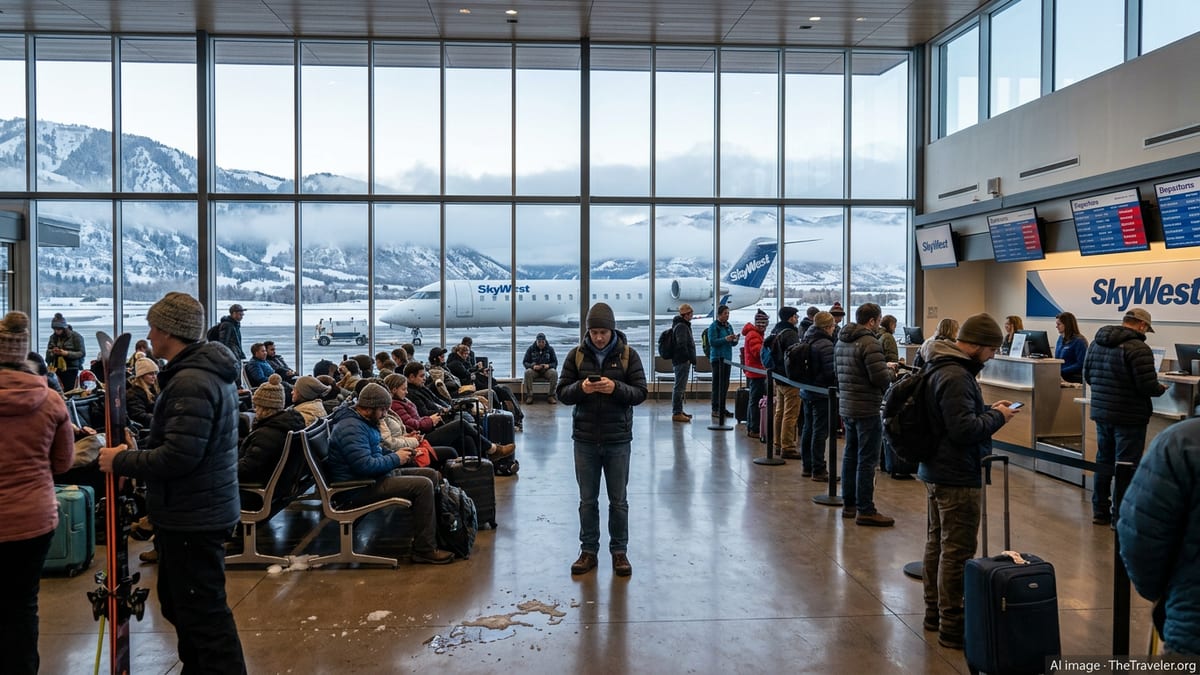
What Is Known About Flight SKW4929’s Diversion
Publicly available flight-tracking data for SkyWest operations in Colorado indicate that Flight SKW4929 was scheduled as a short sector between Grand Junction Regional Airport and Aspen–Pitkin County Airport, a route typically flown in under 40 minutes on Canadair Regional Jet equipment. On the day of the incident, tracking information shows the aircraft departing Grand Junction, climbing toward cruise, then reversing course and returning to its departure airport rather than continuing into the Roaring Fork Valley.
As of the latest updates, there are no publicly posted indications of an on-board emergency such as engine failure, rapid depressurization, smoke in the cabin, or a declared distress call. The flight is instead being described in available coverage as a precautionary diversion, a term commonly used when flight crews elect to abandon a planned destination as a safety margin rather than in response to a single critical failure.
Initial timetable and status data suggest that the aircraft landed back at Grand Junction without further incident, with no immediate reports of injuries among passengers or crew. Passengers would typically have been met at the gate while ground staff arranged onward options, which can include a later flight into Aspen or ground transportation over the passes, depending on schedules and conditions.
Because regional flights into Aspen are often operated under codeshare arrangements, the service may have been marketed to travelers under a major airline brand even though the operating certificate belongs to SkyWest Airlines. That arrangement can add an extra layer of complexity for travelers seeking real-time information, as updates are published simultaneously under both the marketing and operating flight numbers.
Mountain Flying Challenges on the Grand Junction–Aspen Route
The diversion of Flight SKW4929 highlights the operational challenges of serving Aspen, one of the most demanding commercial airports in the continental United States. Aspen–Pitkin County Airport is surrounded by steep terrain, with a single runway aligned down a narrow valley and limited options for circling or holding when conditions deteriorate. Those geographic constraints narrow the margin for error and can quickly trigger diversion decisions when strong winds, low clouds, or shifting visibility combine to reduce safe approach windows.
Industry and community briefings on Aspen’s air service have long noted that regional jets such as the Canadair Regional Jet CRJ-700 are specially qualified for the airport and that flight crews must undergo specific mountain-airport training to operate there. Pilots familiar with the route describe conservative decision-making as standard practice, with diversions to Grand Junction or Denver treated as routine outcomes when weather, runway conditions, or traffic do not align with the aircraft’s performance envelope.
Grand Junction, located to the west on the Colorado Plateau, offers more forgiving terrain, a longer runway, and more flexible instrument procedures than Aspen. For that reason it frequently serves as an alternate or recovery point when Aspen arrivals or departures are curtailed, with passengers subsequently taken onward by bus or rebooked on a later flight once conditions improve.
The airframe involved, the CRJ-700, is widely used on high-altitude and mountain routes throughout the American West. Aviation safety reviews and pilot accounts consistently describe the type as well suited to short, steep climbs out of high-elevation airports, but like all airliners it remains bound by regulatory performance limits that can tighten quickly with high temperatures, tailwinds, or contamination on the runway.
Possible Factors Behind the Decision to Turn Back
At this stage there is no official technical report detailing precisely why Flight SKW4929 abandoned its planned arrival into Aspen. However, patterns from other recent diversions into and out of mountain airports in the region point toward a familiar set of potential triggers, including rapidly changing weather, wind shear alerts, low visibility near minimums, or a combination of weight and performance constraints that can emerge late in the flight.
In similar cases, flight-tracking traces often show an aircraft proceeding toward its destination, entering a holding pattern, or attempting one stabilized approach before climbing away and diverting. When crews observe that forecast improvements are not materializing, or when automated systems detect conditions outside of prescribed limits, the decision to proceed to an alternate is typically made well before fuel reserves are materially affected.
Technical issues on board, such as a non-critical system warning, can also play a role. If a minor discrepancy arises in flight that does not demand an emergency landing but slightly erodes the safety margins needed for a challenging approach, returning to a more accessible airport like Grand Junction becomes the default option. That scenario often results in a safe landing followed by maintenance checks and a later return to service once troubleshooting is complete.
The absence of dramatic accounts or imagery from the cabin suggests that, whatever the root cause, the diversion unfolded in a controlled and orderly manner. For passengers, the experience can still be unsettling, but industry data show that such conservative choices are integral to the safety-first culture that governs commercial aviation operations in complex terrain.
Impact on Passengers and Ongoing Travel Disruptions
For travelers aboard Flight SKW4929, the most immediate impact of the diversion was time. Turning back to Grand Junction effectively extended the journey by several hours, particularly if subsequent flights into Aspen were already tightly scheduled or constrained by the same conditions that prompted the initial diversion.
Standard practice in such events is for the operating airline, often in coordination with its major-airline partner, to rebook travelers on the next available flight or arrange ground transport where feasible. On short routes into resort destinations, buses and shuttles frequently become the backstop when a series of flights are unable to land, creating a rolling wave of changes across the day’s schedule.
For those connecting from or to other services, missed onward flights can cascade into overnight stays or reroutings through hubs like Denver or Salt Lake City. Regional airlines operating on tight turnarounds and limited aircraft availability may need to reposition jets or crews after a diversion, occasionally leading to subsequent delays even after the original issue has been resolved.
The event also folds into a broader pattern of intermittent disruptions across the U.S. regional network, where weather, airspace congestion, and limited back-up capacity can combine to magnify the effects of a single off-plan flight. Such incidents, while usually low in outright risk, contribute to the perception of fragility surrounding regional links that are vital for tourism-dependent communities like Aspen.
Safety Culture and the Future of Regional Jet Ops into Aspen
Although diversions like that of SkyWest Flight SKW4929 are frustrating for passengers, aviation safety specialists frequently cite them as evidence that safety barriers are working as designed. Crews are trained and empowered to make conservative calls, especially at mountain airports that impose strict weather and performance thresholds. The decision to abandon a landing attempt in favor of a stable diversion back to Grand Junction fits squarely within those parameters.
In parallel, policymakers and local stakeholders around Aspen have been debating the long-term future of commercial service into the valley, including runway configuration, noise considerations, and the types of aircraft that will replace aging CRJ-700 fleets. Industry reports have highlighted a gradual shift toward newer regional jets with improved performance and environmental profiles, though any change requires careful calibration against Aspen’s unique terrain and community concerns.
For now, SkyWest and its partner airlines continue to operate CRJ-700s and other regional jets on the Grand Junction–Aspen corridor under well-established procedures designed around high-altitude operations. The latest diversion joins a history of similar events that have not altered the underlying safety record but have reinforced the importance of flexibility in how travelers plan their journeys to and from the mountain town.
Prospective visitors are often advised by travel planners to build additional buffer time into itineraries involving Aspen, particularly in winter and during periods of unsettled weather. The experience of Flight SKW4929 serves as a current reminder that, on some of the nation’s most scenic routes, the final approach can still be subject to last-minute change when safety margins dictate a return to clearer skies.