


More news on this day
Air travel across New Zealand and Australia faced major disruption on Saturday as airports in Wellington, Auckland, Christchurch, Melbourne, Sydney and Brisbane reported a combined 463 delays and 40 cancellations, affecting services operated by Air New Zealand, Air Tahiti Nui, Delta Air Lines, Qantas and other carriers.
Get the latest news straight to your inbox!
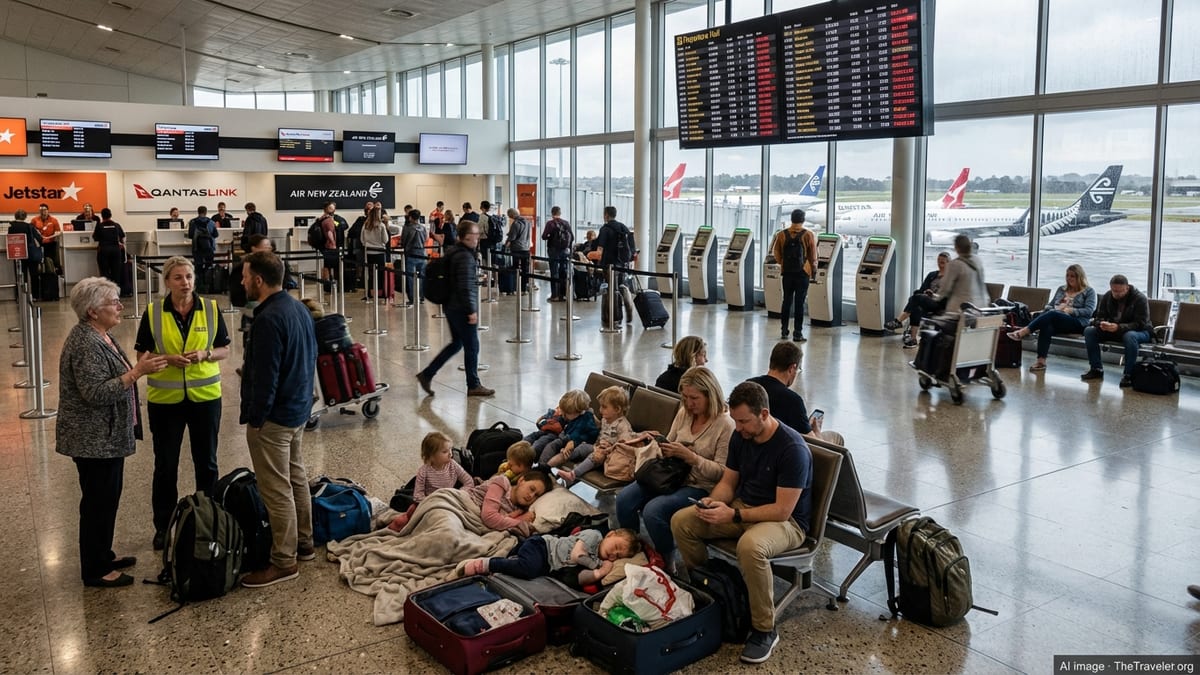
Widespread Delays Across Key Trans Tasman Hubs
Operational data compiled from airport boards and live flight tracking services indicates that the disruption stretched across both domestic and international networks, with knock on effects rippling through the day’s schedules. Short haul routes linking Wellington, Auckland and Christchurch with Sydney, Melbourne and Brisbane were among the most affected, although impacts were also visible on longer haul services connecting to North America and the Pacific.
Publicly available information shows that the bulk of the problems manifested as late departures and arrivals rather than outright cancellations. However, the cumulative effect of 463 delayed flights across the region translated into missed connections, extended waiting times and significant crowding at terminals as airlines worked to re accommodate passengers.
While individual delay durations varied, live tracking boards showed a pattern of services running between 30 minutes and several hours behind schedule at peak times. Routes already known for weather and congestion related challenges, such as Wellington to Auckland and Brisbane to Sydney, appeared particularly exposed as the day’s disruptions compounded.
In several cases, aircraft operating earlier sectors arrived late from elsewhere in the network, creating a domino effect that pushed back subsequent departures. Industry performance reports from recent months have highlighted how tightly scheduled trans Tasman operations can be vulnerable when even a small number of flights fall out of sequence.
Air New Zealand and Qantas Bear the Brunt
Air New Zealand and Qantas, as the largest operators in the New Zealand and Australian markets, shouldered a significant share of the disruption. Flight status feeds for services such as Air New Zealand’s trunk routes between Auckland, Wellington and Christchurch, and Qantas flights between Brisbane, Sydney and Melbourne, showed multiple departures flagged as delayed across the day.
According to published performance data from New Zealand’s Ministry of Transport, both airlines already contend with variable on time statistics on some trans Tasman routes, with weather, air traffic volume and operational constraints all playing a role. The latest wave of delays appears to have exacerbated these underlying pressures, particularly on sectors that typically run close to capacity.
Other carriers including Air Tahiti Nui and Delta Air Lines also experienced knock on schedule changes where their flights relied on shared airport infrastructure and air traffic slots. Long haul departures and arrivals are often timed to connect with regional feeder services, so disruption in one part of the network can quickly spread to international operations.
Airlines generally respond to this kind of congestion by prioritising the continuation of long haul services while adjusting or consolidating some shorter domestic sectors. However, given the scale of Saturday’s disruption, passengers on both regional and intercontinental flights reported extensive re timings and re routings according to social media posts and traveller forums.
Weather, Congestion and Infrastructure Under Scrutiny
Although a single overriding cause for the day’s disruption was not immediately clear, publicly accessible meteorological and transport advisories pointed to unsettled conditions in parts of New Zealand, along with strong winds and showers across sections of Australia’s east coast. Wellington in particular is known for weather related flight challenges, and recent travel commentary has noted how gusty conditions and low cloud can trigger delays and diversions at short notice.
Beyond immediate weather factors, recent aviation on time performance bulletins for the New Zealand network have underlined how limited runway capacity at major hubs, combined with tight aircraft utilisation, can leave little room to absorb unexpected shocks. Once morning services run late, the delays can cascade through afternoon and evening waves, especially on days with high passenger demand.
In Australia, government updates on wider transport resilience have also drawn attention to broader pressures on fuel supply, staffing and infrastructure. While there is no indication that any single factor fully explains Saturday’s figures, analysts regularly cite the interaction of these elements as a key reason why flight schedules across the region can rapidly shift from mostly punctual to heavily disrupted.
With both countries entering the cooler months, aviation planners typically prepare for more frequent bouts of adverse weather. Airlines and airports often encourage travellers to build extra connection time into itineraries during this period, particularly when connecting between domestic and international services at busy hubs.
Knock On Effects for International Connections
The disruption across New Zealand and Australia’s main gateways had particular implications for passengers travelling between North America, Europe and the Pacific. Carriers such as Delta Air Lines and Air Tahiti Nui rely on smooth connections at Auckland and other regional hubs to feed passengers onto onward flights, and Saturday’s delays increased the risk of missed links.
Trans Tasman sectors also function as critical feeders into long haul departures operated by Qantas and its partners from Sydney, Melbourne and Brisbane. When flights from New Zealand arrive late, passengers may find themselves rebooked onto later services or routed via alternative cities, extending overall travel times by many hours.
Travel industry commentary notes that even modest schedule changes can have outsized impacts on itineraries that involve separate tickets or complex routings. Passengers connecting from regional centres in New Zealand onto overseas flights through Auckland or Wellington, for example, can face overnight stays if last flights of the day are significantly delayed or cancelled.
Online travel forums monitored on Saturday featured multiple accounts of travellers urgently adjusting accommodation and ground transport plans in response to evolving departure boards. With 40 flights cancelled outright, some passengers were also seeking information on refund options and travel insurance coverage for disrupted journeys.
Advice for Affected and Future Travellers
Consumer guidance from aviation regulators and transport agencies in both countries generally encourages passengers to stay closely informed via airline apps and airport displays when widespread disruption occurs. On days like Saturday, same day rebooking options can change rapidly as airlines identify spare seats on later services or deploy larger aircraft to clear backlogs.
Travel advisers often recommend that passengers build additional contingency time into plans during seasons prone to weather volatility, especially for itineraries requiring a change of airport or an overnight stop. In the New Zealand context, connections that rely on Wellington can be particularly sensitive to wind and low cloud, while in Australia, afternoon thunderstorm patterns around Brisbane and Sydney are regular sources of delay.
For those whose flights are cancelled rather than delayed, standard airline policies typically provide options such as rebooking at the next available opportunity or requesting a refund. In some circumstances, national regulations may entitle passengers to claim reasonable expenses, but eligibility varies by route and cause of disruption, and travellers are usually advised to review both airline conditions of carriage and any relevant government guidance.
As airlines across New Zealand and Australia work to stabilise schedules following Saturday’s disruption, operational data over the coming days will indicate how quickly the network recovers. For now, travellers planning to pass through Wellington, Auckland, Christchurch, Melbourne, Sydney or Brisbane are being urged by publicly available advisories and travel industry commentary to monitor their bookings closely and allow extra time for potential changes.