


More news on this day
Travelers at Philadelphia International Airport faced widespread disruption on Saturday as publicly available tracking data showed 184 delayed and 9 cancelled flights affecting carriers including Delta Air Lines, Southwest, United, Frontier and regional operator Jazz, with knock-on impacts reported across the United States, Canada, the United Kingdom, Ireland, the Netherlands and Switzerland.
Get the latest news straight to your inbox!
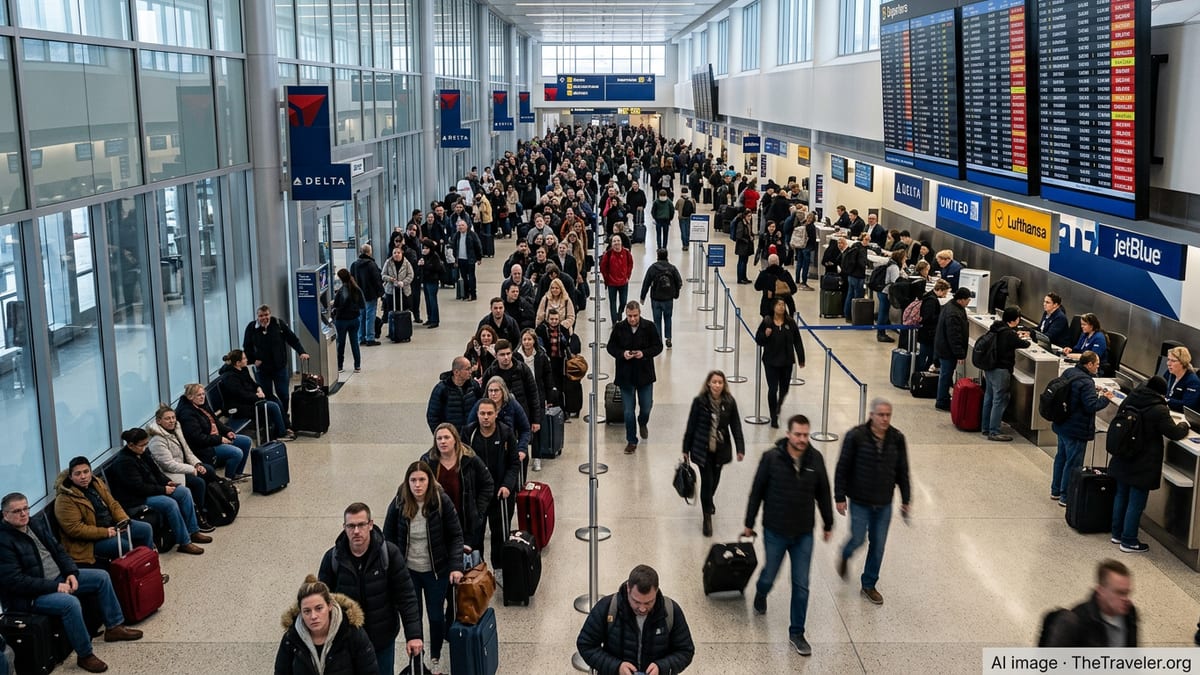
Philadelphia Hub Sees Morning Operations Slow Dramatically
By mid-morning on June 20, departure and arrival boards at Philadelphia International Airport reflected a sharp slowdown in operations, with dozens of services showing late departures and extended ground holds. The disruption encompassed both domestic and international routes, hitting passengers booked on major U.S. carriers as well as codeshare and regional partners.
Tracking portals indicated that the backlog built steadily through the early hours, with routine early departures slipping behind schedule and recovery proving difficult as aircraft and crew cycles were disrupted. The figures of 184 delayed and 9 cancelled flights represent a significant share of the airport’s daily schedule, particularly for a busy summer weekend when load factors are typically high.
The timing of the disruption posed particular challenges for connecting passengers who rely on Philadelphia as a transfer point. Many itineraries through the hub are constructed with relatively tight layovers, and even modest delays can cause missed onward connections when disruption spreads across multiple airlines and terminals.
While individual flight pages listed specific late departures and occasional cancellations, the broader pattern pointed to system strain rather than an isolated airline issue. Large network carriers, low cost operators and regional affiliates all appeared among the disrupted services, adding complexity for travelers attempting to rebook.
Major U.S. Carriers Among Those Most Affected
Data from flight-status platforms showed delays across a range of carriers, including Delta Air Lines, Southwest Airlines, United Airlines and Frontier Airlines, along with regional operator Jazz that connects Canadian cities into U.S. hubs. The breadth of airlines involved underlined that the disruption was not confined to a single route network or operational model.
For full-service carriers such as Delta and United, late-running narrowbody aircraft on domestic legs can quickly translate into further delays for subsequent flights, particularly when aircraft are scheduled to continue on to transatlantic or transborder services. Once rotations start to slip, airlines often struggle to recover on the same operating day without resorting to selective flight cancellations.
Southwest and Frontier, which follow point-to-point and high-utilization models, face different constraints when a large number of their departures are delayed. Because their schedules rely on quick turnarounds and closely timed sequences, an extended ground delay in one city can propagate through multiple subsequent flights, affecting passengers far beyond the original airport.
Regional carrier Jazz, which feeds Canadian passengers into U.S. hubs for onward connections, has a prominent role in linking smaller cities to international gateways. Disruption on regional segments can strand passengers at intermediate points or cause missed long-haul departures, particularly when alternative services operate only once or twice daily.
Ripple Effect Extends Across North America and Europe
The high number of delayed and cancelled flights at Philadelphia translated into missed connections and rebookings across a broad geographic area, according to publicly available schedules and tracking data. Routes within the United States experienced immediate knock-on delays as aircraft and crew struggled to reposition, while transborder services to Canada also reported slippage.
Transatlantic itineraries involving the United Kingdom and Ireland were particularly vulnerable. Many passengers traveling between secondary U.S. cities and European destinations depend on Philadelphia as a connecting point, and delayed feeder flights can leave them missing the limited number of daily crossings. Even when long-haul services depart, they can be held for late-arriving connections, adding further minutes or hours to the delay tally.
Links to continental Europe, including the Netherlands and Switzerland, also experienced disruption on itineraries that route via Philadelphia. When a U.S. hub encounters a large volume of delays, downstream effects can be felt at European airports later in the day, as aircraft arrive off-schedule and ground handlers and border facilities face surges of late passengers.
Published coverage of similar events in previous years indicates that summer travel patterns amplify these ripple effects. High load factors limit the number of spare seats available on alternative services, making it harder for affected passengers to be accommodated quickly and often forcing overnight stays or rerouting via other hubs.
Weather, Congestion and System Constraints Under Scrutiny
While a precise, single cause for Saturday’s disruption at Philadelphia had not been identified in early tracking data, the pattern of delays was consistent with a mix of factors typically observed in peak travel periods. Aviation performance reports from the U.S. Department of Transportation describe how non-extreme weather, traffic-volume restrictions and air traffic management measures can combine with airline-controlled factors such as maintenance and crew availability to generate large clusters of delays.
During the summer, convective weather and fast-changing storm systems in the U.S. Northeast can trigger flow-control programs that slow arrivals and departures at major airports. Even when such measures are temporary, they may reduce the number of aircraft movements permitted per hour, leading to queues on taxiways and ultimately to missed departure slots for flights bound for international destinations.
Operational data from previous years show that airlines balance competing pressures during such events. Keeping long-haul flights operating may require holding short-haul services on the ground or cancelling them altogether in order to free up aircraft and crew. This can concentrate the impact on travelers using regional links, even if headline figures also show disruption on flagship routes.
Infrastructure constraints at busy hubs can also limit recovery options. Gate availability, ground-handling capacity and security and customs processing create additional bottlenecks once traffic falls significantly behind schedule, slowing turnaround times and complicating efforts to bring departure and arrival boards back to normal.
Passengers Confront Long Waits and Limited Options
For the thousands of travelers passing through Philadelphia International Airport, Saturday’s disruption translated into hours of waiting, extended time in terminal areas and uncertainty over revised departure times. In many cases, travelers were required to re-clear security after rebooking or to seek assistance at airline service desks that quickly accumulated lines.
Experience from similar disruption events suggests that passengers on separate tickets or complex itineraries are often among the most affected, particularly when their journeys span multiple airlines and alliances. When tight minimum connection times are exceeded by rolling delays, these travelers may find that protection and rebooking options vary widely depending on the ticket type and carrier policies.
Consumer information published by transportation agencies emphasizes that the reasons behind a delay or cancellation can influence what assistance passengers receive, including meal vouchers, hotel accommodation or refunds. Distinctions between delays attributed to airline-controlled factors and those linked to broader airspace or weather-related constraints can be significant when travelers seek compensation or alternative arrangements.
Observers note that days with widespread delays at a major hub often prompt renewed calls for clearer communication and more proactive customer-service measures during irregular operations. With the busy summer travel season under way, the disruption at Philadelphia serves as another reminder of how quickly localized issues can escalate into a network-wide challenge for North American and transatlantic air travel.