


More news on this day
Travelers on a regional SkyWest service between Detroit and Buffalo faced unexpected disruption when Flight SKW3636, operated by a Bombardier CRJ-900, abandoned its route and executed a dramatic return to Detroit Metropolitan Wayne County Airport, triggering a wave of missed connections and last-minute rebooking across the busy corridor.
Get the latest news straight to your inbox!
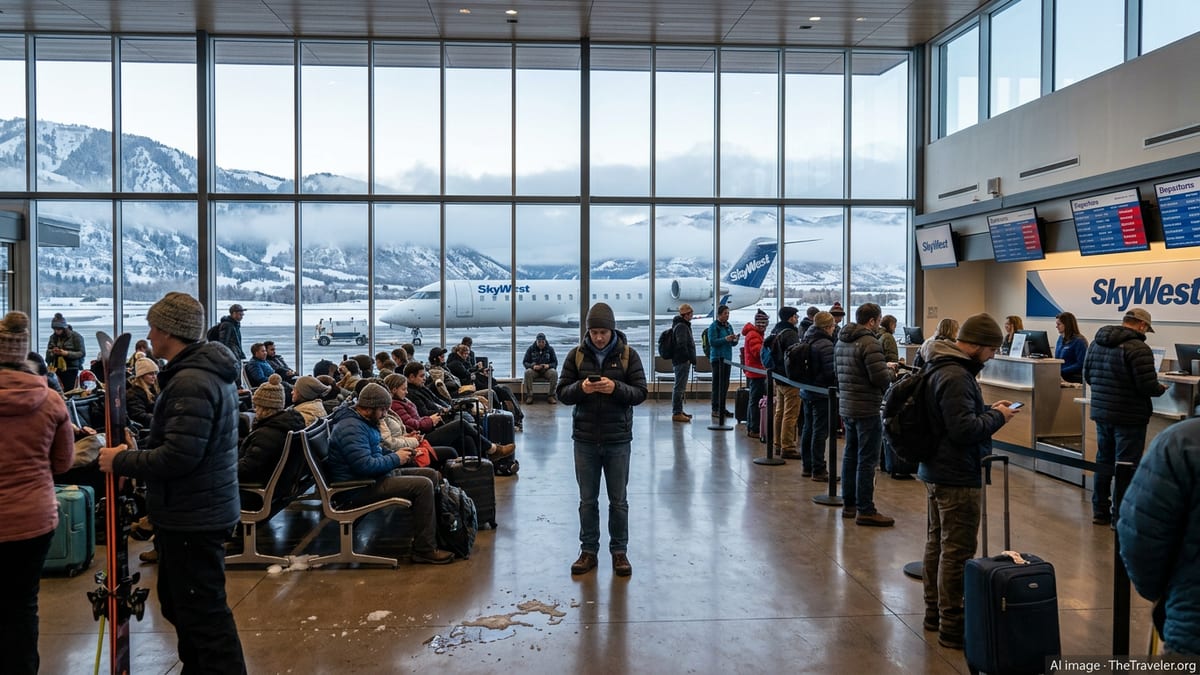
Midroute Turnback Disrupts Detroit to Buffalo Corridor
Publicly available flight-tracking data indicates that SkyWest Flight SKW3636 departed Detroit for Buffalo as scheduled before performing an abrupt turnback and returning to Detroit instead of continuing to western New York. The flight, operated on a Bombardier CRJ-900 regional jet under a major-carrier code-share, completed a loop back to its origin, landing safely but leaving passengers without a direct path to Buffalo.
Routing data shows that the aircraft climbed out normally from Detroit, then leveled and reversed course partway along the short hop to Buffalo. There have been no immediate indications of a serious in-flight emergency, and early tracking records suggest the return was controlled and orderly rather than involving rapid descent or diversion to an alternate airport.
The Detroit Buffalo route is a key feeder segment for connections across the Midwest and East Coast. Any disruption on this relatively short sector can quickly cascade into a larger network problem, particularly for travelers relying on tight connection windows, limited evening frequencies, or onward international departures.
Travel Chaos for Passengers as Options Narrow
The sudden cancellation of the Buffalo leg left passengers facing a familiar yet frustrating scenario: long queues at customer-service desks, pressure to secure scarce seats on later departures, and a scramble to rebook through other hubs such as New York or Chicago. Travelers connecting in Buffalo for regional driving itineraries across upstate New York and southern Ontario found themselves especially squeezed, with limited late-night ground transport options and tight hotel availability around major airports.
Published coverage of similar regional turnbacks shows that when a short-haul route is interrupted, airlines often prioritize rebooking onto the next available flight operated by the same partner, but capacity on 76 to 90 seat regional jets can vanish quickly. On busy travel days, this can mean some customers are pushed to flights the following morning, with knock-on effects for business meetings, family events, and vacation plans.
Passengers on SKW3636 faced an added complication because Detroit and Buffalo are both spoke airports for many regional carriers, not large-scale hubs with unlimited spare aircraft. Once the CRJ-900 returned to Detroit and the Buffalo segment was abandoned, there was little slack capacity in the schedule to absorb dozens of displaced travelers at short notice.
CRJ-900 Turnback Highlights Regional-Jet Vulnerabilities
The aircraft involved in the incident, a Bombardier CRJ-900, is a workhorse of the North American regional fleet. It typically seats around 76 to 90 passengers in a mixed-class configuration and operates short to medium-stage lengths on behalf of major brands. While the type enjoys a broadly solid safety record, operational data shows that regional jets like the CRJ-900 are especially sensitive to small technical issues, changing weather conditions, and air-traffic constraints because of the tight, high-frequency schedules they maintain.
When an aircraft such as a CRJ-900 returns to its origin after departure, publicly accessible aviation databases frequently categorize the event as an air turnback or precautionary return. Many such events ultimately trace back to minor technical alerts, weather-related reductions in landing margins at the destination, or operational considerations such as crew duty-time limits, rather than a single dramatic emergency. Even so, the effect on passengers is similar: an abrupt end to a planned journey and uncertainty about when they will actually reach their destination.
Fleet and schedule information for SkyWest and its major partners shows that Detroit and Buffalo typically see a modest number of daily regional jet rotations, not the dense shuttle-style frequencies common on larger trunk routes. That means a single disrupted flight can represent a significant share of daily capacity, magnifying the impact of any operational hiccup on that city pair.
Detroit and Buffalo Rebooking Challenges Ripple Out
In the hours after SKW3636’s return to Detroit, the disruption likely rippled through both airports. At Detroit Metropolitan Wayne County Airport, passengers seeking alternatives to Buffalo would have looked to remaining same-day departures or to itineraries routed through other hubs where SkyWest and its partners maintain larger operations. Because many regional flights feed onward narrow-body or wide-body services, missed connections out of Detroit can translate into a chain reaction of rebookings across multiple domestic and international destinations.
In Buffalo, the absence of the inbound segment had its own consequences. Ground transport providers and airport-side hotels often see sudden shifts in demand when a flight is canceled or fails to arrive, with some travelers choosing to reroute to other New York airports such as Rochester or Syracuse and continue by car. Published accounts from past disruptions on the Detroit Buffalo corridor show that travelers sometimes opt to rent vehicles and drive the roughly 250-mile distance rather than wait for limited replacement flights.
For airport operations teams, a return-to-origin event can mean juggling gate assignments, towing equipment, and crew schedules at short notice. Although the flight landed back at Detroit, any downstream leg planned for the aircraft and crew may also have required rescheduling, potentially adding more canceled or delayed flights into the system later in the day.
Questions Over Reliability on Short Regional Routes
The SKW3636 episode adds to a growing conversation about the reliability of short regional routes across the United States. Aviation performance data gathered over recent years shows that routes under 300 miles, especially those operated with regional jets, can exhibit higher rates of delay and cancellation compared with longer mainline sectors, in part because there is less buffer time in the schedule and fewer backup aircraft available.
In markets like Detroit Buffalo, where many travelers are connecting to or from larger hubs, a single disruption can feel disproportionately severe. A missed evening arrival might mean lost hotel nights, rescheduled meetings, or additional ground transport costs. These knock-on effects have led some travelers to rethink whether to rely on short regional hops or opt for direct driving when distances allow.
For SkyWest and its major-airline partners, maintaining reliability on routes like SKW3636 is increasingly important as passengers weigh convenience against perceived risk of disruption. While publicly available information at this stage points to a controlled and safe return to Detroit by the CRJ-900, the abandoned Buffalo leg has again highlighted how even routine precautionary actions in the cockpit can cascade into full-blown travel chaos for passengers on the ground.