


More news on this day
Slovakia is moving to ease pressure on its busiest railway corridor, rolling out capacity upgrades and new operating patterns on the main line linking Bratislava with Trnava and the country’s northern cities.
Get the latest news straight to your inbox!
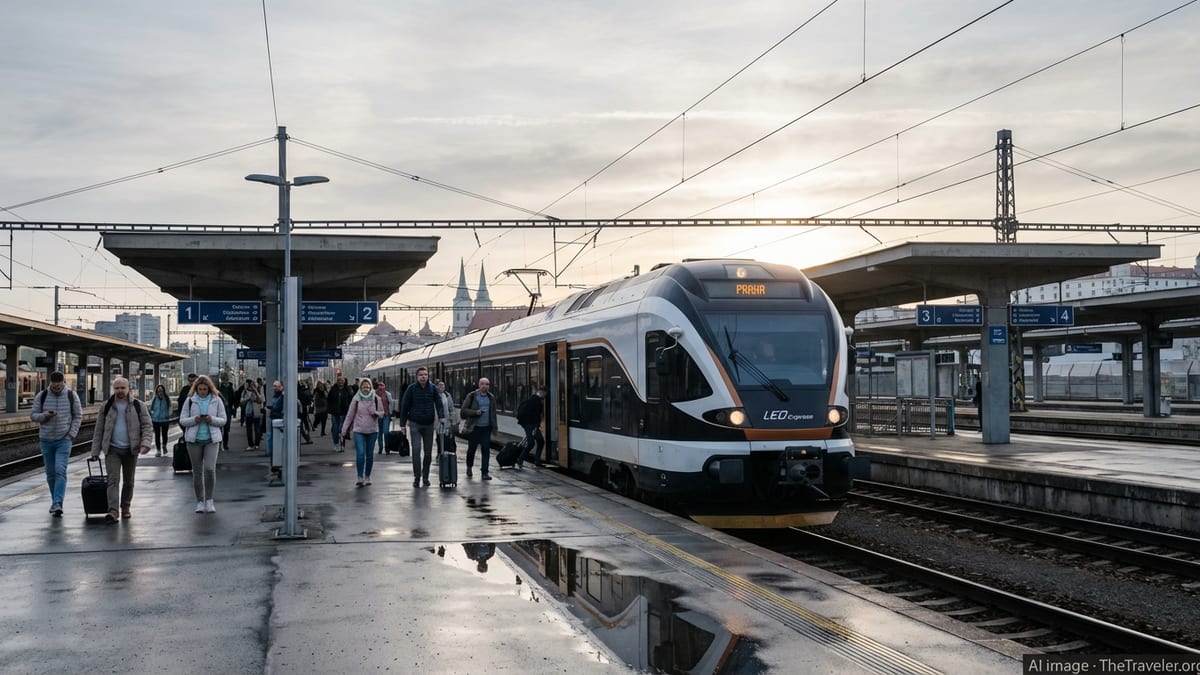
Key project finishes on Bratislava–Rača to Leopoldov section
Publicly available information from infrastructure manager Železnice Slovenskej republiky indicates that a major project to increase capacity on the Bratislava–Rača to Leopoldov section was completed in June 2026. The route forms the western core of the east–west trunk line that carries intercity, regional and freight traffic across the country.
The works focused on upgrading signaling, interlockings and track layouts to shorten headways and allow more trains to run in the same time window. According to published coverage, modern electronic systems have replaced older technology on several stations and line sections, enabling more flexible routing of both passenger and freight services.
The project, which had been highlighted in earlier capacity strategies as a priority, was designed to unlock additional train paths at peak hours. Modernization of junctions around Bratislava and Rača is expected to reduce bottlenecks where suburban services, long distance expresses and freight trains converge on the approach to the capital.
Completion of the Bratislava–Rača to Leopoldov upgrade also creates a technical basis for future timetable changes. Railway planners are expected to use the enhanced infrastructure in coming working timetables to refine departure patterns and introduce additional peak services on the most crowded sections.
Timetable and rolling stock changes on the busiest line
The main corridor between Bratislava, Trnava, Žilina and Košice has seen demand grow steadily in recent years, supported by regular interval express services and integrated regional connections. Regional media reports describe the Bratislava–Žilina–Košice axis as the country’s most heavily used rail route, with trains often running close to capacity on weekends and holidays.
To respond, operators have been strengthening individual services with extra coaches on peak dates, particularly around Easter and other holiday periods. Coverage from outlets in the Žilina region notes that flagship expresses such as Ex Tatran and Ex Kriváň between Košice and Bratislava have been lengthened to cope with high passenger numbers.
The line has also benefited from an hourly express pattern introduced in late 2024 on the Bratislava–Žilina–Košice route, supported by modernized infrastructure on several corridor segments. Timetable enthusiasts and passenger groups point out that this regular-interval structure allows easy transfers at key nodes and makes rail more competitive with road transport.
Railway plans discussed in public documents suggest that the latest capacity improvements west of Trnava will permit further fine tuning of these patterns. Additional regional services may be slotted between long distance trains where infrastructure and demand allow, particularly in the dense commuter belt around the capital.
Reconstruction impacts around Bratislava and Trnava
The increased capacity is coming alongside temporary disruption on the same corridor. Announcements from integrated transport coordinators in the Bratislava region show that from February to June 2026 a significant line possession between Bratislava and Trnava has affected all trains on this stretch, requiring timetable adjustments and replacement arrangements on some connecting bus routes.
These works are part of a broader effort to modernize the rail approaches to Bratislava, upgrade stations and prepare the network for future European Train Control System equipment. According to planning documents on the national transport strategy, the broader Bratislava rail node is earmarked for a comprehensive modernization program starting in 2026 and extending into the next decade.
In the short term, passengers on the busiest line are experiencing longer journey times and occasional capacity constraints as tracks and signaling are renewed. However, infrastructure managers emphasize in public materials that staging the works now is essential to avoid more serious bottlenecks in the future as traffic volumes continue to rise.
Once construction-related restrictions are lifted, the upgraded section between the capital and Trnava is expected to accommodate a combination of fast intercity services, stopping regional trains and substantial freight flows with fewer conflicts than today.
Modernisation along the wider Bratislava–Žilina corridor
The capacity boost on the Bratislava–Trnava axis is only one element of a long running modernization of the entire corridor toward Žilina. Earlier projects have already upgraded several segments to higher speeds and improved reliability, including work between Púchov and Považská Teplá and extensive reconstruction in and around Žilina.
European rail corridor implementation plans and Slovak infrastructure strategies describe the Bratislava–Žilina–Košice line as part of a key trans-European freight and passenger route linking Central and Eastern Europe. Investment has focused on raising line speeds, strengthening track for heavier axle loads, and installing modern signaling systems compatible with European standards.
In Žilina, a multi year modernization of the railway node has reconfigured platforms, underpasses and approach tracks to increase throughput and improve passenger interchange. Public information shows that this project, together with electrification and power supply upgrades, is scheduled to reach final stages around 2026, closing one of the remaining gaps on the corridor.
As more of these schemes come online, infrastructure planners expect smoother operations across the entire route. Shorter journey times, better punctuality and additional capacity should make it easier to maintain hourly or better frequencies on long distance services without sacrificing regional connections.
What the changes mean for travellers
For passengers, the most visible impact of the capacity increases is likely to be more frequent and less crowded trains at peak times on the Bratislava–Trnava–Žilina line. With modern signaling allowing shorter gaps between services, operators have more flexibility to add trains in the busiest morning and evening windows.
Improved junction layouts and station facilities also play a role. Upgrades in and around Bratislava and Žilina are designed to simplify transfers between long distance, regional and suburban services, reducing missed connections and easing congestion on platforms.
Travelers may also benefit from greater resilience when disruptions occur. With more crossovers, parallel tracks and modern control systems, dispatchers have additional options to reroute services around incidents, which can limit knock on delays on such a heavily used corridor.
While some construction related disruptions will continue in the short term, the combination of recent project completions and ongoing works suggests that Slovakia’s busiest railway line is entering a new phase. The network is being reshaped to handle higher volumes of both daily commuters and long distance travellers, positioning rail as a central pillar of the country’s transport system in the years ahead.