


More news on this day
South Korea is facing a fresh wave of air travel disruption after more than 60 flights were cancelled in a single day, interrupting key connections operated by Korean Air, Delta Air Lines, Lufthansa, China Eastern and other carriers on routes to Shanghai, Beijing, Frankfurt, Seattle and several regional hubs.
Get the latest news straight to your inbox!
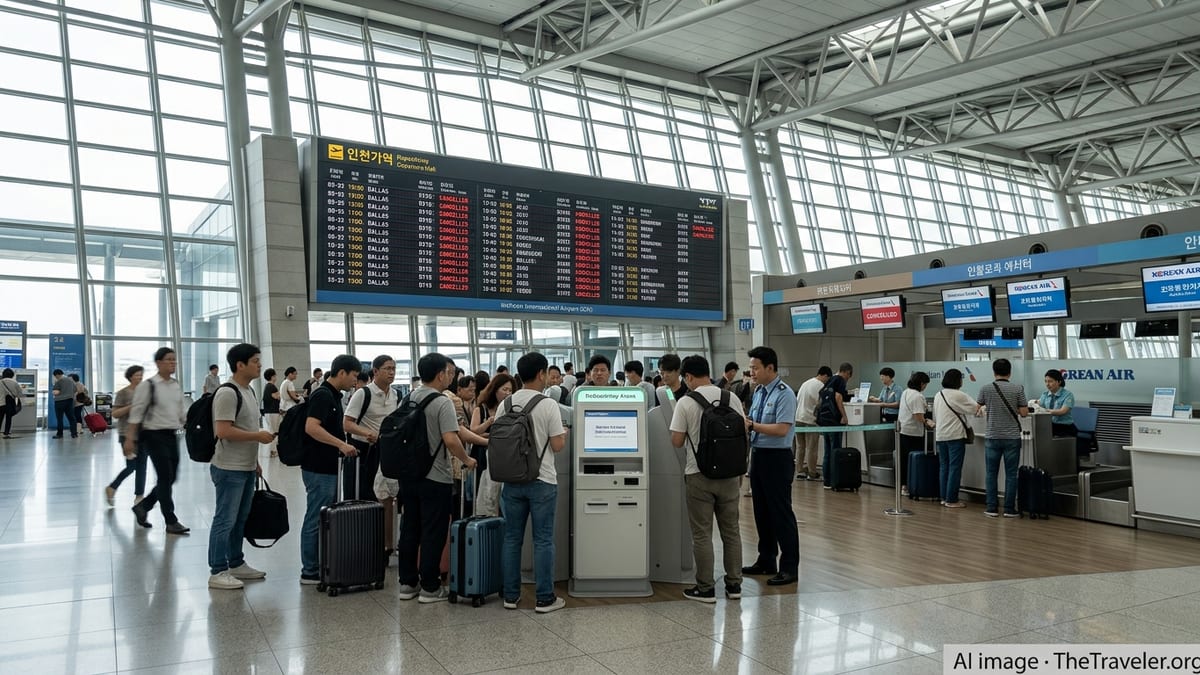
Cancelled Flights Hit Major Korean Gateways
According to recently published disruption tallies, the latest cancellations are concentrated at Seoul Incheon and Gimpo, with knock-on effects at Busan and Jeju. More than 60 affected flights in one day have removed capacity on a mix of long-haul, regional and domestic services, stranding passengers and compressing available seats on remaining departures.
Reports indicate that Korean Air has been among the most affected operators, with a series of cancellations impacting links between South Korea and Mainland China as well as intra-Asian and domestic routes. China Eastern flights touching South Korean airports have also been listed in the disruption data, particularly on services connecting to Shanghai and other major Chinese hubs.
Foreign carriers are part of the picture as well. Delta Air Lines, which partners closely with Korean Air on transpacific services, has seen cancellations that affect itineraries connecting South Korea with US cities such as Seattle and Detroit. Lufthansa operations between Seoul and Germany have also been disrupted, reducing direct connectivity to Frankfurt and Munich on specific days.
These flight cuts arrive amid a broader pattern of operational strain across Asian aviation, where a mix of capacity adjustments, crew availability, weather and regional airspace constraints has been contributing to recurring waves of cancellations and delays.
Key International Routes Disrupted: Shanghai, Beijing, Frankfurt and Seattle
The most recent figures highlight a cluster of cancelled flights on trunk routes linking South Korea with key gateways in China, Europe and North America. Services from South Korea to Shanghai and Beijing have been particularly exposed, affecting both leisure and business travellers who rely on these corridors for onward connections throughout Mainland China.
On the transpacific side, the cancellations have hit itineraries that rely on the Korean Air–Delta joint network via Seoul. Passengers booked between South Korea and US cities such as Seattle and Detroit are among those facing last-minute schedule changes, re-routings through alternative hubs or extended layovers as they wait for available seats on remaining services.
Lufthansa’s presence on the Seoul–Frankfurt and Seoul–Munich routes means that cancellations on these flights ripple into Europe-bound travel plans. Travellers connecting in Frankfurt to onward destinations across the continent may find their original itineraries invalidated, requiring rebooking on later departures or different hubs.
Publicly available operational snapshots also flag disruptions on other regional links from South Korea to destinations including Taipei, Kaohsiung and Guam, reinforcing the sense that the current wave extends well beyond a single country pair or airline.
Why This Wave of Cancellations Matters for Travellers
Industry data and recent regional coverage suggest that these South Korea cancellations are part of a wider pattern of volatility across Asian air networks in April 2026. Large day-to-day swings in schedules, including hundreds of cancellations and thousands of delays across the region, are creating an environment in which itineraries that once felt predictable now require closer monitoring.
For passengers, the practical impact goes beyond a single cancelled flight. When a Seoul–Shanghai or Seoul–Frankfurt sector drops out of the timetable, connecting legs on other airlines may become unusable, leaving travellers scrambling for alternatives. This is especially acute where long-haul flights are fully booked or where capacity between Asia, Europe and North America remains carefully managed.
Frequent flyers and corporate travel managers are paying close attention because reduced reliability on key routes can affect everything from business itineraries and meetings to cargo movements and time-sensitive shipments. Even when travellers are rebooked, they may face overnight stays, added costs and extended travel times through substitute hubs.
The disruption also highlights the tight interdependence created by global alliances and joint ventures. When one partner carrier like Korean Air or Delta adjusts schedules, ripple effects can quickly touch itineraries that also involve China Eastern, Lufthansa or other alliance members on adjacent legs.
What Passengers Flying via South Korea Should Do Now
With cancellations affecting a mix of domestic, regional and long-haul flights, travellers with upcoming trips touching South Korea are being urged by public travel advisories and industry coverage to monitor their bookings more actively than usual. Same-week and even same-day schedule changes have become more common, particularly on routes linking Seoul with Chinese and European hubs.
Passengers are advised to keep a close eye on airline notifications in the 24 to 48 hours before departure and to regularly check flight status tools provided by carriers and airports. If a flight is cancelled, many airlines are currently offering options such as free date changes, alternative routing via partner hubs or refunds, depending on the fare type and regulations that apply to the journey.
Travel planners suggest building extra buffer time into itineraries that involve tight connections through Incheon or other busy hubs, especially when travelling onward to cities such as Shanghai, Beijing, Frankfurt or Seattle where capacity may already be constrained. Booking slightly longer layovers can provide a margin of safety if inbound flights are delayed or re-timed.
Those with essential travel, including business or family emergencies, may want to consider flexible tickets or routes that offer multiple daily frequencies, which can make same-day reaccommodation more feasible if a specific flight is removed from the schedule.
Broader Trend of Regional Flight Volatility
Recent travel-industry reports paint the current South Korean disruptions as part of a broader, rolling pattern of instability across Asian skies this month. Other snapshots from around the region have recorded hundreds of cancellations and several thousand delays in single-day periods across countries such as China, Japan, Singapore, Thailand and the United Arab Emirates, affecting airlines ranging from full-service carriers to low-cost operators.
In this context, the more than 60 cancelled flights tied to Korean Air, Delta, Lufthansa, China Eastern and other airlines in South Korea are another indicator that the regional recovery in air travel remains uneven. Operational resilience is being tested by a combination of high demand, tight capacity, complex airspace constraints and continuing logistical challenges.
For South Korea specifically, the situation underlines the importance of its role as a transfer hub connecting North America, Europe and Asia. When disruptions hit Incheon and other Korean airports, the impacts are felt across multiple continents, with travellers from far beyond the region suddenly caught up in cascading schedule changes.
As April progresses, aviation analysts and travel publications are closely watching whether cancellations in South Korea and neighboring markets ease or whether further waves of disruption will continue to shape flight schedules through the coming weeks.