


More news on this day
Travel between South Korea and major North American hubs is facing fresh disruption as a series of cancellations and schedule cuts by Air Canada, Air India, American Airlines and United Airlines affect routes touching Vancouver, Delhi, Dallas Fort Worth, San Francisco and other key gateways.
Get the latest news straight to your inbox!
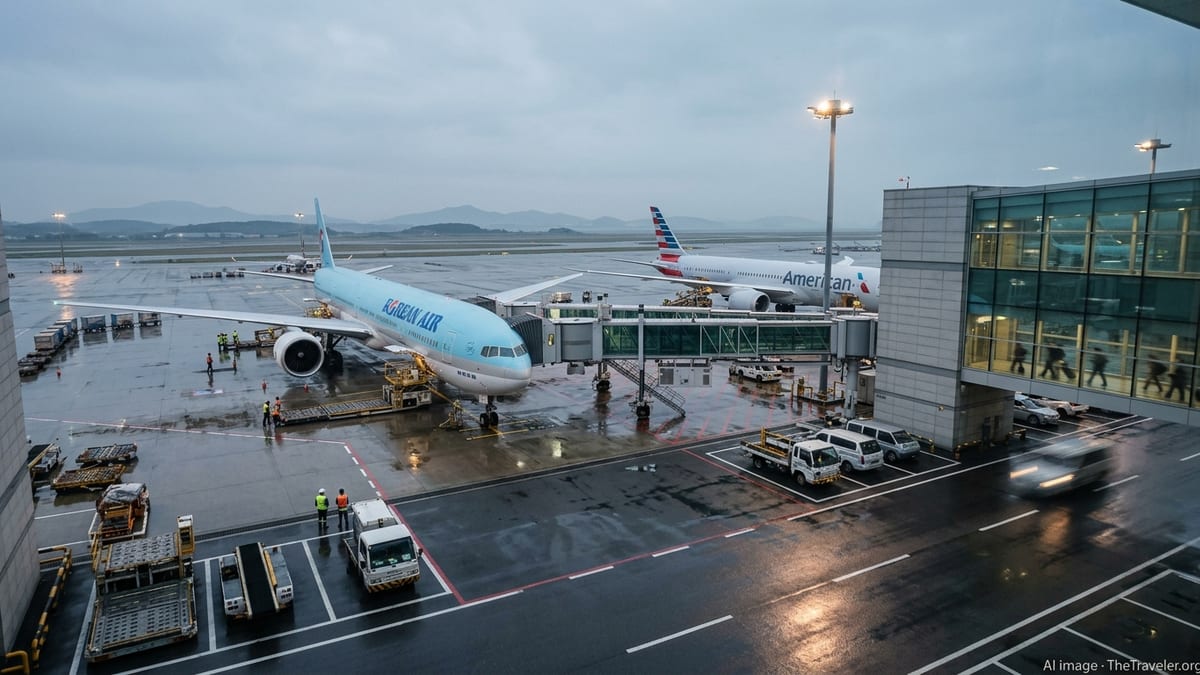
Targeted Cancellations Ripple Across Transpacific Networks
Publicly available schedules and recent coverage indicate that several long haul links connecting South Korea to North America have been thinned out in late May 2026, with at least five individual flights canceled or removed from near term timetables. The changes are concentrated on routes involving Seoul Incheon, Delhi, Vancouver, Dallas Fort Worth and San Francisco, all of which serve as major connection points for travelers between Asia and the Americas.
In many cases, the disruption does not amount to a full suspension of a city pair, but rather to the removal of selected frequencies on already busy corridors. That pattern is most visible on India North America services that funnel passengers through South Korea or onward transpacific hubs. While aircraft continue to operate on core days, travelers who had booked on trimmed departures are being shifted to alternative flights or asked to rebook altogether.
For passengers, this combination of outright cancellations and quiet schedule reductions can feel similar, particularly where an affected flight had been the only convenient same day option that aligned with onward connections in Canada or the United States.
With airlines still selling seats across their online platforms, experts tracking timetables stress that anyone traveling in late May and June on multi leg itineraries touching South Korea should recheck their booking reference and not rely on older confirmation emails.
Air India Cuts Delhi Links to Vancouver and San Francisco
The most detailed recent information concerns Air India, which has initiated a significant summer adjustment across its long haul network. According to Indian business press reports and airline industry analysis, Air India is temporarily suspending some nonstop services between Delhi and U.S. cities while cutting weekly frequencies to both San Francisco and Vancouver through at least August 2026.
On the west coast, Delhi San Francisco flights that had operated up to ten times per week are being reduced to seven weekly services, effectively canceling three rotations in the schedule and shrinking options for travelers using San Francisco to connect onward across the United States. The move impacts passengers who had built itineraries through South Korea or Southeast Asia that relied on the former pattern of near daily departures and additional peak day flights.
In Canada, Air India’s Delhi Vancouver route is shifting from a daily schedule to five flights per week. That implies at least two weekly cancellations relative to the previous timetable and narrows choices for travelers between western Canada, India and wider Asia. Combined with recent steps to pause other North American routes, particularly Delhi Chicago, the cuts are reshaping how India based travelers access connecting points toward South Korea and beyond.
Online discussion forums focused on Air India report that some passengers with June and July tickets have been notified of rerouting or flight removal, while others only discovered changes when checking their reservations. Travel agents are advising affected customers to secure alternative options quickly, as peak summer seats on remaining nonstops are tightening.
American and United Adjust Seoul Links to Dallas and San Francisco
North American carriers are also fine tuning their Seoul Incheon operations. Flight tracking data for American Airlines flight AA280 on the Seoul Incheon to Dallas Fort Worth route shows normal operations up to and including May 25 2026, but recent updates to some booking engines and timetable displays signal isolated cancellations on specific operating days into early June.
For travelers connecting through Dallas Fort Worth, the impact is most acute for those with tight onward connections to Latin America or secondary U.S. cities. When a single long haul leg such as Seoul Dallas is withdrawn for a day, rebooking often pushes passengers onto itineraries via other hubs such as Los Angeles, Chicago or San Francisco, sometimes adding many hours of travel time.
United Airlines continues to showcase its Seoul Incheon to San Francisco service in schedules and fare displays, but day by day flight status pages have reflected at least one recent date where a regularly timed departure was removed and passengers were moved to nearby options. Industry observers describe these as tactical cancellations driven by aircraft positioning and demand patterns rather than a long term retreat from the route.
Because both American and United sell large volumes of connecting traffic over their U.S. hubs, even a handful of South Korea related cancellations can strand travelers booked on complex, multi segment trips, especially when those journeys also rely on partner airlines within Asia.
Air Canada Capacity Pressures Touch Vancouver and Beyond
Air Canada’s global network has come under renewed pressure from higher jet fuel prices and lingering supply chain constraints. Recent Canadian media coverage notes that the carrier has suspended or thinned out several routes described as no longer economically feasible, particularly where alternative services or alliance partners can partially backfill capacity.
While much of the attention has centered on suspensions from Toronto and Montreal to New York area airports, the same fleet and staffing constraints influence how many seats Air Canada can offer on long haul and transpacific services connected to its Vancouver hub. Industry forums dedicated to Canadian aviation have highlighted that reductions on certain domestic and regional routes feeding Vancouver can indirectly affect connectivity for passengers continuing onward to and from Asia, including South Korea.
For travelers, that can manifest as unexpected changes to a single flight leg rather than a headline grabbing withdrawal of an entire route. Affected itineraries may see a Vancouver departure canceled on a given day, forcing a switch either to a different time or to a partner operated service via another Canadian or U.S. gateway.
Travel analysts point out that Vancouver’s role as a bridge between Asia and secondary cities in Canada and the United States means that even limited cuts are felt widely in booking patterns, as passengers search for replacement options that preserve existing vacation dates and hotel reservations.
What Travelers Should Do If Their Flight Is Affected
The changing picture across Air India, Air Canada, American Airlines and United Airlines underscores how quickly long haul schedules can shift, even after tickets are purchased. Travelers planning journeys that involve South Korea and major North American hubs are being urged by travel advisers and consumer advocates to monitor their bookings closely in the days leading up to departure.
The first step is to log in directly to the airline’s website or mobile app and verify that all flight numbers and times remain confirmed. Third party booking confirmations or screenshots taken weeks earlier may no longer reflect the latest adjustments. Where a flight has been canceled, travelers are typically entitled to a rebooking on the next available service or a refund, subject to the fare rules and the jurisdiction of departure.
Passengers with tight connections via Vancouver, Delhi, Dallas Fort Worth or San Francisco should pay particular attention to minimum connection times. When a long haul leg is shifted to a different day or time, it can break the legal connection to a separately booked short haul segment, leaving the traveler responsible for changes to the latter.
Given that summer is approaching peak travel season across the North Pacific, remaining nonstop seats are likely to sell quickly. Industry commentary suggests that travelers who discover changes to their flights should act promptly, as waiting even a few days may mean fewer rebooking options and higher fares on competing services.