


More news on this day
Travelers on key Middle East and Europe routes faced fresh uncertainty this week after three short-notice flight cancellations at Cairo International Airport affected Air France service to Paris Charles de Gaulle and Royal Jordanian operations to Amman.
Get the latest news straight to your inbox!
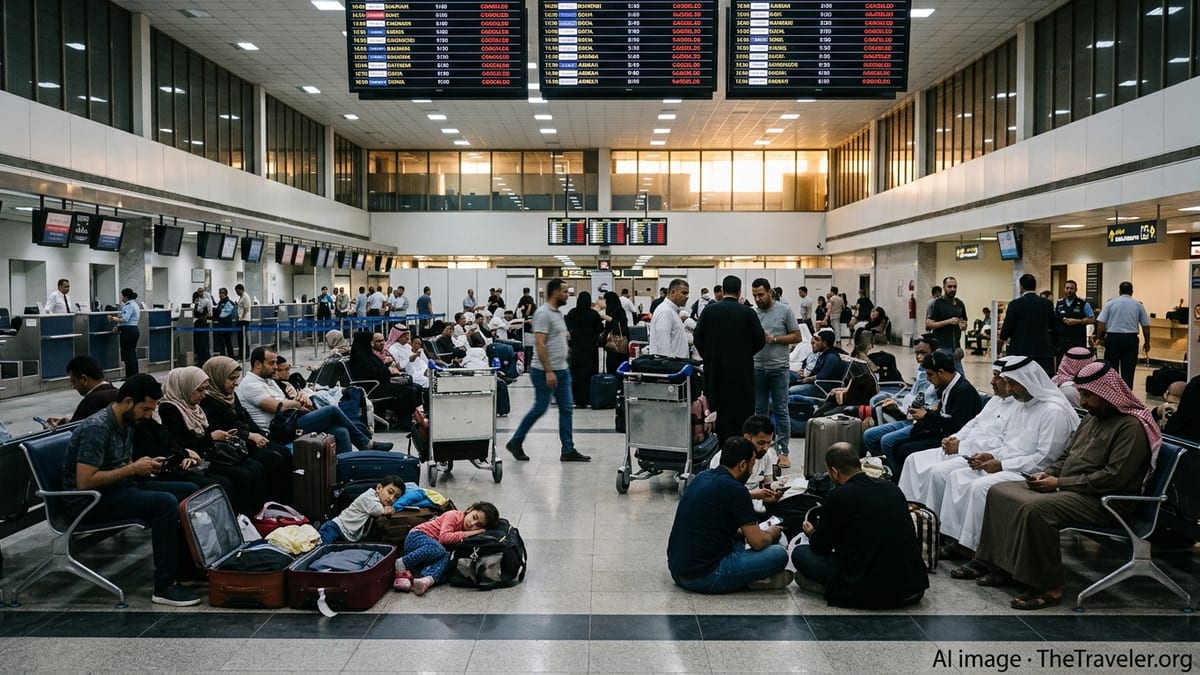
Disruption Hits Paris and Amman Links From Cairo
According to published schedule data and real-time tracking tools, a cluster of cancellations at Cairo International Airport disrupted at least three departures and arrivals involving Air France and Royal Jordanian on routes to Paris Charles de Gaulle and Amman’s Queen Alia International Airport. The disruption emerged over a 24 to 48 hour window at the start of the week, coinciding with a busy late-May travel period and adding pressure on already constrained regional connectivity.
Publicly available information indicates that an Air France service on the Paris Charles de Gaulle to Cairo route, which normally operates as AF570/AF567 in each direction, was withdrawn from operation on one of its scheduled days, with the corresponding return sector also removed. On the Jordanian side, at least one Royal Jordanian rotation between Cairo and Amman was cancelled at short notice, interrupting a route that is normally served multiple times per day by several carriers.
Real-time flight status portals showed affected Cairo departures as cancelled close to, or on, the day of travel, leaving some passengers reliant on last-minute rebooking, connection changes or overnight stays. While the majority of services on the same city pairs continued to operate, the small cluster of cancellations was enough to cause missed onward connections and extended journey times for some travelers.
Limited Transparency on Causes as Airlines Adjust Operations
As of publication time, no detailed public explanation had been posted on the main consumer channels of Air France or Royal Jordanian specifically addressing the Cairo cancellations. Industry reference material on both airlines notes that schedules can be adjusted for a wide range of reasons including operational constraints, aircraft rotation, crew availability, security considerations and demand-related changes.
Recent advisory documents and passenger-rights guides relating to both carriers emphasize that flight cancellations may occur in response to factors such as airspace restrictions, regional instability, congestion at hub airports or weather-related challenges. General guidance available to travelers highlights the possibility of rolling schedule revisions across parts of the Middle East network when conditions change quickly.
In the absence of a single identified cause from official channels, analysts tracking regional air traffic have pointed to a combination of high seasonal demand, tight fleet utilization and evolving regional risk assessments as potential background factors. The Cairo Amman corridor in particular is served by multiple airlines, which can amplify the knock-on effects when even one or two rotations are withdrawn from a daily pattern.
Impact on Passengers and Connection Networks
The cancellations at Cairo rippled well beyond point to point travelers. Air France’s Cairo Paris service feeds into a large long haul network at Charles de Gaulle, meaning that a withdrawn segment can affect onward journeys to North America, other parts of Europe and Asia for passengers ticketed on a single itinerary. Travelers depending on precise connection times at Paris may have found themselves rebooked on later departures or rerouted through alternative hubs.
For Royal Jordanian, the Cairo Amman route acts as a key spoke into its hub at Queen Alia International Airport, where passengers can connect to destinations across the Levant, Gulf and Europe. When a Cairo rotation is cancelled, passengers with onward legs from Amman including regional and long haul sectors may require re-accommodation, sometimes across different operating days if loads on subsequent flights are already high.
Travel forums and passenger reports in recent months show that travelers on both Air France and Royal Jordanian increasingly rely on airline apps and online tools to monitor last minute changes, particularly when flying through hubs exposed to shifting regional conditions. The latest Cairo cancellations reinforce how a relatively small number of withdrawn flights can still have outsized consequences for complex, multi leg trips.
Advisories for Travelers Using Cairo, Paris and Amman
Publicly available guidance from travel agents, passenger advocacy groups and airline help materials stresses the importance of checking flight status repeatedly in the 24 hours before departure, especially for routes touching Cairo, Paris Charles de Gaulle or Amman during periods of operational volatility. Travelers are encouraged to enable push notifications in airline apps, confirm contact details in their bookings and verify itineraries directly on carrier websites rather than relying solely on third party listings.
For itineraries involving a connection at Paris or Amman, experts recommend allowing a generous minimum connection window, as even modest delays related to congestion, security procedures or late arriving aircraft can become more disruptive when schedules are tight. Where possible, same airline or alliance itineraries are preferred, as they can offer more integrated rebooking options in the event of a cancellation.
Some passenger rights frameworks, particularly on flights touching the European Union, may provide compensation or specific care obligations when services are cancelled at short notice, depending on the circumstances. Consumer information sites advise travelers to retain boarding passes, booking confirmations and any written notices of cancellation to support potential claims.
Signs of Resumption but Continued Need for Vigilance
Updated schedule information suggests that both Air France and Royal Jordanian have continued to operate the majority of their Cairo related flights in the days around the cancellations, with services between Cairo and Paris Charles de Gaulle and between Cairo and Amman still appearing in real-time departure boards and timetable data. The pattern points to a localized disruption rather than a long term suspension of routes.
Nevertheless, travel planners note that recent months have shown how conditions affecting Middle Eastern and Eastern Mediterranean airspace can evolve quickly, leading airlines to adjust individual rotations or entire sequences of flights at short notice. The Cairo episode underscores the value of flexible tickets, comprehensive travel insurance and contingency planning for travelers whose trips depend on a tight sequence of flights.
For now, the three cancellations at Cairo International Airport serve as a reminder that even well established routes linking major hubs such as Paris, Cairo and Amman are not immune to sudden disruption. Passengers intending to use these corridors in the coming days are advised by publicly available guidance to stay closely informed on schedule updates and to prepare for the possibility of last minute changes while airlines work to keep their broader networks running.