


More news on this day
CrossCountry has emerged as the lowest rated rail operator in Britain in the latest passenger satisfaction scorecards, sharpening scrutiny of long distance services already under pressure from delays and disruption.
Get the latest news straight to your inbox!
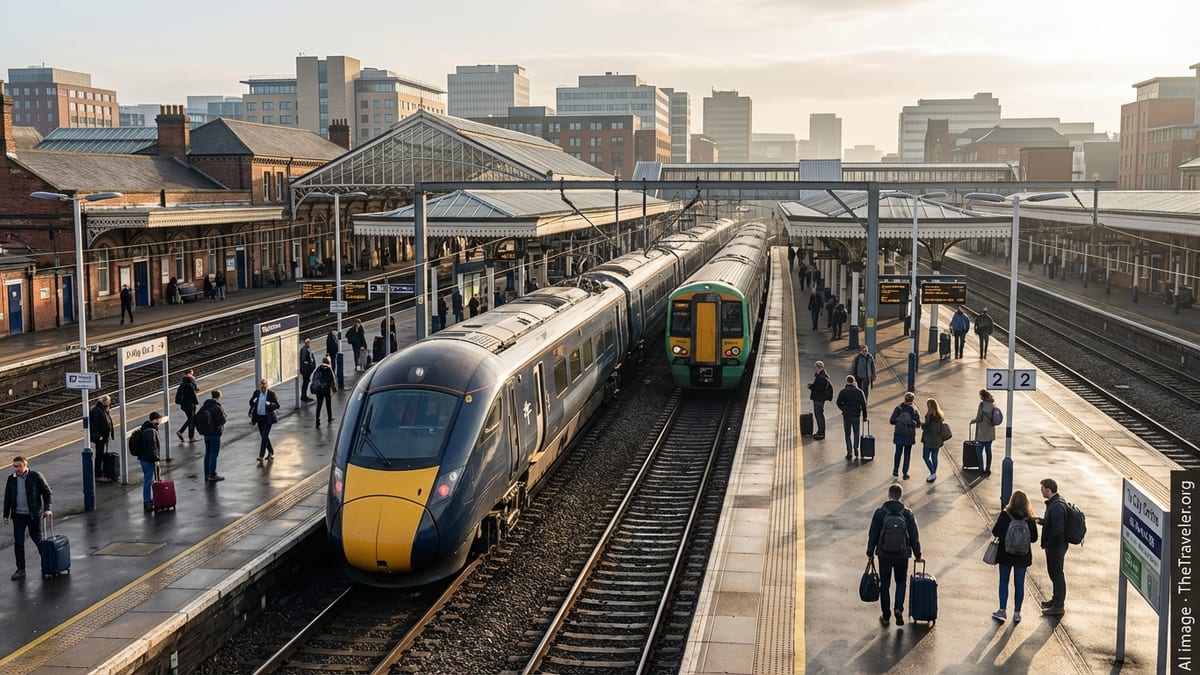
Scorecards put CrossCountry at the bottom of the table
Recent customer scorecards published by independent watchdog Transport Focus show CrossCountry recording the lowest overall satisfaction of any national rail operator in Britain. In the most recent snapshot, national satisfaction across the network stands at around the high‑80s in percentage terms, while CrossCountry trails this figure by several points, leaving it in last place among the operators covered.
The watchdog’s analysis highlights particular concerns about punctuality and reliability on CrossCountry routes. Fewer than four in five passengers reported being satisfied with trains running to time, and satisfaction with how the operator handled disruption was markedly weaker still. This combination placed CrossCountry at the bottom of the league table in the winter performance scorecard, with its rating falling compared with the previous reporting period.
The figures are drawn from the new Rail Customer Experience Survey, which has replaced the long‑running National Rail Passenger Survey. Rather than taking a snapshot twice a year, the new survey gathers feedback continuously, providing rolling data on each operator and enabling more frequent scorecards. For passengers, that means recent experiences of crowding, cancellations or timetable changes feed quickly into the rankings.
Transport Focus presents the scorecards as official statistics in development, giving them additional weight in the ongoing debate about rail performance and value. While overall satisfaction levels remain relatively high by historic standards, the widening gap between the best and worst operators is seen as a sign that some passengers are experiencing significantly poorer service than others.
Delays, disruption handling and value for money drive dissatisfaction
The watchdog’s commentary on the latest survey results points to a cluster of factors behind CrossCountry’s low ranking. Passengers report particular frustration with delays, missed connections and the way information is provided when services are disrupted. Satisfaction with how problems are handled is substantially lower than for punctual journeys themselves, suggesting that communication and customer care are a key part of the problem.
On long distance services, a single cancellation or significant delay can have a disproportionate impact on passengers, especially when alternative routes are limited. In that context, clear information about replacement services, ticket acceptance and onward travel is critical. The survey findings indicate that many CrossCountry passengers do not feel this is happening consistently, contributing to a perception of poor reliability even when day‑to‑day performance is broadly in line with national averages.
Value for money is another pressure point. While rail fares are set through a mix of regulated and unregulated ticketing, passengers on longer journeys tend to pay higher absolute prices and therefore scrutinise service quality more closely. When delays combine with limited seating, older rolling stock on some routes and crowded peak services, reports indicate that many travellers judge the experience against the cost and come away dissatisfied.
Industry data on cancellations reinforces this picture. Separate analysis of performance statistics for the first months of 2026 identifies CrossCountry among the operators with the highest proportion of cancelled trains, alongside Avanti West Coast and East Midlands Railway. Taken together, these figures suggest that the company is under pressure both on headline punctuality and on the reliability of its advertised timetable.
How CrossCountry compares with other UK operators
The same Transport Focus survey shows a wide spread of performance across the network, with some operators achieving significantly higher satisfaction scores. Several regional and commuter operators score above 90 per cent for overall journey satisfaction in recent periods, creating a stark contrast with the bottom of the table where CrossCountry currently sits.
In long distance markets, newer open‑access operators and some intercity franchises record substantially better ratings for value for money, onboard comfort and overall satisfaction. One relatively new entrant on the East Coast Main Line, for example, has been highlighted in industry coverage for topping the table on perceived value, while also delivering strong overall satisfaction scores. These results underline that high‑quality long distance services are achievable within the current regulatory and infrastructure constraints.
Across the broader system, national surveys show that passengers still place the greatest weight on punctuality, reliability and the ability to get a seat. Operators that invest in modern rolling stock, more frequent services and clearer real‑time information tend to perform better on these metrics. For CrossCountry, which runs complex cross‑country routes threading through busy junctions and sharing track with multiple other operators, maintaining those standards presents particular operational challenges.
The contrast between top and bottom performers is prompting renewed debate about how franchise contracts and management agreements should reflect customer experience. With detailed satisfaction data now available for every operating period, there is growing discussion about linking payments or penalties more closely to how passengers rate their journeys, rather than relying solely on punctuality targets and financial metrics.
Wider indicators confirm pressure on passenger experience
Passenger satisfaction surveys are not the only measure pointing to stress on parts of the rail network. Data from the Office of Rail and Road on cancellation rates and complaint volumes shows that several intercity and regional operators are struggling to meet customer expectations. CrossCountry features prominently in these statistics, with relatively high complaint volumes and a modest share of complainants saying they are satisfied with how their grievances are resolved.
Separate benchmarking by the industry regulator on passenger assistance for disabled travellers also highlights inconsistencies between operators. While many passengers report that assistance, when delivered, is of a good standard, the reliability of that assistance varies. In some cases, operators have been required to produce action plans to improve how services are planned and delivered for passengers who need additional support at stations and on board.
For the wider rail system, the combination of satisfaction surveys, complaints data and cancellation statistics paints a picture of a network in transition. Publicly available reports note that, although overall satisfaction remains relatively high, passengers have become more sensitive to poor performance following years of disruption related to infrastructure upgrades, industrial action and the long tail of the pandemic.
Policy debates about the future structure of Britain’s railway increasingly reference these measures of passenger sentiment. As the government prepares for changes to contracts and oversight arrangements in the coming years, the experience of operators at both ends of the satisfaction table is likely to play a central role in shaping expectations of what a modern rail service should deliver.
What this means for passengers planning UK rail journeys
For travellers, the latest rankings serve as a guide rather than a guarantee. A low satisfaction score for a particular operator does not mean that every journey will be poor, just as a high‑scoring operator can still experience disruptions. However, the surveys give an indication of where problems are more persistent and where passengers feel their concerns are not being adequately addressed.
Regular users of CrossCountry services may already be familiar with the issues highlighted in the data, from short‑notice cancellations to busy trains on key cross‑country routes. Awareness of how the operator compares with others can help passengers plan contingencies, such as allowing additional connection time or checking for alternative routes on rival operators where ticketing rules permit.
Industry bodies argue that the new continuous survey model will help drive improvements by giving operators more immediate feedback. Scorecards are expected to be updated regularly, allowing passengers and policymakers to track whether companies at the bottom of the table succeed in closing the gap with better performers over time.
For now, the latest evidence places CrossCountry at the bottom of Britain’s rail satisfaction rankings, crystallising concerns that have been voiced by passengers on long distance routes for several years. How quickly that perception can be reversed will depend on a combination of improved reliability, clearer communication when things go wrong and a stronger sense among passengers that the service they receive matches the fares they pay.