


More news on this day
A Southwest Airlines passenger says they were left stranded in 2026 after an automated rebooking glitch removed them from an on-time flight despite arriving at the gate in time to board, highlighting growing concerns about the carrier’s increasingly complex digital systems.
Get the latest news straight to your inbox!
Allegation of a Rebooking Error on an Otherwise Operable Flight
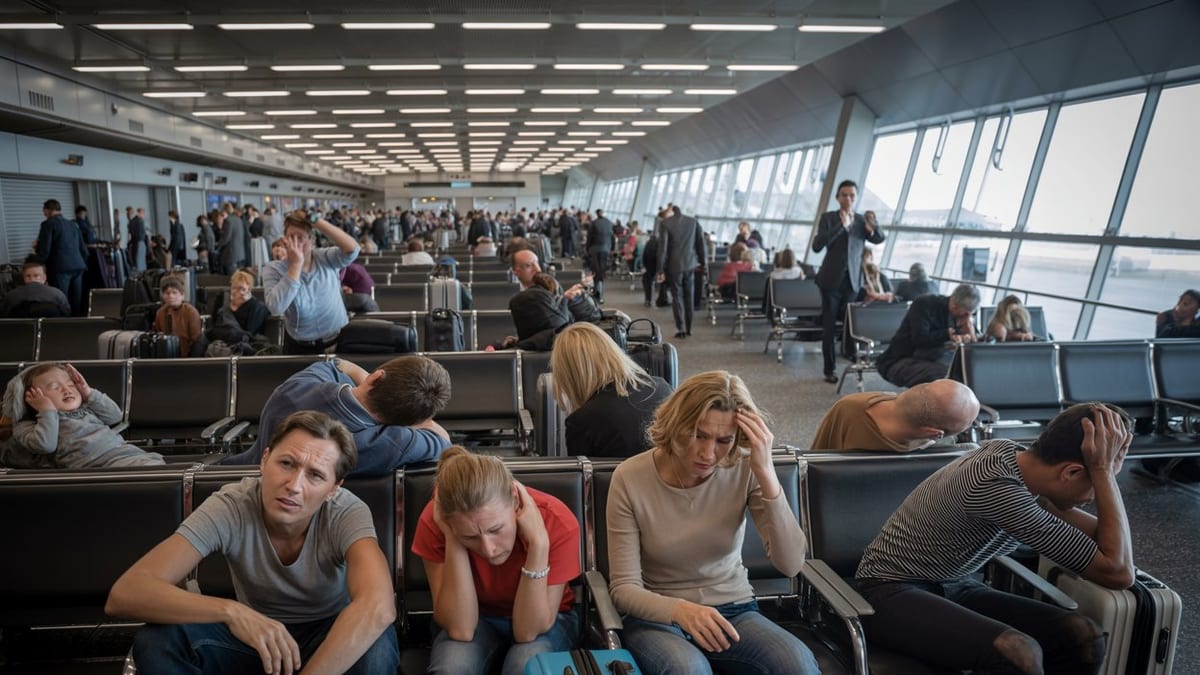
According to accounts shared on social media and travel forums in mid-2026, the incident began when a Southwest Airlines customer received notice of schedule changes and potential disruptions, only to discover at the airport that their original flight was operating and boarding as planned. The traveler reports arriving at the gate ahead of boarding cutoff, but found their reservation had been automatically shifted to a later itinerary by Southwest’s systems.
Publicly available information on Southwest’s current policies indicates that the airline reserves the right to cancel a reservation if a customer is not present at the gate at least ten minutes before departure. However, in this case, the traveler maintains they met the airline’s timing rules and that the issue stemmed from an automated rebooking process that had reassigned their seat before the gate arrival could be registered.
Similar traveler reports shared in 2025 and 2026 describe a pattern in which flights initially flagged for cancellation or major delay were later reinstated, while earlier automated rebookings were not fully reversed. In those accounts, passengers arrived on time only to find that their boarding passes would not scan or that their names no longer appeared on the flight manifest, even though the aircraft departed close to schedule.
While each case involves its own set of circumstances, the latest allegation adds to a body of complaints that the carrier’s disruption-management tools sometimes move faster than real-time operational changes, leaving travelers in limbo between the app, call centers, and gate agents.
Automation, Policy, and Tight Gate Timelines
Southwest’s published policies in 2026 emphasize tight check-in and gate-arrival windows, particularly the requirement to be at the gate at least ten minutes before departure and checked in at least thirty minutes before a domestic flight. The airline also outlines that, during significant delays, it may proactively rebook customers to alternative flights, with notifications sent via email, text, and its mobile app.
In practice, travelers have increasingly described situations where those automated decisions interact awkwardly with real-world conditions at crowded airports. Some recent accounts reference new cutoffs in the airline’s internal systems that restrict same-day changes or seat adjustments within thirty minutes of departure, which can make last-minute corrections more difficult if the system has already moved a passenger off a flight.
Digital guidance produced for travelers in 2025 and 2026 also notes that automated rebookings may generate complex itineraries, sometimes adding long layovers or overnight connections, and that the best alternative option is not always surfaced first by the system. Consumer-focused tip sheets urge passengers to move quickly to review and, if necessary, override automated changes using the Southwest app or airport kiosks, warning that delays in responding can leave fewer viable options as other disrupted travelers compete for the same seats.
In the case of the stranded passenger in 2026, the key dispute appears to center on timing and visibility: whether the automated system’s decision to reassign their seat occurred before or after they reached the gate, and whether frontline staff had the flexibility or technology to reverse that move once boarding was underway.
Growing Scrutiny of Southwest’s Tech After Major Changes in 2026
The allegation arrives in a year when Southwest’s technology and operational reliability are already under heightened scrutiny. In early 2026 the airline began rolling out a shift away from fully open seating, alongside changes to boarding procedures and same-day change options. Coverage in national outlets and traveler commentary has linked those transitions to longer boarding times and tighter connections, particularly at busy hubs and during peak travel windows.
Separate reports in 2026 have highlighted issues ranging from difficulties using the mobile app to check rebooking options, to confusion when flights are delayed, reinstated, or operated with equipment swaps that disrupt seat assignments. In some accounts, travelers say they did not receive email or text notifications of cancellations or rebookings at all, only discovering changes when attempting to check in or scan a boarding pass at the airport.
Industry analyses and academic work tracking U.S. carriers have identified Southwest as one of the large airlines grappling with the complexity of integrating legacy infrastructure with newer, more automated tools. Researchers note that, while automation can speed up rebooking for thousands of customers during widespread disruptions, even small mismatches between data feeds, crew assignments, and real-time gate decisions can have outsized impacts on individual travelers.
Consumer advocates argue that when those systems fail or create confusing outcomes, the burden on customers can be significant, especially if alternative flights are limited and call centers or in-person agents are overwhelmed. For passengers, a single misaligned rebooking decision can turn a routine connection into an unexpected overnight stay or the loss of nonrefundable hotel and event reservations.
Passenger Options When Rebooking Goes Wrong
Publicly available guidance on Southwest’s website outlines several avenues for customers affected by cancellations or significant delays, including automatic rebooking, self-service changes, and, in some cases, refunds. When the airline cancels or substantially changes a flight, travelers may be eligible for a refund of the unused portion of their ticket. Some advisory materials also suggest that, in limited circumstances, the carrier can work with other airlines or provide credits and vouchers, though such arrangements are typically constrained by internal policies and interline agreements.
Consumer-facing rebooking manuals and unofficial guides stress that speed and documentation are critical when a glitch or misalignment occurs. Travelers are urged to take screenshots of app messages, flight status pages, and any notifications of cancellation or rebooking. These records can support later claims for refunds, reimbursement of out-of-pocket costs, or additional goodwill compensation.
In scenarios similar to the 2026 incident, where the central dispute is whether a passenger complied with gate-arrival requirements, available advice encourages travelers to seek written confirmation at the airport whenever possible. While not always easy during a disruption, a notation on the reservation or an emailed incident summary can be helpful if a later review is needed to determine whether the system or the passenger failed to follow stated procedures.
Travelers who believe an automated rebooking error caused them to be stranded are also frequently advised by consumer organizations to submit formal complaints through Southwest’s customer-relations channels, and, if necessary, to file a complaint with the U.S. Department of Transportation. Publicly posted case histories indicate that some passengers have received additional compensation or clarifications after such reviews, though outcomes vary.
What the 2026 Glitch Reveals About Airline Automation Risks
The reported 2026 case of a Southwest customer stranded despite an on-time gate arrival underscores the broader tension between efficiency and fairness in highly automated airline operations. As carriers rely more heavily on algorithms to preemptively rebook travelers during disruptions, individual edge cases can expose blind spots in those systems.
Experts following airline technology trends note that automation often assumes consistent, clean data about flight status, crew availability, and passenger movements. In reality, boarding decisions may evolve minute by minute, notifications can arrive late or not at all, and travelers may be moving quickly between security checkpoints and gates when the system is making high-impact decisions about their reservations.
For passengers, the incident serves as a reminder that real-time awareness and active management of bookings are increasingly necessary. Travel guidance in 2026 frequently recommends checking flight status repeatedly on day of travel, confirming gate information on airport displays rather than relying solely on push notifications, and reacting immediately to any rebooking message instead of waiting for the airline’s systems to settle.
For airlines, including Southwest, the growing volume of public complaints related to rebooking, gate cutoffs, and inconsistent communication suggests that refining automation logic, improving transparency in the app, and giving frontline staff clearer tools to unwind problematic automated changes may be as critical as adding new digital features. The 2026 glitch allegation adds one more data point in a year where travelers are closely watching how technology shapes their chances of simply making the flight they were originally sold.