


More news on this day
A Southwest Airlines Boeing 737 operating as Flight SWA1970 from Seattle to Dallas diverted to Austin on August 7, with publicly available flight-tracking data and passenger accounts indicating weather and air-traffic constraints in the Dallas area as likely triggers for the unscheduled stop.
Get the latest news straight to your inbox!
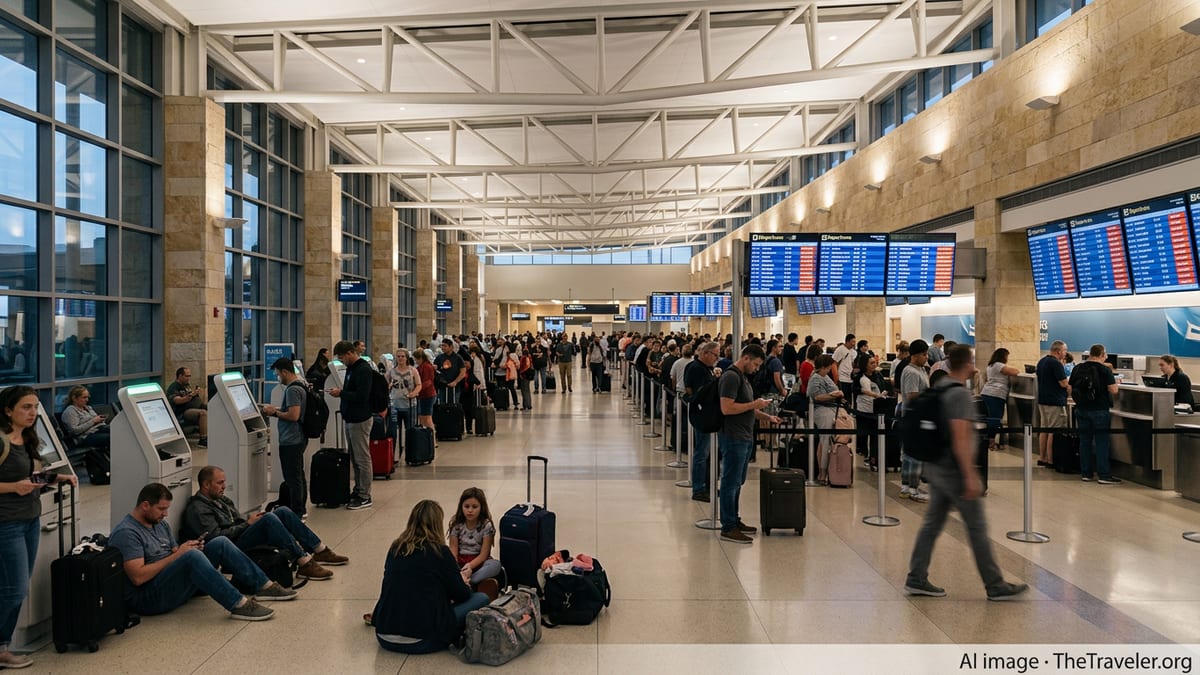
What Happened on Southwest Flight SWA1970
According to flight-tracking data for August 7, Southwest Flight SWA1970 departed Seattle–Tacoma International Airport bound for Dallas Love Field before altering course en route and landing instead at Austin–Bergstrom International Airport. The aircraft, a Boeing 737, completed its journey safely with no reported injuries, but arrived at an airport not listed on passengers’ original itineraries.
Publicly accessible flight-status tools classify a diversion as a situation in which an aircraft lands at an airport different from its scheduled destination, typically due to operational, weather, or airspace constraints. The change in destination for SWA1970 fits this profile, with the flight touching down in Austin and remaining on the ground while onward arrangements to Dallas were coordinated.
Reports from travelers connecting through Texas on the evening of August 7 and into August 8 describe multiple diversions and extended ground delays affecting services into Dallas Love Field. These accounts align with the updated routing observed for SWA1970, which was among the flights redirected away from the busy North Texas airspace.
Despite the disruption, standard indicators show the flight completed its diverted sector without any declared emergency, and there have been no reports of technical or safety events involving the Boeing 737 beyond the need to alter its arrival airport.
Likely Causes: Weather, Congestion, and Crew Duty Limits
Published discussions among passengers and aviation enthusiasts point to a combination of summer thunderstorms north of the Dallas–Fort Worth region and related air-traffic flow restrictions as the most plausible factors behind the diversions on August 7. When storms line up along common arrival paths, controllers can reduce arrival rates, forcing airlines to hold, reroute, or divert inbound aircraft.
Commentary from travelers on other Southwest flights into Dallas that same evening describes aircraft being placed in holding patterns and then diverted to alternate airports such as Austin and San Antonio after extended delays. These narratives suggest that the Dallas area was experiencing intermittent convective weather that complicated arrival flows just as evening traffic peaked.
Operational guidance for U.S. carriers also notes that extra time spent in holding patterns and diversions can push flight crews toward regulatory duty and flight-time limits. If pilots exceed those limits, airlines must replace them before continuing the journey, which can further lengthen delays for passengers on a diverted aircraft.
While Southwest has not publicly detailed the specific chain of events for Flight SWA1970, the pattern of route changes, the timing of weather in North Texas, and passenger accounts of crew “timing out” on related flights all point to a familiar mix of summer storms, congestion, and crew scheduling constraints rather than an aircraft malfunction.
Impact on Passengers Traveling Between Seattle, Austin, and Dallas
For travelers on SWA1970, the diversion meant an unplanned arrival at Austin–Bergstrom instead of Dallas Love Field. Passengers on similar flights into Texas that evening have described extended waits on the tarmac, changing departure estimates, and the challenge of rebooking missed connections once a diversion is declared.
When a flight diverts, passengers often must wait on board until the aircraft receives a gate assignment and ground services are available, which can take time if the airport was not originally scheduled to handle that particular flight. In some recent cases involving Southwest diversions, travelers have reported remaining on board for an hour or more while fuel, crew, and gate logistics were arranged.
Once at the gate, standard airline practice is to reassess crew duty times and determine whether the same aircraft and crew can continue to the original destination. If the crew has reached its duty limit, the onward segment may be delayed until a replacement crew can be positioned, or passengers may be rebooked onto later flights. This scenario has been echoed in accounts from diverted Southwest customers who found themselves unexpectedly overnighting in Austin while waiting for new crews.
For those connecting beyond Dallas, a diversion can cascade into missed onward flights across the Southwest network, which spans more than 100 destinations across the United States, Mexico, Central America, and the Caribbean. Travelers then depend on remaining seat availability into Dallas and onward cities once operations stabilize after the weather or air-traffic constraints ease.
Understanding Diversions on Southwest’s Boeing 737 Fleet
Southwest operates an all Boeing 737 fleet, primarily the 737-700 and 737-800 families along with the 737 MAX series. Diversions on these aircraft are generally not inherently tied to the aircraft type, but to external factors such as weather, airport congestion, and air-traffic control restrictions, or to internal factors like crew scheduling and fuel planning.
Industry guidance on diversions notes that when weather threatens an aircraft’s ability to land with required fuel reserves, pilots may choose or be instructed to divert to a nearby airport where conditions are more favorable. Austin–Bergstrom, located roughly 200 miles south of Dallas, is a common alternate for flights into North Texas because it offers multiple Southwest gates and regular service within the airline’s network.
Regulatory frameworks in the United States require that airlines and pilots maintain strict reserve fuel margins and adhere to duty-time rules, even when those decisions lead to significant inconvenience for travelers. In the case of SWA1970, the eventual safe landing in Austin and the absence of any reported onboard incident are consistent with a precautionary operational decision within these rules.
While diversions can be unsettling for passengers, they are a routine feature of airline operations, particularly during peak thunderstorm seasons. The event involving Flight SWA1970 fits into a broader pattern of weather-driven route adjustments that have periodically affected carriers across the Dallas region during busy summer travel periods.
What Travelers Can Do When a Flight Diverts
Travel experts and airline passenger advocates recommend several practical steps when confronted with a diversion similar to the Southwest Flight SWA1970 event. The first is to monitor the airline’s mobile app and flight-status tools as soon as the routing begins to change, since these platforms often update before gate displays and can clarify whether the aircraft will continue on to its original destination.
Once on the ground at the diversion airport, passengers are encouraged to check for updated connection options through the airline’s digital channels while also queuing, if necessary, to speak with airport staff. During large-scale weather events, digital self-service tools can secure seats on later flights more quickly than waiting in line alone.
Travelers on itineraries involving tight connections in weather-prone regions may also consider scheduling longer layovers during summer months or opting for earlier departures when possible. Historical data on United States flight delays shows that afternoon and evening periods tend to be more vulnerable to weather-related congestion, increasing the chance of holding patterns and route changes.
For those affected by diversions, it is advisable to retain boarding passes and any written communication regarding delays, as these may be helpful when seeking reimbursement for out-of-pocket expenses or when documenting disrupted travel for insurance or employer purposes. While each case is evaluated under the airline’s contract of carriage and relevant regulations, clear documentation can make it easier to navigate the after-effects of an unexpected stop such as the August 7 diversion of Southwest Flight SWA1970.