


More news on this day
A luxury expedition cruise ship held off Cape Verde amid a suspected hantavirus outbreak is seeing medical teams rotate off the vessel even as at least one seriously ill British national remains in limbo awaiting full evacuation, raising new questions over how fast remote ocean emergencies can be resolved.
Get the latest news straight to your inbox!
Deadly outbreak turns wildlife voyage into medical emergency
The Dutch-flagged MV Hondius, an expedition vessel that departed southern Argentina in March, has been transformed from a wildlife and polar adventure cruise into the scene of a rare and deadly infectious disease emergency. Around 150 passengers and crew remain confined off the coast of Cape Verde after a cluster of suspected hantavirus cases led to at least three deaths and multiple serious illnesses.
Reports indicate that the fatalities include a Dutch couple and a German passenger, all of whom developed acute respiratory illness consistent with hantavirus infection during the Atlantic crossing. One British passenger was previously taken off the ship on Ascension Island and flown to South Africa, where publicly available information shows that the individual is in intensive care and has tested positive for a hantavirus strain.
The World Health Organization and national health agencies in Europe and Africa are tracking the situation closely, describing the cluster as highly unusual for a modern cruise operation. Hantaviruses are typically carried by rodents and are more often associated with remote rural exposure than with luxury ships sailing intercontinental routes.
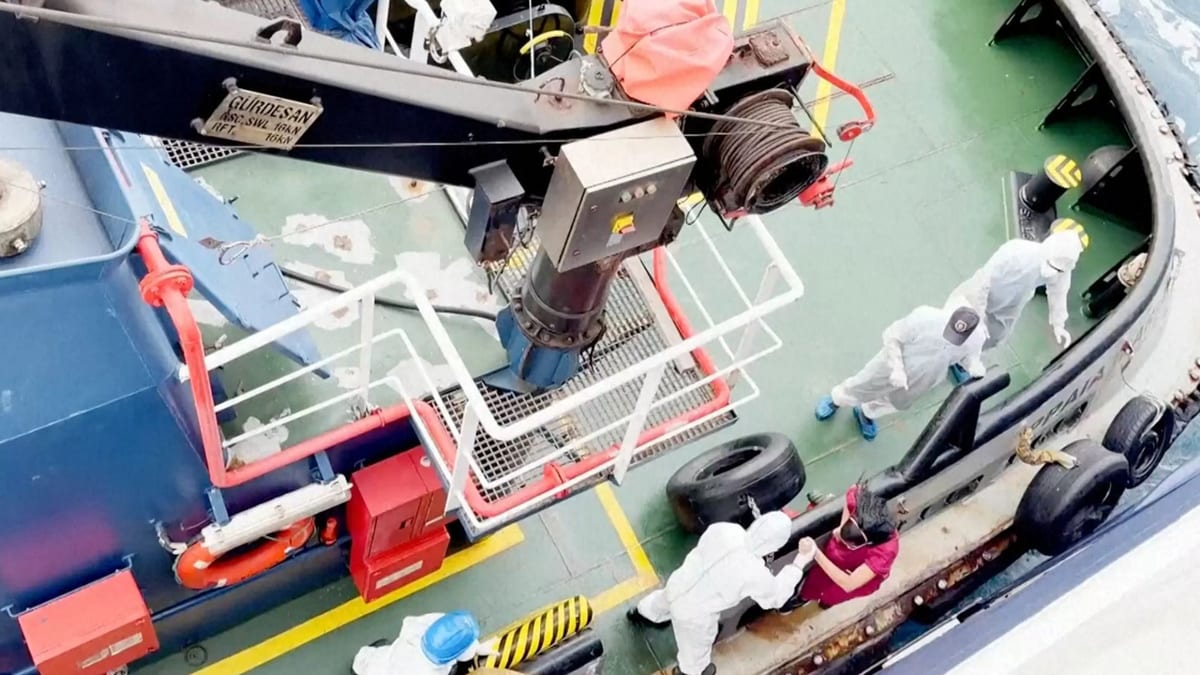
As the Hondius remains offshore, its decks and lounges sit largely deserted, with footage published by international media showing passengers ordered to stay in their cabins while teams in protective suits move between medical areas and service corridors.
Medics rotate off ship as evacuation plans stall
New details emerging from Cape Verde and European capitals suggest that some medical personnel who first boarded the Hondius have now left the vessel, part of a rotation and handover process that is standard in prolonged offshore incidents. However, these departures have coincided with growing public focus on a seriously ill British crew member who has yet to be fully evacuated from the ship.
Cruise operator statements and international news coverage describe two crew members, one British and one Dutch, suffering from acute respiratory symptoms and in need of urgent medical care. Plans for their removal to advanced hospital facilities in Europe have been repeatedly flagged, but as of early 5 May the timing and logistics of those evacuations remained unsettled.
Reports from Cape Verde indicate that a limited number of patients and close contacts are expected to be taken ashore and flown onward by air ambulance, while the majority of guests will not disembark in the island nation. That strategy reflects a balancing act between providing intensive care for the sickest individuals and limiting pressure on a relatively small national health system.
The uncertainty over exactly when the remaining sick Briton will be transferred has fueled concern among families and observers, especially given the rapid deterioration that hantavirus infections can cause once severe respiratory symptoms appear.
Rare ‘rat virus’ raises fears of onboard transmission
The pathogen at the center of the crisis is widely described as a rat-borne virus, a reference to the family of hantaviruses that usually spread when people inhale particles from infected rodent urine, droppings or saliva. While most known hantaviruses do not pass easily between humans, some strains have shown limited person-to-person transmission in close-contact settings.
Publicly available statements from the World Health Organization note that investigators are examining whether any human-to-human spread may have occurred on board the Hondius. Early assessments point to several confirmed or suspected cases among people who shared cabins or spent extended time together, a pattern that could be consistent with close-contact transmission, although no final conclusion has been announced.
For anxious passengers confined to cabins, the distinction between environmental exposure and possible onboard transmission may feel largely academic. The incubation period for hantavirus can stretch from several days to several weeks, meaning that individuals exposed earlier in the voyage could still develop symptoms even as the ship inches closer to safe harbor.
Health experts cited in international coverage emphasize that, despite its severity, hantavirus is not considered capable of driving a large-scale global outbreak similar to COVID-19. Even so, the combination of a high case fatality rate and the confined environment of a cruise vessel has amplified fear and revived uncomfortable memories of earlier pandemic-era ship quarantines.
Cruise industry under renewed scrutiny on health protocols
The Hondius incident arrives at a time when the cruise sector is still rebuilding traveler confidence after the upheavals of the coronavirus pandemic. While exhaustive health protocols and pre-boarding screenings have become standard, the suspected rodent-borne outbreak highlights ongoing vulnerabilities that are harder to monitor and control.
Public documents and expert commentary point to several possible investigative trails, including whether rodents may have accessed food storage, waste areas or dockside facilities at earlier ports of call. Investigators are also expected to review cabin occupancy, cleaning records and ventilation patterns to understand how the virus might have spread across multiple decks.
For expedition-style cruises in particular, the episode underscores the complexity of operating in remote regions, where immediate hospital care is days away and medical evacuations depend on military-grade logistics, specialized aircraft and port state agreements. That reality is now in sharp focus for Hondius passengers, many of whom joined the voyage for its wilderness appeal but are now experiencing the other side of isolation at sea.
Travel industry analysts note that the case is likely to feed into future guidance on rodent control, environmental monitoring and crisis planning on cruise ships worldwide. Even if the ultimate source of the outbreak is never definitively traced, the operational lessons around rapid testing, isolation and evacuation are expected to reverberate across the sector.
Travel implications for passengers and future cruisers
As medics rotate off the Hondius and evacuation plans for the sickest passengers move forward, attention is beginning to shift to what comes next for those who remain well but stranded. Operator information indicates that, once critical patients and close contacts are evacuated, the ship aims to sail north toward the Canary Islands or the Netherlands, where full disembarkation and follow-up screening could take place.
Travel insurers and tour operators are monitoring the evolving situation, with industry observers expecting a wave of claims related to trip interruption, medical costs and extended accommodation needs. Standard policy wording for expedition cruises often contemplates weather and mechanical delays, but a rare infectious disease outbreak of this kind may test the limits of coverage and customer expectations.
For prospective cruisers, the episode serves as a reminder to scrutinize health provisions and evacuation clauses before booking remote itineraries. Specialists generally advise travelers to verify that operators have robust contingency plans, including access to air ambulance services and clear protocols for coordination with national health systems if serious illness strikes far from shore.
In the near term, the image of medics disembarking a virus-hit ship while a severely ill British crew member waits for evacuation is likely to linger, reinforcing both the allure and the inherent risk of venturing far out to sea in search of once-in-a-lifetime experiences.