


More news on this day
Sri Lanka is moving ahead with plans to offer free tourist visas to visitors from 40 countries, a move aimed at shoring up arrival numbers and tourism revenue as global tensions and flight disruptions weigh on travel demand.
Get the latest news straight to your inbox!
Free Visa Expansion Targets 40 Key Markets
Publicly available information shows that the Sri Lankan government has approved an expansion of its free tourist visa policy to cover 40 additional countries, on top of an existing group of seven markets that already enjoy visa fee waivers. The initiative is framed as a core pillar of the country’s tourism recovery strategy, which seeks to make entry procedures simpler and cheaper for priority source markets.
Reports indicate that the new scheme will allow eligible travelers to obtain a free 30-day electronic travel authorization for leisure visits, with the option to extend stays subject to prevailing immigration rules. The expanded list is understood to focus heavily on Europe, North Asia, and high‑spending long‑haul markets such as the United States, Canada, Australia, and several EU member states, reflecting Sri Lanka’s push to diversify beyond its traditional regional base.
Coverage in regional business media notes that cabinet‑level approval for the broader visa waiver was first granted in 2025 following an earlier pilot program for seven Asian countries including India, China, Thailand, Russia, Japan, Malaysia, and Indonesia. The enhanced regime would lift the total number of free‑visa markets to 47 once fully in force, positioning Sri Lanka among the more open destinations in South Asia from a border policy perspective.
While the final implementation timetable and full list of participating countries are being refined through regulations and parliamentary procedures, officials have repeatedly signaled that the intent is to have the framework in place for upcoming peak travel windows, provided legal and technical hurdles can be resolved.
Tourism Push Amid Global Tensions and Weaker Arrivals
The policy shift comes at a delicate moment for Sri Lanka’s tourism industry. According to recent tourism statistics cited by regional news outlets, the country welcomed more than 700,000 visitors in the first quarter of 2026, a modest year‑on‑year increase. However, arrival numbers dipped in March compared with the previous year, with one report noting a decline of more than 20 percent over a mid‑month comparison period.
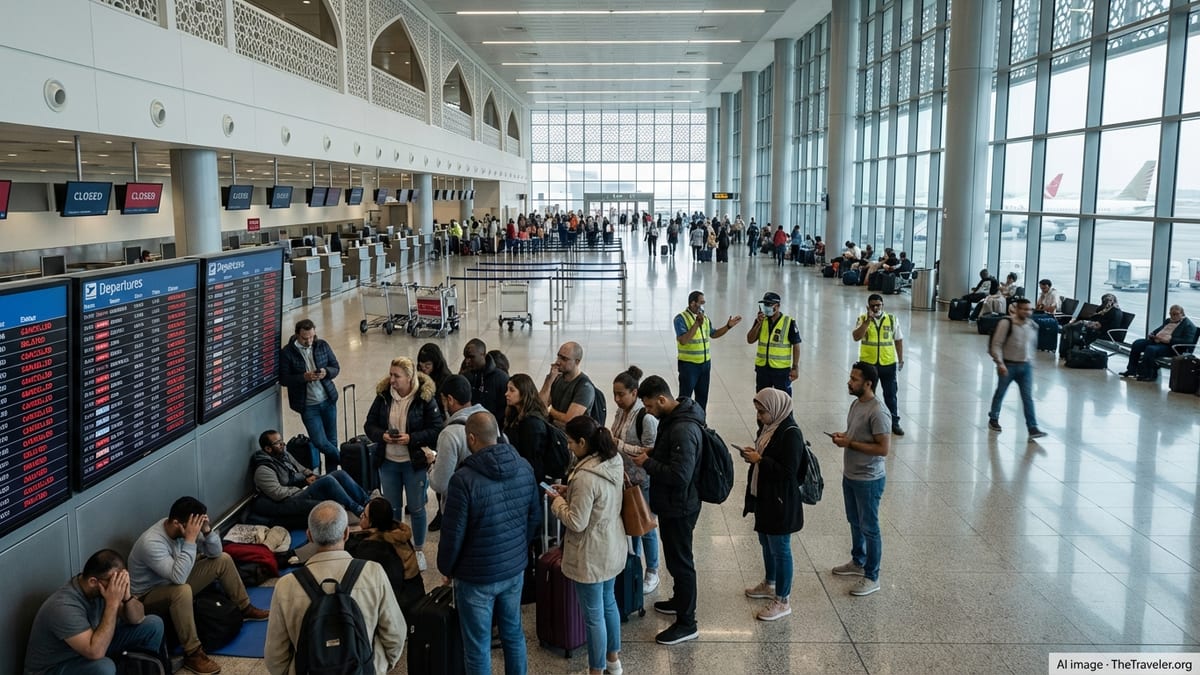
Analysts link the softer performance partly to wider global tensions, including conflict‑related airspace closures and rerouted long‑haul flights that have added time and cost to journeys across parts of the Middle East and Eurasia. Heightened geopolitical uncertainty has also discouraged some discretionary travel, particularly from long‑haul markets that are sensitive to insurance conditions and airline capacity.
Industry commentary suggests that Sri Lanka is especially exposed to these headwinds because it relies heavily on air connectivity and has been working to rebuild confidence since the Easter Sunday attacks of 2019, the COVID‑19 pandemic, and the 2022 economic crisis. Tourism once contributed close to 5 percent of gross domestic product, and policymakers are keen to restore that share to support foreign‑exchange earnings and employment in hospitality and related sectors.
In this context, waiving visa fees is being presented domestically as a relatively quick lever to keep the destination competitive at a time when travelers are facing higher airfares and tighter budgets. By reducing the upfront cost and administrative friction at the border, authorities hope to tip travel decisions in Sri Lanka’s favor when visitors compare options across the Indian Ocean, Southeast Asia, and the Mediterranean.
Balancing Revenue Loss With Broader Economic Gains
Economic coverage of the proposal highlights that the free visa plan is not without trade‑offs. Estimates published in local business press put the potential loss of direct visa fee revenue at around 66 million dollars per year once the full 40‑country expansion is in place. For a fiscally strained government implementing an International Monetary Fund‑supported reform program, this is a significant sum.
Supporters of the policy argue that the forgone fees are likely to be offset by higher overall tourism spending on accommodation, food and beverage, transport, attractions, and retail. If the scheme succeeds in attracting more long‑haul visitors who stay longer and spend more per trip, the net impact on tax receipts and foreign‑exchange inflows could be strongly positive, even after accounting for the revenue sacrifice at the border.
Publicly available analysis also points out that visa fee waivers are relatively straightforward to reverse or recalibrate if the expected gains do not materialize. The regulations can be reviewed periodically, with the possibility of adding or removing countries from the list, adjusting the duration of stay, or reintroducing modest processing charges if fiscal pressures intensify.
For now, tourism stakeholders appear to be treating the expanded free visa plan as part of a broader package that includes destination marketing campaigns, route development incentives for airlines, and ongoing investment in hotel capacity. The combined effect of easier entry and improved air and product offerings is seen as critical for achieving Sri Lanka’s medium‑term goal of hosting several million visitors annually and raising per‑capita spending.
Implementation Delays and Legal Challenges
Despite the strong policy intent, Sri Lanka’s path to a free visa regime for 40 countries has been uneven. Earlier iterations of the plan, announced in 2024 and 2025, experienced significant delays linked to technical rollouts of a new e‑visa system and legal disputes over a previous visa outsourcing contract. At one point, the expansion was temporarily placed on hold pending court proceedings, creating uncertainty for travelers and tour operators.
Reports from Colombo‑based media in late 2025 and early 2026 described a sequence in which cabinet approval was followed by a requirement to draft detailed regulations, secure parliamentary approval, and align systems at the Department of Immigration and Emigration. These procedural steps have taken longer than initially projected, pushing back target implementation dates that were first set for late 2024 and subsequently for various points in 2025 and early 2026.
As legal questions around earlier outsourcing arrangements have been addressed and the country reverted to a revised electronic travel authorization platform, the government has moved to decouple the free visa decision from vendor‑specific disputes. Recent coverage indicates that draft regulations for the expanded 40‑country scheme have now cleared cabinet and are being prepared for submission to parliament, signaling renewed momentum after months of uncertainty.
Travel industry observers caution, however, that the policy will only deliver its intended benefits if communication to foreign visitors is clear and consistent. Confusion over eligibility, fee structures, or application portals in previous phases has occasionally led to mixed messages in overseas markets, underlining the need for coordinated information from tourism, foreign affairs, and immigration agencies once the new rules enter into force.
Regional Competition and Strategic Positioning
The decision to widen free visa access also reflects increasingly intense competition across Asia for international tourists. Destinations such as Thailand, Malaysia, and the Maldives have pursued their own waves of visa relaxations or fee waivers in recent years, aiming to lower barriers at the same time as they expand air connectivity and upgrade tourism infrastructure.
By extending visa fee waivers to 40 predominantly long‑haul and higher‑spending markets, Sri Lanka is attempting to carve out a more distinctive position as an accessible yet relatively uncrowded alternative to more mature beach and culture destinations. The authorities are also seeking to capitalise on the country’s compact size, diverse landscapes, and cultural heritage, marketing Sri Lanka as a place where visitors can combine beaches, tea country, wildlife, and historic sites within a single itinerary.
Published tourism strategies emphasize that the free visa policy is meant to work hand in hand with efforts to improve visitor experience on the ground, including better infrastructure at key sites, digital ticketing, and upgraded airport facilities. Improving perceptions of safety and stability, following several years of crisis headlines, remains another priority in attracting visitors who may be unfamiliar with the destination.
How quickly Sri Lanka can translate its planned visa liberalisation into sustained gains in arrivals will depend not only on domestic execution but also on external factors, from airline capacity and fuel prices to the trajectory of global conflicts affecting air routes. For now, the decision to press ahead with free visas for 40 countries signals a clear bet that lowering entry barriers is essential if the island is to regain its place on the world travel map in a more turbulent era.