


More news on this day
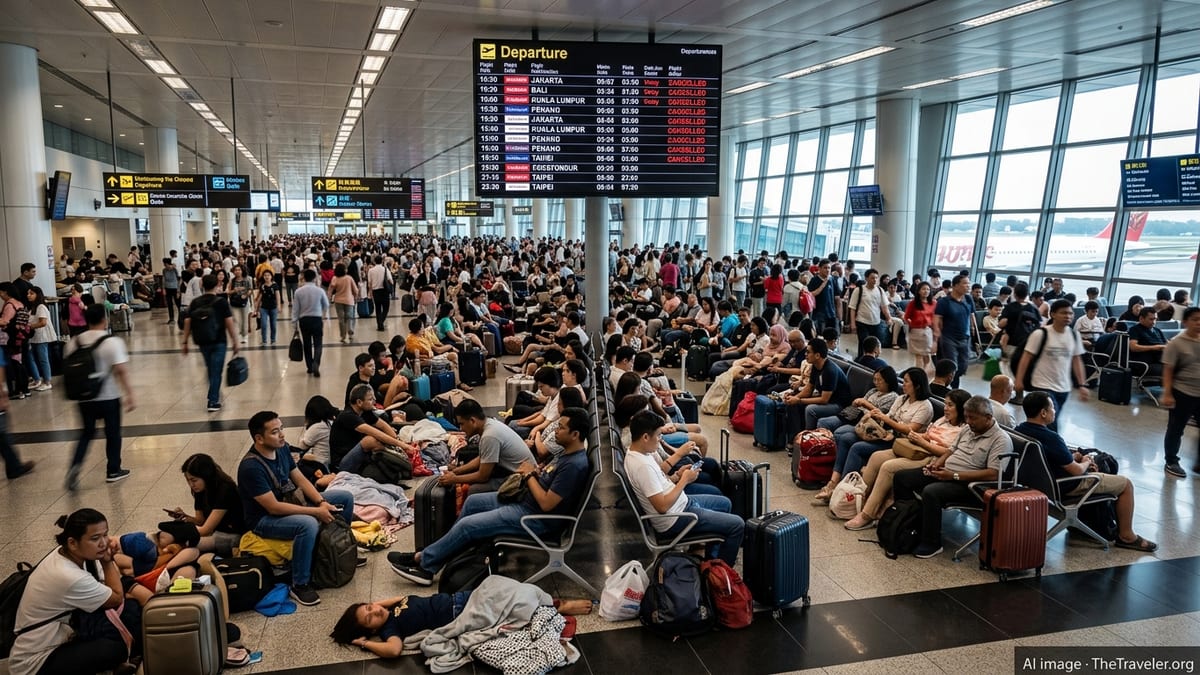
Hundreds of passengers across Asia are facing long waits and missed connections as a fresh wave of flight disruptions triggers at least 46 cancellations and about 600 delays at major airports including Jakarta, Bali, Shanghai, Bangkok, Narita, Yancheng, Mumbai and other key international hubs.
Get the latest news straight to your inbox!
Major Asian Hubs Buckle Under New Wave of Delays
Publicly available operational data for April 14 indicates that a cluster of large Asian gateways has been hit by extensive schedule disruption, with delays far outnumbering outright cancellations. At Jakarta Soekarno Hatta International Airport, more than a dozen flights were canceled and close to 200 delayed, affecting both regional and long haul itineraries. Bali’s Denpasar airport has reported additional knock on delays as airlines attempt to reposition aircraft and crews.
Shanghai Pudong, one of the region’s busiest international hubs, has emerged as another flashpoint. Data compiled by aviation trackers and summarized in specialist travel coverage shows Pudong registering a high double digit tally of cancellations alongside well over one hundred delays, amplifying connection problems for passengers heading to Europe and North America via Chinese and Gulf carriers.
In Southeast Asia, Bangkok’s Suvarnabhumi Airport has recorded a similar pattern of disruption, with a relatively modest number of cancellations compared with a heavy volume of late departures and arrivals. Reports highlight that connecting traffic bound for regional destinations, as well as onward long haul services, has been particularly vulnerable as ground operations struggle to absorb the uneven flow of aircraft.
Japan’s Narita International Airport, a key gateway for transpacific travel, has also experienced elevated levels of disruption, with multiple cancellations and scores of delayed departures listed in airport and airline summaries. Passengers traveling through Narita toward North America, Oceania and Southeast Asia have reported extended layovers and missed connections as schedules slip further behind published times.
India, Indonesia and China Experience Cascading Disruptions
The disruption has been especially visible in India and Indonesia, where busy domestic networks feed into a smaller number of international departure banks. In Mumbai, a high volume of delayed flights has been recorded alongside a smaller group of cancellations, indicating intense pressure on airport infrastructure and turn times rather than widespread grounding of services. Similar conditions are reported at Bengaluru and Delhi, contributing to rolling knock on effects across the subcontinent.
Jakarta and Bali are experiencing parallel challenges. Travel industry monitoring compiled on April 14 points to Jakarta facing well over one hundred delays and more than ten cancellations, while Bali has seen mounting schedule slippage as aircraft arriving late from other disrupted hubs struggle to depart on time. These patterns have left transfer passengers in particular vulnerable to missed regional and long haul connections.
In mainland China, multiple reports describe a concentration of delays at large interior and coastal hubs, adding further stress to the regional network. Airports such as Chengdu Tianfu, Chongqing Jiangbei and Changsha Huanghua have logged a mix of cancellations and substantial delays, while Shanghai Pudong continues to act as a focal point for congestion. The result has been a complex web of schedule changes that ripple outward to neighboring markets, including Hong Kong, Thailand and Singapore.
Smaller but strategically important airports have not been spared. Yancheng, serving a growing mix of domestic and limited international services, has recorded heightened disruption within its more modest schedule. While the absolute number of affected flights is lower than at mega hubs, any cancellations or extended delays there can significantly reduce options for travelers relying on single daily links to larger gateways.
Network Congestion, Aircraft Rotations and Capacity Cuts Fuel the Chaos
Coverage across regional travel and aviation outlets points to a blend of factors behind the latest wave of disruption. Network congestion following several consecutive days of elevated delays has left airlines with little slack in aircraft and crew rotations. When heavily banked schedules at hubs like Shanghai, Bangkok or Jakarta begin running late, the impact can propagate quickly across multiple countries as aircraft arrive out of sequence and crews hit duty time limits.
Operational pressure has been worsened by broader capacity adjustments. Recent schedule changes by major Asian and Gulf carriers, including selective frequency reductions and aircraft swaps in response to higher fuel prices and geopolitical risks, have narrowed the margin for recovery when irregular operations occur. Even a relatively limited number of cancellations can therefore translate into hundreds of delays as airlines try to protect the remainder of the network.
Weather has also contributed in some markets, although available reports for mid April point more strongly toward structural congestion and resource constraints. High load factors during a busy spring travel period, combined with tight turnaround times on popular regional routes, leave little room to absorb disruptions once they begin. Airports that function as multi directional connection points, such as Narita, Bangkok and Singapore, become particularly vulnerable to these compounding effects.
Industry analyses note that the current pattern follows several days of elevated disruption across Asia, with data from earlier in the week already indicating hundreds of cancellations and several thousand delays across a broad arc from Northeast Asia to the Gulf. The latest figures from April 14 suggest that while the number of outright cancellations has remained in the dozens at individual hubs, the cumulative effect on on time performance has been substantial.
Passengers Face Long Queues, Missed Connections and Rebooking Challenges
The human impact of the disruption is visible in crowded departure halls and extended check in and rebooking queues across the region. With at least 46 flights canceled and roughly 600 delayed in the latest wave across key hubs, hundreds of passengers have been stranded overnight or forced into complex re routings that add many hours to their journeys. In some cases, travelers have had to wait for the next day’s departures where services operate only once daily.
At major connection points including Shanghai, Bangkok, Jakarta and Mumbai, reports from travelers and airport status boards point to departure times slipping progressively through the day. As early morning and midday banks run late, evening services are left with diminished turnaround windows, further constraining airlines’ ability to recover their schedules before curfews or crew duty limits take effect.
Rebooking has been complicated by high demand on alternative flights. With many services already close to capacity, displaced passengers often have limited options, particularly on popular regional leisure routes linking hubs with beach destinations such as Bali or Phuket. Some airlines have reportedly offered voluntary change waivers or flexible travel options on a short term basis, but availability remains constrained on core city pairs.
Travel advisories and media coverage across multiple markets are encouraging passengers to monitor airline communication channels and airport status information closely, to allow extra time at departure airports, and to be prepared for last minute gate changes or equipment substitutions. Analysts suggest that while conditions may gradually stabilize if no new shocks emerge, the accumulated backlog from several days of disruption could continue to affect on time performance across Asia for at least another 24 to 48 hours.
Knock on Effects for Long Haul Links and Tourism Flows
Beyond the immediate inconvenience for passengers, the disruption is beginning to show signs of broader economic impact, particularly in markets heavily reliant on air connectivity for tourism and trade. Jakarta, Bali and Bangkok, which serve as critical entry points for international visitors, have all reported heightened delays, creating uncertainty for inbound tour groups and individual travelers with tightly scheduled itineraries.
Long haul traffic flows are also being affected as delayed Asian feeder flights miss banked departure windows for services to Europe, North America and the Middle East. At hubs like Shanghai and Narita, even modest slippage in arrival times from secondary Asian cities can translate into missed onward connections, forcing airlines either to hold long haul departures at the cost of additional delays or to rebook passengers onto later flights.
Travel industry observers note that airlines and airports across the region have invested heavily in rebuilding capacity since pandemic era lows, but that the current bout of disruption underscores ongoing vulnerability to shocks in an interconnected network. With carriers operating tighter schedules and higher load factors, irregular operations at a few key hubs can quickly ripple into a system wide issue, as seen in the latest wave of cancellations and delays.
Market analysts suggest that if elevated disruption persists, some airlines may be prompted to add further buffer into schedules or to trim marginal frequencies on congested routes in order to restore reliability. Such moves could have knock on implications for ticket prices and seat availability into peak summer travel months, particularly on popular transpacific and Asia Europe corridors that rely heavily on smooth operations at hubs in China, Japan, Thailand, India and Indonesia.