


Landing at Kilimanjaro International Airport, you are roughly halfway between Arusha and Moshi with no city bus, no train and often a long travel day behind you. Deciding whether to take the official shared shuttle, a local bus, or a private transfer can make the difference between a smooth arrival and an exhausting scramble. This guide walks you through the real options for getting from Kilimanjaro International Airport (JRO) to Arusha and Moshi in 2026, with practical prices, where to find each service, and when it is worth paying more for a private ride.
Get the latest updates straight to your inbox!
Understanding Kilimanjaro International Airport’s Location
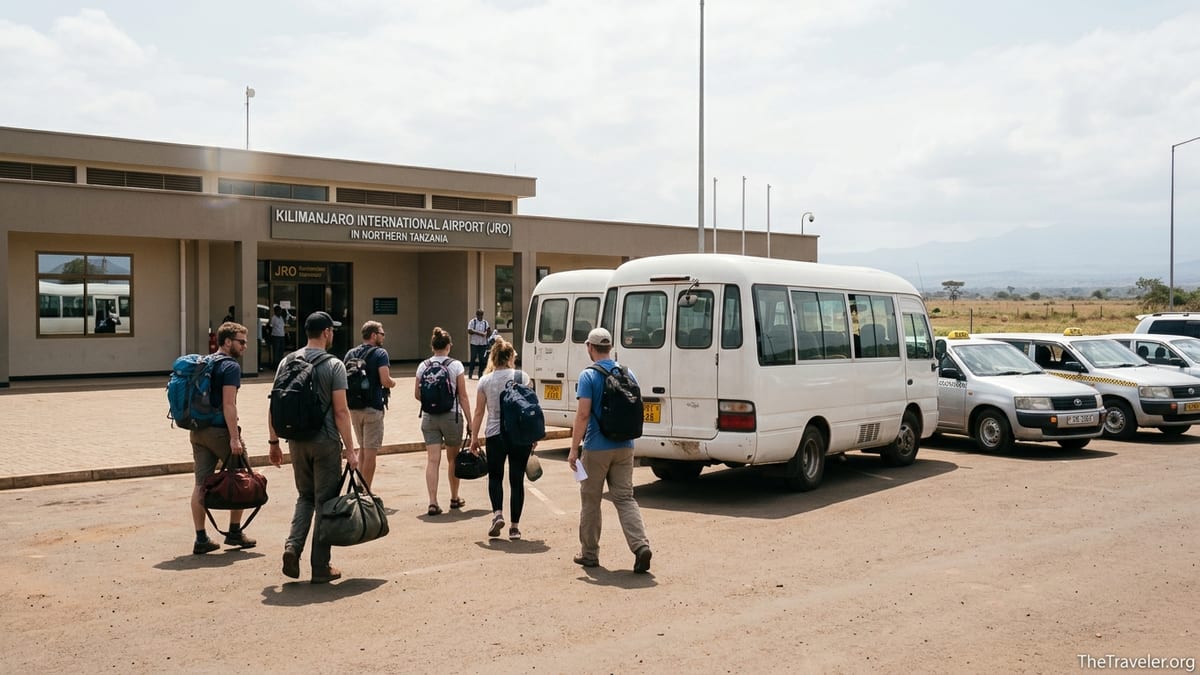
Kilimanjaro International Airport sits in largely rural countryside between the main traveler hubs of Arusha and Moshi. By road, it is typically about 45 to 60 minutes to central Arusha and roughly 40 to 50 minutes to central Moshi, depending on traffic, time of day and roadworks. The airport itself is compact, with one main terminal and a single arrivals hall where almost all ground transport originates. There is no train station, metro, or regular urban bus route connecting the terminal directly to either town.
For trip planning, it helps to think of JRO as a regional gateway rather than a city airport. Many international visitors arrive late at night from hubs such as Doha, Amsterdam or Addis Ababa, then continue by road to a lodge in Arusha for safari or to Moshi for a Kilimanjaro climb. Because distances are moderate but not trivial, and public transport is informal, you should decide in advance whether you will rely on the official shared shuttle, a prearranged hotel pickup, or an on-the-spot taxi.
The airport is operated by Tanzania Airports Authority, and information desks in the terminal can point you toward the official shared shuttle counter or taxi rank. However, schedules and prices for shared services can change and capacity is limited, so arriving with a clear expectation of typical costs and options will help you avoid unnecessary expense or touts outside the terminal.
Travelers should also distinguish JRO from Arusha Airport, a smaller domestic airfield on the edge of Arusha city. Many safari itineraries combine an international arrival at JRO with a light aircraft flight from Arusha Airport the next morning, which adds another short transfer. In that case you will first need ground transport from JRO to a hotel in Arusha, making the shuttle and taxi choices described in this guide even more relevant.
The Official Shared Airport Shuttle: How It Works
The most budget-friendly and straightforward option for many independent travelers is the official shared airport shuttle that runs between Kilimanjaro International Airport and both Moshi and Arusha. The airport operator promotes this service as a communal bus connecting arriving passengers to the two towns at a fixed low fare. Recent information from airport materials indicates a base fare of around 10,000 Tanzanian shillings per person for the shared shuttle, which is roughly equivalent to a few US dollars at current exchange rates.
In practice, travelers report that prices can vary slightly by operator and with inflation, so you may see quotes closer to 10,000 to 20,000 shillings per person in 2026. Even at the higher end of that range, this is significantly cheaper than a private taxi. For example, a couple taking the shuttle from JRO to Moshi might pay about 40,000 shillings total, compared with US$40 to US$60 for a private car quoted by many hotels and transfer companies for the same journey.
The shuttle uses minibus or small coach-style vehicles that wait until a reasonable number of passengers have gathered, especially during busy times when several international flights arrive within an hour. Travelers commonly report a wait of 15 to 45 minutes after exiting customs before the shuttle departs. Once on the road, the bus normally goes first to one town then the other, or operates distinct vehicles labeled for Arusha and Moshi. Driving time to either destination is around an hour in normal conditions, but can stretch longer in evening traffic near Arusha.
There is no need to prebook the official shared shuttle in most cases. You simply walk out of the arrivals hall, look for the shuttle desk or staff just beyond the exit doors, or ask at the information counter inside. Staff will group passengers by destination and direct you to the right vehicle. Payment is typically made in cash to the driver or conductor, so having some Tanzanian shillings from an ATM inside the terminal is a good idea, though some drivers will accept small US dollar bills for visitors arriving late when exchange options are limited.
Finding the Shuttle at JRO and What to Expect On Board
After clearing immigration and customs at Kilimanjaro International Airport, you will exit into a small public arrivals area. To find the shared shuttle, ignore independent taxi drivers immediately approaching with offers and instead look for uniformed staff or signage for airport shuttle or shared bus just outside the main doors. Airport and airline information boards sometimes display shuttle details, and staff at the tourist information desk can walk you to the pickup point if it is not obvious.
Vehicles usually park in the main car park just a short walk from the terminal entrance. You may see buses or minibuses with destination signs such as "Arusha Shuttle" or "Moshi Shuttle" in the front window. Drivers or conductors call out destinations and ask where you are going. Before boarding, confirm clearly that the price quoted is per person, verify whether it includes drop-off near your hotel or only a central stop, and ask approximately how long until departure. Do not be shy about repeating the fare and checking it again when you pay, to avoid confusion.
On board, expect basic but functional transport: padded seats, openable windows, and luggage stacked in the rear or on spare seats. Air conditioning may or may not be available or effective. Large trekking duffels and safari bags are common, and drivers are usually used to handling them. If you are carrying particularly bulky items such as camping gear or oversized camera cases, be ready to help load and secure your own luggage. It is common for bags to be piled on top of each other, so keep fragile items and small valuables in a daypack that stays with you in the cabin.
Most shuttles do not have onboard toilets, and there are no scheduled rest stops on the short run between JRO, Arusha and Moshi. If you have just come off a long international flight, it is wise to use the airport restrooms before boarding. Seat belts may be available only on some seats; if you see one, use it. Drivers know the route well and operate daily, but road conditions can include speed bumps, occasional potholes, and construction detours. For many travelers, the ride is their first glimpse of rural northern Tanzania, with views of small villages, banana groves, and, on clear days, the distant outline of Mount Kilimanjaro or Mount Meru.
Typical Prices, Luggage Rules and Money-Saving Examples
The main appeal of the shared shuttle is cost. While exact fares can change, current reports from regional transport guides suggest that a seat on a shared shuttle from Kilimanjaro International Airport to either Moshi or Arusha usually falls in the range of 10,000 to 20,000 Tanzanian shillings per person. By contrast, door-to-door private taxis for the same routes often cost between US$40 and US$80 per vehicle, depending on the time of day, how you book, and whether the transfer is bundled into a safari or Kilimanjaro trek package.
Consider a concrete example: two backpackers arriving on an evening flight from Nairobi who plan to spend a few nights in budget accommodation in Moshi. If they take the shuttle and pay 15,000 shillings each, their combined airport-to-town cost might be roughly US$12 to US$14 equivalent, leaving more money for park fees and meals. The same couple booking a private car online in advance at US$50 would spend nearly four times as much. For solo budget travelers, the difference is even starker, because a private taxi quote is usually per car, not per person.
Luggage rules on shared shuttles are informal but practical. Climbers often board with one large duffel, a daypack, and sometimes a second checked bag for gear rental, and drivers generally accept this without extra charge. You may be asked to keep smaller bags on your lap if the bus is full. If you arrive with extremely large or numerous items, such as filming equipment or multiple expedition bags, and the shuttle is busy, the driver might decline or ask for a supplement. In that case, a private transfer booked in advance is safer.
To maximize savings, combine the shuttle with a short local taxi within town rather than paying for a door-to-door airport car. For instance, a traveler flying into JRO and staying at a midrange guesthouse a few blocks from the bus park in Arusha could pay the shuttle fare into town, then take a local licensed taxi from the bus stop to the hotel for an additional 5,000 to 10,000 shillings. Even after tipping, the total cost stays well below an all-in private transfer booked through an international tour operator.
Arusha and Moshi Connections: Where the Shuttle Drops You
On the Arusha side, shared shuttles and airport minibuses commonly terminate near the central bus area or at a small cluster of recognized drop-off points close to Boma Road and the main hotel district. You might be dropped near well-known landmarks such as the clock tower roundabout or in the vicinity of popular midrange hotels and tour operator offices. From there, it is usually a short walk or a quick local taxi ride to many city guesthouses, safari lodges’ in-town bases, or backpacker hostels.
In Moshi, the shuttle typically stops near the town center, close to the main bus stand or along one of the central streets leading toward the Kilimanjaro climbing agencies. Many climbing outfitters, such as local trekking companies and budget guesthouses, arrange to meet their clients at this central stop. If you have booked a climb, your operator may send a driver or representative to wait at the shuttle drop-off with a sign, turning your budget shuttle ride into an almost door-to-door arrival without paying for a full private airport car.
Travelers transiting onward by regional bus also benefit from the shuttle’s city-center locations. Someone arriving in the morning and planning to continue from Arusha to Dar es Salaam later the same day can ride the shuttle to town, walk or take a short taxi to the main coach companies’ offices, and board an afternoon bus. Similarly, those heading from Moshi to the Kenyan border or to smaller northern towns find it easy to connect from the shuttle’s drop-off point to local buses and minibuses that fan out through the region.
When situating your hotel reservation, it can be worth choosing a property that lies within a short distance of the common shuttle stop points. A guesthouse a ten-minute walk from Arusha’s central drop-off, for example, saves the extra cost of a late-night taxi and allows you to stretch your legs after long flights. Many budget properties in both towns are familiar with the shuttle schedule and can tell you by email or phone where to ask the driver to let you off to minimize walking with luggage.
Private Transfers vs Shared Shuttle: When Paying Extra Makes Sense
While the shared shuttle offers substantial savings, there are times when a private transfer is clearly the better choice. The most obvious case is late-night or very early morning arrivals. If your international flight lands at JRO after the last scheduled shuttle has left, or in the small hours of the morning, you may find no shared bus operating. In that scenario, prearranging a private pickup with your hotel or a transfer company is safer and avoids negotiating with ad hoc taxis after midnight.
Private transfers also make sense for families with young children, travelers carrying bulky or expensive gear, and anyone arriving after an unusually long or stressful journey. For example, a family of four with two small kids arriving from Europe might decide that paying US$60 to US$70 for a private van to Arusha is worthwhile to have car seats, a guaranteed vehicle, and a direct ride straight to their lodge door. Divided among four passengers, the per-person cost becomes more reasonable, particularly when weighed against the convenience and reduced hassle.
For those booking multi-day safaris or Kilimanjaro climbs, many reputable operators include airport transfers in the overall package. A trekking company based in Moshi might roll the cost of a private airport pickup and a hotel-night transfer into its climb price, so that your guide or driver greets you in the arrivals hall with a sign and takes you directly to your staging hotel. Though this is technically not free because it is bundled into the package, it often represents good value, especially when you consider the support if your flight is delayed and the familiarity of the staff with your itinerary.
If you are on a very tight schedule, the reliability of a prebooked private transfer can also be worth the premium. A traveler landing mid-morning at JRO and needing to reach Arusha Airport in time for an early afternoon light aircraft safari departure has little margin for shuttle delays. In that case, a private car waiting at arrivals, tracking the incoming flight, and driving straight to Arusha Airport provides insurance against missing the connection, which could be far more expensive than the transfer itself.
Practical Timing, Safety and Local Transport Tips
Timing your transfer from Kilimanjaro International Airport starts with your flight schedule. As a rough guide, the shared shuttle is more likely to be available during the daytime and early evening, aligning with the busiest arrival periods. If your flight lands between about 09:00 and 21:00, especially during high safari and trekking seasons, you have a reasonable chance of catching a shuttle without undue waiting. Outside those hours, especially after midnight, assume you will need a taxi or a prearranged pickup and plan your budget accordingly.
Traffic can be heavier near Arusha in the late afternoon and early evening, when local commuters and regional buses converge on the city. From JRO to central Arusha, a nominal 50-minute drive can stretch toward 75 minutes at these times. Moshi traffic is generally lighter but still experiences slowdowns around school dismissal hours and market days. When planning onward travel, such as catching a regional bus or a domestic flight, build at least 90 minutes of buffer time on top of the typical drive, more if you cannot afford to miss the connection.
In terms of safety, both the shared shuttle and reputable private transfers are generally considered safe for visitors. The main risks are the same as in many places: opportunistic overcharging, unlicensed taxis, and occasional aggressive touting just outside the arrivals doors. Minimize problems by confirming prices in advance, using official desks where possible, and avoiding handing over your luggage to anyone who is not clearly associated with your vehicle. Once on the road, keep valuables like passports, bank cards, and electronics in a small bag on your lap or within arm’s reach rather than in the main luggage pile.
Within Arusha and Moshi, local movement from the shuttle stop to your accommodation is usually by licensed taxi or, for very short distances, on foot in daylight. App-based ride services have limited coverage in this part of Tanzania, with more reliable availability in larger cities than in Moshi, so you should not rely on them at JRO. Instead, ask your hotel in advance what a fair taxi price from the shuttle stop should be, so you have a reference when negotiating. Paying in shillings gives you more leverage and avoids poor exchange rates sometimes offered for foreign currencies by small operators.
The Takeaway
For independent travelers flying into Kilimanjaro International Airport, the shared airport shuttle is the key budget tool for reaching Arusha or Moshi without overspending. It offers a simple, low-cost ride on a route that sees thousands of climbers and safari-goers each year, and it allows you to arrive in town alongside other visitors heading in the same direction. With typical fares in the low tens of thousands of shillings per person and straightforward pickup outside the arrivals hall, it is hard to beat on price.
At the same time, a realistic view of your arrival time, luggage, energy levels and onward plans might point you toward a private transfer instead. Families, late-night arrivals and travelers with tight same-day connections often find that paying for a prebooked taxi or a package-included pickup delivers better value in peace of mind than the money saved by the shuttle. Many tours and climbs quietly bundle this into their rates, which simplifies logistics and provides a safety net if flights run late.
Whichever option you choose, arriving at JRO with a clear understanding of how the shuttle works, what it costs, and where it goes will help you navigate the first hour on the ground with confidence. Plan for typical driving times, carry some local currency for fares, confirm prices before boarding and avoid rushed decisions in the arrivals hall. With those basics in place, the road from Kilimanjaro International Airport to Arusha or Moshi becomes a straightforward start to your northern Tanzania adventure rather than a stressful unknown.
FAQ
Q1. Is there a public bus from Kilimanjaro International Airport to Arusha or Moshi?
There is no city-style public bus or train directly from the airport, but there is an official shared shuttle and plenty of taxis connecting JRO with both Arusha and Moshi.
Q2. How much does the shared shuttle from JRO to Arusha or Moshi usually cost?
Recent traveler reports and local sources suggest the shared shuttle typically costs around 10,000 to 20,000 Tanzanian shillings per person, depending on operator and timing.
Q3. Do I need to book the Kilimanjaro airport shuttle in advance?
Most travelers do not prebook the official shared shuttle. You can usually find it outside the arrivals hall, although booking a private transfer in advance is wise for very late or early arrivals.
Q4. Where does the shuttle drop passengers in Arusha?
Shuttles commonly drop passengers near central Arusha, close to the main bus area and hotel district around Boma Road and the clock tower, from where taxis or short walks reach most hotels.
Q5. Where does the shuttle stop in Moshi?
In Moshi, the shuttle generally stops near the town center and main bus stand, convenient for reaching local guesthouses and many Kilimanjaro trekking operators’ offices.
Q6. Is it safe to arrive at JRO at night and use the shuttle?
Safety standards are generally good, but shuttle availability late at night can be limited. For arrivals after about 21:00, many travelers prefer a prebooked private transfer or hotel pickup.
Q7. Can I bring large trekking luggage on the shared shuttle?
Yes, the shuttle routinely carries large duffels and backpacks for climbers and safari guests. Bags are stacked inside the vehicle, so keep valuables in a small daypack with you.
Q8. How long does the drive from JRO to Arusha or Moshi take?
Under normal conditions, expect roughly 45 to 60 minutes to central Arusha and 40 to 50 minutes to central Moshi, with extra time during peak traffic or roadworks.
Q9. When is a private transfer better than the shuttle?
A private transfer is usually better for late-night arrivals, families with young children, travelers with oversized gear, or anyone with tight onward flight or bus connections.
Q10. Do safari and Kilimanjaro tour packages include airport transfers?
Many reputable safari and Kilimanjaro operators include private airport pickups and drop-offs in their package prices, so you may not need to arrange or pay separately for shuttles or taxis.