


For many UK travelers, Starling Bank has quietly become the default card to pack for everything from long weekends in Paris to six-week backpacking trips across Southeast Asia. Marketed as a mobile-only current account rather than a dedicated “travel card,” Starling has built a reputation for low fees, strong app features and simple money management abroad. But what does this travel-friendly banking app actually do, and how does it compare in real life when you land in another country and head straight for the ATM?
Get the latest updates straight to your inbox!
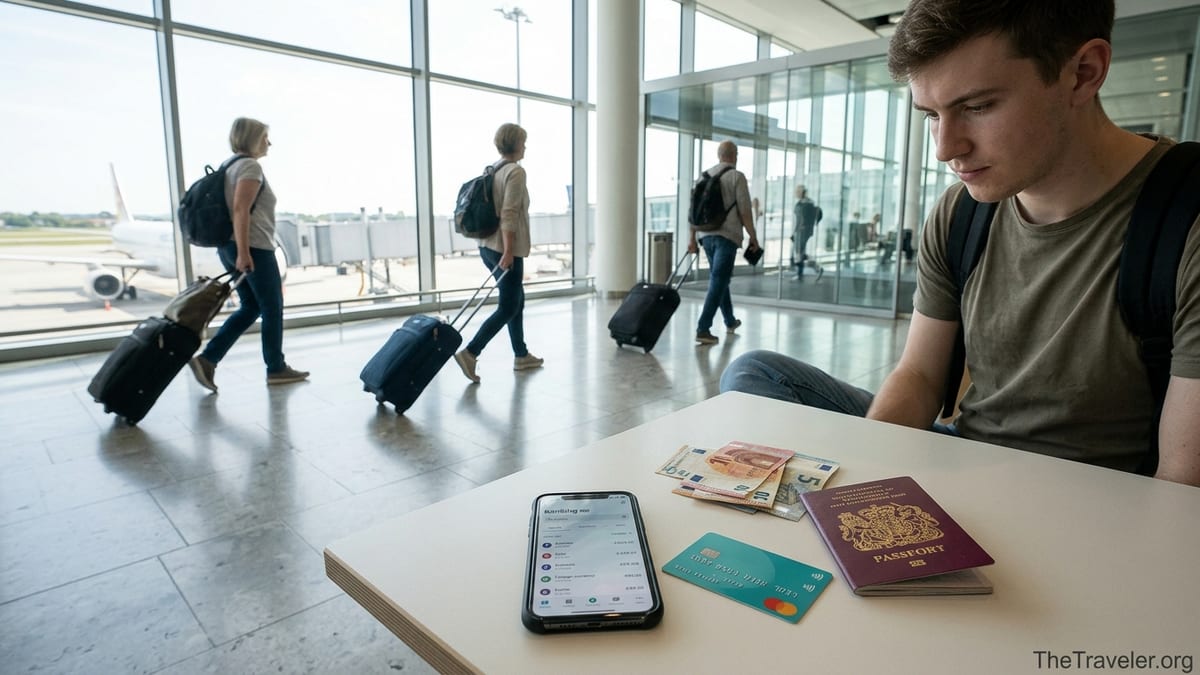
What Starling Bank Actually Is (And Who It Is For)
Starling Bank is a UK-based digital bank with a full UK banking licence and FSCS protection on eligible deposits, accessed primarily through a mobile app rather than branch networks. In practical terms, that means you get a standard current account with a debit card, but the experience, fees and travel features are built from the ground up for people who live on their phones and often travel abroad. You open and manage the account entirely through the app, from verifying your identity to freezing your card if it goes missing in a hostel dorm.
For travelers, the important point is that Starling is not a prepaid travel card or a niche fintech wallet that you top up before every trip. It is a full everyday bank account you can use at home in the UK to get your salary paid in, pay bills and set up direct debits, then take the same card overseas without switching products. This makes it particularly attractive to frequent travelers or digital nomads who want one primary account to use both in London and in Lisbon, without constantly shuffling money between accounts.
However, Starling’s personal accounts are currently aimed at UK residents. If you live in the United States or mainland Europe without a UK address, you generally cannot open a Starling retail account and will need to consider alternatives such as Wise or Revolut for similar travel benefits. Starling has focused its overseas strategy on licensing its technology to other banks rather than rolling out consumer accounts globally.
Because it holds a full UK banking licence, Starling comes under UK regulation and eligible balances are protected by the Financial Services Compensation Scheme up to the current statutory limit. For a traveller who might keep several thousand pounds in an account while booking flights or paying for accommodation, that level of protection is a reassuring contrast to some prepaid or e-money travel cards that do not have the same safeguards.
Card Payments Abroad: FX Rates, Fees and Real-Life Costs
The core reason Starling is popular with travelers is simple: the bank does not add its own foreign transaction fee when you pay with your card in another currency. When you tap your Starling card to pay for dinner in Rome or a metro ticket in Tokyo, the transaction is converted at the Mastercard exchange rate, and Starling does not bolt on a separate non-sterling fee that many traditional banks charge. In everyday terms, if you spend the equivalent of £100 abroad, you pay roughly £100, not £103 after a 3 percent fee.
Consider a typical city-break example. A couple from Manchester spends a long weekend in Barcelona and pays for most things by card: 120 euros on hotel incidentals, 60 euros on restaurant meals, and 40 euros on museum tickets and metro fares, around 220 euros in total. On a high-street UK bank debit card that adds a 2.75 percent non-sterling fee, that trip’s card spend could quietly attract about 6 euros in extra charges. With Starling, the same 220-euro spend is converted at the Mastercard rate with no extra fee from the bank, which over several trips a year can add up to noticeable savings.
The exchange rate itself is, of course, still a factor. If the pound weakens during your holiday, everything costs more in sterling regardless of which bank you use. What Starling does is remove the hidden surcharge that many banks apply on top of the card network rate. In the app, each foreign transaction appears with both the local currency amount and the exact sterling amount, usually within seconds of paying, so you can see immediately what that tapas round in Madrid or that Grab ride in Bangkok actually cost you in pounds.
There are some nuances. When a card machine abroad offers you the choice between paying in local currency or in pounds, you should almost always choose the local currency. This avoids a practice called dynamic currency conversion, where the merchant’s bank sets its own rate, usually significantly worse than the Mastercard rate that Starling would otherwise use. In real terms, that souvenir shop in Prague might offer to charge you 20 pounds for an item that would have cost 18.80 pounds if you had chosen to pay in Czech koruna and let Starling handle the conversion.
ATM Withdrawals on the Road: Fees, Limits and Local Pitfalls
Many digital banks shine for card purchases but stumble when you need cash. Starling is unusual because it does not charge its own fee for cash withdrawals abroad on personal accounts, up to the standard daily ATM limit, which is typically around £300 or its equivalent in local currency. If you land in Bangkok and withdraw 6,000 Thai baht, or take out 200 euros from a cash machine in Rome, Starling itself does not add a withdrawal fee on top of the Mastercard conversion.
This does not mean every cash withdrawal will be free, because the ATM operator can still charge its own fee. Travelers in Spain, for example, often report that some big-name ATM networks quote fees like 4 to 7 euros per withdrawal for foreign cards, while other banks’ machines remain free or cheaper. In practice, this means you might see one ATM at Barcelona airport trying to charge a 6-euro fee for a 100-euro withdrawal, while a bank-branded ATM a few streets away in the city charges nothing or a much smaller amount. Starling does not control or refund those local operator fees.
In Japan, travelers frequently use 7-Eleven or Japan Post Bank ATMs with Starling cards, since these tend to work reliably with foreign debit cards. Operators sometimes display a conversion in pounds on the ATM screen and offer to complete the transaction in your home currency instead of yen. The same advice applies as in shops: always decline conversion and proceed in local currency to avoid inflated exchange rates set by the ATM network. Starling will then convert the withdrawal at the Mastercard rate with no additional fee from the bank itself.
Because the daily Starling cash withdrawal limit is relatively generous for a debit card, many budget travelers withdraw cash less often and in larger chunks to reduce the number of times they risk paying a local ATM fee. For example, a backpacker in Mexico might take out the equivalent of £200 every week or ten days rather than withdrawing £20 or £30 every couple of days. The Starling app shows each withdrawal and any operator fee in near real time, helping you adjust your habits if you notice that certain ATM brands in your destination are consistently more expensive.
Managing Money In-App While You Travel
Starling’s travel appeal is not just about fees. The app itself is designed to make it easy to keep track of spending and manage your account on the move, whether you are working from a cafe in Lisbon or checking your balance on a night train between Vienna and Budapest. Instant spending notifications pop up each time your card is used, showing the local currency, the sterling equivalent and the merchant name when available.
Inside the app, transactions are automatically categorised into areas like “Transport,” “Groceries,” or “Eating Out,” which gives frequent travelers a clearer sense of where their money is going abroad. After a two-week trip to Thailand, for example, you can open the analytics view and quickly see how much of your budget went on accommodation, how much on street food and restaurants, and how much on internal flights or overnight trains. For digital nomads spending months abroad, this category breakdown becomes a simple budgeting tool for deciding whether a destination really is cheaper than home once all costs are considered.
Starling also lets you set up “Spaces,” which are mini pots inside your main account. Many travelers create a dedicated Travel Space and move a fixed amount into it before departure, say £1,000 for a three-week trip through Vietnam. While abroad, they pay for everything using their main Starling card, but mentally treat the Travel Space as the total budget, using the app to track how quickly it is shrinking. Some people go further and set up individual Spaces for separate trips, such as “Summer in Greece,” “Ski week in Austria,” or “Japan 2027,” funding each over time with small automated transfers.
Security management is also entirely app-based. If your wallet disappears in a crowded tram in Prague, you can freeze your Starling card in a few taps to block new transactions, then unfreeze it if you later find it at the bottom of your backpack. You can also control features such as magstripe ATM use or contactless payments, which is handy in destinations where you want to reduce the risk of certain types of card fraud while still keeping the card usable for chip-and-PIN transactions.
International Transfers, Multi-Currency Use and When Starling Is Not Ideal
Although Starling is excellent for card spending and ATM withdrawals abroad, its international bank transfer service is more mixed from a traveler’s perspective. The bank allows you to send money to a range of countries from inside the app, typically charging a percentage-based fee on the transfer amount plus an exchange margin. This is convenient if you need to pay a landlord abroad or send money to a friend in another country, but it is not always the cheapest method for large transfers compared with specialists like Wise, which focus entirely on cross-border payments.
Starling also offers euro accounts for some customers, allowing you to hold euros separately from your main sterling balance. For someone who spends several months a year in the eurozone, this can be useful. For example, a remote worker renting a flat in Lisbon might receive income in euros from an EU client and keep it in a Starling euro account to pay rent and local bills, avoiding constant small conversions into and out of pounds. However, converting between pounds and euros within Starling typically involves a small conversion fee. That means casual city-break travellers are usually better off just spending from their sterling balance and letting Starling convert at the Mastercard rate on each transaction.
There are also structural limitations in where you can send money and which currencies you can hold directly. If you are paying tuition fees in Canada or transferring a deposit to a landlord in New Zealand, you may find Starling’s supported corridor list or pricing less competitive than that of a dedicated money transfer provider. Similarly, while Starling is great for everyday travel, it is not meant to be an offshore account or a solution for more complex tax residency or wealth management issues that arise for long-term expatriates.
Finally, Starling remains a UK-focused bank. If you are a US citizen living in New York or a long-term resident of Germany without a UK address, you cannot simply download the app and open a Starling current account the way you might sign up for an international fintech wallet. In those cases, products like Wise, Revolut, or local banks that specifically market no-foreign-transaction-fee accounts may be more appropriate. For UK residents, however, Starling can comfortably sit at the centre of a travel money toolkit, sometimes supplemented by a specialist credit card or backup prepaid card.
Starling vs Traditional Banks and Other Travel Cards
To understand what Starling actually offers travelers, it helps to compare it with both traditional high-street banks and popular travel card alternatives. Most legacy UK banks still charge a non-sterling transaction fee on debit card purchases abroad, often around 2.75 to 3 percent, plus a foreign cash withdrawal fee of several pounds each time you use an overseas ATM. A week in Italy involving 500 euros of card spend and two 150-euro ATM withdrawals could easily cost a traditional bank customer 20 to 30 pounds in fees alone.
With Starling, the same week in Italy would see the 500 euros of card spend converted at the Mastercard rate with no extra percentage fee from the bank, and the two 150-euro cash withdrawals would not incur a Starling withdrawal fee, only any fee imposed by the local bank. The total cost difference over even a single holiday can be enough to pay for a decent meal out or a taxi from the airport instead of the bus. Over several trips a year, particularly for families or frequent travellers, the savings compound.
Compared with specialist travel cards like Wise or Revolut, Starling’s strength is that it is a full current account that can be your everyday bank at home, not just a travel wallet. You can receive salary, set up direct debits and hold your main financial life there. Wise and similar providers often offer slightly sharper exchange rates or cheaper international transfers, especially for large sums, and allow you to hold multiple currencies simultaneously. Many travelers use Starling alongside one of these, using Starling for day-to-day card spending and ATM withdrawals, and a specialist service for big international transfers or when holding foreign currencies long term.
Another comparison point is credit cards that waive foreign transaction fees, such as certain UK-issued reward cards. These can be excellent for purchases abroad and may offer perks like travel insurance or airline miles, but they are still credit products subject to eligibility checks, potential interest charges and the risk of debt. Starling, by contrast, is a debit card linked directly to your own money. For many younger travelers or those who prefer to avoid credit, using a low-fee debit card like Starling is psychologically and practically simpler, especially on longer trips where you do not want to return home to a large credit card bill.
The Takeaway
Starling Bank has effectively turned a standard UK current account into one of the most practical travel tools available to British travelers today. By stripping out non-sterling transaction fees on card purchases and avoiding its own ATM withdrawal charges abroad for personal accounts, it removes many of the traditional pain points of using your everyday bank card in another country. Combined with instant spending notifications, clear currency conversion breakdowns and useful money management tools like Spaces, it offers a level of transparency that can make budgeting on the road much easier.
That does not mean Starling is perfect for every scenario. Local ATM operators can still charge their own fees, international transfers are not always the cheapest, and the bank remains focused on UK-based customers. For complex cross-border financial lives or very large currency transfers, specialist providers still have a place. But for most UK residents planning anything from a weekend in Amsterdam to months working remotely around Europe or Asia, Starling functions as a reliable, low-hassle primary account that just happens to work extremely well abroad.
The most powerful aspect of Starling for travelers is that you do not need to think of it as a separate “holiday card” at all. You simply use the same account and app you rely on at home, confident that your card will work in most countries where Mastercard is accepted, without layers of extra fees. In a travel world where flight prices and hotel rates can swing wildly, that sort of predictability on your day-to-day spending is a quiet but meaningful advantage.
FAQ
Q1. Is Starling Bank a good primary account for frequent travelers?
Yes, for many UK residents Starling works well as a main account because it combines a full UK current account with very travel-friendly card fees. You can get your salary paid in, pay bills at home and then use the same card abroad without non-sterling transaction fees on purchases, which keeps things simple for frequent trips.
Q2. Does Starling charge fees for using ATMs abroad?
Starling does not charge its own fee for cash withdrawals abroad on personal accounts up to its standard daily limit, but the ATM operator in the destination country can still apply a local fee. You see this fee on the machine before confirming the withdrawal, so you can cancel and try another ATM if the charge seems high.
Q3. What exchange rate does Starling use for foreign card payments?
When you pay in a foreign currency, Starling typically uses the Mastercard exchange rate for that day and does not add a separate non-sterling transaction fee. The app shows both the local amount and the sterling equivalent shortly after you pay so you can see the actual rate you received in context.
Q4. Should I choose to pay in local currency or pounds when offered abroad?
In almost all cases you should choose to pay in the local currency of the country you are in. Selecting pounds usually means the merchant or ATM is using dynamic currency conversion with a poorer rate, which can cost you noticeably more than letting Starling convert at the card-network rate.
Q5. Can non-UK residents open a Starling account for travel?
Starling’s personal accounts are primarily aimed at UK residents with a UK address and mobile number. If you are based in another country and do not meet those criteria, you are unlikely to be able to open an account and may need to look at other travel-focused banking options available where you live.
Q6. How does Starling compare with dedicated travel cards like Wise or Revolut?
Starling is a full UK current account with travel-friendly fees, while Wise and Revolut are more like multi-currency wallets and payment platforms. Wise and similar services can be cheaper for large international transfers or holding multiple currencies, but Starling often wins for simplicity as an everyday account that happens to work very well when you go abroad.
Q7. Is my money with Starling protected if something goes wrong?
Starling is a regulated UK bank with a full banking licence, and eligible balances are protected by the Financial Services Compensation Scheme up to the prevailing limit. That gives a level of protection more in line with traditional banks than with some prepaid travel cards or e-money wallets, which may have different arrangements.
Q8. What happens if I lose my Starling card while traveling?
If your card is lost or stolen abroad, you can freeze it instantly in the Starling app to block new transactions. You can then contact Starling through in-app chat or phone to arrange a replacement card and discuss any urgent payments; in the meantime, you can still make certain app-based transfers from your account if needed.
Q9. Are there limits on how much I can spend or withdraw abroad with Starling?
Yes, there are standard daily and monthly limits for card spending and ATM withdrawals, similar to those of other banks. The exact limits can vary and are visible in the app, but for most travelers they are high enough to cover typical holiday spending, provided you plan ahead for very large one-off payments or cash needs.
Q10. Do I need a backup card if I use Starling for travel?
It is sensible to carry at least one backup card from another provider in case a particular ATM network or merchant does not accept your primary card, or if your card is lost or damaged. Many travelers pair Starling with a no-foreign-transaction-fee credit card or another low-fee debit option so they always have an alternative payment method.