


More news on this day
Virgin Voyages is preparing to extend its adults-only concept into Northern Europe, unveiling a set of longer sailings that will bring its signature, nightlife-forward cruise experience to cooler climates such as Iceland, Norway and the Baltic region from 2026 and beyond.
Get the latest news straight to your inbox!
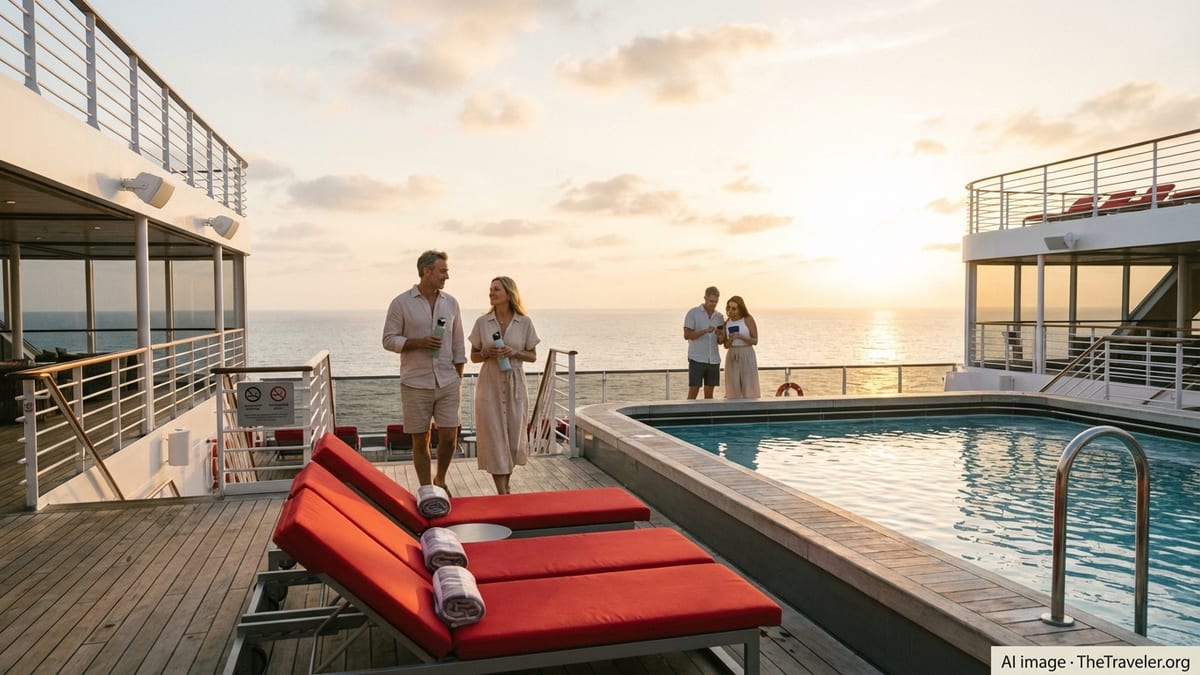
New Northern Europe Season Built Around Longer Itineraries
Publicly available itinerary information indicates that Virgin Voyages is assembling a dedicated Northern Europe season that departs from the United Kingdom and continental ports, shifting the brand beyond its established Mediterranean and Caribbean footprint. Schedules for 2026 show a focus on sailings between seven and twelve nights, a notable contrast with the shorter “long weekend” style trips that helped define the company’s early European program.
Booking engines and Virgin Voyages’ own voyage planner highlight a flagship route between Portsmouth and Iceland, reflecting growing demand for cooler-climate cruising and scenic sailing days. These itineraries position the line to compete more directly with premium brands that have traditionally dominated the North Atlantic and Arctic-adjacent market.
The Northern Europe deployment will sit alongside Virgin Voyages’ existing Europe cruises from ports such as Barcelona, Athens and Rome, which are marketed as six to fifteen night voyages spanning the Mediterranean and broader European coastline. The expanded mix of itineraries suggests the line is moving to keep its repeat guests within the brand for a wider variety of summer vacations.
Industry observers note that the move aligns with broader cruise sector trends, as lines add capacity in Northern Europe to balance strong demand in the Mediterranean and provide alternatives to regions affected by geopolitical constraints.
Ports of Call Stretch From Iceland to the Baltic
Although the full list of calls is still being refined, current schedules and promotional materials point to an itinerary pattern that combines Icelandic ports, Norwegian fjords and classic Baltic cities with a handful of Western European stops. Sailings advertised for late summer 2026 connect Portsmouth with Iceland over ten nights, typically pairing at-sea days with time in Reykjavik and smaller Icelandic communities.
Virgin Voyages has also previewed a broader Northern Europe portfolio for a later season that includes Scandinavia and Baltic capitals, with a ship homeporting in Amsterdam over a mid‑summer window. Itineraries for that deployment feature a mix of maiden calls across two seas, incorporating both well-known ports and lesser-visited destinations designed to appeal to repeat cruisers looking for new experiences.
Travel trade documentation and third-party cruise retailers show Northern Europe cruises marketed with an emphasis on dramatic scenery, extended daylight hours and opportunities for active shore excursions, from hiking and cycling to glacier and geyser touring. This creates a contrast with the line’s existing Mediterranean offerings, which tend to foreground beaches and warm-weather nightlife.
The geography of the region also allows for scenic cruising through fjords and archipelagos, something particularly attractive to guests used to open-ocean transits in the Caribbean. Longer daylight in high summer further supports Virgin Voyages’ positioning around late-night dining and entertainment.
Adults-Only Concept Comes to Cooler Climates
Virgin Voyages differentiates itself as an adults‑only cruise line, welcoming guests aged 18 and over and marketing heavily to child‑free couples, groups of friends and solo travelers. Bringing that model to Northern Europe introduces a relatively uncommon product to a market where family‑oriented lines have long held the largest share.
According to the company’s general positioning for Europe cruises, ships feature a high concentration of specialty dining, contemporary entertainment and late-night venues, along with wellness and fitness programming. Applying this formula to Iceland, Norway and Baltic ports is expected to appeal to travelers seeking destination‑intensive itineraries without family-focused amenities such as kids’ clubs or water parks.
Travel commentary and discussion in cruise communities suggest that some guests who previously favored Northern Europe with more traditional lines are now considering Virgin Voyages as an alternative, citing the appeal of an adults‑only atmosphere combined with modern design and flexible dining. Others are watching to see how the brand’s energetic onboard style translates to itineraries that emphasize natural landscapes and cultural touring over pool‑deck sunbathing.
The brand’s expansion into cooler climates may also help smooth seasonal demand. By offering Northern Europe in peak summer while maintaining strong Mediterranean and North American programs, Virgin Voyages can keep ships deployed year‑round in a mix of warm and temperate destinations.
Homeports and Schedules Signal Broader European Strategy
The emerging Northern Europe program is anchored by Portsmouth on England’s south coast and Amsterdam as key homeports, according to booking platforms that compile confirmed sailings. These cities provide strong air and rail links for both British and international travelers and allow the line to reach Iceland, Norway and the Baltic within ten to twelve night windows.
Virgin Voyages already operates a range of European cruises from Barcelona, Piraeus near Athens, and Civitavecchia near Rome, offering six to fifteen night itineraries around Spain, France, the Adriatic and Greek Islands. Adding a Northern Europe layer means the company can now present Europe as a multi‑region portfolio rather than a single Mediterranean focus, with marketing materials referring broadly to “Northern Europe journeys” alongside “Weeklong European escapes” and “Long Med days.”
Deployment summaries for 2026 and 2027 also highlight that the line is increasing the share of longer sailings in its schedule, reflecting demand from guests willing to allocate more vacation time to reach remote destinations. Travel agencies report that these Northern Europe cruises are typically priced higher per night than shorter warm‑weather itineraries, consistent with industry patterns for Iceland and fjord cruising.
Observers note that the combination of UK and Dutch homeports also diversifies the brand’s source markets. Sailings from Portsmouth may skew more heavily toward British guests, while Amsterdam departures are expected to draw from a mix of continental Europe and long‑haul markets, including North America.
Competitive Landscape Heats Up in the North Atlantic
Virgin Voyages’ decision to send a ship into Northern Europe comes as several rival cruise operators expand their own presence in the region. Premium and expedition brands have been adding Norwegian fjords, Arctic Circle and Iceland routes, while large contemporary lines have scheduled more departures from ports such as Southampton, Copenhagen and Reykjavik.
Industry reports show that cruise lines increasingly view Northern Europe as a complement to, rather than a replacement for, Mediterranean capacity, providing options for guests who want cooler temperatures, nature‑focused excursions and fewer beach days. For Virgin Voyages, which built its image around warm-weather “sun and fun” sailings, the move into sub‑Arctic waters is being watched as a test of how flexible its brand can be.
Travel analysts point out that the company can leverage its existing reputation for high service levels and design‑forward ships while tailoring entertainment and shore excursion offerings to destinations such as Icelandic hot springs, Nordic capitals and Baltic UNESCO sites. If successful, the Northern Europe program could become a recurring seasonal feature, helping to support the company’s four‑ship fleet with a mix of itineraries that appeal to both new and returning guests.
With initial Northern Europe cruises already bookable and further Baltic and Scandinavia deployments previewed for a later season, the next two years are expected to demonstrate how strongly travelers respond to the combination of an adults‑only cruise style and some of Europe’s most dramatic coastal landscapes.