


More news on this day
The U.S. State Department has renewed warnings tied to heightened Middle East tensions, advising Americans in the region to exercise increased caution and be prepared for sudden flight cancellations, airspace closures, and broader travel disruption.
Get the latest news straight to your inbox!
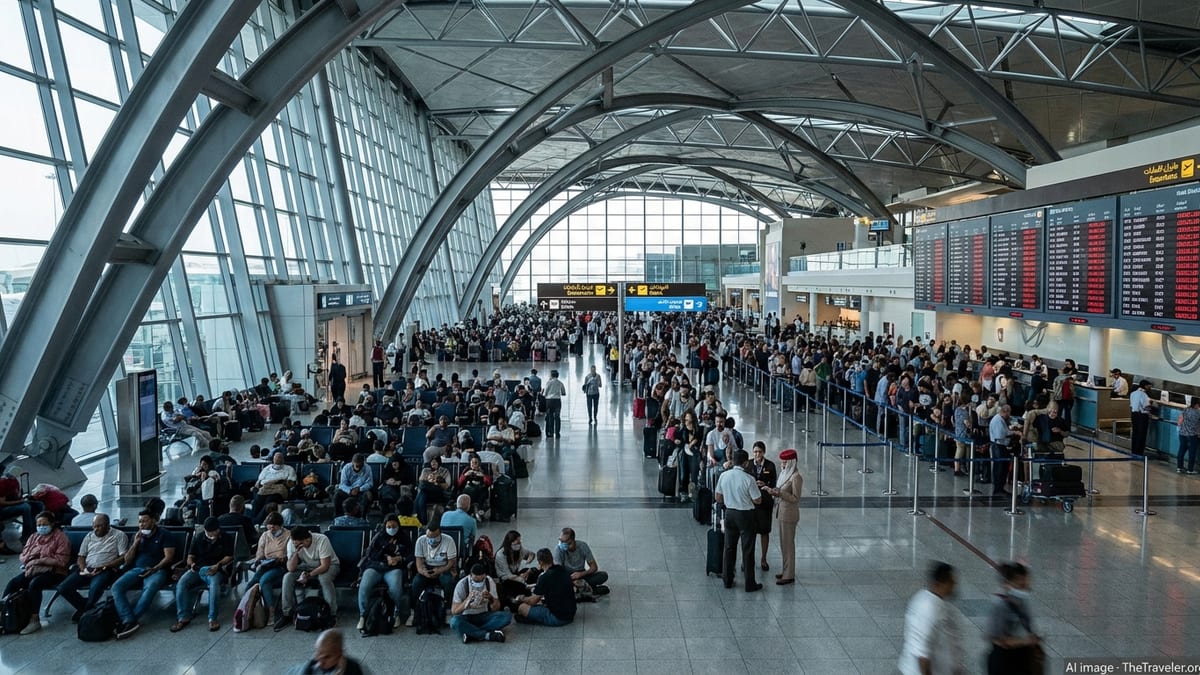
What the latest State Department warning says
The most recent State Department “Worldwide Caution” update, dated July 22, 2026, flags a volatile security environment linked to heightened tensions in the Middle East and the possibility of rapid, unforeseen escalation. The alert emphasizes practical travel impacts as much as security concerns, including periodic airspace closures and unpredictable airline schedule changes.
The advisory also urges Americans outside the Middle East to reconsider travel to and through the region. For travelers who still need to transit, the notice points to the importance of monitoring airport operations and carrier communications for last-minute changes that can strand passengers or force reroutes.
Separately, the State Department’s Middle East travel information page continues to direct travelers to destination-specific advisories and embassy security alerts, and it lists the department’s emergency assistance numbers for U.S. citizens who need help abroad.
Where advisories are most restrictive right now
While the “Worldwide Caution” is global in scope, the State Department’s country-by-country advisories show especially restrictive guidance across parts of the Middle East. Iraq, for example, carries a Level 4 “Do Not Travel” advisory dated August 29, 2026, citing risks that include terrorism, kidnapping or hostage taking, armed conflict, and limits on the U.S. government’s ability to provide emergency services.
Other destinations carry high-level warnings even when they are not at Level 4. Saudi Arabia is currently listed as Level 3 “Reconsider travel,” with the advisory dated September 15, 2026. The summary highlights risks tied to regional conflict and the potential for drone and missile activity, alongside other concerns such as terrorism and restrictions that can affect travelers.
Israel, the West Bank, and Gaza are also covered by a Level 3 “Reconsider Travel” advisory dated August 26, 2026. The country information page includes specific “Do Not Travel” areas, including certain border zones and a buffer area near Gaza, reflecting how localized conditions can sharply change risk even within a single destination.
How the warning could affect flights and transit routes
For many travelers, the most immediate consequence of a regional warning is not a change in entry rules but a change in how, when, and whether flights operate. The State Department’s Worldwide Caution explicitly warns travelers to expect flight cancellations and periodic airspace closures, and it notes that some airlines in the region have delayed restoring prior schedules while others have canceled certain routes.
That matters for Americans whose itineraries include connections through major Middle East hubs. Even when a traveler’s final destination is outside the region, a disrupted connection can lead to long airport holds, rebooking complications, and higher costs when the remaining seats are limited or must be rerouted on short notice.
Travelers with time-sensitive plans, such as cruises that require arriving in a specific port city on embarkation day or tours with fixed start dates, may want to build in extra buffer days and confirm the operator’s policies for missed departures. The State Department warning underscores that conditions can change quickly, making same-day workarounds difficult.
Steps U.S. travelers can take before and during a trip
The State Department’s guidance focuses on staying connected to real-time official updates. Travelers are encouraged to enroll in the Smart Traveler Enrollment Program (STEP) to receive security updates from U.S. embassies and consulates, and to monitor embassy and consular alerts for their specific location.
On the practical side, the department advises travelers moving through the region to confirm their flights directly with air carriers and to contact airlines for flight-change details if an itinerary is affected. In periods of rapid disruption, airline apps and automated emails may lag behind gate changes and operational updates.
For Americans who need assistance, the State Department’s Middle East travel page provides emergency contact numbers: +1-202-501-4444 from abroad and +1-888-407-4747 from the U.S. and Canada. Travelers concerned about evolving security conditions can also review destination-specific advisories and any recent security alerts before deciding whether to proceed, postpone, or change routing.