


More news on this day
The United States Department of State has issued a fresh security alert for Americans across the Middle East, urging citizens to exercise heightened caution, anticipate sudden travel disruptions and be prepared to depart the region quickly if tensions escalate further.
Get the latest news straight to your inbox!
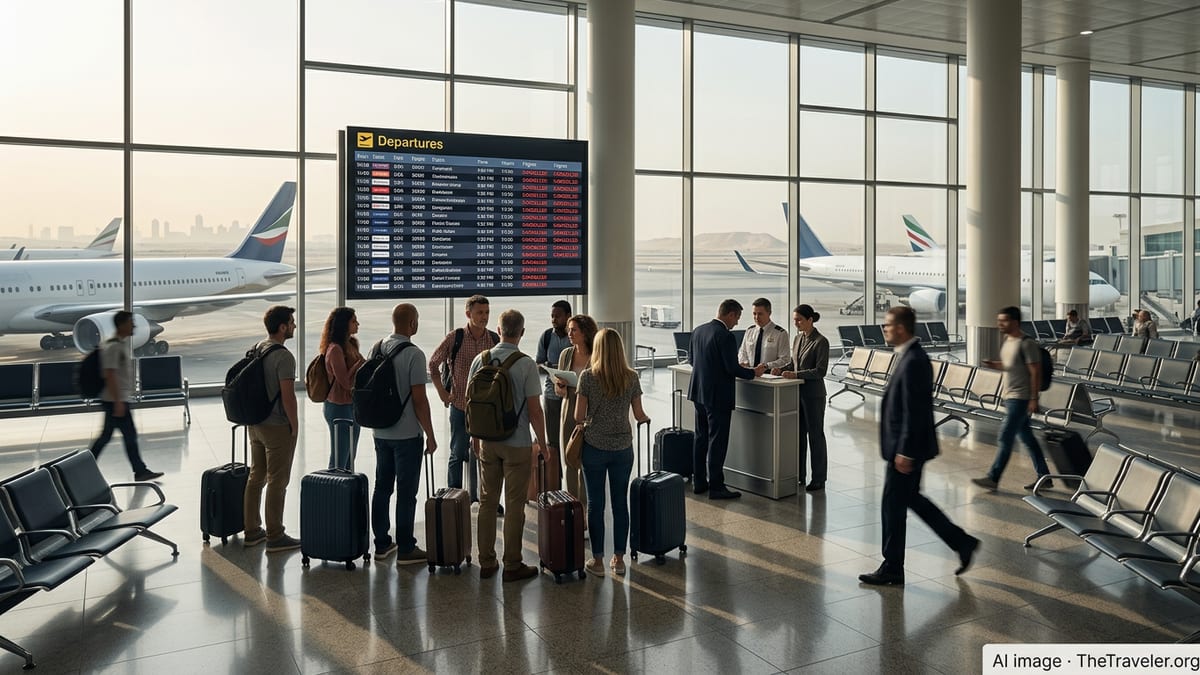
New alert underscores volatile regional security picture
According to publicly available information, the latest State Department alert highlights that the security environment across the Middle East remains highly unpredictable, with the potential for rapid escalation. The message, shared via embassy channels and consular updates, advises U.S. citizens in multiple countries to closely monitor local developments and U.S. government communications.
The wording of the alert indicates that Americans should be ready to adjust travel plans at short notice, including leaving the region if commercial flights and overland routes remain available. The guidance stresses that conditions can change quickly, and what appears safe one day may be subject to airspace closures, new military activity or targeted attacks the next.
Reports indicate that U.S. missions in several Gulf and Levant states have reposted the alert, emphasizing the risk of spillover from ongoing conflict and the possibility of further strikes, protests or attacks on infrastructure. The advisory does not announce new evacuations, but it reinforces that individuals should not rely on the prospect of large-scale government-assisted departures.
Regional media and international outlets describe the alert as part of a broader pattern of warnings that have intensified since the outbreak of the Iran conflict earlier this year, when the State Department first urged Americans in select countries to “depart now” using commercial options while they remained viable.
Which countries are affected and how risk levels differ
While the latest message is framed broadly for “Americans in the Middle East,” it sits on top of a detailed country-by-country advisory system that remains in force. Publicly posted travel guidance currently places destinations such as Iran, Iraq, Lebanon, Syria, Yemen and Gaza at the highest warning tier, advising U.S. citizens not to travel there at all due to armed conflict, terrorism, kidnapping and civil unrest.
Other states, including Bahrain, Israel, the West Bank, Jordan, Kuwait, Oman, Qatar, Saudi Arabia and the United Arab Emirates, are generally categorized at a slightly lower level that urges travelers to reconsider nonessential trips. In these countries, the concern centers on the risk of missile or drone strikes, potential attacks on facilities associated with Western interests, and sudden flare-ups along national borders or within contested territories.
The State Department’s security messaging also notes that even in locations with relatively stable day-to-day conditions, Americans may face indirect effects from the wider confrontation, such as the diversion of flights, temporary closure of airports, or heightened scrutiny at checkpoints and border crossings. The alert advises citizens to maintain flexible itineraries, keep exit options under review and avoid areas where large gatherings or demonstrations are expected.
Travel industry observers point out that many commercial carriers have already rerouted flights around high-risk airspace or reduced frequencies to certain hubs, and the new alert may accelerate that trend if insurers and operators reassess their exposure in light of further military activity.
What the alert means for travelers and expatriates
For Americans already living, working or traveling in the region, the latest warning is framed as a call to prepare rather than to panic. The alert encourages individuals and families to review their personal security plans, confirm that travel documents are valid, and ensure they have access to funds and communication tools if they need to move quickly.
Consular guidance shared in recent weeks has repeatedly emphasized that U.S. citizens should not assume that the government will be able to organize large-scale evacuations in the event of a sudden deterioration. Instead, the expectation is that most people will leave, if necessary, on commercial flights or by crossing land borders into safer neighboring states, conditions permitting.
Security specialists quoted in open-source analyses note that this type of preemptive messaging is designed to reduce the number of Americans who might become stranded if air routes close or infrastructure is damaged. Encouraging citizens to “be prepared to depart” gives those in higher-risk locations a window of time to reassess whether their presence is essential and, if not, to leave before options narrow.
For U.S. businesses, schools and nongovernmental organizations that rely on American staff in the Middle East, the alert may prompt a reevaluation of staffing levels, travel rotations and contingency arrangements, particularly in countries that border active conflict zones or host significant military facilities.
Practical steps recommended for Americans in the region
Publicly available travel-security guidance suggests several practical measures for Americans who choose to remain in the Middle East at this time. Citizens are encouraged to enroll in official notification systems so they can receive real-time security alerts from the nearest embassy or consulate, including updates on airport status, curfews and localized incidents.
The alert urges travelers to maintain a low profile, avoid locations associated with Western interests where possible, and steer clear of protests and large public gatherings that could become flashpoints. It also highlights the importance of situational awareness, such as identifying multiple routes back to accommodation, understanding local emergency numbers and tracking local news in both English and regional languages.
Travel planners recommend that Americans keep several days’ worth of essential supplies on hand, including medications, and maintain electronic and paper copies of passports and visas. Having contingency funds in multiple forms, such as cash in widely accepted currencies and access to international payment cards, can also be crucial if banking systems face outages.
Families with children or dependents are being advised, in publicly posted guidance, to discuss separation plans and rendezvous points in advance, and to consider early departure from higher-risk cities even if wider evacuations are not in progress, especially where medical support or mobility constraints could complicate a rapid move later.
Impact on future travel plans to the Middle East
The State Department’s renewed warning is likely to affect future itineraries for many Americans considering travel to the Middle East for tourism, business or family visits. Travel analysts expect that some leisure visitors will postpone or redirect trips, especially to destinations located near active fronts or missile trajectories, until there is clearer evidence of de-escalation.
At the same time, major Gulf hubs have historically proven resilient during periods of regional tension, and industry observers note that some travelers may continue to use cities such as Dubai, Doha or Abu Dhabi as transit points while avoiding onward connections to higher-risk countries. Airlines and tour operators may respond by adjusting schedules, expanding flexible booking policies or offering alternative routings that avoid the most exposed airspace.
Insurance providers are closely watching developments, with several firms already excluding certain countries from standard coverage or requiring additional premiums for travel linked to conflict zones. Travelers are being advised to read policy terms carefully, checking clauses related to war, terrorism and government advisories, so that they understand what support would be available if plans are disrupted.
For now, the message from official U.S. travel guidance remains consistent: Americans in the Middle East should stay alert, keep close track of changing conditions and be prepared to leave if the situation worsens, relying on commercial options while they remain available.