


More news on this day
Thousands of passengers across Canada faced scrambled travel plans as more than 100 flights were cancelled and hundreds more delayed around Montreal, Ottawa, Quebec City, Toronto, Nain and other communities, disrupting operations at major carriers including WestJet, Air Canada, Air Borealis, PAL Airlines, Flair and Porter.
Get the latest news straight to your inbox!
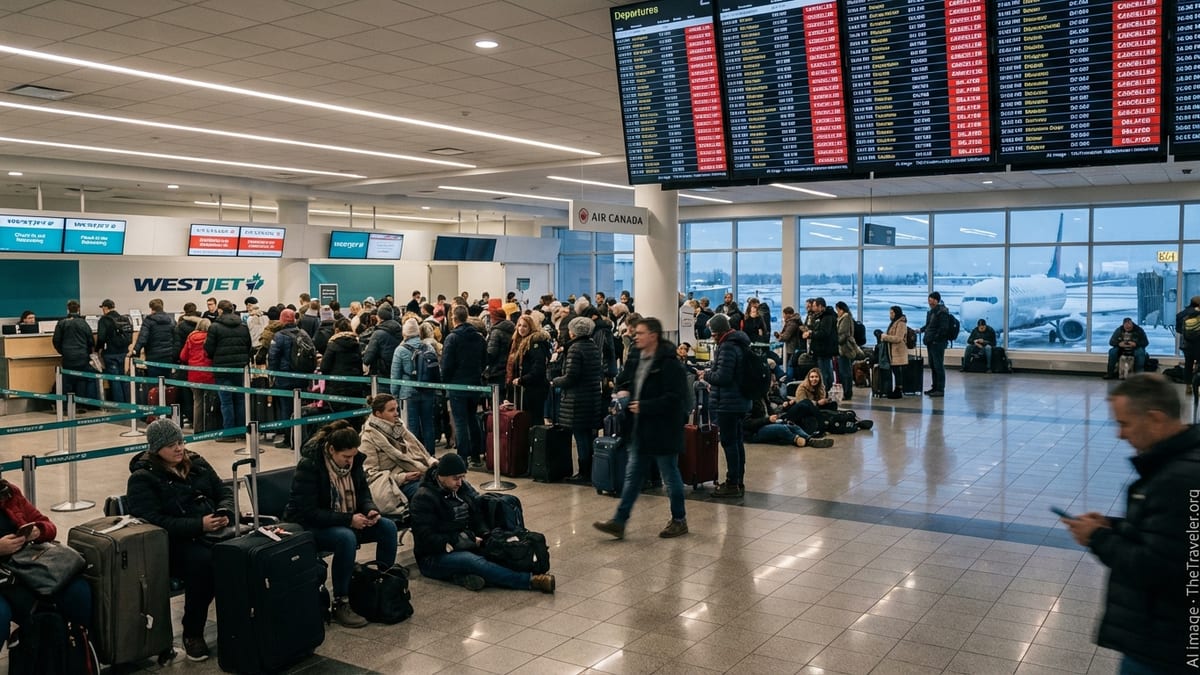
Wide Network Disruptions At Major Canadian Hubs
Publicly available flight-tracking data for Thursday shows at least 101 cancellations and around 860 delays affecting departures and arrivals at key Canadian airports. The impact is most visible at major hubs such as Toronto Pearson, Montreal Trudeau, Ottawa and Quebec City, where heavy domestic and transborder schedules leave little room to absorb cascading delays.
Operations data indicate that flights on some of the country’s busiest corridors, including Montreal to Toronto and Ottawa to Western Canada, experienced rolling delays throughout the day as earlier disruptions pushed aircraft and crews out of position. While some services managed to depart close to schedule, others accumulated delays stretching several hours, ultimately leading to cancellations when crew duty limits and airport curfews came into play.
Travel-industry monitoring platforms also show that knock-on effects rippled well beyond the largest hubs. Delays on east–west trunk routes left connections to smaller cities squeezed, while congestion at key airports lengthened turnaround times at the gate, further extending the disruption window into the evening.
Remote Communities Feel The Strain In Nain And Beyond
Alongside Canada’s largest airports, smaller regional fields and remote airstrips also saw service interruptions. In Labrador, flights serving communities such as Nain, which rely heavily on regional carriers including Air Borealis and PAL Airlines, reported delays and cancellations that left travelers with limited alternatives and long waits for rebooking.
Regional schedules in northern and Atlantic Canada often operate with slim buffers and minimal spare aircraft. When a mainline or regional flight is held up further south, the aircraft and crew that would normally cycle into remote routes can arrive late or not at all. Industry data and past disruption patterns indicate that a single aircraft taken out of service in these networks can trigger multiple cancellations across a day’s schedule.
For residents of remote communities, such interruptions can affect not only leisure travel but also access to medical care, education and essential goods. With many northern routes operating only a few times per week, passengers who lose a seat to a cancellation may face waits of several days before another flight is available, depending on seasonal demand and aircraft capacity.
Multiple Airlines Caught In A Complex Disruption
The latest disruption has affected a broad swath of carriers, from Canada’s two largest airlines, WestJet and Air Canada, to low-cost and regional operators such as Flair, Porter, PAL and Air Borealis. Flight-status boards and tracking services show schedule changes spread across domestic, cross-border and some longer-haul services, underlining how interconnected airline operations have become.
WestJet and Air Canada, which operate dense schedules at Toronto Pearson and other major gateways, appear among those with the highest absolute numbers of delayed services, reflecting their overall scale. However, smaller airlines can feel an outsized impact from a comparatively small number of cancellations, as limited fleets and tight utilization make it harder to reposition aircraft or crews when problems arise.
Porter and Flair, which have been expanding aggressively on competitive domestic routes, also figure into the disruption picture. With newer services linking Montreal, Ottawa, Quebec City and Toronto to both Canadian and sun destinations, schedule hiccups on one leg can quickly cascade, leading to missed connections, crew timing issues and, eventually, aircraft taken out of rotation for the day.
Weather, Congestion And Operational Pressures Converge
The pattern of delays and cancellations suggests a mix of contributing factors rather than a single cause. Recent Canadian travel seasons have been marked by bouts of severe weather, including late-winter storms and prolonged cold snaps, which regularly slow airport operations by limiting runway availability, complicating ground handling and extending de-icing procedures.
Operational data and previous seasons’ performance reports also point to persistent staffing challenges across airlines and airport service providers. When ground crews, maintenance teams or flight crews are stretched thin, routine disruptions, such as an aircraft arriving late from a previous leg, can take longer to recover. This, in turn, increases the likelihood that short delays turn into cancellations later in the day as duty-time limits approach.
Congestion at Canada’s largest hubs compounds these pressures. With airports such as Toronto Pearson and Montreal Trudeau handling busy schedules that include transcontinental and international operations, slots for recovery flights are limited. When several flights in a bank are affected at once, air traffic control restrictions and gate availability can force carriers to prioritize certain routes while suspending others.
Passengers Confront Long Lines, Rebooking Challenges And Compensation Rules
For travelers, the immediate impact of 101 cancellations and hundreds of delays is felt in airport departure halls, where long check-in and customer-service lines have been reported. With multiple airlines rebooking at the same time, seats on alternative flights can quickly sell out, particularly on routes with limited competition or low-frequency service.
Canadian air passenger protection regulations set out minimum standards for communication, care and, in some cases, financial compensation when flights are disrupted. Consumer-rights organizations note that the level of assistance travelers receive often depends on whether the disruption is categorized as within the airline’s control, within its control but required for safety, or outside its control entirely. In practice, determining which category applies can be complex, especially when several factors such as weather, congestion and staffing interact.
Travel advocates generally recommend that passengers keep detailed records of their disruption, including boarding passes, receipts and screenshots of flight-status updates, in case they pursue claims later. At the same time, they advise flexibility in accepting alternative routings or airports when offered, particularly during widespread disruption events when capacity across the network is constrained.
As airlines and airports work through the backlog created by today’s cancellations and delays, operational data suggest that some effects may linger into subsequent days, particularly on routes that rely on tight aircraft rotations or limited regional capacity. Passengers with upcoming travel around Canada are being urged by publicly available advisories and industry coverage to monitor flight status closely and allow extra time at the airport.