


More news on this day
Operations at Hartsfield Jackson Atlanta International Airport were severely disrupted in mid-June 2026, with at least 624 delays and 17 cancellations reported as major U.S. carriers struggled to keep domestic and international schedules on track during a volatile stretch of summer storms and network strain.
Get the latest news straight to your inbox!
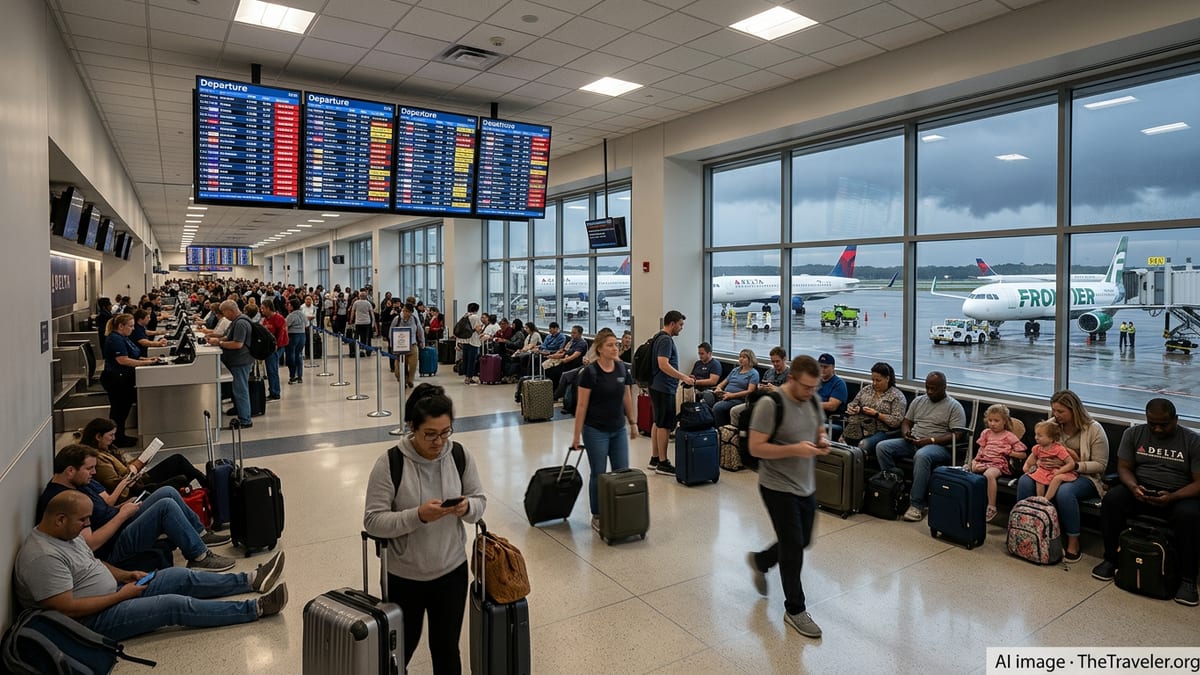
Severe Weather and Network Pressures Converge on Key Hub
Publicly available flight tracking dashboards and social media updates point to a sharp spike in disruption at Atlanta’s primary hub airport as scattered thunderstorms, heavy rain and lightning rolled across much of Georgia and neighboring states around June 18 and 19. Forecast discussions referenced a risk of intense downpours and localized flooding, conditions that typically force temporary ground stops or flow restrictions on departures and arrivals.
Historical climate data for Atlanta in June show that the city regularly experiences convective storms, but this mid-June pattern combined tropical moisture, unstable air and repeated storm rounds across the broader Southeast. Weather commentators in regional forums described a fast changing environment, with radar imagery showing strong cells building and decaying over key air corridors used by flights to and from Atlanta.
Airport operations in such conditions often slow dramatically as controllers increase spacing between aircraft, lightning protocols limit ramp activity and airlines reroute or hold flights on the ground. The resulting bottlenecks can quickly cascade through an interconnected network, especially at a hub that routinely handles more daily flights than any other airport in the world.
The 624 delays and 17 cancellations recorded over the period reflect that combination of weather and system congestion rather than a single isolated failure. While most affected flights eventually departed, many did so hours behind schedule, contributing to missed connections and overnight disruptions across the country.
Delta Bears Brunt of Disruption at Its Largest Hub
Delta Air Lines, which holds the dominant share of passenger traffic at Atlanta according to recent city aviation disclosures, appeared to face the largest number of affected flights by virtue of its scale at the hub. Flight status tools and customer reports highlighted numerous delayed Delta departures to major domestic destinations such as New York, Chicago, Denver and Orlando, along with transatlantic services to Europe experiencing knock on effects from earlier weather and operational challenges.
In online travel and aviation forums, passengers described receiving weather advisories from Delta warning of potential departure and arrival disruptions around Atlanta as storm systems moved through the region. Several itineraries were reportedly modified in advance, including rebooked connections and voluntary changes by travelers seeking to avoid tightly timed layovers through the hub.
Recent federal data on on time performance show that June is already one of the more challenging months for airlines at large hubs, with tarmac delays and extended gate holds more likely when convective weather is present. Analysts note that even when Delta maintains relatively strong on time metrics compared with peers, its reliance on Atlanta means that any slowdown there can reverberate across its national and international network for days.
By late in the disruption window, schedule displays suggested a gradual recovery as storms moved east and south of the metro area and the airport returned to more typical throughputs. However, some passengers connecting through overnight banks reported residual delays, particularly on longer haul services.
Southwest, Frontier, American and United Also Affected
While Delta absorbed the heaviest volume of delayed flights, other major carriers that operate significant schedules at Atlanta also experienced interruptions. Flight boards and third party trackers showed Southwest, Frontier, American and United all posting delayed departures and arrivals on routes where Atlanta serves as either an origin, destination or connection point.
Southwest, which focuses on point to point flying rather than a single dominant hub at Atlanta, saw delays ripple into its broader network, especially on services linking the Southeast with Texas and the Midwest where additional storms were in play. Travel discussion threads indicated that some Southwest itineraries required tight re-accommodation as aircraft and crews arrived late from weather affected cities.
Frontier, which has been expanding its presence at Atlanta with more low cost leisure routes, also appeared on delay lists, particularly on East Coast and Florida flights. Posts from frequent customers in recent weeks have praised the added options but flagged the sensitivity of ultra low cost schedules to extended weather holds, given thinner route frequencies.
American and United, which rely on other airports as their primary hubs, nonetheless felt the impact on spokes touching Atlanta. Delayed feeder flights into their core networks at Dallas Fort Worth, Charlotte, Chicago and Houston created downstream timing pressures on onward domestic and international departures, underscoring how an extended slowdown at a single large hub can propagate widely.
Knock On Effects for Domestic and International Travelers
The cluster of 624 delays and 17 cancellations came at a time when U.S. airlines were managing near record summer demand, with many planes reportedly departing close to full. In that environment, even a relatively modest number of outright cancellations can prove difficult to absorb, as spare seats on later flights are scarce and aircraft utilization is already high.
Domestic travelers faced a mix of gate holds, extended taxi times and missed connections, particularly on north south routes that funnel through Atlanta as a mid continent transfer point. Passengers connecting from smaller regional cities into long haul flights found that even short delays of under an hour could translate into overnight stays when last departures of the evening were affected.
International routes also experienced stress. Recent traveler accounts from early June pointed to lingering delays on transatlantic services from Atlanta to major European gateways following previous weather and operational disruptions. The mid June storms added another layer of complexity as airlines worked to reposition widebody aircraft, crew and catering loads, sometimes swapping equipment or consolidating lightly booked departures.
Air travel consumer advocates pointed to the situation as a reminder of how vulnerable complex hub and spoke systems can be to clustered summer weather. When several large carriers share the same airfield and airspace during an active storm pattern, the margin for recovering quickly narrows, and a relatively small number of schedule adjustments can multiply into hundreds of delayed segments.
What Travelers Can Expect Through the Remainder of June
Long range outlooks for the Southeast in late June 2026 indicate continued chances of scattered afternoon thunderstorms and periods of heavy rain, a typical pattern for the region at this time of year. While such forecasts do not guarantee further large scale air travel disruption, they suggest that travelers using Atlanta and other major hubs across the storm belt may continue to encounter weather related schedule changes.
Airline operational planning teams generally attempt to build resiliency into summer schedules by increasing turn times, staging spare aircraft where possible and coordinating closely with air traffic managers during active weather. However, when multiple storm systems affect several hubs simultaneously, even robust plans can be overtaken by events.
Publicly accessible flight tracking sites and airline mobile applications allow passengers to monitor developing delays in real time, and recent experience around Atlanta underscores the value of checking status frequently in the 24 hours before departure. Flexible ticket policies and same day change options, where available, can provide additional room to maneuver when severe weather is in the forecast.
For now, the mid June disruption centered on Atlanta serves as another example of the complex interplay between weather, infrastructure capacity and airline scheduling in the peak summer travel season, with major carriers including Delta, Southwest, Frontier, American and United all navigating the challenge of keeping passengers and crews moving against a backdrop of unstable skies.