


Shamakhi sits among rolling wine country and low Caucasus foothills, about a two-hour drive west of Baku. It is one of Azerbaijan’s oldest cities, once a capital of the Shirvanshah kingdom and now a calm regional hub surrounded by vineyards, forests and mountain roads that continue toward Ismayilli, Gabala and Sheki. For first-time visitors, Shamakhi can feel very different from cosmopolitan Baku: slower, more traditional, but also less predictable in terms of transport, services and language. Understanding a few practical details before you go will make your visit smoother and help you get more from this historic corner of the country.
Get the latest updates straight to your inbox!
Getting to Shamakhi and Around the Region
Most travelers reach Shamakhi from Baku, usually as part of a wider route that continues to Lahij, Ismayilli or Sheki. By private car or pre-booked transfer along the main Baku–Shamakhi highway, the drive generally takes around two hours in light traffic, sometimes a bit more after rain or snow in winter when trucks slow the ascent into the hills. Many local tour operators in Baku sell day trips that combine Shamakhi’s Juma Mosque with nearby sights like the Pirqulu area or Lahij village; door-to-door tours typically cost more per person than public transport, but they remove language and logistics barriers for first-time visitors.
Budget travelers usually rely on long-distance buses and marshrutkas, the shared minibuses that are the backbone of regional transport in Azerbaijan. Services to Shamakhi generally leave from the Baku International Bus Station, with tickets often in the range of a few Azerbaijani manat more than comparable services to other towns on the same corridor. Seats can sell out around weekends and holidays, especially in summer and during major public holidays, so it is wise to buy a ticket at the station or via local booking platforms at least a day ahead if your schedule is tight. Expect straightforward vehicles rather than luxury coaches, with limited baggage space and music or TV playing in the cabin.
Taxis fill in the gaps between scheduled buses. Some visitors negotiate directly with a driver in Baku for a one-way transfer to Shamakhi; in recent years travelers have reported prices for long intercity rides such as Baku to mountain resorts or to Sheki that illustrate how flexible and negotiable this market can be, with prices often differing significantly between hailing on the street and using ride-hailing apps. For Shamakhi, it is sensible to confirm an approximate fare with your accommodation or a local tour desk beforehand, and always agree the price clearly before getting in the car if you are not using an app-based service.
Once in Shamakhi, most central sights cluster close enough together that you can walk between them if you are reasonably mobile. However, the city is spread across hills, and some points of interest such as the Yeddi Gumbaz mausoleums or the Pirqulu area require a vehicle. Local taxis are usually available near central crossroads or can be called through your hotel; drivers rarely use meters, so you should agree a fixed fare for short trips within town and for out-of-town excursions. For example, a short ride to the bus station or Juma Mosque might cost just a few manat, while a half-day hire to visit nearby villages, viewpoints and wineries will be substantially more, but still cheaper when shared among three or four people.
When to Visit and What Weather to Expect
Shamakhi has a continental climate, with cold winters, warm summers and marked differences between seasons. Spring and early autumn are usually the most pleasant times for first-time visitors. From roughly April to June and again from September into October, daytime temperatures are generally mild, roads are less icy, and the surrounding hills and vineyards are at their greenest. This is also when many local and regional tours build Shamakhi into multi-day itineraries between Baku and the northwestern Silk Road towns.
Summer, especially July and August, can be warm to hot in the lowlands, but Shamakhi’s elevation makes it noticeably cooler than Baku on the coast. On many days you will be comfortable sightseeing in short sleeves, though carrying a light layer for evenings is wise, especially if you plan to sit outside at a vineyard restaurant or walk after sunset. Sudden summer thunderstorms are possible, and unpaved lanes around villages can get muddy after heavy rain, so shoes with at least some grip are useful.
Winters are colder and can bring snow or icy conditions in and around Shamakhi, particularly on the higher sections of the road toward Pirqulu or Ismayilli. This can create atmospheric views of white hills and quiet villages, but you should allow extra time for driving, especially if you plan to connect to onward buses or trains in other towns. Some smaller guesthouses reduce operations in the coldest months, concentrating on weekends when local families come up from Baku for a change of scenery.
Whenever you visit, pack for layering. In April, for example, you might start the day in a light jacket and jeans, peel down to a T-shirt by lunchtime, then want a sweater by evening. In late October, it can be crisp and bright in the sun but noticeably chilly in the shade of the mosque courtyard or on the wind-exposed terraces above the city. Always check a reliable weather forecast for Shamakhi a few days before your trip and adjust your plans if heavy snow or storms are predicted on the main highway.
Key Sights: From Juma Mosque to Vineyards and Forests
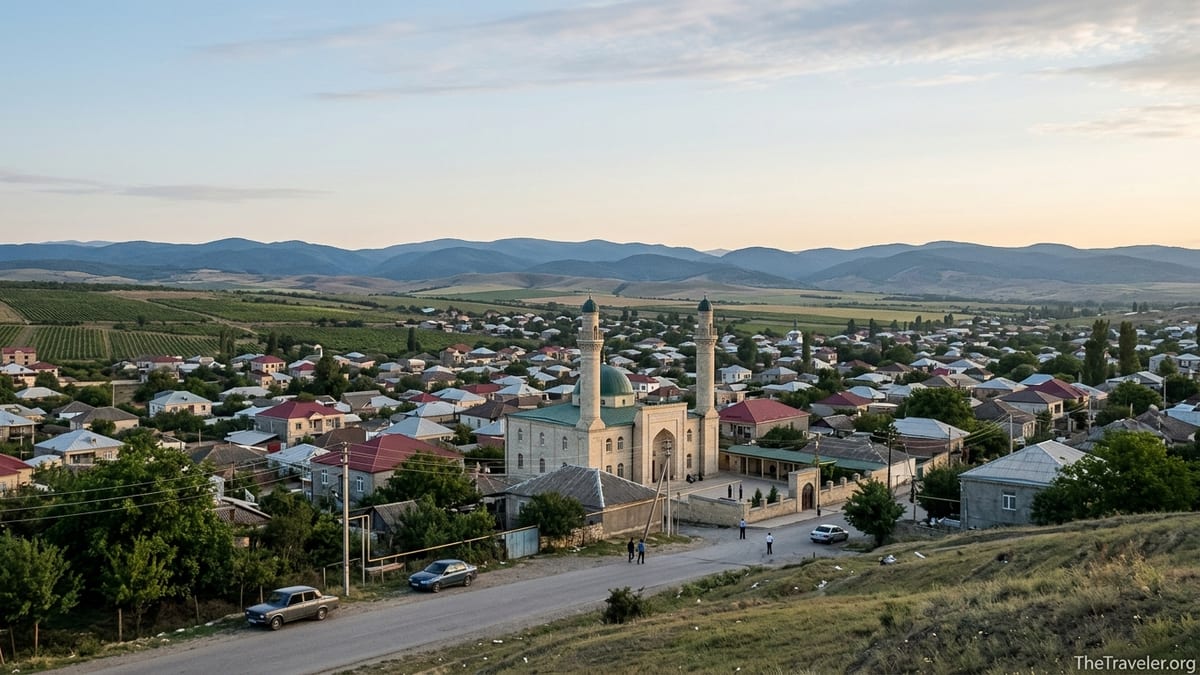
For most visitors, the Juma Mosque of Shamakhi is the single unmissable site. Considered one of the oldest mosques in the Caucasus, it occupies a commanding spot above the town and has been repeatedly rebuilt after earthquakes and invasions. Today it presents an elegant modern restoration with a large courtyard, twin minarets and spacious prayer hall. Non-Muslim visitors are generally welcome outside main prayer times; dress modestly, remove shoes before entering the prayer area, and keep voices low. Women are expected to cover their hair inside the mosque; if you do not have a scarf, ask discreetly, as some mosques keep spare headscarves for visitors.
Just outside town, the Yeddi Gumbaz mausoleums sit on a low hill with broad views across the valley. The name translates as “Seven Domes,” referring to the surviving domed tombs of 18th and 19th century local rulers. The structures themselves are partially ruined but atmospheric, combining stonework and brick with traces of decorative details. Many travelers pair a short visit here with a stop at a nearby viewpoint or picnic area. Local taxi drivers are used to this circuit and will often suggest combining several stops into one short trip.
Shamakhi’s surrounding countryside is increasingly known for wine and rural tourism. Several wineries in the wider Shamakhi–Ismayilli corridor operate tasting rooms and vineyard restaurants, where you can sample Azerbaijani wines alongside local cheeses, breads and kebabs. A typical tasting flight might include a fresh white, a light red and perhaps a regional blend, with prices that are noticeably lower than what you would pay for similar experiences in Western Europe. Many Baku-based tour companies run “wine day trips” that include Shamakhi as one of several stops, combining tastings with a walk in nearby forests or a visit to Lahij’s copper workshops.
Nature-oriented travelers use Shamakhi as a springboard into the Pirqulu area and forested reserves. Even a simple roadside stop at the Topchu Forest stretch of highway, toward Sheki, can feel memorable: trees form a natural tunnel over the road, local vendors sell jars of honey and homemade jams, and families spread blankets for quick roadside picnics. More active visitors sometimes arrange guided hikes or overnight stays in higher-altitude guesthouses, where night skies can be remarkably clear on dry evenings.
Culture, Etiquette and Language Basics
Compared with Baku, Shamakhi feels more traditional and conservative in daily life. You will see fewer foreign visitors, men and women often dress more modestly, and family groups dominate public spaces, especially in the evenings and on weekends. As a general rule, you will attract less attention if you dress in a way that covers shoulders and knees, particularly when visiting religious sites. Shorts and strappy tops are not illegal, but they may draw lingering looks in smaller neighborhoods or village shops.
Azerbaijani (Azeri) is the main language, with older residents and some officials also speaking Russian. English is less widely spoken than in central Baku, although staff at larger hotels, established guesthouses and wineries are increasingly comfortable handling basic questions in English. Phrasebook apps or offline translation tools make a real difference here: being able to say “thank you” or “please” in Azerbaijani almost always earns a warmer response, whether you are buying bread from a corner bakery or asking for directions at a petrol station.
Hospitality runs deep in the culture. It is not uncommon for shopkeepers to offer tea when you linger, or for a family in a village to invite you to sit for a short chat if you ask a question. Accepting a glass of tea or a small sweet is a polite way to honor that generosity, but you are not obliged to stay long or accept alcohol if it is offered. In such cases, a friendly smile, a few words of thanks and a clear indication that you must continue your trip are usually understood.
Within mosques and cemeteries, behave respectfully: avoid loud conversations, do not step on graves, and ask before taking photographs of people, especially when they are praying or mourning. At the Juma Mosque, photography of the architecture is typically allowed, but it is courteous to avoid photographing individuals without consent. On rural roadsides and in vineyards, ask permission before photographing people working; many will agree, and some may pose proudly with their grapes, bread ovens or copper tools.
Money, Costs and Practical Logistics
Shamakhi uses the Azerbaijani manat, like the rest of the country, and cash is still more widely used than cards in smaller businesses. Larger hotels, highway service stations and some wineries willingly accept major payment cards, but family-run guesthouses, corner shops and market stalls often prefer cash. For a first trip, withdraw enough manat in Baku, where ATMs are plentiful, to cover a few days of spending on food, taxis and modest entry fees.
Daily costs in Shamakhi are moderate by Western European standards. A simple local lunch of kebab, salad, bread and tea in a basic café can often come to the equivalent of only a handful of US dollars per person, while a more polished dinner with grilled meats, salads, soft drinks and coffee in a restaurant targeting domestic tourists will be more, but still very reasonable when split between two or three people. Vineyard restaurants and hotel dining rooms tend to charge slightly higher prices, broadly comparable with mid-range dining in Baku, but usually with better views of fields or hills.
Accommodation runs from large resort-style hotels, such as well-known hillside properties with pools and spa facilities, to modest guesthouses and roadside motels. Resort hotels can price rooms at a level similar to international four-star properties, especially on summer weekends when Baku families come for fresh air and cooler nights. By contrast, clean, simple guesthouses in town or in nearby villages may offer private rooms with shared or basic en suite bathrooms at a fraction of that cost. If you are on a budget, look for locally run lodgings that include breakfast; a spread of fresh bread, cheeses, jams, eggs and strong tea will set you up well for a day of walking.
In terms of day-to-day logistics, shops selling water, snacks and basic groceries are easy to find around central Shamakhi, and small markets offer seasonal fruits and vegetables at low prices. Pharmacies stock standard over-the-counter medicines, though brand names may differ from what you are used to at home. It is smart to bring any personal medications you might need in clearly labeled original packaging, along with a small basic kit containing painkillers, plasters, and any allergy tablets you commonly use.
Safety, Road Conditions and Health Considerations
For most visitors, Shamakhi feels safe, with low levels of street crime and a strong sense of community. Standard travel awareness is still important: keep valuables out of sight, particularly in crowded bus stations or markets; use hotel safes if provided; and avoid leaving bags unattended in cafés or roadside stops. Petty theft is more likely in busy transit hubs than in quiet village lanes, but it is still rare compared with many large cities.
Road conditions are a more relevant safety consideration. The main highway from Baku to Shamakhi is paved and generally in good condition, but it includes curves, occasional roadworks and sections where heavy trucks can slow traffic. In winter, snow and ice sometimes affect the steeper stretches near higher passes, and fog is possible in shoulder seasons, especially early in the morning or late at night. Drivers in Azerbaijan can be assertive, so if you rent a car you should feel comfortable with local driving styles, keep headlights on in poor visibility, and allow extra following distance. If you are not confident, a private transfer or joining a tour removes the stress of navigating in challenging conditions.
Tap water quality varies, and many locals prefer to drink bottled or filtered water rather than straight from the tap. For short stays, buying bottled water from supermarkets and kiosks is the simplest option, and prices are usually low. If you use a refillable bottle, ask your accommodation whether they have filtered water available. Food hygiene in established restaurants and hotel dining rooms is generally acceptable, but as with any rural destination, be cautious with undercooked meat, unwashed raw vegetables, and dairy products if you have a sensitive stomach.
Medical facilities in Shamakhi are basic compared with Baku’s larger hospitals. For minor issues, local clinics or pharmacies will usually suffice, but for anything serious you would likely need to return to the capital. Travel insurance that clearly covers medical evacuation or treatment in Baku is sensible. Also note that some hillside areas can be home to ticks and other insects in spring and summer; wearing long trousers and closed shoes during hikes, and checking for bites afterward, reduces risk.
Day Trip Ideas and Regional Combinations
Many travelers see Shamakhi not as a standalone destination, but as part of a broader loop through northwestern Azerbaijan. One common approach is to travel from Baku to Shamakhi in the morning, visit the Juma Mosque and Yeddi Gumbaz, and then continue to Lahij village by mid-afternoon. Lahij, set on the slopes above the Girdimanchay river, is famous for its cobbled streets, coppersmith workshops and traditional stone houses, and it pairs naturally with Shamakhi’s religious and political history for a full day of contrasts between town and mountain village.
Another natural pairing is Shamakhi with the Pirqulu or Ismayilli areas, which offer forests, meadows and small resorts catering primarily to domestic tourists. A day might start with a vineyard visit near Shamakhi, then move on to a picnic or hike in the pine woods of Pirqulu, returning to a hotel in Shamakhi or continuing directly to a guesthouse further west. Local tour providers in Baku often brand these routes as “wine and nature” escapes, and they are especially popular in late spring and early autumn when the weather is mild.
For travelers heading deeper into the country, Shamakhi works well as a one-night or two-night stop on the way to Gabala and Sheki. Private drivers and some shuttle services between Baku and Sheki routinely include Shamakhi as a rest or sightseeing stop, allowing passengers to stretch their legs at the mosque, take photos in the Topchu Forest, or buy honey and preserves from roadside stands. If you are arranging your own driver, you can request similar stops, agreeing the additional time and cost in advance.
When planning these combinations, remember that daylight hours change significantly with the seasons. In June, you may have long evenings to enjoy vineyard terraces or village walks, while in November it will get dark much earlier, reducing the time available for outdoor photography or hiking between stops. Check sunrise and sunset times for your travel dates and work backward to avoid driving narrow rural roads in the dark if you can.
The Takeaway
Visiting Shamakhi for the first time introduces you to a quieter, more historic side of Azerbaijan beyond glittering Baku. Its appeal lies not in a long list of blockbuster attractions, but in the combination of an ancient mosque, scattered mausoleums, emerging wine culture and easy access to forests and mountain villages. With some advance planning for transport, accommodation and weather, you can weave Shamakhi into a rewarding route that also includes Lahij, Pirqulu, Gabala or Sheki.
Focus on a manageable set of experiences: give yourself time to sit with tea in the mosque courtyard, watch light move across vineyard hills, talk with a coppersmith in Lahij, or share a simple grilled lunch at a roadside café. Respect local customs, dress modestly, and approach interactions with patience and curiosity. If you do, your first trip to Shamakhi is likely to feel less like a rushed excursion and more like an introduction to the rural heart of Azerbaijan.
FAQ
Q1. How many days do I need in Shamakhi on a first visit?
Most travelers find that one full day is enough to see the main sights and enjoy a vineyard or forest stop, especially if Shamakhi is part of a longer route toward Lahij, Gabala or Sheki. Staying one or two nights allows you to travel at a slower pace and experience evening and morning light in the hills.
Q2. Is Shamakhi safe for solo travelers, including women?
Shamakhi is generally considered safe, and solo female travelers do visit, though they are still relatively uncommon outside the main tourist spots. Dressing modestly, avoiding isolated areas after dark, and using trusted taxis or pre-arranged drivers will help you feel more comfortable, much as in other small towns in the region.
Q3. Can I visit Shamakhi as a day trip from Baku?
Yes, a day trip is very realistic. Many organized tours leave Baku in the morning, stop at the Juma Mosque and Yeddi Gumbaz, and add a forest or vineyard visit before returning in the evening. Independent travelers can do the same by renting a car or arranging a private driver, but should account for at least four to five hours of total driving time.
Q4. Do I need to cover my head or wear special clothing at the Juma Mosque?
Women are expected to cover their hair inside the mosque and should wear clothing that covers shoulders, chest and knees. Men should avoid shorts and sleeveless tops. Outside the mosque, modest clothing is still a good idea, but there is no strict dress code on the streets.
Q5. Is English widely spoken in Shamakhi?
English is less common than in central Baku. Staff at larger hotels, some wineries and more established tourist businesses may speak basic English, but many taxi drivers, shopkeepers and small café owners will only speak Azerbaijani or Russian. A translation app and learning a few local phrases will be very helpful.
Q6. What is the best time of year to visit Shamakhi?
Spring and early autumn are usually the most comfortable times, roughly April to June and September to October. Temperatures are mild, the surrounding countryside is green, and roads are generally clear of snow and ice, making it easier to combine Shamakhi with nearby villages and nature areas.
Q7. Are there ATMs and card payment options in Shamakhi?
ATMs exist in town but are less numerous than in Baku, and some can occasionally be out of service. Larger hotels and certain restaurants accept cards, but many small shops and family-run guesthouses prefer cash. Bring enough manat from Baku to cover several days of everyday expenses.
Q8. Can I drive myself from Baku to Shamakhi, and is it advisable?
You can drive yourself using a rental car, and the main highway is paved and signposted. However, you should be comfortable with assertive local driving styles, potential roadworks, and winter weather if you travel in colder months. Less confident drivers often prefer to book a local driver or join a tour and focus on the scenery instead of navigation.
Q9. What should I budget for food and basic daily expenses?
Costs vary, but a simple café meal with kebab, salad and tea can often be very affordable, while a mid-range dinner in a popular restaurant or vineyard will be more, though still moderate by Western European standards. Adding local taxis, small entry fees, coffee and snacks, many travelers are comfortable with a modest daily budget on top of accommodation.
Q10. Is Shamakhi suitable for children and families?
Yes, families from Baku often visit for fresh air, space and resort-style hotels with pools or play areas. Children tend to enjoy the open courtyards, forest stops and occasional encounters with farm animals along rural roads. Parents should still supervise closely near traffic, steep drops around mausoleums, and in busy bus stations or markets.