


Butterfield & Robinson has spent decades building a reputation for high-touch, small-group, active luxury trips. For many travelers, a B&R cycling or walking itinerary in Burgundy, Tuscany or New Zealand is a dream purchase that can easily run to several thousand dollars per person. When that kind of money and anticipation are on the line, even small miscalculations can lead to disappointment. The good news: most problems guests report are both predictable and avoidable if you understand how B&R actually operates and what its tours are designed to deliver.
Get the latest updates straight to your inbox!
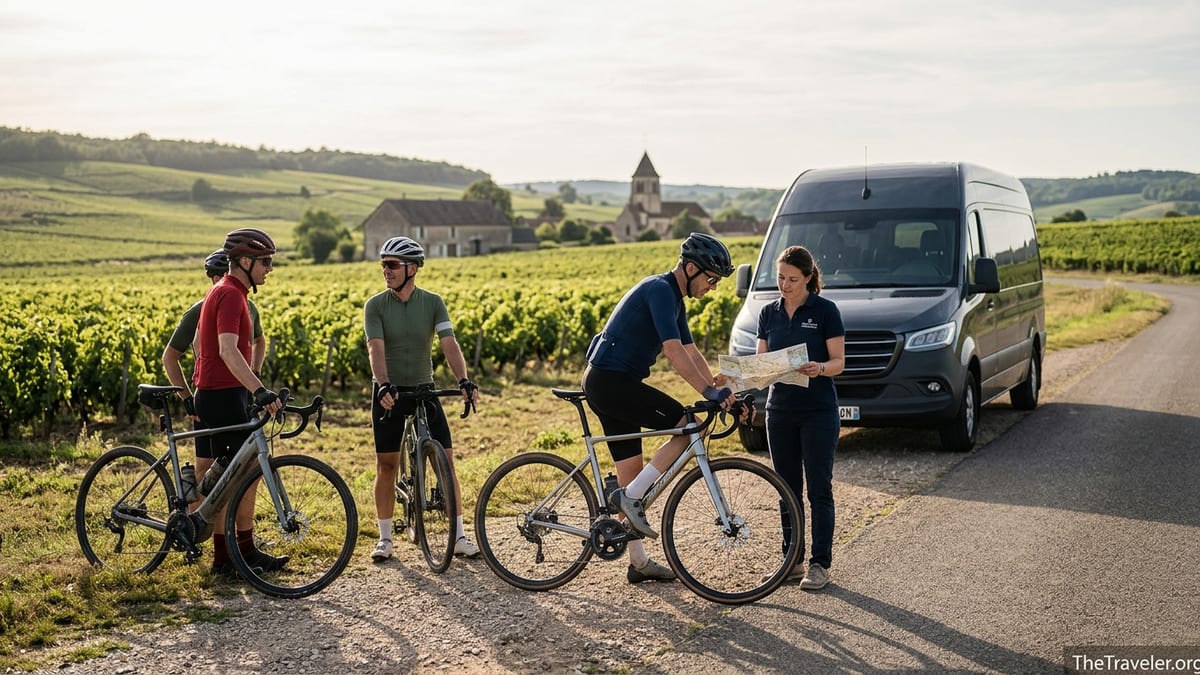
Confusing “Luxury” With “No Effort Required”
One of the most common mistakes is assuming that because Butterfield & Robinson is a top-tier operator, the experience will be effortless in every sense. In reality, B&R defines luxury as thoughtful routing, deep local access, excellent food and characterful hotels, rather than as a completely passive, chauffeured vacation. A New Zealand biking itinerary, for example, typically includes hilly terrain on well-groomed gravel trails and smooth dirt paths, with full days outside before a refined dinner and a boutique lodge at night. Travelers who picture a spa resort with the occasional short spin around a flat valley often find the days more demanding than expected.
Consider a couple in their late 50s booking a classic France biking trip because they love wine, but who have not ridden regularly for years. On paper the mileage might look modest, say 30 to 50 kilometers a day with van support and e-bikes available. On the road, though, back-to-back days in the saddle, heat in mid-summer, and rolling hills through vineyard country can feel intense if you have not prepared. The result is not that B&R failed to deliver a quality product, but that the travelers mismatched their fitness, expectations and season to the trip style. The company’s support vans and flexible route options are generous, but they cannot fully compensate for a body that is simply unaccustomed to daily activity.
The remedy is straightforward. Before you commit your deposit, read the published activity level descriptions carefully and speak honestly with a B&R advisor about your recent exercise habits, health issues and goals. If you rarely cycle, you might opt for a walking-focused itinerary in Italy or Ireland, add an e-bike on a biking trip, or choose departures in cooler shoulder seasons. A few months of moderate training at home, especially getting used to being active several days in a row, makes the “active” part of active luxury far more enjoyable.
Misunderstanding What Is Included in the Price
Butterfield & Robinson tours are expensive compared with mainstream group operators; a weeklong small-group biking trip in Europe or New Zealand often starts in the range of several thousand U.S. dollars per person, excluding flights. That sticker shock sometimes leads travelers to assume that “at these prices, everything must be included,” from intercontinental airfare to guide gratuities and every glass of wine at dinner. In practice, B&R includes a lot, but not everything, and misunderstandings around inclusions are a recurring source of frustration.
Take a recent small-group New Zealand biking itinerary as an example. The published inclusions typically list boutique accommodations, most meals, internal flights within the country, use of a high-quality bike or e-bike with helmet, GPS routes on a smartphone, baggage transfers and the constant presence of a support van. What is not normally included are international flights to and from the start and end points, travel insurance, guide gratuities and private airport transfers outside defined group times. Travelers who budget tightly and only later realize they must add long-haul flights, insurance and tips can feel blindsided, even though these exclusions are standard in the industry and clearly stated in pre-trip materials.
To avoid this mistake, treat the headline trip price as the foundation rather than the full cost of your holiday. Ask your B&R advisor, in writing, to provide a list of typical extra expenses for your specific departure, including average spending on independent lunches, optional activities and guide gratuities. If you are considering a custom or private trip, clarify how internal transportation, special experiences such as hot-air balloon rides, and wine upgrades will appear on your invoice. A transparent line-by-line estimate, combined with your own research on flight costs from your home city, will give you a more realistic picture of the all-in investment.
Choosing the Wrong Group Size and Social Dynamic
Butterfield & Robinson has built its brand around small-group travel, generally capping most small-group departures at about 16 travelers and often running with 10 to 12 guests. That scale allows access to family-owned hotels, intimate restaurants and private visits that could not accommodate a busload of 40. Yet travelers sometimes neglect to think about what group size and demographic will feel comfortable for them personally, leading to mismatched social expectations even on beautifully run trips.
For example, many B&R departures naturally attract well-traveled couples and groups of friends in their 40s through 70s who are comfortable spending on premium experiences. A solo traveler in their early 30s looking for peers, nightlife and a more casual vibe may find themselves in a convivial but older group that goes to bed after a final glass of Barolo at the hotel bar rather than seeking out late-night music. Conversely, an older traveler seeking quiet conversation may land on a departure where a private group of eight friends skews the social dynamic toward inside jokes and shared history.
If group chemistry matters to you, raise it explicitly in your discussions with B&R before booking. Ask whether a departure is already attracting mostly couples, friends traveling together, or solo guests, and what the current age range looks like. While no operator can guarantee a perfect match, you may be able to choose dates that line up better with your preferences. If you are traveling as a family or a larger group, consider privatizing an existing itinerary once you have eight or more people, so that the social tone of the trip is essentially yours to set.
Overlooking the Impact of Terrain, Weather and Season
Another frequent misstep is focusing on the romantic idea of a destination rather than its practical realities. A Tuscany biking brochure might show riders coasting past golden fields under blue skies, but the terrain is famously hilly and summer temperatures can climb well above 30 degrees Celsius. Similarly, New Zealand’s South Island offers spectacular gravel trails but also variable weather that can switch from sun to wind and showers in a single day. Butterfield & Robinson’s route planners know this and design days with support vans, layers of difficulty and equipment advice, yet guests sometimes sign up for peak-season departures or challenging regions without fully considering how those factors will feel in real life.
Imagine booking a July departure in Provence because you want lavender fields at their peak, without realizing that it is also high season for heat, crowds and traffic. Daily rides that might feel leisurely in late May can become taxing when the midday sun is at its strongest and village cafés are packed. Or picture an early-spring walking trip in Ireland; the landscape will be lush, but you are likely to encounter cool temperatures, wind and rain. Well-prepared guests pack proper layers, waterproof jackets and a flexible mindset; less-prepared travelers may arrive with only light urban clothing and expectations shaped by glossy images.
Mitigating this is a matter of timing and gear. When possible, look at shoulder-season departures in April, May, September or October for European trips if you prefer milder weather and fewer crowds. Study the “good to know” sections for each itinerary, which often mention typical conditions and recommended clothing. Ask specifically about surfaces: are you riding mostly paved country roads, dedicated bike paths, or mixed gravel and dirt? If you are not comfortable on loose surfaces, you might choose a different trip or practice at home first. The goal is not to eliminate surprise, but to avoid being surprised by things that were knowable in advance.
Not Matching the Trip Style to Your Travel Personality
Butterfield & Robinson offers several ways to travel: scheduled small-group departures, private trips based on those itineraries, and fully custom journeys designed from scratch. It also operates biking, walking and mixed-activity trips, plus self-guided offerings in some regions. A common mistake is defaulting to the most visible option without considering how the structure aligns with your personality. Someone who loves flexibility, dislikes fixed dinner times and prefers to linger spontaneously might feel constrained on a tightly choreographed small-group departure, even if it is beautifully executed.
Consider a traveler who chooses a group Burgundy bike tour because the dates work and they like the idea of “meeting people,” but who is actually happiest exploring on their own. They may be surprised to find that most meals are arranged as group affairs, that departure times are set by the daily schedule, and that opt-out choices, while available, still occur within a framework designed for the group as a whole. Conversely, a guest who thrives on social interaction and reassurance may choose a self-guided itinerary in Tuscany for the lower price point, only to feel uneasy navigating between hotels with just GPS routes and phone support.
The practical solution is to be honest with yourself about how you like to travel. If you value independence and unstructured time, ask about self-guided options or custom trips where a private guide can flex the day around your choices. If being part of a group energizes you, lean into scheduled small-group departures where the day’s arc, shared tastings and communal dinners are core parts of the experience. Within each category, your advisor can help fine-tune the balance of activity, culture and downtime so that you are not surprised by how full or relaxed the days feel.
Underestimating the Importance of Pre-Trip Communication
Even with a well-designed itinerary, problems crop up when travelers do not engage fully with pre-trip information or do not communicate special needs in advance. This can range from dietary requirements to mobility issues, bike sizing and room configuration. On a premium trip where meals often involve multi-course tasting menus and boutique hotels may have limited room types, last-minute surprises are hard to fix on the fly, even for a seasoned operator.
For instance, a guest who has severe shellfish allergies but only mentions it casually to a guide at the welcome dinner may find that the set menus arranged with local restaurants rely heavily on seafood. While B&R guides and restaurant partners will do their best to adapt, they are working within constraints. Similarly, a traveler who requires a step-free room or specific bed configuration might assume that “a luxury company will take care of it,” without clarifying in writing, only to arrive at a heritage property where many rooms are up narrow staircases or where only certain categories have walk-in showers.
To sidestep these issues, treat the booking process as a partnership. Complete all pre-trip forms thoroughly, including questions about health, diet and special requests. If something is critical to your comfort or safety, such as needing a lower-floor room or a specific bike setup, confirm it via email and ask for written acknowledgment. Make time to read the detailed trip dossier, packing list and daily itinerary rather than just skimming the highlights. This is also the moment to clarify cancellation terms, payment schedules and change policies so that you are not surprised if plans shift on your side or the operator’s.
Focusing Only on Headline Destinations, Not Daily Flow
Another subtle but important mistake is evaluating a Butterfield & Robinson trip exclusively by its marquee stops rather than the rhythm of the days. It is easy to be seduced by names like Napa, Bordeaux or the Amalfi Coast and to assume that any premium operator will string them together in a way that feels smooth. In practice, some itineraries involve more time in transit, more hotel changes or more urban riding than others, and individual tastes vary widely in tolerance for these elements.
Imagine you are comparing two five- or six-night European biking trips. One bases you in just two country hotels, with circular rides and a single hotel change halfway through. The other moves every night, covering more ground and checking into a different town each day. Both might feature great food and scenery, but the daily experience is very different. If you dislike packing and unpacking or have limited energy, the “moving” trip can feel rushed. Or consider an itinerary that includes a major city at the start or end: some guests love a guided urban ride or walk; others find traffic and navigation stressful and would rather focus on rural landscapes.
When you speak with B&R or your travel advisor, ask them to walk you through a typical day on the trip: wake-up times, average hours of activity, how often the van appears, how long transfers last, and how much time is truly unstructured. Inquire about the number of hotel changes, whether there are any “transfer-heavy” days, and how routes are designed around traffic and road quality. Matching your temperament to the daily flow, not just the Instagram highlights, is one of the best ways to choose a tour you will actually enjoy from start to finish.
The Takeaway
Butterfield & Robinson has earned its standing in the active luxury space by using small groups, seasoned guides and carefully crafted routes to connect travelers with landscapes and cultures in meaningful ways. Most guests return enthusiastic, and many become repeat clients across multiple continents. The trips are not, however, a magic carpet that can turn any destination, season or fitness level into a flawless experience on their own. The most common disappointments arise when travelers conflate price with complete effortlessness, overlook what is and is not included, or choose itineraries that do not match their physical capacity or social preferences.
If you approach a B&R trip as a collaboration rather than a purchase off the shelf, you dramatically increase your odds of a wonderful journey. That means asking detailed questions about route difficulty, weather, inclusions and group composition; being candid about your needs and limitations; and investing a bit of time in preparation at home. In return, you are far more likely to find yourself pedaling along a quiet vineyard road in Burgundy, or walking between coastal villages in Ireland, thinking not about logistics or mismatched expectations, but about how lucky you are to be exactly where you are.
FAQ
Q1. Are Butterfield & Robinson trips worth the high price compared with other tour companies?
Value is subjective, but many travelers feel B&R is worth the premium when they prioritize small groups, strong local access, thoughtful routing and characterful hotels. If you mainly want basic accommodation and are indifferent to fine dining or curated experiences, a lower-priced operator may suit you just as well.
Q2. How fit do I really need to be for a Butterfield & Robinson biking trip?
Most biking itineraries are designed for reasonably active people who can comfortably be on a bike for several hours a day, several days in a row. E-bikes, multiple route options and support vans make trips accessible to a wide range of abilities, but some regular training beforehand greatly improves comfort and enjoyment.
Q3. Are e-bikes available on all Butterfield & Robinson cycling departures?
E-bikes are available on the majority of modern B&R cycling trips, particularly in hilly regions such as Tuscany or New Zealand. Availability can vary by destination and date, so you should request an e-bike at booking and confirm it in your written trip documents.
Q4. What extra costs should I budget for beyond the listed trip price?
Plan for international flights, travel insurance, guide gratuities, some independent meals and drinks, optional activities not listed in the itinerary and any private transfers outside group arrangements. The exact amounts depend on your destination, travel style and departure city, so ask your advisor for a personalized estimate.
Q5. Will I be the only solo traveler on a Butterfield & Robinson tour?
Solo travelers do join B&R trips, but most departures still skew toward couples and small groups of friends. If traveling solo, ask which dates already have other solo bookings and what the current group mix looks like. Be prepared to pay a single supplement if you prefer your own room.
Q6. How small are Butterfield & Robinson “small groups” in practice?
Typical small-group departures average around 10 to 12 travelers, with a published maximum of about 16 guests. Custom and private trips can be designed for just a couple, a family or a larger private group, but scheduled departures are intentionally kept well below big-bus tour sizes.
Q7. Can Butterfield & Robinson accommodate special diets and food allergies?
Yes, B&R can usually accommodate common dietary needs such as vegetarian, gluten-free or shellfish-free menus, especially if advised well in advance. It is essential to detail your requirements on pre-trip forms and to reiterate them to guides at the start of the tour so restaurants can adjust set menus where possible.
Q8. What happens if the weather is bad during an active Butterfield & Robinson trip?
Guides typically adapt the schedule, adjusting routes, shortening rides or walks, or substituting cultural visits when conditions are poor. Support vans provide shelter and transfers, and you are never obligated to complete an activity that feels unsafe or uncomfortable. Packing proper layers and rain gear makes it easier to enjoy the trip despite variable weather.
Q9. How far in advance should I book a Butterfield & Robinson tour?
Popular itineraries and peak-season departures often fill many months, and sometimes more than a year, in advance. Booking early gives you better choice of dates, room categories and bike types. Last-minute spaces can appear, but relying on them is risky if you have fixed vacation windows or specific destinations in mind.
Q10. Is a Butterfield & Robinson small-group trip or a private trip better for first-time guests?
First-time guests who enjoy meeting new people often start with a small-group departure to experience the B&R style at a lower per-person cost than a fully private trip. Travelers who prefer full control over pacing, departure dates and group composition, or who are celebrating a major occasion with family or friends, may find a private or custom itinerary a better fit from the outset.