


More news on this day
China’s major airports are grappling with a wave of delays and cancellations as intense summer storms, tighter airspace management and a packed peak-season schedule converge to disrupt aviation across the country’s biggest cities.
Get the latest news straight to your inbox!
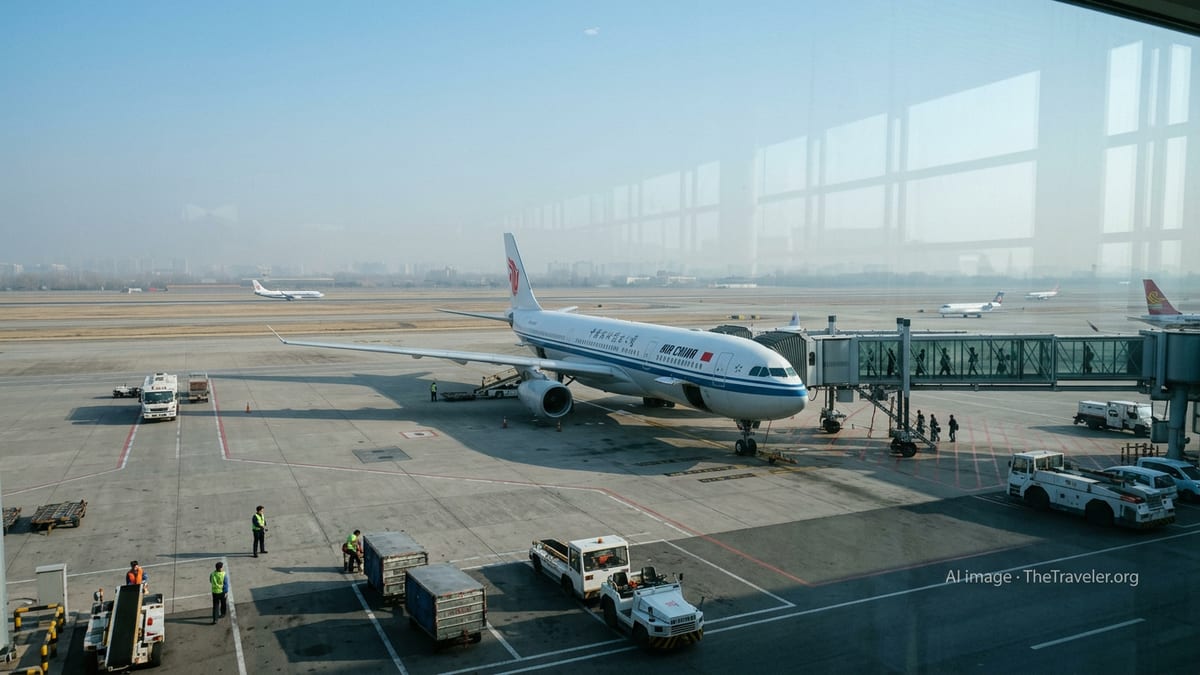
Severe Summer Weather Slams Key Aviation Hubs
China’s busiest aviation corridors are entering the heart of the summer rainy season, and a series of powerful storm systems has begun to test the resilience of airport operations. Publicly available notices from the Civil Aviation Administration of China show repeated warnings of heavy rain, thunderstorms and low cloud affecting large swathes of East and Central China in recent weeks, conditions that routinely trigger traffic flow restrictions and ground handling suspensions.
Beijing, Shanghai and Guangzhou, which together handle a substantial share of the country’s domestic and international traffic, have all faced bouts of disruptive convective weather. Thunderstorms in terminal areas limit the number of aircraft that can safely land and depart each hour, while lightning alerts force ramp workers to halt refueling, baggage loading and aircraft pushbacks until conditions improve.
Chinese carriers have begun issuing their own alerts as storm clusters stall over eastern seaboard cities. China Eastern Airlines, which operates major hubs in Shanghai and other coastal centers, has published multiple recent advisories noting that thunderstorms and heavy rainfall were affecting parts of its network and encouraging travelers to monitor flight status and use digital channels for rebooking and refunds.
These localized systems arrive on top of a broader forecast of elevated disaster risk for July, with China’s emergency management authorities highlighting the potential for intense rain events in northern and eastern regions. That warning aligns with a pattern familiar to regular travelers in China, where short but violent storms can ripple through the tightly scheduled networks of the country’s large airlines.
Capacity Surges for Peak Season Leave Little Margin
Beyond the weather itself, the structure of China’s summer aviation schedule is amplifying the impact of every storm cell. The current season’s timetable, introduced at the end of March, authorized thousands of additional weekly flights, with Chinese and foreign airlines expanding domestic and international services as demand rebounds. Official schedule data indicate that domestic capacity on many trunk routes now exceeds pre-pandemic levels.
New and reinstated routes are heavily concentrated on flights linking regional airports with the country’s main coastal and central hubs. This has created dense banks of departures and arrivals in morning and evening peaks at major airports, increasing the risk that a single thunderstorm over a hub can cascade into knock-on delays throughout the day on spokes across the country.
Airlines and regulators have been promoting collaborative decision making and more granular weather forecasting to keep flows moving. Industry documentation from Chinese meteorological and air traffic management bodies describes the rollout of minute level rainfall intensity assessments and probability-based thunderstorm forecasts for major airports, tools designed to allow earlier rerouting and metering of flights before storms reach their peak.
Even with those measures, the basic arithmetic of the summer schedule leaves little slack. When thunderstorms force a temporary reduction in the number of aircraft that can use a runway, controllers must quickly meter arrivals and departures, while airlines scramble to reassign aircraft and crews that may already be operating at or near regulatory duty limits.
Airspace Management and Safety Measures Add Constraints
China’s airspace is among the most tightly managed in the world, and operational decisions in the upper airways can have immediate consequences at ground level. During periods of convective weather, air traffic control units may impose route restrictions, altitude caps or flow programs to maintain safe separation and avoid the most active storm cells, cutting the throughput that busy city pairs can handle.
Sector capacity is also shaped by the division of civil and non civil airspace. Analysts of China’s aviation system frequently note that large portions of upper airspace are reserved for non commercial use, concentrating civil traffic in narrower corridors. When storms intrude into those corridors over hubs such as Shanghai or Guangzhou, options for large scale rerouting are comparatively limited, increasing the likelihood of ground delays and airborne holding.
On the ground, safety protocols during lightning and intense rainfall are stringent. Airport meteorological services and operations centers use alerting systems to trigger ramp closures when lightning is detected within defined radii, preventing personnel from working on exposed aprons and jet bridges. While these stoppages are essential for safety, they mean aircraft can be physically present at gates yet unable to board, disembark or refuel passengers until an all clear is issued.
Recent technical reports involving Chinese aviation stakeholders highlight efforts to refine these systems, including the use of phased array radar and advanced lightning detection to better target high risk cells. The goal is to reduce unnecessary stoppages while maintaining conservative safety margins, but for now the effect for travelers is often the same: prolonged waits in terminals with limited visibility into when operations will resume at full pace.
Travelers Confront Rolling Cancellations and Operational Strain
For passengers flying into and within China this July, the operational pressures are translating into a familiar pattern of rolling cancellations, long queues and tight connection windows. Flight tracking data and public notices from major Chinese carriers indicate elevated disruption levels on some of the most trafficked corridors linking Beijing, Shanghai, Guangzhou and Chengdu, particularly on afternoons and evenings when convective activity typically peaks.
Carriers are responding with a mix of schedule thinning, same day switching and flexible waiver policies. Notices from airlines such as China Eastern advise customers whose flights are affected by adverse weather that they may change travel dates or request refunds through websites, mobile applications and customer service hotlines, often without additional fees. In practice, however, securing a desired alternative can be difficult when multiple flights on the same route are full during the holiday travel rush.
Operational strain is also evident in crew and aircraft availability. When storms force extended ground holds or diversions to alternate airports, aircraft can end up out of position relative to their next scheduled flights. Crews may reach their duty limits while waiting out weather, triggering further cancellations even after storm cells have passed. This dynamic is particularly acute at hub airports where a single delayed inbound aircraft may have been scheduled to operate several subsequent flights that day.
Travel forums and social media posts from within China reflect growing passenger frustration at sudden schedule changes, as well as praise in some instances for airlines that proactively issue vouchers or rebook travelers before they reach the airport. The mixed experiences underline how heavily outcomes depend on the timing of storms relative to banked departures and the flexibility of individual itineraries.
What International Travelers Should Expect Next
With forecasters in China cautioning that July and August will continue to bring episodes of extreme rainfall and thunderstorms to parts of the country, further aviation disruption around major cities appears likely in the coming weeks. The combination of ambitious summer scheduling, constrained airspace and heightened weather risks suggests that even routine afternoon storm cells can have outsized impacts on flight operations.
International travelers planning to transit through Chinese hubs such as Beijing Capital, Beijing Daxing, Shanghai Pudong, Shanghai Hongqiao and Guangzhou Baiyun may face longer connection times and a higher probability of missed onward flights, especially on itineraries that require tight domestic links. Travel advisers commonly recommend building in additional buffer time or considering overnight stays when routing through these airports during the peak storm season.
Industry observers also point to the possibility of further incremental improvements in how disruptions are managed. Wider use of predictive weather tools, expanded data sharing between airlines and air traffic management, and continued investment in hub infrastructure could gradually reduce the scale of delays triggered by individual storms. For the moment, however, publicly available information suggests that China’s aviation system is operating at near full capacity just as nature delivers some of its most challenging flying conditions of the year.
For travelers looking ahead to trips later in the summer, the current pattern in China offers a broader reminder that climate driven extremes are increasingly shaping aviation reliability across Asia. From tropical systems along the southeast coast to thunderstorms rolling across the northern plains, the skies over China’s major cities are likely to remain busy and unpredictable throughout the season.