


More news on this day
Thunderstorms and traffic management measures at Hartsfield-Jackson Atlanta International Airport are triggering extensive flight delays and cancellations on July 6, disrupting operations for major U.S. and international airlines and rippling across domestic and long haul networks.
Get the latest news straight to your inbox!
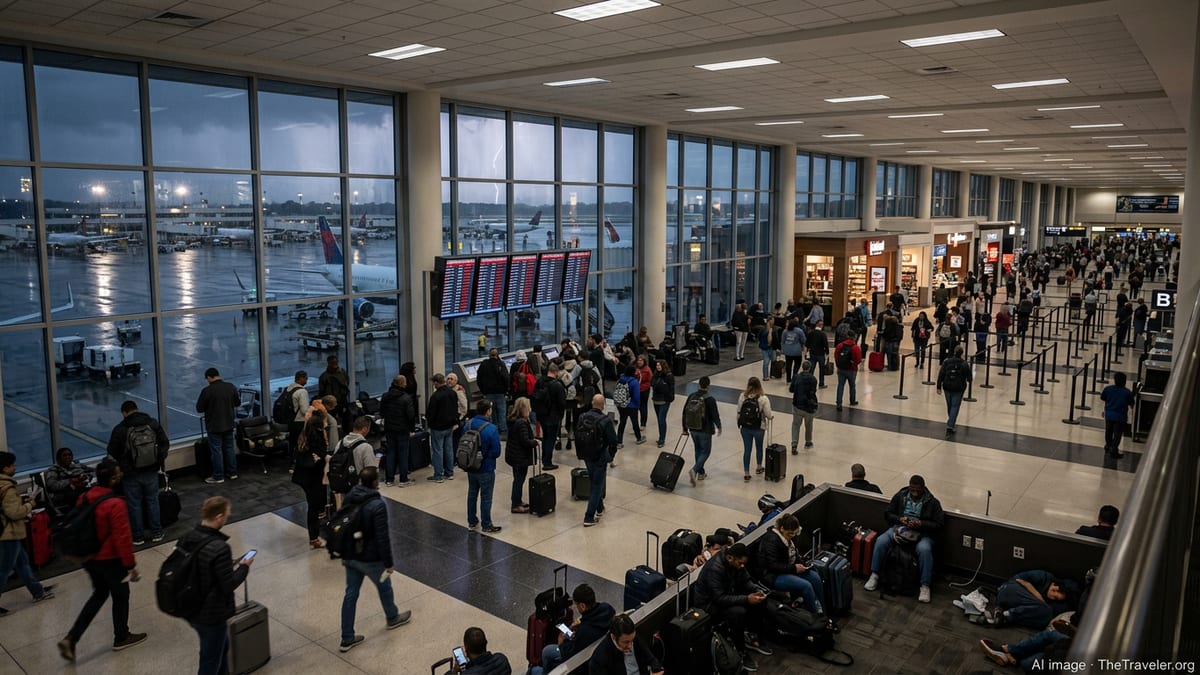
Weather, Traffic Programs Combine to Slow the World’s Busiest Hub
Publicly available aviation data on July 6 indicates that stormy conditions around Atlanta, coupled with federal air traffic initiatives, are reducing the rate at which flights can take off and land at Hartsfield-Jackson Atlanta International Airport. The airport, which regularly ranks among the world’s busiest by passenger volume, is particularly vulnerable when thunderstorms, lightning and low visibility converge at peak travel periods.
Federal aviation status pages show that on Monday, weather in the Atlanta region is contributing to average departure delays measured in tens of minutes, with periods of tighter constraints when thunderstorms move directly over the field. Meteorological outlooks for the city highlight hot, unstable air and pop up storms through the afternoon and evening, a pattern that often prompts ground stops or ground delay programs that hold flights on the ground at departure airports until capacity improves in Atlanta.
Local broadcast and digital outlets in Atlanta report that storms have already caused pockets of power outages and downed trees in parts of the metro area, a sign of the intensity of some cells passing near key transportation infrastructure. While the airport itself is designed to continue operating in most conditions, safety rules require that ramp work pause when lightning is in the vicinity and that traffic volume be reduced when heavy rain and low clouds limit visibility.
Industry guidance notes that such “flow control” measures, though temporary, can quickly build long queues of departures and arrivals. Once aircraft and crews are out of position, delays tend to persist even after the most severe weather has moved away from the airfield.
Ground Stops and Ripple Effects for Major U.S. Carriers
Recent months have underscored how quickly disruption at Atlanta can spread across airline networks. Coverage from regional and national outlets in March and April documented multiple events in which storms and low visibility prompted ground stops affecting flights inbound to Hartsfield-Jackson, followed by extensive delays and canceled departures throughout the day.
In one March episode, publicly accessible flight tracking and federal traffic management summaries showed a carrier requested ground stop for flights headed to Atlanta from multiple states, including key feeder markets across the Southeast, Ohio Valley and mid Atlantic. That move temporarily halted new departures bound for the hub while controllers managed storms and congestion, leading to rolling delays for travelers who had not yet boarded and cancellations when crews or aircraft could not be repositioned in time.
Storm related restrictions have not been limited to winter and early spring. April coverage described thunderstorms over north Georgia that led to another ground stop for Hartsfield-Jackson, with inbound flights held at origin airports and departures from Atlanta slowed as lightning and heavy rain moved through. Reports from that period highlighted travelers facing lengthy waits on the tarmac and in concourses as airlines worked through backlogs of delayed flights.
Today’s conditions are raising concerns of a similar pattern. With Atlanta serving as a primary hub for one of the nation’s largest carriers and an important focus city for several others, any significant ground operation slowdown typically sends schedule disruptions into dozens of domestic destinations, from regional spokes in the Southeast to major coastal markets.
International Routes Also Feel the Strain
The impact of delays and cancellations at Hartsfield-Jackson extends beyond U.S. borders. The airport has grown into a substantial international gateway in recent years, with long haul services connecting Atlanta to Europe, Latin America, the Caribbean, the Middle East and parts of Africa. Public route maps and airline schedules list nonstop flights to major centers such as London, Paris, Amsterdam and Seoul, along with newer links to destinations including Calgary and Addis Ababa.
When storms or traffic management programs constrain Atlanta’s operations, long haul flights are particularly sensitive. International rotations depend on tight aircraft and crew schedules, often using a single widebody aircraft for an overnight leg followed by a daytime return. If that aircraft is delayed on arrival or held on the ground due to weather and congestion, carriers may have limited flexibility to substitute equipment, increasing the likelihood of cancellations or lengthy rebookings.
Reports and traveler accounts from prior disruption days this year describe passengers on international itineraries facing extended layovers or unexpected overnights after missing connections in Atlanta. In some cases, weather related restrictions at the hub led to diversions of widebody aircraft to alternate airports, with onward travel rescheduled once conditions and gate availability improved.
Given the concentration of connecting traffic at Atlanta, especially for transatlantic and Latin American routes, a single afternoon of thunderstorms can therefore affect flights and passengers across several continents, even if skies are clear at their origin or destination airports.
Traveler Experience: Cancellations, Missed Connections and Crowded Halls
Travelers connecting through Atlanta on July 6 are encountering familiar challenges that typically accompany disruption at large hubs. According to publicly available flight tracking tallies from recent storm events, spikes in delays at Hartsfield-Jackson often coincide with hundreds of cancellations systemwide for the largest airlines, filling customer service lines and crowding rebooking channels as passengers scramble for alternatives.
Social media and online forums in earlier disruption periods this year have described departure boards filled with delayed or canceled flights, with some passengers reporting that domestic trips of a few hundred miles stretched into all day journeys. Missed connections are a particular concern in Atlanta, where many itineraries involve tight transfer windows between regional arrivals and mainline departures.
When thunderstorm activity lingers into the evening, the effect can cascade into the following day. Crews may time out under duty limits, and aircraft may end the night at outstations rather than returning to scheduled hubs. Public analyses of prior Atlanta weather disruptions show that airlines sometimes need much of the next morning to reposition planes and crews before operations normalize.
Passenger advocates typically advise travelers to monitor airline apps and airport status tools closely on days with active thunderstorms around Atlanta, to build extra time into connections and to be prepared for last minute gate or schedule changes as air traffic managers respond to evolving conditions.
What Comes Next for Operations at Hartsfield-Jackson
Forecasts for Atlanta indicate that Monday’s storms are likely to be scattered rather than continuous, which may allow air traffic capacity to recover in windows between the strongest cells. However, the combination of heat, humidity and atmospheric instability suggests that the threat of additional thunderstorms will persist through the late afternoon and evening travel peaks.
Airport traffic reports published in late spring show that Hartsfield-Jackson continues to handle extremely high passenger volumes, with robust demand on both domestic and international routes. That density means that even moderate flow restrictions can translate quickly into visible queues at security, crowded gate areas and flight banks that depart later than scheduled.
Federal construction and capacity planning documents also show ongoing airfield projects designed to maintain and improve Atlanta’s runways and taxiways through 2027. While much of this work is scheduled to minimize disruption, it can reduce operational flexibility during periods of bad weather, leaving less margin to absorb surges of arrivals and departures when storms move in.
As airlines and traffic managers work through today’s disruptions, travelers using Atlanta in the coming days are likely to watch conditions closely. If weather quiets and crews return to position, recent patterns suggest that Hartsfield-Jackson can recover quickly to near normal throughput. If storms redevelop or linger, Georgia’s flagship airport may see yet another round of rolling delays that underscores how central Atlanta has become to the resilience of the U.S. air travel system.