


More news on this day
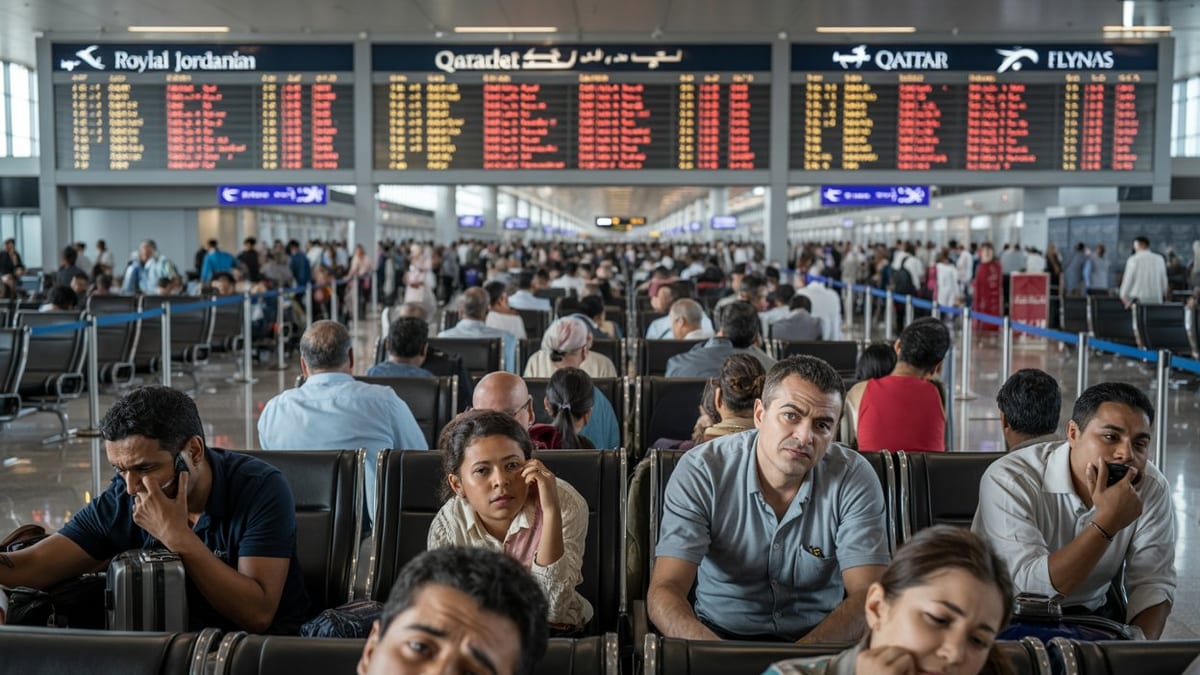
Thunderstorms over Dallas–Fort Worth International Airport on May 25 triggered hours of disruption across one of the nation’s busiest hubs, with hundreds of travelers stranded as airlines logged 392 delays and 85 cancelled flights that disrupted connections across the United States, Mexico, the United Kingdom, Germany, Japan, South Korea and other long-haul markets.
Get the latest news straight to your inbox!
Severe Weather Triggers Ground Delays At Major Hub
Publicly available data from federal airspace monitoring systems on Monday showed Dallas–Fort Worth International Airport operating under weather-related traffic management programs during the afternoon, as thunderstorms moved through North Texas and limited the rate at which departures could safely leave the airport. Updates indicated thunderstorms with reduced departure capacity and average wait times stretching close to an hour for some outbound flights.
Operations at nearby Dallas Love Field remained largely on time, underscoring how conditions directly over the larger Dallas–Fort Worth hub created a localized choke point for the national network. Travelers connecting through the hub reported prolonged waits, rolling delay estimates and difficulty securing timely rebookings as the backlog of flights grew through the day.
Once storms pass, airlines often face additional constraints as crews and aircraft fall out of position. That appears to have been the case in Dallas, where a surge of delayed departures put pressure on gate availability and turn times, compounding the initial impact of the weather.
American, Delta, Frontier And Regional Partners Hit Hard
American Airlines, the dominant carrier at Dallas–Fort Worth, bore the brunt of the disruption, with a substantial number of its mainline and regional departures delayed or cancelled. Regional affiliates such as Envoy Air and SkyWest, which operate a large share of American’s feeder flights into and out of the hub, were also affected as thunderstorms forced schedule adjustments and ground holds.
Delta Air Lines and ultra-low-cost carrier Frontier Airlines, while operating smaller schedules at Dallas–Fort Worth compared with American, each recorded significant delays and selected cancellations. The combination of mainline carriers and regional operators meant that travelers on multiple booking codes, including those who believed they were flying with one brand but were actually on a partner-operated aircraft, found themselves subject to the same weather bottleneck.
Past federal consumer reports show that regional operators such as Envoy Air and SkyWest already contend with relatively high rates of weather and air-traffic-related delays due to their heavy reliance on congested hubs. Today’s storms over Dallas–Fort Worth fit squarely within that pattern, amplifying delay statistics for the regional sector as well as for their major-airline partners.
Ripple Effects Across North America, Europe And Asia
As the day progressed, the disruption at Dallas–Fort Worth spilled across domestic and international networks. The airport serves as a primary gateway for flights to Mexico and other parts of Latin America, as well as a key departure point for transatlantic and transpacific services. When dozens of originating and inbound flights are delayed or cancelled at a hub of this size, passengers bound for distant destinations often miss tightly timed connections.
According to live schedule and flight-tracking information, services linking Dallas–Fort Worth with major U.S. cities such as Houston, Las Vegas and Miami experienced prolonged delays, pushing some arrivals into late-night or next-day windows. Those knock-on effects cascaded onto onward flights serving destinations across Mexico, the United Kingdom and Germany, where inbound aircraft from Texas arrived late and forced operators to compress turn times or reschedule departures.
Long-haul routes connecting Dallas–Fort Worth with Japan, South Korea and other Asian markets were also caught in the disruption as aircraft and crews were held on the ground or arrived behind schedule. Even when those flights ultimately departed, the delayed operations complicated onward domestic connections for travelers at the far end of their journeys, extending the reach of the Dallas weather episode well beyond Texas.
Hundreds Stranded As Rebooking Options Narrow
With 85 flights cancelled and nearly 400 delayed, same-day rebooking became difficult for many travelers, especially those on multi-leg itineraries. Seats on remaining departures from Dallas–Fort Worth to major hubs on the East and West Coasts quickly filled, particularly in the late afternoon and evening periods when airlines attempted to clear the backlog.
Reports from passengers indicated long lines at customer service counters and heavily used mobile rebooking tools as travelers searched for alternatives. Those with international connections faced especially complex challenges, with minimum connection times blown apart by rolling delays and limited options to switch to later long-haul departures without extended overnight stays.
Some travelers opted to abandon air travel altogether on shorter routes, turning instead to rental cars or intercity ground transport between Texas cities when faced with multi-hour delays or canceled flights. Others remained in the terminal waiting for standby opportunities, hoping that additional seats would open as airlines adjusted their aircraft routing into and out of Dallas.
Weather, Network Complexity And What Travelers Can Expect Next
Industry data and previous government consumer reports underscore how vulnerable large connecting hubs such as Dallas–Fort Worth are to fast-changing storms, particularly during the late spring and summer thunderstorm season in North Texas. Even brief periods of severe weather can trigger ground-delay programs that sharply limit the number of arrivals and departures per hour, creating a wave of missed connections and aircraft out of position long after the skies clear.
With today’s disturbances centered on a peak travel day heading into the summer season, analysts expect some residual disruption into the evening and early Tuesday as airlines reposition aircraft and crews. Travelers scheduled to connect through Dallas–Fort Worth in the next 24 hours are likely to encounter schedule changes, tighter connection windows and occasional last-minute gate or time shifts as operators work to normalize their timetables.
Consumer advocates generally advise passengers facing rolling delays or cancellations at major hubs to monitor real-time flight status tools, consider revising itineraries to bypass affected airports when feasible and keep documentation of disruptions in case future compensation or reimbursement becomes available under airline policies or applicable regulations. For those who passed through Dallas–Fort Worth on May 25, the day’s 392 delays and 85 cancellations served as another reminder of how a single afternoon of thunderstorms can reverberate throughout a global air travel system.