


More news on this day
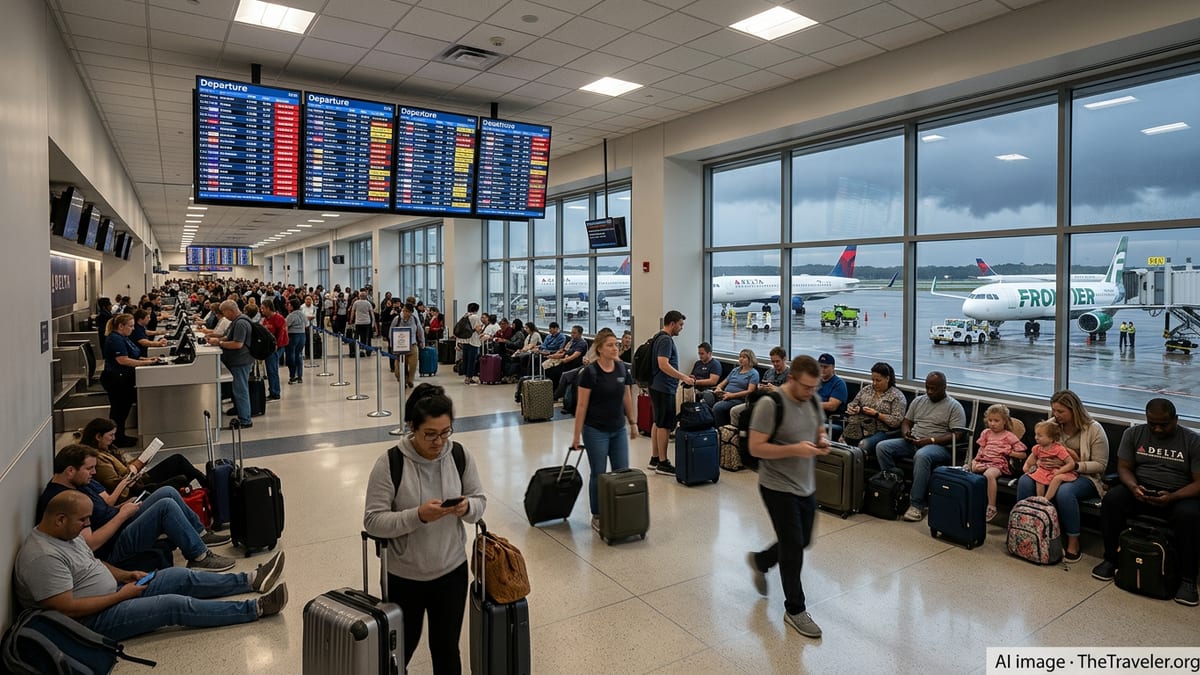
Departures from Jacksonville International Airport faced a fresh wave of disruptions on July 6 as thunderstorms across Florida and key East Coast hubs triggered rolling delays and cancellations, rippling through one of the busiest travel periods of the year.
Get the latest news straight to your inbox!
Weather Turbulence Hits Florida and East Coast Hubs
Publicly available aviation and weather data for Monday, July 6 indicate a volatile pattern of thunderstorms across the southeastern United States, including Florida, with scattered storms forecast through much of the afternoon and evening. Local forecasts for South Florida highlight high heat, tropical moisture and recurring thunderstorm cells, conditions that often translate into air traffic management initiatives for the wider region.
The Federal Aviation Administration’s National Airspace System status page on Monday morning showed a series of active delays at major East Coast and Florida gateways, including extended departure holds attributed to thunderstorms and related traffic management programs. These constraints at large hubs create bottlenecks that quickly affect secondary airports such as Jacksonville International Airport, even when conditions at the local airfield are relatively manageable.
Regional aviation delay maps for the southeastern United States also showed pockets of moderate disruption across several Florida airports, reflecting a familiar summer pattern in which heat-driven storms build through the afternoon peak. For travelers, the result is a mix of schedule changes, rolling departure pushes and last-minute cancellations as airlines and air traffic controllers work within reduced flow rates into congested corridors.
Industry analyses for the 2026 travel season note that shifting weather patterns and more frequent convective storms have increased the incidence of air traffic control holds, particularly at major hubs from Atlanta to New York. When those hubs are constrained, flights into and out of Jacksonville that rely on connections through these cities are often among the first to feel the impact.
Jacksonville International at the Crossroads of Disruption
Jacksonville International Airport functions as a growing regional gateway, with scheduled flights linking northeast Florida to major hubs such as Atlanta, Charlotte, Washington, Chicago and New York. When hubs along the East Coast introduce ground delay programs or slow arrival rates because of storms, Jacksonville’s outbound departures frequently encounter knock-on disruptions, even if skies over the airport remain partly clear.
On Monday, the airport’s public flight information board reflected a familiar pattern of creeping delays, with several departures pushed back compared with their scheduled times. Many of the changes were tied to inbound aircraft arriving late from storm-affected airports, a common precursor to further schedule adjustments as aircraft and crews fail to arrive on time for their next segments.
Historical performance data for Jacksonville routes to major hubs show that even moderate convective weather can push average delays into the 30 to 60 minute range, particularly for late-afternoon and evening departures. Once thunderstorms build along key en route corridors, flights can be rerouted, slowed or briefly held on the ground while air traffic control meters arrivals into constrained airspace, leading to extended waits at departure gates.
Jacksonville’s role as an alternate and diversion point for other Florida airports adds another layer of complexity. Reports from recent months describing diversions into Jacksonville when storms closed or constrained airports such as Orlando underline how quickly gate space, ramp capacity and baggage operations can be stretched when unexpected arrivals converge with a peak departure bank.
Cascading Effects Across Florida and Eastern Corridors
The disruptions in Jacksonville on July 6 formed part of a broader chain of operational challenges spanning Florida and the wider East Coast. In recent days, storms have produced significant delays and cancellations at major airports including Chicago O’Hare, and carriers have issued weather waivers covering East Coast thunderstorms, allowing some passengers to adjust itineraries without change fees.
When storms trigger ground delay programs or ground stops at large hubs such as New York, Washington or Atlanta, flights from cities like Jacksonville are often held at the gate until arrival demand at the destination falls within safe limits. That strategy reduces airborne holding but lengthens gate and taxi times, frequently causing travelers to miss onward connections or arrive hours later than planned.
Travel waiver notices and operational alerts from major airlines in early July highlight the scope of weather-related disruption, citing thunderstorms and heavy rain across a swath of East Coast airports. These waivers often list Florida origins and connections among the affected routes, reflecting how tightly linked Jacksonville’s operations are to conditions hundreds of miles away.
Across the Southeast, airport delay tracking tools on Monday continued to flag moderate to significant congestion at select facilities, particularly during the afternoon peak. Even when Jacksonville is not explicitly listed as a delay hotspot, the city’s carriers depend heavily on slots and connections at these larger hubs, keeping local passengers exposed to the wider network’s vulnerabilities.
How Airlines and the Airport Manage Prolonged Disruptions
When cancellations and extended tarmac waits become likely, Jacksonville International Airport operates under a contingency framework designed to handle irregular operations, based on a tarmac delay plan filed under federal requirements. That document outlines how passengers are to be provided with basic services during long onboard holds and sets limits on how long aircraft can remain on the taxiway with doors closed before passengers must be given the option to deplane, subject to safety constraints.
Airlines serving Jacksonville pair these regulatory obligations with internal recovery strategies that include rerouting aircraft, reassigning crews and adjusting schedules to match reduced capacity at weather-affected hubs. During prolonged summer disruptions, carriers may proactively cancel a portion of the schedule to preserve operational stability, focusing remaining resources on routes with the highest demand or the greatest connectivity.
Passenger experiences shared on travel forums and social media throughout 2026 describe a recurring cycle during peak storm season: rolling departure time changes, crowded gate areas, lengthy call center waits and, in some cases, overnight stays when crews time out or connections cannot be rebooked the same day. Jacksonville travelers connecting through East Coast hubs report that even short disruptions can ripple into multi-leg itineraries, leading to missed vacations, business meetings and family events.
Airport construction and infrastructure work at several large hubs also contributes to reduced capacity during adverse weather, according to federal construction impact reports. When runway or taxiway availability is constrained at those destinations, the margin for handling thunderstorms or low visibility narrows, increasing the likelihood that smaller origin airports like Jacksonville will face preemptive ground holds and rolling cancellations.
What Travelers From Jacksonville Can Do Now
With summer storms and network congestion likely to persist, travel experts recommend that Jacksonville passengers build extra flexibility into their plans on days with active thunderstorm forecasts across Florida or the East Coast. Monitoring airline apps and airport status pages before heading to the terminal can provide early warning of significant schedule changes and offer opportunities to rebook before flights fill up.
Same-day schedule changes are often easier to secure early, before widespread delays cascade across the network. Travel waivers, which some airlines issue in advance of forecast storms, can allow affected passengers to move trips a day earlier or later without additional fees, reducing the risk of being stranded when ground stops or air traffic flow programs intensify.
For those already at Jacksonville International Airport during a disruption, staying close to the gate, watching departure boards and keeping contact details current in airline profiles can help ensure that rebooking options and gate changes are received promptly. Travelers on tight connections through major hubs may wish to explore alternative routings, including itineraries that avoid the most weather-affected corridors when forecasts suggest severe storms.
While Monday’s pattern of delays and cancellations underscores the challenges of flying through Florida and East Coast airspace in midsummer, it also highlights the importance of real-time information and contingency planning. For Jacksonville passengers, understanding the broader network context behind a local delay can make the difference between a long, uncertain wait and a manageable adjustment to evolving conditions.