


More news on this day
Travel across parts of East Asia was thrown into disarray on June 14 as Shenzhen Bao’an International Airport reported a cluster of flight cancellations and hundreds of schedule changes involving major Chinese carriers, stranding and rerouting passengers on busy routes within China and to South Korea.
Get the latest news straight to your inbox!
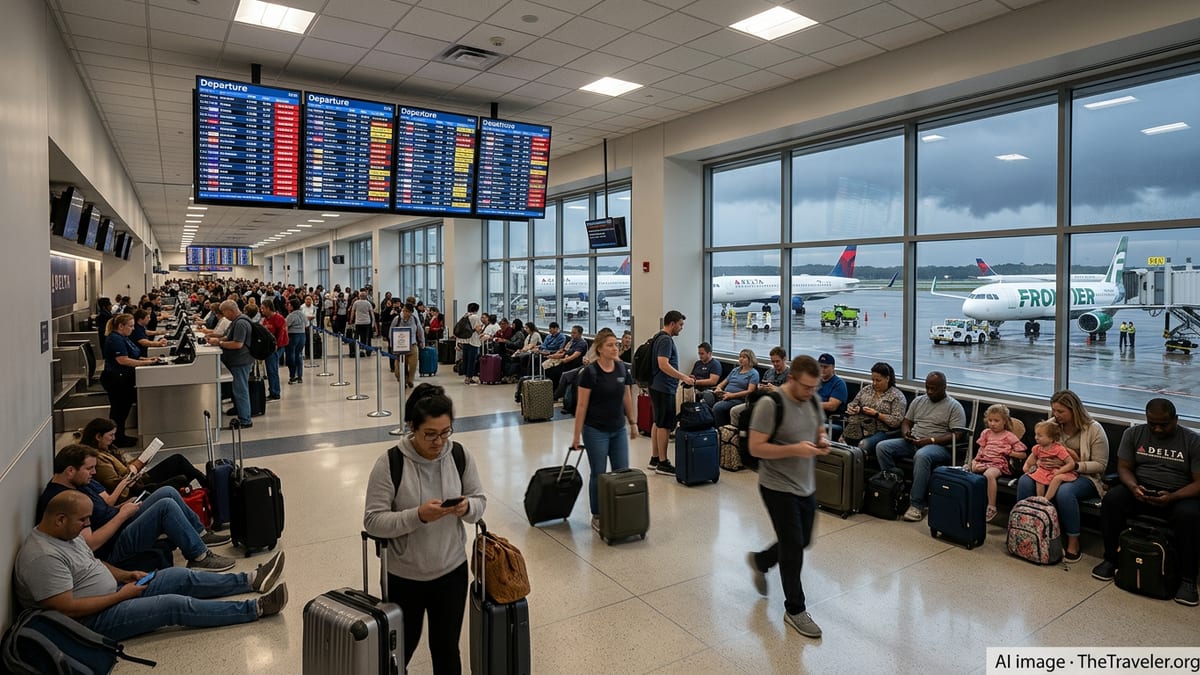
Severe Weather and Network Strain Hit Key Southern Hub
Operational data compiled on June 14 point to Shenzhen Bao’an International Airport as one of the hardest hit facilities in China’s aviation grid, with 21 flights reportedly scrapped outright and around 365 departures or arrivals affected by delays, diversions or significant retimings. Publicly available disruption trackers link the problems to a combination of severe convective storms and downstream congestion across southern China’s dense airspace.
Shenzhen Bao’an is a primary hub or focus city for several of the country’s largest airlines, including Shenzhen Airlines, China Southern, Hainan Airlines and China Eastern, while also handling a notable share of Air China’s domestic and regional traffic. That role magnifies the impact when schedules at the airport begin to unravel, because aircraft and crews based in Shenzhen are tightly woven into rotations serving Beijing, Shanghai, Chengdu and other major cities.
Recent performance analytics already suggested rising pressure at the airport. Industry analysis earlier in June highlighted an unusual spike in average departure delays from Shenzhen, reflecting how quickly operations can deteriorate when weather or air-traffic-flow restrictions collide with full schedules and heavy transfer traffic.
The June 14 disruption appears to be an intensified example of this pattern: once thunderstorms and low visibility slowed departures and arrivals, knock-on effects spread quickly beyond the Pearl River Delta, catching travelers on connecting itineraries throughout the domestic network.
Big Five Mainland Carriers at the Center of Disruptions
The cancellations and delays at Shenzhen Bao’an primarily affected five major Chinese airlines: Hainan Airlines, Air China, Shenzhen Airlines, China Eastern and China Southern. These carriers collectively account for a significant share of China’s domestic capacity and a growing number of short-haul international services from southern hubs.
According to aggregated flight-status boards and schedule matrices reviewed on June 14, some services were removed from the operating program entirely, classified as scrapped flights, while many others remained on the board but operated with extended ground times, revised departure slots or altered routings. In several cases, aircraft that were scheduled to operate onward legs from Shenzhen were reassigned or held, creating a ripple effect on subsequent flights.
Operational statistics circulating in Chinese-language aviation forums and industry digests suggest that China Southern and China Eastern absorbed a particularly heavy share of delays, while Air China, Hainan Airlines and Shenzhen Airlines all recorded multiple cancellations or extensive retimings. These figures dovetail with broader nationwide data pointing to several hundred significant delays and more than two hundred cancellations across Chinese carriers on the same day.
Because several of the affected airlines use Shenzhen as either a primary base or an important focus city, recovery can require extended schedule adjustments. Aircraft and crew rotations often need one to two days to fully realign with the published timetable once a bank of flights at a hub is disrupted.
Domestic Corridors and China–South Korea Routes Affected
The immediate impact was most visible on high-frequency domestic corridors linking Shenzhen with Beijing, Shanghai, Guangzhou, Chengdu, Xi’an, Hangzhou, Kunming and other major urban centers. Published coverage and live tracking dashboards showed irregular operations on trunk routes where passengers typically rely on tight connections to continue deeper into China.
At the same time, the turbulence in Shenzhen’s schedule has also affected regional links between China and South Korea. In recent months, Chinese and South Korean carriers have been rebuilding and expanding services between the two countries, particularly on routes connecting southern China with Seoul and other Korean gateways. The June 14 disruptions forced some passengers heading to or from South Korea to rebook or accept extended layovers as their Shenzhen legs were delayed or cancelled.
Industry commentary notes that, as more international capacity returns on China–South Korea routes, hubs such as Shenzhen Bao’an, Guangzhou Baiyun and Shanghai’s airports are carrying a growing mix of domestic and cross-border traffic. On days of severe weather, this increases the complexity of any recovery effort, as airlines must juggle domestic passenger flows with strict slot and curfew limitations at foreign airports.
For travelers connecting through Shenzhen from secondary Chinese cities to South Korea, the situation on June 14 underlined how a disruption concentrated at one hub can quickly spill over into what appear to be unrelated international journeys, especially when itineraries are ticketed on a single Chinese carrier or within a partner group.
Passengers Confront Long Queues, Confusion and Limited Options
Travelers caught in the Shenzhen disruptions reported long lines at check-in, security and transfer desks as airport and airline staff attempted to reroute passengers and issue new boarding passes on rapidly changing schedules. Social media posts and online travel forums on June 14 highlighted confusion around which flights were still operating, as some third-party booking platforms, airport displays and airline applications updated at different speeds.
Publicly available consumer accounts describe passengers waiting hours for confirmation on whether their flights would depart, while others faced overnight stays when onward connections evaporated. Several posts referenced difficulties in securing alternative seats during peak summer demand, especially for families or groups trying to remain on the same itinerary.
Advocacy-minded travel blogs observed that Chinese domestic aviation rules and carrier-specific policies on cancellations, meal vouchers, hotel accommodation and rebooking can be complex for occasional flyers to navigate. Passengers were urged in these reports to keep boarding passes and receipts, monitor airline notifications closely and, when possible, seek written confirmation of any agreed changes to their tickets.
Airline customer-service channels, including call centers and in-app messaging, appeared to experience heavy traffic during the disruption window, with some travelers describing extended wait times before reaching an agent capable of confirming options such as refunds, date changes or reroutes via alternative hubs.
What Comes Next for Shenzhen’s Summer Operations
Aviation analysts watching the Chinese market note that June and July combine some of the busiest travel weeks of the year with a heightened risk of severe thunderstorms and heavy rain across southern provinces. Shenzhen’s role as a booming technology and manufacturing gateway, as well as a leisure and business hub, means flights are often tightly booked, leaving limited slack in the system on days of disruption.
Industry forecasts anticipate that carriers operating from Shenzhen Bao’an, including Hainan Airlines, Air China, Shenzhen Airlines, China Eastern and China Southern, may fine-tune their schedules and crew planning across the next several weeks in an effort to build more resilience into peak-day operations. That could include small reductions in marginal frequencies, greater use of larger aircraft on select routes or revised departure banks to ease pressure during periods of frequent storms.
Travel publications advising passengers on summer itineraries through southern China recommend leaving additional connection time when routing through Shenzhen, particularly for those linking domestic legs to international flights bound for South Korea and other nearby markets. Flexible ticket conditions and well-chosen travel insurance products are also emphasized as tools to offset the financial risk of last-minute changes.
For now, the June 14 wave of cancellations and delays stands as a reminder of how quickly conditions can deteriorate at one of China’s most important aviation gateways. With more capacity returning to the skies and demand rising into the northern summer, how Shenzhen Bao’an and its anchor carriers adapt to recurrent storm patterns will be closely watched by travelers across the region.