


More news on this day
U.S. air travelers are facing another punishing day of disruptions, as real-time aviation data shows 4,633 flight delays and 124 cancellations nationwide while strong thunderstorms slow operations at major hubs including Chicago O’Hare, Detroit Metropolitan, and Washington’s Reagan National Airport.
Get the latest news straight to your inbox!
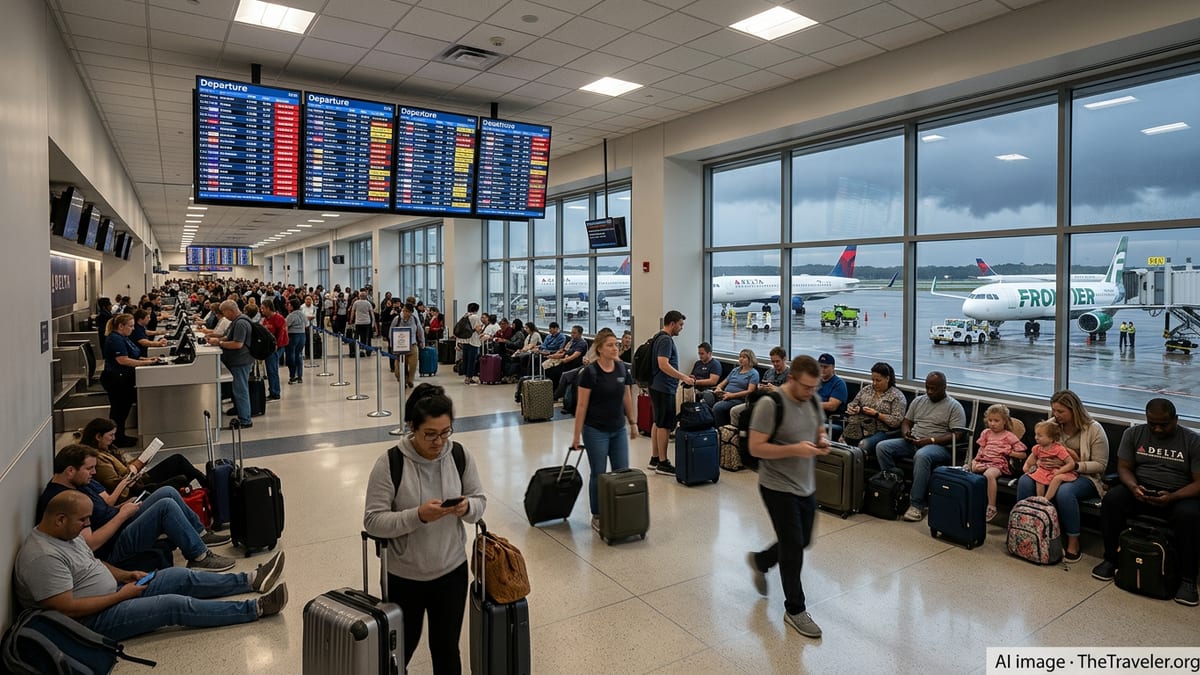
Thunderstorms Turn Key Hubs Into Bottlenecks
Publicly available tracking data compiled on September 4, 2026 indicates that storms rolling across the Midwest and Mid-Atlantic have become the main trigger behind the latest wave of delays and cancellations. Chicago O’Hare, Detroit Metropolitan Wayne County, and Ronald Reagan Washington National are among the airports reporting significant schedule disruptions as bands of thunderstorms pass over some of the country’s busiest air corridors.
The Federal Aviation Administration’s daily operations outlook for Friday highlighted the risk of thunderstorm-related slowdowns in Chicago, Detroit, and the Washington region, where multiple airports share the same constrained airspace. When convective weather moves through these hubs, controllers often must increase spacing between aircraft, temporarily halt some departures, or meter arrivals into saturated approach paths, which quickly translates into mounting delays on departure boards nationwide.
Travel-industry coverage drawing on real-time aviation feeds shows that the 124 cancellations sit alongside more than 4,600 late flights within, into, or out of the United States. While those totals are lower than some of the worst meltdown days seen in recent summers, they are still high enough to affect tens of thousands of passengers, particularly at connecting hubs where even short holds can cascade into missed onward flights.
The same data sets point to weather as the predominant factor for today’s problems, rather than a single airline or mechanical failure. Thunderstorms near Chicago and Detroit during peak bank periods, followed by additional cells sweeping toward the Washington area, have effectively created a moving choke point across a swath of the national airspace system.
Chicago O’Hare Again at the Center of Weather Turmoil
Chicago O’Hare remains one of the most sensitive nodes in the U.S. aviation network whenever storms fire along the Great Lakes and upper Midwest. Industry trackers note that even localized thunderstorm cells near O’Hare’s complex runway system can trigger ground-delay programs that ripple far beyond Illinois, as flights bound for Chicago are slowed or held at their origin airports.
Recent analyses of FAA advisory data show that on days with embedded thunderstorms near Chicago, delay programs are often layered with additional traffic-management initiatives such as miles-in-trail spacing and metering of departures. That combination reduces the airport’s effective capacity, forcing airlines to stretch flight times and increase scheduled buffers, yet still leaving many departures running late when storms linger over key arrival and departure fixes.
Advocacy and passenger-rights sites tracking the September 3 and 4 weather pattern report that Chicago has repeatedly ranked among the hardest-hit airports for both delays and weather-related cancellations this week. Those reports describe how a single wave of thunderstorms crossing the region quickly affected not only O’Hare but also flights headed to or from Detroit and the Washington area, where air traffic routes intersect.
The latest disruptions arrive despite recent efforts to improve resilience at O’Hare through schedule adjustments and air traffic management reforms. However, analysts note that when fast-building storm cells sit directly over the airport’s approach paths, even improved staffing and new procedures can only do so much; for safety reasons, controllers must space out traffic, and airlines have little choice but to wait.
Detroit and Reagan National Hit by Morning and Midday Storms
Detroit Metropolitan Wayne County Airport has also seen a sharp spike in delays as a line of thunderstorms swept across southeastern Michigan. Local weather coverage reported severe thunderstorm warnings for the region on Friday morning, with lightning and heavy rain prompting increased separation between aircraft and ground stops for certain periods. Those conditions translated into dozens of morning cancellations and roughly 150 delays out of Detroit alone before midday.
Farther south and east, Ronald Reagan Washington National Airport has faced its own difficulties as storms and unsettled air mass conditions move along the Mid-Atlantic. FAA status pages for Reagan National show periods of inbound delay programs and volume-related holds when convective weather or low visibility constrain arrivals into the compact riverside airport, which sits under tight airspace restrictions near central Washington.
Travel-disruption trackers note that even short-duration ground stops at Reagan National can cause ripples along the East Coast, because many flights into the airport originate at other delay-prone hubs such as Chicago, Atlanta, and New York. When thunderstorms simultaneously impact multiple nodes in this network, delays compound and aircraft can find themselves out of position for later departures.
In combination, the issues at Detroit and Reagan National help explain how a national delay total exceeding 4,600 flights can build up even without a single headline-grabbing meltdown. With each airport operating below normal capacity for chunks of the day, connecting banks are thinned out and recovery from earlier disruptions becomes slower and more fragile.
FAA Programs and Airline Schedules Strain Under Peak Travel Demand
Federal flight-operations summaries for early September show a busy holiday travel period layered on top of already crowded summer schedules. On September 4, 2026, industry sites monitoring FAA data counted dozens of active delay programs across 25 U.S. airports, encompassing ground holds, arrival metering, and reroutes designed to keep traffic flowing safely through storm-affected regions.
At Chicago, Detroit, and Reagan National, these measures often take the form of time-based flow management, where departures to storm-impacted airports receive specific slots rather than launching on a first-come, first-served basis. While this approach reduces airborne holding and keeps aircraft out of hazardous weather, it also means aircraft may sit at gates or on taxiways for extended periods, contributing to the statistics that passengers experience as late departures and missed connections.
Industry reports emphasize that today’s 124 cancellations, though modest compared with some historic events, are concentrated in a relatively small number of airlines and airports, magnifying the effect on particular routes. Travelers flying through Chicago or connecting from Detroit into East Coast destinations, for example, may find that several successive departures on the same route are delayed or consolidated, leaving limited alternatives for rebooking later in the day.
Historical consumer-report data from the U.S. Department of Transportation underscores how weather has remained a leading cause of delays in recent years, particularly in the late summer and early fall. Thunderstorms, in particular, create highly localized but intense disruptions that are difficult to schedule around, prompting regulators and airlines to rely increasingly on real-time traffic management rather than static timetable changes.
What Today’s Disruptions Mean for Travelers
Passenger-rights organizations and travel advisories responding to this latest wave of disruptions suggest that travelers passing through Chicago, Detroit, or the Washington region should be prepared for rolling delays and gate changes throughout the day. Given the relatively low number of outright cancellations compared with the large volume of delayed flights, many passengers are still expected to reach their destinations, albeit hours later than planned.
Guidance compiled from airline and consumer advocates stresses the importance of monitoring carrier apps and airport displays closely when thunderstorms are affecting multiple hubs at once. Repeated re-sequencing of departures, substitution of aircraft, and shifting of crews between flights can alter boarding times with little warning, even after an initial delay has already been announced.
Analysts also warn that today’s disruptions may linger into the weekend as aircraft and crews work back into position. When storms cause delays late in the week, some aircraft end the day far from their planned overnight locations, forcing airlines to reshuffle Saturday and Sunday schedules. That knock-on effect may be especially evident at connecting hubs like Chicago O’Hare and Detroit, where tight turn times are common and spare capacity is limited during peak travel periods.
While today’s figures of 4,633 delayed flights and 124 cancellations do not represent an extreme outlier by recent standards, they highlight how vulnerable U.S. air travel remains to clusters of thunderstorms over a handful of strategic airports. With forecasts calling for continued unsettled weather across parts of the Midwest and Mid-Atlantic, passengers planning to travel in the coming days may see similar patterns of rolling delays, even if skies appear calm at their local departure gate.
TheTraveler.org: U.S. Travelers Face Fresh Wave of Flight Delays and Cancellations
Travel and Tour World: 124 Cancellations and 4,633 Delays Impact Travel
Yahoo Travel: Over 1,990 Flights Delayed amid Widespread U.S. Disruptions