


More news on this day
Thunderstorms sweeping across the Houston area recently forced temporary ground stops at both William P. Hobby Airport and George Bush Intercontinental Airport, disrupting hundreds of flights as summer storms collided with one of the busiest travel periods of the year.
Get the latest news straight to your inbox!
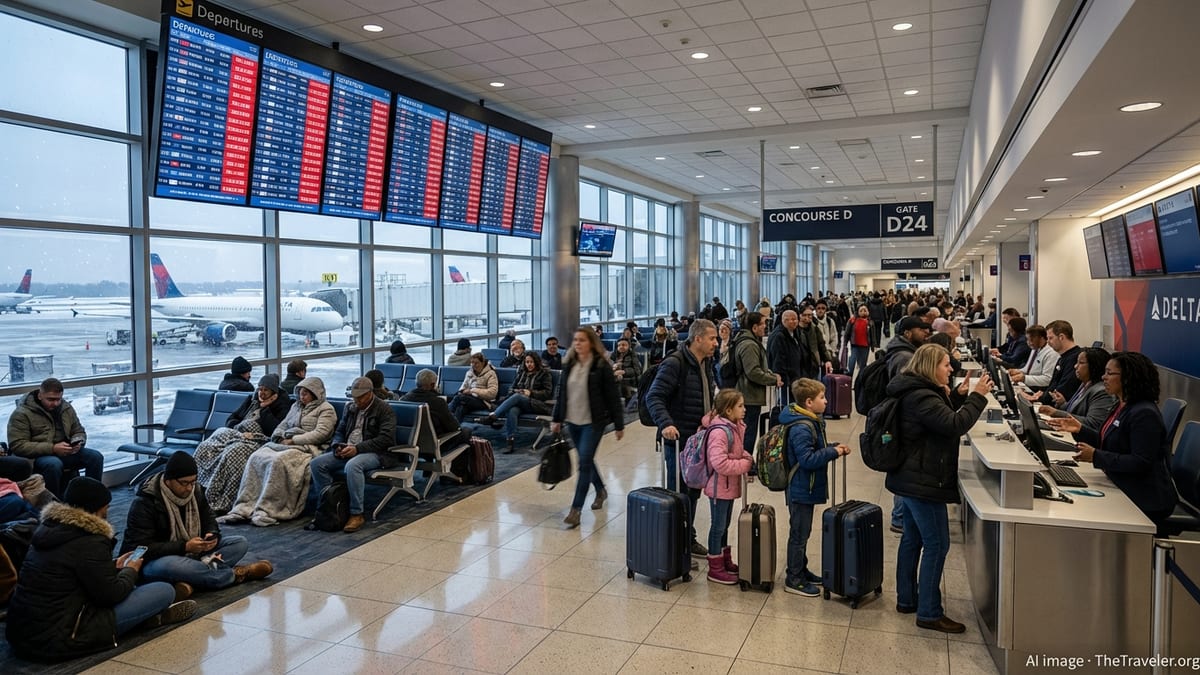
Severe Weather Halts Arrivals Into Houston
Recent storm systems moving through southeast Texas brought heavy rain, lightning and low clouds to the Houston metro area, triggering ground stops that temporarily halted arrivals into William P. Hobby Airport and George Bush Intercontinental Airport. Publicly available Federal Aviation Administration information and local media coverage indicate that the ground stops were imposed as thunderstorms passed near the airfields and key approach paths.
At Hobby Airport, a ground stop tied to severe thunderstorms was reported on June 3, 2026, pausing inbound traffic while convective cells moved across the city. A similar disruption had already affected Bush Intercontinental earlier in the season, when storms on March 7, 2026, led to a ground stop that was later lifted the same evening once conditions improved. These episodes reflect how quickly operations can shift when intense storms track over Houston’s airspace.
Ground stops are used when air traffic managers determine that weather, runway conditions or other issues sharply limit an airport’s ability to safely accept arriving flights. Departures already on the ground in Houston may still take off when conditions allow, but flights from other cities bound for Hobby or Bush can be held at their origin until the constraint eases. For travelers, that can translate into rolling delays far from the actual storms.
The latest interruptions come as the region contends with an active early summer pattern. Forecast discussions and regional outlooks describe frequent afternoon and evening thunderstorms, with localized flooding and gusty winds a recurrent threat. The pattern increases the likelihood that similar traffic management programs could be needed again when storm cells build near the airports.
Impact on Passengers and Flight Operations
The ground stops at Hobby and Bush created ripple effects across airline networks, with delays and scattered cancellations reported on flights into Houston and onward connections. Travel forums, social posts and airline operations alerts describe passengers facing extended waits at distant hubs as flights bound for Houston were held at the gate until air traffic managers cleared additional arrivals.
At Bush Intercontinental, the March weather event led to a pause on inbound flights during the late afternoon and early evening. According to published coverage, the ground stop was lifted later that night, allowing airlines to begin working through backlogs of diverted and delayed aircraft. Even once restrictions ended, crews and aircraft were out of position, leading to knock-on delays that stretched into subsequent departures.
Hobby saw similar strain when thunderstorms on June 3 triggered a ground stop there. Images and local reporting from that day showed crowded security lines and busy gate areas as travelers waited for updated departure times and reassigned aircraft. Because Hobby functions as a major base for domestic point to point flying, disruptions can quickly propagate to smaller markets that rely on a limited number of daily frequencies.
Operationally, both airports must balance safety procedures with the pressure of heavy summer demand. When lightning is detected near the airfield, ramp work such as fueling, baggage loading and aircraft pushbacks can be temporarily suspended, even if the runways themselves remain usable. That safety step adds another layer of delay on top of any restrictions on arriving flights stemming from low visibility or convective weather around the terminal area.
World Cup Crowds Add Pressure to Houston Airports
The timing of these weather related disruptions is challenging for Houston. The city is hosting matches for the 2026 FIFA World Cup, and Houston’s airport system has projected millions of additional passengers moving through Hobby and Bush over the course of the tournament period. Local reports describe expectations of heightened travel volumes, full parking facilities and busy security checkpoints at both airports.
Travel and weather coverage point out that visitors arriving for World Cup matches may not be familiar with the speed at which storms can form over the Gulf Coast. Quick hitting downpours and intense lightning are a routine part of the warm season in southeast Texas, but for fans with tight match schedules and connecting flights, even a short ground stop can disrupt carefully planned itineraries.
Airport planners have spent recent years upgrading facilities and refining contingency plans, from new passenger bridges at Bush to expanded international capabilities at Hobby. These investments are intended to help the system absorb surges in demand tied to major events while maintaining safety margins during adverse weather. Even so, this month’s thunderstorms highlight how sensitive large, complex hubs remain to short term capacity constraints.
For airlines, the combination of peak seasonal traffic and event driven spikes leaves less slack in their schedules. When storms force a pause in arrivals, carriers have fewer open seats on later flights to rebook stranded passengers, increasing the likelihood that some travelers may need to wait until the next day to reach their destination.
Why Summer Storms Hit Houston Aviation Hard
Houston’s geography and climate play a central role in the recurring weather disruptions at its airports. Warm, humid air from the Gulf of Mexico feeds daily thunderstorm development over southeast Texas throughout late spring and summer. Forecast analyses in recent weeks have emphasized the potential for slow moving cells capable of dumping heavy rain, producing strong wind gusts and generating dangerous lightning near transportation corridors.
Airport climatology records compiled by meteorological agencies show that both Hobby and Bush have a history of significant weather events, including severe thunderstorms with damaging wind gusts. While the most intense storms are relatively rare, even ordinary afternoon cells can reduce visibility, spark lightning related ground holds and cause controllers to reroute arriving aircraft around active storm cores.
Houston’s sprawling airspace also concentrates a high volume of domestic and international flights. Bush Intercontinental functions as a major hub for long haul and connecting traffic, while Hobby serves dense regional and domestic routes. When storms align with peak arrival banks, controllers may need to limit the rate at which planes can land, prompting the FAA to implement ground stops so that aircraft remain safely spaced and airborne holding is minimized.
These structural factors mean that even as infrastructure improves, the region will continue to face periodic weather driven capacity cuts. The recent ground stops illustrate how operational plans depend heavily on short term forecasts and real time radar, particularly when storm systems approach from the Gulf or organize into squall lines across interior Texas.
What Travelers Can Do When Ground Stops Hit
While travelers cannot prevent weather related disruptions, preparation can ease the impact when ground stops affect Houston’s airports. Aviation advisories and airline guidance consistently underscore the importance of monitoring flight status through airline apps and alert systems, especially during the warm season when thunderstorms are common in the afternoon and evening.
Passengers connecting through Bush or Hobby may benefit from scheduling longer layovers when traveling during June and July, allowing extra time to absorb delays without missing onward flights. Travel experts frequently recommend avoiding the last departure of the day on critical routes, since that flight leaves little room for rebooking if storms trigger extended restrictions.
Visitor oriented coverage connected to the World Cup also encourages arriving fans to factor Houston’s weather into ground transportation plans. Heavy rain can slow freeway traffic between the airports and the city’s stadium, so additional travel time may be necessary on match days if storms are in the forecast. Leaving early for the airport can reduce stress if sudden downpours or lightning later stall operations.
For now, operations at both Hobby and Bush have resumed after the recent weather related pauses, but forecasts continue to point to a stormy pattern along the Texas Gulf Coast. As summer progresses, aviation observers expect that additional short term ground stops will remain a possibility whenever intense thunderstorms move across Houston’s busy airspace.