


More news on this day
Newark Liberty International Airport is experiencing significant travel disruption as 229 delayed flights and 39 cancellations ripple across domestic and transatlantic routes, affecting operations by United Airlines, Delta Air Lines, Air Canada Jazz, Porter, Republic and other carriers serving the busy New York–area hub.
Get the latest news straight to your inbox!
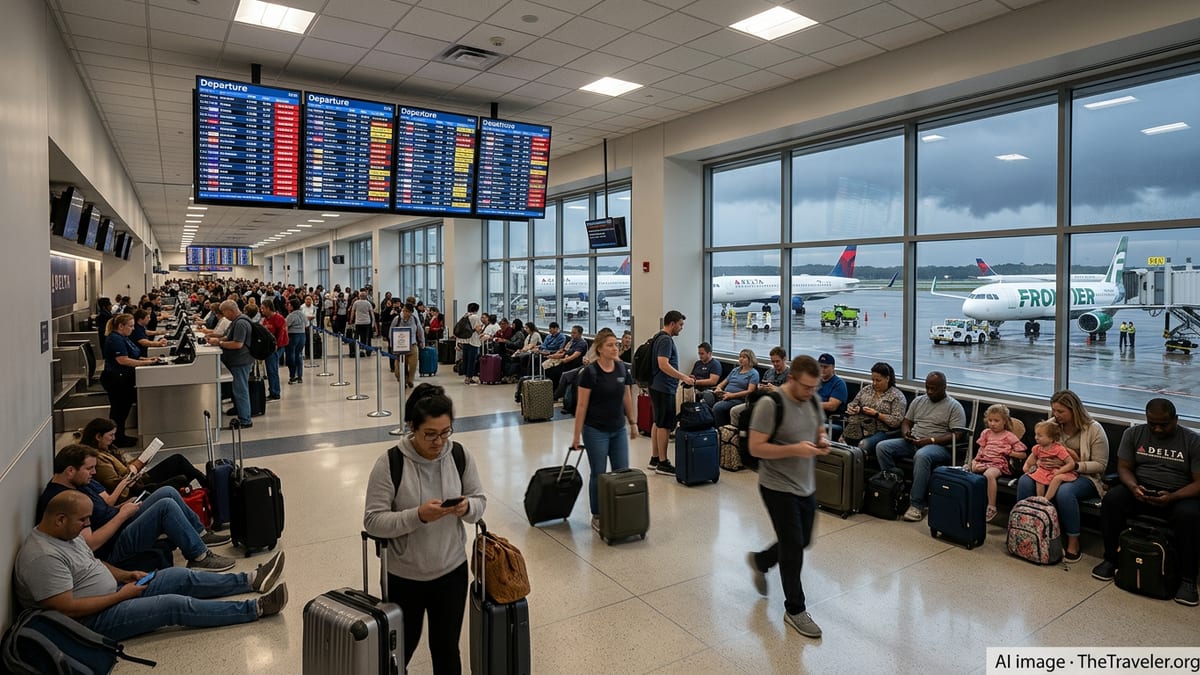
Thunderstorms and Traffic Controls Snarl Operations
Publicly available air traffic data for June 12 indicate that thunderstorms moving through the Northeast have triggered extensive ground delay programs at Newark Liberty International, forcing departures and arrivals to operate well behind schedule. Federal aviation dashboards show traffic management initiatives in effect for Newark, with ground holds and airborne spacing measures designed to keep traffic flows at safe levels while storms pass through the region.
Real-time delay trackers list 229 flights arriving at or departing from Newark as delayed and 39 as canceled by late evening, highlighting the extent of the disruption at what is already one of the most delay-prone hubs in the United States. The knock-on effects extend throughout the country and into Canada and Europe as aircraft and crews fall out of position, forcing schedule adjustments through the rest of the operating day.
Average departure and arrival delays at the airport are reported at close to or above one hour, with some individual flights running several hours late. Travelers connecting through Newark to long-haul destinations in Europe and to major Canadian cities are among those most exposed to missed connections and schedule changes.
United, Delta, Jazz, Porter and Regional Partners Hit Hard
Newark serves as United Airlines’ largest East Coast hub, and publicly accessible flight boards show that United and its regional partners account for a substantial share of the delayed and canceled services. Republic Airways, which operates United Express flights on regional routes, appears prominently in the disruption statistics, reflecting the vulnerability of shorter-haul feeder flights when schedules compress.
Delta Air Lines, which operates from Newark’s newer Terminal A alongside several other carriers, is also reporting delays and isolated cancellations on its domestic network into and out of the airport. Disruptions for Delta customers are concentrated on short-haul routes along the East Coast and into the Midwest, where aircraft rotations rely on tight turnaround times.
In the Canada market, connections are being affected on flights operated by Air Canada Jazz and Porter Airlines, particularly between Newark and major Canadian hubs such as Toronto and Montreal. These services play a key role for business travelers and transatlantic passengers routing through Canadian gateways, amplifying the broader impact of the operational challenges at Newark.
Ripple Effects Across the US, Canada and Europe
Newark Liberty International is a major transatlantic gateway, and the wave of delays is sending shockwaves across networks linking the United States, Canada and Europe. Data from live disruption trackers show that a number of Newark departures to European cities, as well as inbound flights from the continent, are operating significantly behind schedule as aircraft arrive late or await departure slots.
Connections are proving especially fragile for travelers relying on regional flights operated by Jazz, Porter, Republic and other partners to reach Newark in time for overnight departures to Europe. When early evening feeder flights depart late or are canceled, passengers can miss once-daily transatlantic services, resulting in extended rebooking windows and overnight stays.
Within North America, airports with heavy Newark traffic such as Chicago, Washington, Toronto, Boston and Atlanta are showing clusters of delays that mirror the timing of the disruptions in New Jersey. Published statistics on nationwide cancellations and delays indicate that Newark is among the leading contributors to the day’s overall operational challenges across the United States aviation system.
Structural Strain at a Chronically Congested Hub
Newark has long been identified in federal analyses as a congested and delay-prone airport, even in periods of relatively stable weather. Earlier regulatory filings and schedule management notices describe efforts by aviation authorities to impose targeted limits on arrivals and departures during peak hours in an attempt to curb chronic bottlenecks and long ground holds.
The situation on June 12 is unfolding against that backdrop of structural strain. Even with operating caps and a renewed focus on spacing flights more evenly throughout the day, traffic volumes during the busy summer season leave little slack when severe weather moves through the New York airspace. Once thunderstorms reduce runway capacity and require increased separation between aircraft, delays tend to compound quickly.
Construction, periodic runway maintenance and continued pressure on air traffic control staffing in the region have also been cited in prior public briefings and notices as important contributing factors. When these constraints align with convective weather events, the likelihood of multi-hour delays and clusters of cancellations increases significantly, as seen in the latest disruption figures.
What Travelers Can Expect in the Coming Hours
Based on current delay programs and the evening timing of many of Newark’s longest-haul departures, travel impacts are likely to persist into the late-night and early-morning hours. Real-time operational summaries show that some departure and arrival delays are slowly decreasing as thunderstorms move out of the immediate area, but backlogs remain on the ground and in the wider network.
Passengers scheduled to fly into or out of Newark are being advised by airlines, airport information pages and third-party trackers to verify the latest status of their flights before heading to the airport. With rolling delays in the range of one to two hours for many services and the risk of additional short-notice cancellations, same-day travel plans may need to incorporate greater flexibility.
For those connecting onwards to Canada or Europe, publicly available guidance from passenger-rights organizations emphasizes the importance of monitoring both the initial Newark flight and any onward segments, as delays on the first leg can remove eligibility for certain types of compensation or rebooking options. With 229 delays and 39 cancellations already recorded, the June 12 disruption underscores the continuing sensitivity of Newark Liberty International Airport to summer storms and regional airspace constraints.