


I spent three days in Puerto Rico’s central mountains with a single mission: drink as much good coffee as possible and finally compare two of Adjuntas’ best known farm experiences, Sandra Farms and Hacienda Tres Ángeles. I booked both tours in the same week, stayed in the same base city, tracked every expense from fuel to lunch and coffee bags, and took notes on group size, guide quality, tastings and logistics. This is a grounded, first hand comparison of what I actually learned and tasted at each farm, not a ranking of pretty viewpoints.
Get the latest updates straight to your inbox!
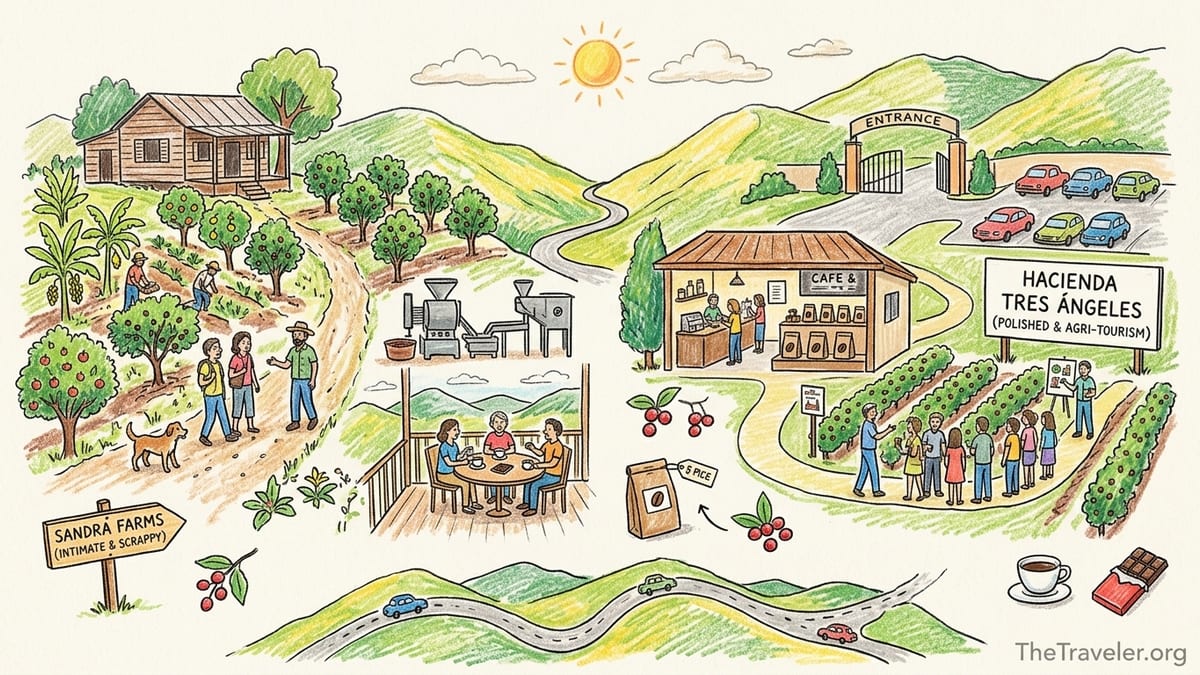
What I Expected From Each Adjuntas Coffee Tour
Going in, I expected Sandra Farms to feel like the more intimate, scrappy operation. Friends described it as a working family farm where you walk among the trees, hear stories about hurricane recovery and finish on a veranda with coffee and chocolate. Online reviews also suggested that tours often run with just a handful of people, so I pictured a slower, conversational visit where questions could shape the pace.
Hacienda Tres Ángeles, on the other hand, markets itself as a polished agritourism project with award winning specialty coffee and structured tours that run mainly on weekends. Regional tourism brochures describe a plantation to cup experience that lasts around two to two and a half hours, with a cafe and small restaurant on site serving their own beans in espresso drinks and pour overs. I expected it to feel more like a destination experience, with clearer signage, more parking and a slightly larger group.
Price wise, I anticipated both farms to be in the same general bracket as other serious coffee tours in Puerto Rico, which commonly charge somewhere in the range of 25 to 40 US dollars per adult. I also assumed that the real spending would happen on coffee bags, since both farms sell freshly roasted beans at the end of the visit, often in the 12 to 18 dollars per bag range depending on roast and size.
Because Adjuntas sits in the central mountain range, I knew that driving would be a meaningful part of the day. I based myself in Ponce on the south coast and used that same city for both tours. The drive from Ponce up to the Adjuntas area usually takes around 45 minutes to one hour each way, depending on traffic and the exact farm entrance road. Keeping the base the same meant I could directly compare not just the tours, but also the driving time and fuel cost for each.
Booking, Schedules and First Impressions
I booked both tours about two weeks ahead. For Sandra Farms, the process began by finding their official contact information and sending a message with my preferred date and time. I received a personal reply confirming availability and the per person rate, which at the time of my visit fell within the same general range as other central mountain coffee farms. Payment was handled directly with the farm, and I got clear driving directions since rural roads can confuse mapping apps.
Hacienda Tres Ángeles uses a more structured system. Their hours are concentrated on Fridays and Saturdays, with defined tour slots that you need to reserve. I contacted them using the information provided in local tourism materials and received a prompt confirmation with tour length, language and arrival instructions. The tone was professional and organized, more like booking a small attraction than arranging a private farm visit.
On arrival, the differences were immediate. Reaching Sandra Farms involved a narrower mountain road and then a short final stretch along a concrete and gravel driveway. Signage was present but modest, and parking meant pulling into a small cleared area near the farmhouse. Stepping out of the car, I was greeted directly by a member of the family, a couple of farm dogs and the sight of coffee trees on a hillside below the house.
At Hacienda Tres Ángeles, the entrance was more formal. A main gate and a clearer driveway led to a larger dedicated parking area with enough space for several cars. The reception area doubles as a coffee shop, with a counter displaying bags of their roasted beans, pastries and a menu of espresso drinks and brewed coffee. I checked in with a staff member behind the counter, received a brief overview of how the tour would unfold and was invited to purchase a coffee to sip while waiting for the group to assemble.
Walking the Fields and Seeing Coffee Grown
Sandra Farms placed heavy emphasis on the plants themselves and the realities of farming in Puerto Rico’s climate. Our group that morning consisted of just four visitors plus the guide, who was one of the long term farmers. We set off down a footpath into the coffee fields with the guide stopping frequently to show how the trees were pruned after hurricane damage, how shade trees were selected and how mixed plantings of fruit trees helped both biodiversity and income stability.
In the fields, we talked frankly about the hurricanes that hit Puerto Rico in recent years and how the storms affected the farm. The guide pointed to rows that had to be replanted and explained why some slopes were terraced differently after soil loss. There was no attempt to gloss over the ongoing challenges of pests, labor costs and climate variability. At several points we watched workers actively tending the plants, clearing undergrowth and checking ripeness, which reinforced that this was not a staged demonstration but a genuinely working piece of land.
Hacienda Tres Ángeles also included time among the coffee plants, but it was woven into a more structured narrative. Our group had about twelve people of mixed ages. We followed a set route that began with a short introduction to the history of the hacienda, then moved into a designated plot where the guide described the Arabica varietals they cultivate, how altitude and microclimate affect flavor and how they monitor ripeness. The fields felt more manicured, with paths clearly laid out and designated stopping points where the guide gave prepared explanations.
Compared side by side, Sandra Farms gave me a deeper sense of the farm as an ecosystem and economic livelihood, partly because the small group size allowed for more tangents and local anecdotes. Hacienda Tres Ángeles provided clearer, polished explanations of varietals and growing conditions that would be ideal for guests who like a classroom style overview. On my visit, I saw more visible day to day work happening at Sandra Farms, while at Tres Ángeles I saw fewer workers in the fields but more emphasis on presentation and teaching.
Processing, Roasting and How Deep the Guides Went
Back up near the central buildings at Sandra Farms, we moved into the processing area. The guide walked us through how freshly picked cherries are depulped, fermented or mechanically washed, then dried. Some of the machinery reflects years of incremental upgrades, so we saw a mix of older equipment that survived the storms and newer pieces added during the recovery. The explanation focused on trade offs between traditional methods and more efficient processing and how choices affected both flavor and labor requirements.
We also stepped into the roasting space, which is compact but fully functional. The guide described how they roast small batches for different profiles, roughly from lighter roasts that highlight acidity and florals to darker roasts preferred by some local customers. When I asked detailed questions about roast profiles and how they decide on charge temperature or development time, the guide answered patiently and drew on real batches from that week, pointing to bags that illustrated specific flavor outcomes.
At Hacienda Tres Ángeles, the processing and roasting component followed a clearly structured plantation to cup arc. We entered a dedicated processing facility where the guide walked us along the path coffee takes from delivery of ripe cherries through pulping, washing, drying, sorting and storage. The equipment and layout feel engineered for visitors, with signage and safe vantage points for seeing the machinery. The explanation emphasized sustainability and eco friendly technology in their wet processing and water use, tying it into the farm’s broader branding as a model of responsible production.
In the roasting area, the discussion leaned more toward how consistent profiles support quality in their specialty coffee and how they roast to highlight specific attributes that earn them recognition. My technical questions about roast curves and quality control were answered competently but within the limits of a group tour. Overall, Sandra Farms allowed for a little more open ended technical back and forth, while Hacienda Tres Ángeles delivered a well rehearsed, educational overview suitable for a wider audience.
Tasting: Coffee, Chocolate and How Many Cups I Tried
The tasting at Sandra Farms took place on the family veranda overlooking the valley. We sat around a long table while the guide brewed coffee using different methods. Over the course of the session I tasted at least two distinct roast levels of their main coffee in simple brewed preparations, along with a small pour over that highlighted a lighter profile. In total I had three cups, served in modest portions so you could appreciate differences without overcaffeinating.
Alongside the coffee, Sandra Farms paired locally made chocolate that they work with, encouraging us to try sips of coffee before and after a bite to see how the bitterness and sweetness interacted. The guide invited comparisons of flavor notes, but in a relaxed way, prompting us to use our own language rather than insisting on a rigid list of descriptors. In my notes I wrote down dark chocolate, roasted nuts and a faint red fruit edge on the lighter roast, with a rounder, caramel and toasted hazelnut character in the medium roast.
Hacienda Tres Ángeles structured its tasting more like a formal cupping lite blended with a cafe experience. During the tour I sampled their brewed coffee as part of a guided tasting that included discussion of aroma, body and finish. After the official tasting, the presence of an on site coffee shop meant I could order an additional drink. I opted for a cappuccino prepared with their espresso blend and noted a creamy body and gentle cocoa and almond flavors. Between the guided tasting and my cafe order I effectively tried at least two distinct preparations from their beans.
Comparing the cups, Sandra Farms leaned more toward a home setting, with filter style brews that showcased clarity and sweetness, while Hacienda Tres Ángeles gave a more complete cafe spectrum, including espresso based drinks. I personally preferred the black coffee I had at Sandra Farms, which tasted especially clean and layered in the mountain air. However, for travelers who love milk drinks and want latte art photos, the Tres Ángeles cafe component is a significant advantage.
Atmosphere, Group Size and How Personal It Felt
On atmosphere, the two farms diverged noticeably. Sandra Farms felt almost like being invited to a neighbor’s property. With only four people on my tour, conversations flowed naturally. We asked about how the family got into coffee, how they navigated supply chain problems after storms and even about what it is like to live year round at this elevation. The guide adjusted pacing based on our interests, spending extra time in the processing area when we showed curiosity.
Hacienda Tres Ángeles had a friendlier version of a small attraction vibe. With around twelve people, the tour moved at a set rhythm, and questions were held until natural breaks. It never felt rushed, but it also did not feel like a private visit. The cafe, shop and larger parking area meant there were always a few other people around, some there only to enjoy a coffee rather than take the tour. This created a livelier environment but also one that felt more commercial.
In terms of crowding, neither farm felt overwhelmingly busy on the days I visited. Both limited tour sizes enough that everyone could see and hear. The main difference was emotional tone. Sandra Farms came across as deeply personal and almost homemade, which will appeal to travelers who seek connection with local hosts. Hacienda Tres Ángeles felt polished and professional, with branded merchandise and a clearer line between staff and guests.
For question depth, Sandra Farms again had a slight edge simply because of the format. I asked about soil management, yield per tree and roast decisions and received detailed, conversational answers. At Tres Ángeles, technical questions were welcome but had to fit within a schedule designed for a mixed audience, including people on their first ever coffee farm visit.
Logistics: Accessibility, Facilities, Kids and Buying Coffee
Reaching both farms from Ponce required curvy mountain driving. Using the same base highlighted small differences. The road to Sandra Farms included a narrower final stretch where slower speeds were essential, while the access road to Hacienda Tres Ángeles felt a bit more straightforward with clearer signage. In both cases I allowed about one hour each way from central Ponce to build in time for weather and comfort breaks.
Parking at Sandra Farms consisted of a small area near the farmhouse on uneven ground. It worked fine for a compact rental car, but drivers who are anxious about tight spaces or steep driveways should be aware. The walking portions of the tour involve dirt paths and modest slopes in the fields, so visitors with reduced mobility might find it challenging. Bathrooms were simple but clean, located near the main house.
Hacienda Tres Ángeles offered a more accessible layout. The main building and cafe sit on relatively level ground with a defined parking lot and clearer paths. Some portions of the farm walk still include uneven surfaces, but the immediate facilities, including restrooms and seating areas, are more accommodating to a broader range of visitors. The presence of a cafe and, when available, light food options such as pastries or simple dishes makes it easier to manage snacks and caffeine before or after the tour.
Both farms sell their own coffee for you to take home. On my visits the prices for a standard bag of freshly roasted beans were in line with other specialty coffees in Puerto Rico, typically somewhere in the mid teens per bag depending on size and roast. Sandra Farms’ sales took place in a corner of the veranda with a small display, while Hacienda Tres Ángeles had a dedicated retail corner inside the cafe with branded packaging and sometimes additional products like mugs or shirts. For families with children, Tres Ángeles offers more distractions in the form of a cafe and wider spaces, while Sandra Farms might suit older kids or teens who are genuinely curious about agriculture and do not mind standing through longer explanations.
What I Actually Paid For Both Tours
Because prices and fuel costs change, it is important to treat these figures as one traveler’s snapshot rather than permanent rates. When I visited, the ticket price per adult at each farm fell into a similar band that is common among central mountain coffee tours. For a couple, admission to Sandra Farms plus Hacienda Tres Ángeles came to a combined amount in the low hundreds of dollars once taxes and any booking charges were factored in.
Fuel from Ponce to Adjuntas and back on two separate days added another meaningful though smaller line item. Using a typical compact rental car and regional fuel prices at the time, the round trip drives for both tours together consumed a modest but noticeable amount of gasoline. Parking at both farms was included at no extra charge.
Coffee purchases were where costs climbed by choice. At Sandra Farms my partner and I bought two bags of beans and a bar of locally linked chocolate to bring home, spending roughly the cost of a casual lunch for two. At Hacienda Tres Ángeles we bought two bags of their roasted coffee and ordered drinks and a small snack in the cafe, which together equaled or slightly exceeded the Sandra Farms purchases. Altogether, for a couple doing both tours, buying a few bags at each and adding simple lunches on the road, the total outlay for this two farm experiment comfortably sat in the mid hundreds of dollars.
Because each traveler’s appetite for souvenirs and cafe stops differs, your personal total could be significantly lower if you limit purchases to one bag per farm and skip extra drinks, or significantly higher if you stock up on gifts. The important planning takeaway is that admission is only part of the cost. Serious coffee fans almost always leave with beans, and in Adjuntas that is a very worthwhile indulgence.
Which Coffee Tour I Preferred And Why
If forced to choose based solely on the coffee in my cup, I would give a narrow edge to Sandra Farms. The tasting on the veranda, with multiple brew methods and a relaxed pace, showed off a clarity and sweetness that stayed with me for days. The combination of black coffee and local chocolate created a focused, sensory experience that felt very rooted in place. The ability to talk directly with someone who both grows and roasts the coffee added another layer of connection.
However, my overall favorite tour experience depends on the type of traveler. For serious coffee enthusiasts who already understand basic processing and want to dig into farming realities, Sandra Farms delivered more candid stories about hurricane recovery, diversification and the fragility of small scale agriculture. You see the scars on the landscape, the patched together infrastructure and the determination that keeps the farm running.
Hacienda Tres Ángeles shone as a complete outing. The combination of a well organized plantation to cup tour, attractive facilities, a functioning cafe and a more accessible layout makes it easier to recommend to a mixed group of friends or family with varied interest levels. The coffee is genuinely good, and the chance to enjoy it in espresso based drinks, with comfortable seating and mountain views, is a strong draw.
What surprised me most was how complementary the two farms felt. Sandra Farms grounded me in the gritty, day to day side of coffee farming in Puerto Rico, while Hacienda Tres Ángeles gave me a polished overview of how that agricultural work translates into a visitor facing experience and a branded specialty product. Doing both within a few days created a fuller picture than either could offer alone.
What Disappointed Me
No tour is perfect, and acknowledging the weak points is useful for planning. At Sandra Farms, the primary challenge was accessibility. The combination of narrow mountain roads, a small parking area and uneven walking paths means this experience is not ideal for travelers with significant mobility issues or those anxious about driving in the interior. While I personally enjoyed the rustic setting, some visitors might wish for clearer signage or more structured pacing.
At Hacienda Tres Ángeles, my main disappointment involved the limited flexibility of a larger group format. Because the tour follows a set schedule with more participants, there is less room to linger at specific stages of the process or to dive deep into highly technical questions without slowing everyone else down. Travelers seeking a one on one, mentorship style session on advanced roasting or agronomy might find the content a little broad.
I also found that on a busy weekend, the cafe area at Tres Ángeles could feel noticeably more commercial, with people flowing in and out for drinks even when they were not taking the tour. This is not inherently negative, but travelers hoping for complete quiet or a sense of solitude may be surprised by the modest bustle.
Price sensitivity is another consideration. While I felt that both tours delivered fair value for the level of explanation, scenery and tastings provided, travelers on a tight budget may find that doing both in quick succession stretches finances, especially once coffee purchases and mountain driving costs are added. In that case, it becomes important to choose the farm that best matches your interests, which leads into the final recommendations below.
Recommendations: Enthusiasts, Families, Couples and If You Must Pick One
For serious coffee enthusiasts who already understand basic origin, roast and brewing concepts, I would prioritize Sandra Farms. The smaller group size on my visit, direct interaction with a working farmer and willingness to discuss topics like hurricane damage, soil management and post harvest trade offs made it particularly rewarding. You are more likely to leave with new insight into the realities behind your daily cup.
For families, especially those with children who may not be captivated by long technical explanations, Hacienda Tres Ángeles is the stronger starting point. The structured tour length, clearer facilities, easier parking and presence of a cafe and snacks give kids more opportunities to reset if their attention wanders. Parents can trade off between listening closely to the guide and supervising younger visitors in a space that feels built for hosting.
Couples looking for a romantic or quietly memorable outing will find something to love at both farms. Sandra Farms offers a more intimate, almost private feeling experience that pairs nicely with a slow lunch stop elsewhere in Adjuntas. Hacienda Tres Ángeles offers a cafe where you can linger over a cappuccino with mountain views after the tour. If time permits, doing Sandra Farms first and Tres Ángeles second creates a satisfying arc from rustic to polished.
If you only have time or budget for one farm, choose based on your priorities. Choose Sandra Farms if you care deeply about understanding sustainable agriculture on a human scale, do not mind rustic access and want to focus on black coffee and conversation with a farmer. Choose Hacienda Tres Ángeles if you want a structured plantation to cup overview, comfortable facilities, a cafe atmosphere and a tour you can more easily share with family members of varying interest levels. Either way, base yourself in a nearby city such as Ponce or plan at least a full day from San Juan, build in extra driving time for mountain roads and leave room in your luggage for more coffee than you think you will buy.
The Takeaway
After visiting both Sandra Farms and Hacienda Tres Ángeles within the same week, using the same base city and tracking the full cost from fuel to lunch and coffee bags, I came away convinced that the two farms represent complementary faces of Adjuntas coffee culture. Sandra Farms excels as a personal, small group window into sustainable agriculture and resilience, with a coffee and chocolate tasting that foregrounds the beans without distraction. Hacienda Tres Ángeles offers a refined, visitor friendly plantation to cup experience anchored by a proper cafe and well organized facilities.
In the cups I tasted, Sandra Farms narrowly won my heart for black coffee, while Tres Ángeles impressed with its espresso based drinks and overall polish. Both guides were knowledgeable, and both farms clearly invest in sustainability, processing quality and education. Your choice should hinge less on which coffee is definitively better and more on whether you prefer an intimate farm visit or an agritourism destination.
For travelers with the time and budget to do both, stringing these tours together across two days creates one of Puerto Rico’s most rewarding inland excursions. You will see how geography, infrastructure, hurricanes and human choices shape coffee long before it reaches a bag or a cafe. You will also contribute directly to communities that are working to keep high quality Puerto Rican coffee alive in a changing climate.
Whichever farm you choose, plan for the drive, confirm schedules directly with the hosts before you go and arrive with questions and curiosity. Adjuntas rewards travelers who slow down, listen and taste carefully, one cup at a time.
FAQ
Q1. Can I visit both Sandra Farms and Hacienda Tres Ángeles in one day?
It is technically possible if you book morning and afternoon tours, but I do not recommend it. The drives, mountain weather and amount of information make it more enjoyable to dedicate one day to each farm.
Q2. Which farm is easier to reach for nervous drivers?
Hacienda Tres Ángeles is somewhat easier thanks to clearer signage and a more straightforward entrance road and parking area. Sandra Farms involves a narrower final approach and a smaller parking space.
Q3. Do I need to book coffee tours in advance?
Yes. Both farms expect advance reservations for tours, especially on weekends and during high season. Contact them before your trip to confirm current schedules and prices.
Q4. Are the tours suitable for young children?
Families do visit both farms, but Hacienda Tres Ángeles is usually more comfortable for younger kids thanks to its cafe, larger spaces and more predictable schedule. Sandra Farms may suit older children and teens who enjoy learning about farming.
Q5. How much time should I budget for each tour including driving?
Plan roughly half a day per farm if you are staying in Ponce or another nearby city. This allows for around two to three hours on site and up to one hour of driving each way.
Q6. Can I buy freshly roasted coffee at both farms?
Yes. Both Sandra Farms and Hacienda Tres Ángeles sell bags of their own freshly roasted beans. Many visitors consider this the best souvenir from Adjuntas.
Q7. Is Spanish required to enjoy the tours?
Both farms can accommodate English speakers, though availability may vary by date and guide. When reserving, specify your preferred language so the hosts can advise on suitable tour times.
Q8. What should I wear for coffee tours in Adjuntas?
Wear comfortable closed toed shoes suitable for dirt paths, along with light layers and a rain jacket. Mountain weather can shift quickly, and some sections involve uneven ground.
Q9. Are there food options at the farms or nearby?
Hacienda Tres Ángeles has an on site cafe that can offer light food along with coffee, while Sandra Farms focuses more on the tour and tasting. For fuller meals, combine your visit with restaurants in Adjuntas or Ponce.
Q10. If I am a casual coffee drinker, will I still enjoy these tours?
Yes. While enthusiasts will get the most from detailed explanations, both farms present coffee growing and processing in an accessible way. The scenery, tastings and local stories are enjoyable even for casual drinkers.