


More news on this day
What was marketed as a never ending life at sea has abruptly run aground in Cambodia, where more than 200 residents of the Villa Vie Odyssey now find themselves stranded after the residential cruise ship halted its years long voyage amid spiraling fuel costs and financial turmoil.
Get the latest news straight to your inbox!
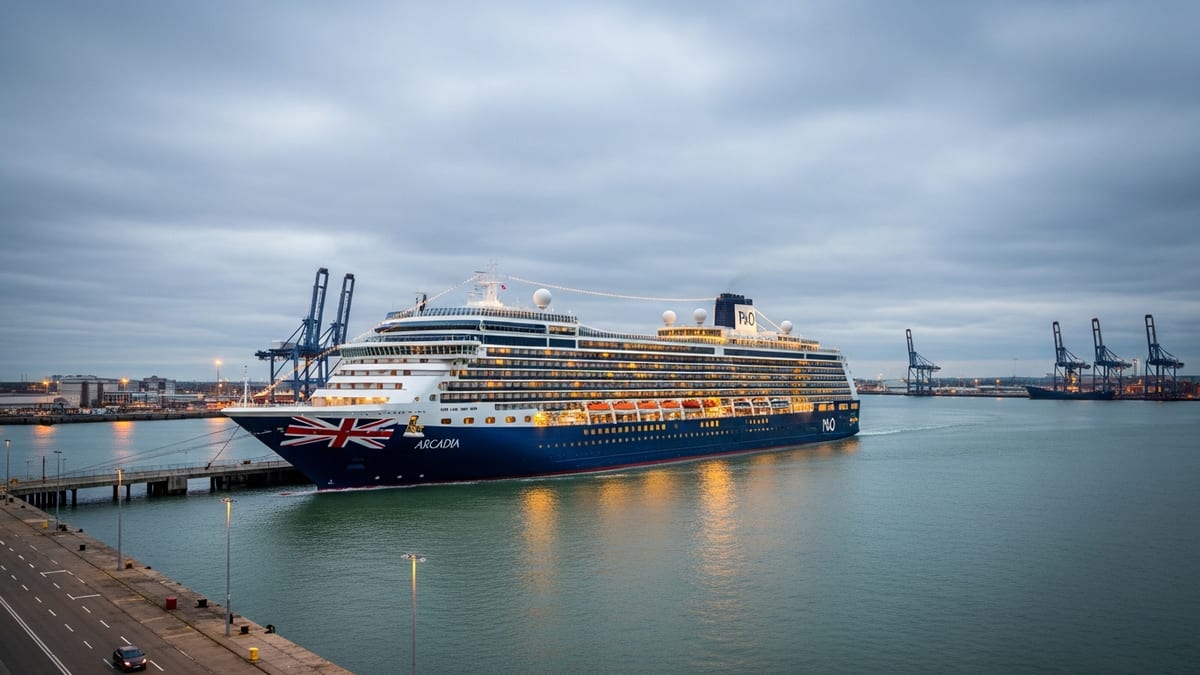
A Residential Cruise That Promised Life at Sea
The Villa Vie Odyssey, a 642 foot residential cruise ship operated by Florida based company Villa Vie Residences, had been sold as a way to live and travel indefinitely without returning to land based routines. Public descriptions of the program outlined an itinerary designed to circle the globe on a continuous loop, allowing passengers to purchase long term leases or cabins with the expectation that the ship itself would function as a floating condo community.
Reports indicate that some guests paid around 120,000 dollars or more to secure multi year stays, with additional monthly fees for services and fuel. Several passengers publicly described selling their homes and most of their belongings to finance the move aboard, treating the ship as a full time residence rather than a vacation. Marketing materials and media coverage repeatedly referred to the concept as a “never ending cruise,” a promise of retirement or remote work years spent waking up in a new port every few days.
The ship’s route in 2026 included extended calls across Asia. According to coverage from multiple outlets, the Odyssey had already faced earlier delays and cash flow concerns, including a crowdfunding style effort by residents to help pay a fuel bill in Singapore so that the voyage could continue. Even so, passengers boarding in recent months did so with the understanding that the long term program remained viable and that a second vessel was being considered for expansion.
The Sudden Order to Disembark in Cambodia
The turning point came in late October 2026, when the Odyssey arrived in Sihanoukville, a coastal city in Cambodia. Publicly available accounts describe a brief onboard announcement giving residents only hours to pack and prepare to leave. Passengers have said they were instructed to complete disembarkation by mid afternoon local time, effectively ending their seagoing life with a same day deadline.
Coverage by international and local media indicates that the operator halted the cruise citing surging fuel prices, particularly on segments of the Asian itinerary. Company statements summarized in those reports describe monthly fuel costs per cabin jumping from historic averages around 1,800 dollars to as high as 6,000 to 8,000 dollars, driven in part by broader energy market volatility connected to conflict in the Middle East.
Once off the ship, residents were left to confront the reality that many no longer had a home to return to. Some had sold property and vehicles and closed long term leases in their home countries. With the Odyssey no longer sailing and its future in doubt, these passengers suddenly needed to arrange last minute hotel stays, regional travel within Cambodia, and complex international flights, all from a port city many had never heard of before booking their cabins.
Follow up coverage indicates that assistance from the operator was limited and, in many cases, delayed. One widely cited passenger account notes that a list of recommended hotels and some logistical support were shared more than a day after the last residents had already been required to leave the ship, leaving those first hours in Sihanoukville particularly uncertain.
Life Afloat: Tight Knit Community and Everyday Routines
Despite the chaotic end, many passengers continue to describe their months aboard the Odyssey as a distinctive and often rewarding way of life. Public interviews and travel features portray a close knit social environment where residents formed routines reminiscent of both a small town and a college campus, with recurring trivia nights, fitness classes, shared meals, and informal workspaces for those employed remotely.
Several residents who spoke to broadcasters and travel publications characterized the experience as “a magical way to live,” citing the combination of stable housing, built in community, and ever changing scenery. Without the constant packing and unpacking associated with traditional cruising, long term residents could decorate their cabins more like apartments, maintain favorite spots in onboard lounges, and build friendships that deepened over successive port calls.
At the same time, earlier accounts from past months onboard pointed to persistent operational strains. Long form write ups and personal essays from former residents noted issues such as maintenance delays, shifting port schedules, and concerns about the company’s financial footing. Some passengers described a sense of living inside a startup experiment at sea, where the promise of adventurous global travel often coexisted with worries about sustainability and safety nets if the business model faltered.
These mixed experiences have shaped how residents now interpret the final days in Cambodia. For some, the strong communal bonds built onboard have provided practical help and emotional support during an involuntary transition back to life on land. For others, those same bonds have magnified the sense of loss associated with leaving what had come to feel like a permanent neighborhood on the water.
Escalating Costs, Money Troubles and a Planned Bankruptcy
As passengers scrambled to secure hotel rooms and flights home, additional details began to emerge about the company’s finances. According to business coverage drawing on internal documents and resident testimony, Villa Vie Residences had been searching for new capital for months. In one widely reported incident, passengers themselves contributed hundreds of thousands of dollars to settle an overdue fuel payment, wiring money directly from a resident’s personal account to a supplier in order to keep the itinerary on track.
Further reporting indicates that only weeks before the voyage halted, the company was still publicly promoting plans to acquire a second ship, to be renamed Villa Vie Legacy, and encouraging would be residents to buy cabins on the future vessel while temporarily residing on the Odyssey. Public information reviewed in those stories raises questions about whether expansion plans continued even as operating costs were becoming difficult to cover.
In the days after the Sihanoukville disembarkation, the company’s chief executive acknowledged in televised interviews that the business intends to file for bankruptcy protection. That announcement effectively confirmed what many residents had already concluded from the circumstances in Cambodia: the “never ending” residential cruise vision, at least in its current form, has ended, and creditors as well as passengers now face a protracted untangling of contracts and claims.
Legal analysts quoted in broader coverage have pointed out that the residential cruise model sits at a legal crossroads between traditional cruising and real estate style time share arrangements, complicating questions about what protections residents may have. Passengers who sold homes or invested substantial savings in long leases are now consulting lawyers and consumer advocates in multiple jurisdictions, seeking clarity on refunds, relocation support, and liability for outstanding expenses.
Stranded Travelers Weigh Next Steps in Cambodia and Beyond
On the ground in Cambodia, residents from the Odyssey have adopted a range of strategies as they regroup. Some are booking relatively quick repatriation flights back to North America and Europe, using savings or credit cards to bridge the gap until any potential refunds are processed. Others, especially long term travelers and retirees without fixed property back home, are opting to stay in Southeast Asia for a period, moving into extended stay hotels or short term rentals while they reconsider their plans.
Public travel advisories and security assessments describe Sihanoukville as a complex environment for suddenly displaced tourists, with a dense mix of casinos, rapid development and pockets of crime. Travel experts quoted in news reports suggest that stranded passengers focus first on securing accommodation in reputable hotels, registering contact information with their home country embassies or consulates, and keeping documentation of all expenses related to the disruption.
The situation has sparked a broader conversation in the travel industry about the risks and rewards of residential cruising. Analysts note that extremely long itineraries and unconventional financing structures expose residents to different vulnerabilities than standard cruise passengers who board for a week or two. Questions are being raised about how clearly such risks were explained at the point of sale, how escrow or trust accounts were managed, and what sort of regulatory oversight is appropriate when a vessel functions more like a condominium tower than a traditional cruise ship.
For now, the Odyssey’s former residents are balancing immediate practical concerns with a more personal reckoning. Many still speak warmly, in public forums and interviews, about sunrise views from their balconies, friendships formed in shipboard dining rooms, and the thrill of watching unfamiliar coastlines come into focus each morning. Yet the abrupt halt in Cambodia has underscored how fragile a life built entirely at sea can be when financial and geopolitical currents shift, leaving even the most dedicated seagoing residents suddenly adrift.