


More news on this day
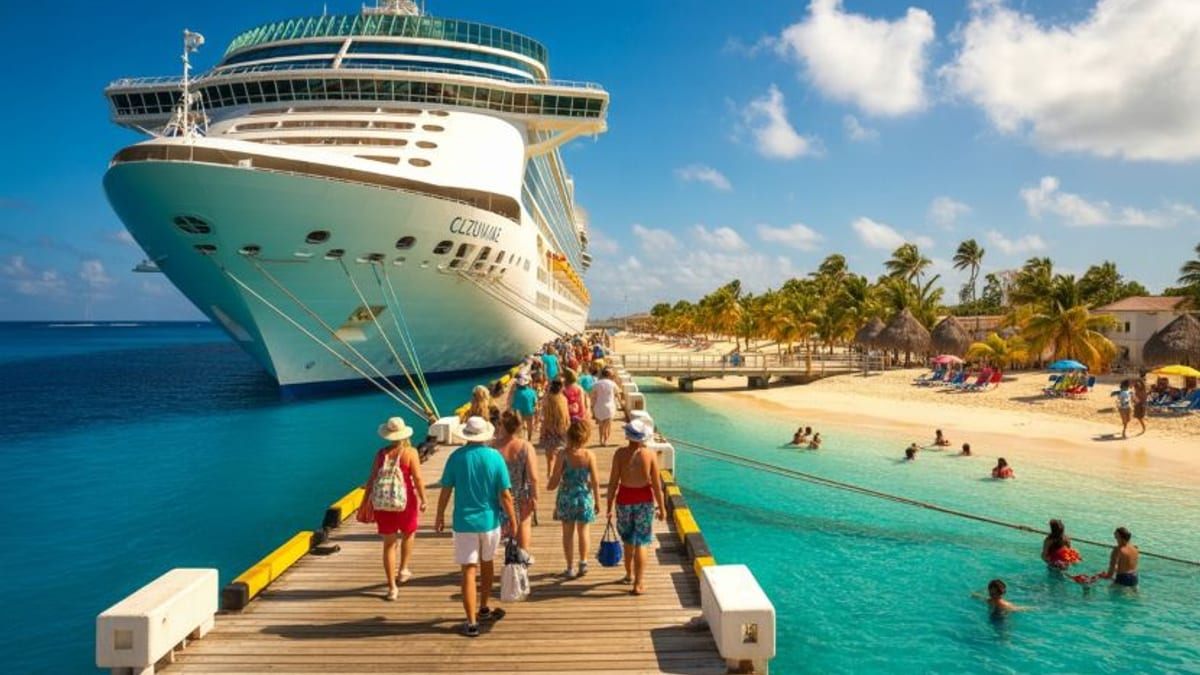
The MV Odyssey, a U.S.-owned residential cruise ship that abruptly halted its planned three-year “endless voyage” in Cambodia after a spike in fuel costs, has departed the port of Sihanoukville with only crew members on board, leaving former residents to piece together their onward journeys on land.
Get the latest news straight to your inbox!
From never-ending voyage to sudden standstill
Publicly available information shows that the MV Odyssey, operated by Florida-based Villa Vie Residences, entered service in 2024 as a residential cruise concept, selling long-term and lifetime stays to travelers seeking to live at sea while circumnavigating the globe. The itinerary had been marketed as a multi-year journey with rotating destinations on several continents.
The ship arrived in Sihanoukville on Cambodia’s southern coast for a scheduled port call in late October 2026. According to published coverage, around 200 passengers were on board when the company announced that operations were being suspended and that everyone would need to disembark with their belongings.
Reports indicate that residents were given only a few hours to leave the vessel on October 28, a sharp break from the promise of stable, long-term life at sea. Social media posts and coverage in international outlets describe scenes of passengers wheeling suitcases down the gangway and into Sihanoukville’s port area, suddenly faced with arranging flights, hotels, and onward plans from a city many had never visited before.
The Odyssey remained alongside in Sihanoukville for several days following the disembarkation while its future was assessed. Cambodian tourism officials publicly acknowledged the ship’s presence and the impact of the sudden change of plan, even as the vessel’s operator cited soaring fuel prices as the reason the three-year cruise could no longer continue as planned.
Fuel shock and financial strain behind the halt
Villa Vie Residences had previously promoted the Odyssey as a way to “own” a cabin or secure long-term leases, positioning the product somewhere between a conventional cruise and a floating condominium. However, statements posted by the company online in late October referred to an “extraordinary” increase in fuel costs that it said had reached more than 300 percent compared with earlier assumptions.
According to recent reporting in European and North American media, the company explained that it could not simply pass such increases on to residents, and that the scale of the rise had placed its business model under unsustainable financial pressure. References in those statements linked the higher fuel prices in part to geopolitical tensions and disruptions to energy markets in 2026.
Industry analysts quoted in travel and business coverage have noted that fuel is one of the largest operating expenses for cruise ships, particularly for long, globe-spanning itineraries. Residential ships that promise long-term stability in route and pricing can be especially exposed when fuel markets move sharply, because they have less flexibility to adjust schedules or fares on short notice.
Information gathered from public documents and news stories suggests that the Odyssey’s fuel suppliers required payments that could not be met under the original financial assumptions of the three-year voyage. This appears to have accelerated the decision to halt the cruise in Cambodia rather than continue on to other planned ports in Southeast Asia.
Passengers disembark, ship sails without them
After several days in port, the Odyssey departed Sihanoukville in early November without any of its former residents on board. Reports from international news agencies on November 4 describe the vessel leaving Cambodian waters with crew and technical personnel only, confirming that there would be no immediate resumption of the promised residential voyage.
The Odyssey has a stated passenger capacity of approximately 650 and carried more than 150 crew members at the time operations were suspended. It remains unclear from public reports exactly how many crew left Cambodia aboard the ship and how many stayed behind to assist with logistics, but the departure with no paying residents marked a symbolic end to the project’s first chapter.
For travelers who had sold or rented out homes on land to join the Odyssey, the days spent disembarking in Sihanoukville involved a rapid rethinking of life plans. Coverage in international outlets and on social platforms shows former residents booking hotels in the coastal city and in Phnom Penh, securing last-minute flights to hubs such as Bangkok and Singapore, and weighing whether to seek refunds or alternative long-term travel options.
While some residents have described their intention to pursue legal or contractual remedies, publicly available information so far points to a complex process of unwinding multi-year agreements that included both real-estate-style contracts and cruise-like services. Many details of those arrangements remain confidential between travelers and the company.
What happens next for the Odyssey and its residents
As of November 4, there has been no detailed public announcement of a new itinerary for the Odyssey or confirmation of when, if ever, the vessel might resume carrying residential passengers. Maritime tracking data cited in regional coverage indicates that the ship left Cambodia under its own power, suggesting that it is heading to a location suitable for lay-up, maintenance, or possible repositioning.
According to information shared by Villa Vie Residences in recent online updates, the company has been exploring options that could include restructuring the voyage, securing new financing, or potentially selling the ship to settle outstanding obligations. None of those possibilities has yet been confirmed as a final outcome, and no revised sailing schedule has been published.
For travelers who disembarked in Sihanoukville, the immediate focus has been on practicalities such as visas, flight availability, and accommodation. Cambodia offers visa-on-arrival and e-visa options for many nationalities, which has eased some of the stress of remaining temporarily in the country while onward arrangements are made. However, passengers have faced the cost and complexity of long-haul travel home from Cambodia compared with larger aviation hubs elsewhere in the region.
Travel-industry observers note that the Odyssey’s troubles highlight the risks of highly specialized cruise products that depend on stable long-term pricing and complex contracts. The situation is already prompting questions among prospective residents on other residential ships about financial safeguards, fuel hedging, and contingency planning if voyages are interrupted.
Implications for the growing residential cruise niche
The Odyssey episode is drawing attention to the fast-evolving residential cruise sector, in which travelers purchase long-term rights to cabins on ships that circle the globe. Compared with conventional cruises, these products often require larger upfront commitments and assume that residents will live on board for months or years at a time.
Public commentary from travel analysts suggests that the sudden halt of a much-publicized “endless cruise” could affect consumer confidence in similar ventures, at least in the short term. Prospective residents may begin to demand more transparent disclosure of financial reserves, insurance protections, and the mechanisms that would apply if a voyage is suspended mid-itinerary.
Regulatory frameworks are also likely to come under renewed scrutiny. While existing rules in major cruise markets provide some protections for deposits and cancelled sailings, it is not yet clear how consistently those safeguards apply to residential models in which travelers buy longer-term interests rather than traditional cruise tickets. Legal experts referenced in recent coverage have noted that jurisdiction, flag state, and contract wording all play a role.
For Sihanoukville and Cambodia’s wider tourism sector, the brief wave of media attention around the Odyssey has highlighted both the opportunities and vulnerabilities of hosting international cruise calls. Local businesses benefitted from a short-term influx of stranded travelers booking hotels, restaurants, and transport, even as many of those visitors arrived under far different circumstances than they had expected when they boarded a ship marketed as home.