


More news on this day
Thousands of travelers who recently flew from Saudi Arabia to Kano are still waiting for their checked luggage weeks after landing in Nigeria, as reports detail a growing baggage backlog involving Saudi flag carrier Saudia and mounting frustration among more than 3,000 affected passengers.
Get the latest news straight to your inbox!
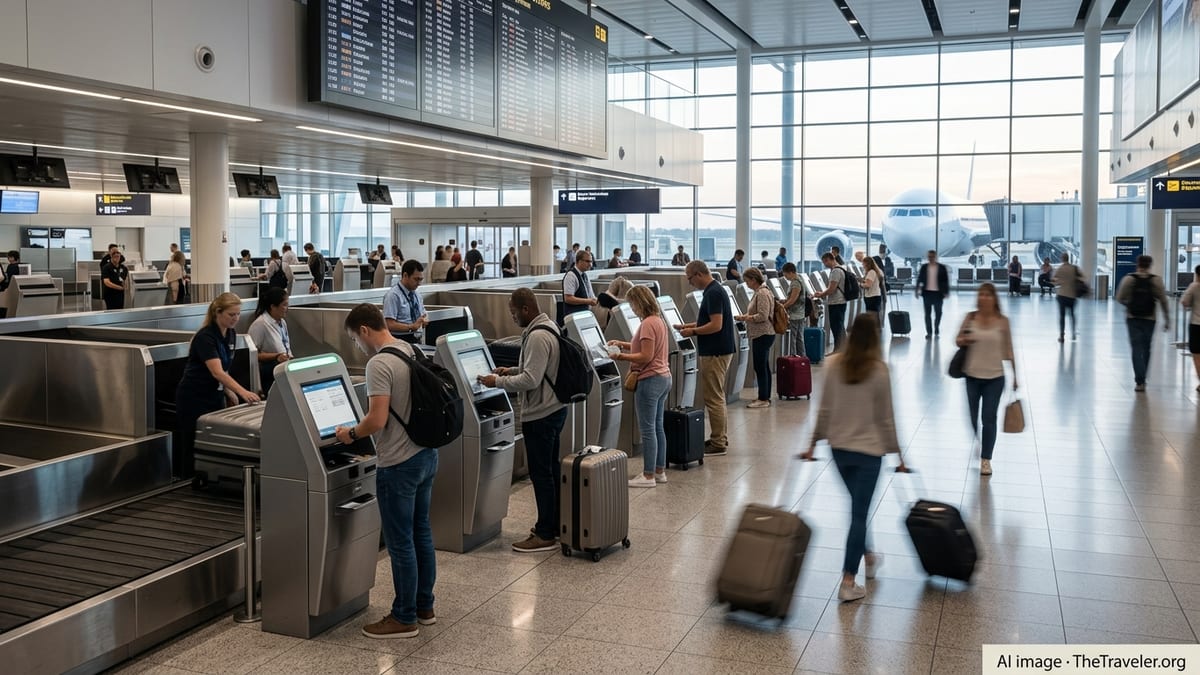
Weeks-long wait as bags remain in Jeddah
Publicly available reports from Nigerian travel and aviation outlets indicate that more than 3,000 passengers who arrived in Kano on Saudia flights over recent weeks are yet to receive their checked luggage, which remains in Jeddah. Coverage of the disruption describes an estimated 180 tonnes of baggage still held in Saudi Arabia, affecting passengers who completed religious trips and other travel to the kingdom before returning to Nigeria.
Several accounts gathered by local media describe passengers landing at Mallam Aminu Kano International Airport to find arrival carousels empty of their belongings, including clothing, medication, work tools, and personal documents. Some travelers reportedly surrendered cabin bags at the gate during boarding after being told that overhead space was full, only to discover that those bags also did not arrive in Kano.
Available information shows that the backlog has persisted for weeks, with some passengers said to be waiting since mid September for resolution. While partial deliveries of delayed luggage have been reported, Nigerian aviation coverage suggests that the majority of affected baggage is still to be repatriated from Jeddah to Kano.
Saudia has been identified in published reports as the operating carrier on the affected services between Saudi Arabia and northern Nigeria. The airline has not issued a detailed public breakdown of the disruption, but local coverage attributes the situation to operational challenges on the route and constraints on aircraft capacity for both passengers and heavy baggage loads.
Regulator steps in as pressure grows in Nigeria
According to Nigerian aviation news sources, the Nigeria Civil Aviation Authority has intervened in the matter, holding discussions with Saudia on clearing the backlog and improving communication with passengers. Public statements cited in local reporting indicate that the regulator has asked the airline to prioritize the airlift of stranded bags and to submit a concrete recovery plan.
Regulatory updates carried by Nigerian travel media note that a small portion of the delayed baggage, reportedly around eight tonnes, has already been transported to Nigeria following the intervention. However, when compared with the estimated 180 tonnes that remain in Jeddah, this represents only a fraction of the total volume still outstanding, leaving thousands of passengers awaiting further flights.
Consumer advocates quoted in Nigerian press coverage argue that extended delays of essential belongings raise questions about passenger care obligations on international routes. While compensation rules for lost or delayed baggage on non European flights are governed by international conventions and airline conditions of carriage, travelers often rely on national regulators to help enforce those standards in practice when large scale disruptions occur.
The Kano situation has also drawn attention from local travel agencies and Hajj and Umrah operators, who act as intermediaries for many northern Nigerian travelers to Saudi Arabia. Industry commentary in Nigeria highlights concerns that unresolved baggage issues could undermine confidence in future religious travel packages that depend on reliable air links between Jeddah, Medina, and cities such as Kano.
Human impact on returning pilgrims and families
Beyond operational statistics, local reporting from Kano underlines the immediate impact on daily life for those still separated from their belongings. Many returning passengers had packed traditional clothing, religious items acquired during their stay in Saudi Arabia, and personal effects needed for work or study back home. Their absence has left some travelers relying on borrowed clothing and emergency purchases.
Accounts compiled in Nigerian media describe passengers making repeated trips back to the airport or calling handling agents for updates, often at additional personal expense. For families that budgeted carefully for the cost of Hajj or Umrah travel, the prospect of replacing entire suitcases of clothing and gifts while still waiting for the originals to reappear has added financial strain to an already expensive journey.
Travel commentators note that baggage delays of this scale can also have longer term consequences, particularly when documents, house keys, or specialized equipment are involved. While airlines usually instruct passengers not to place essential medicines or critical documents in checked luggage, in practice many travelers do so, especially when last minute gate checks convert hand luggage into hold baggage.
In Kano, publicly available accounts suggest that community networks, mosques, and local associations have played a role in supporting affected travelers with temporary assistance. However, for many of those still waiting, the main priority remains clear communication on when specific flights will finally bring their bags home from Saudi Arabia.
What travelers can learn from the Kano disruption
For international travelers following the Kano developments, aviation analysts and travel advisors cited in open reporting point to several practical lessons. The most repeated recommendation is to avoid placing irreplaceable items in checked luggage whenever possible, especially on peak season flights returning from pilgrimage or major events where aircraft are heavily loaded.
Advisers also encourage passengers to document the contents of their bags and to keep baggage claim tags and boarding passes safely stored until all items are received. When delays occur, these documents are critical for filing formal irregularity reports with airlines and, if necessary, for pursuing claims under international carriage rules that govern compensation caps and time limits.
Another lesson highlighted in commentary on the Kano case is the importance of maintaining up to date contact details with airlines and travel agents. When bags are delayed across borders, carriers typically rely on phone numbers and email addresses in booking records to notify passengers of the arrival of their luggage or to arrange delivery beyond the airport.
Travel industry coverage of the Kano backlog also underscores how quickly local disruptions can become cross border issues. Capacity constraints, security checks, and ground handling limitations at one hub, such as Jeddah, can cascade into passenger inconvenience thousands of kilometers away, reinforcing the value of travel insurance products that explicitly cover baggage delays alongside medical and trip interruption benefits.
Ongoing uncertainty over full resolution
As of the start of October 2026, publicly available updates from Nigerian aviation outlets suggest that there is still no confirmed date by which every affected passenger in Kano will be reunited with their bags. While incremental progress has been reported, with some shipments of luggage now arriving in Nigeria, the volume of baggage still to be moved from Jeddah indicates that the process may continue for some time.
Observers in the Nigerian travel press note that the episode may prompt closer scrutiny of how airlines schedule capacity on routes that carry high proportions of religious travelers and group bookings. Balancing passenger loads, cargo demand, and baggage weight is a routine part of airline planning, but the scale of the disruption in this case has raised questions about the resilience of contingency plans during peak periods.
For now, travelers who recently flew on affected Saudia services into Kano are being advised, through media reports and publicly shared guidance, to stay in contact with the airline or their booking agents, keep copies of all documentation related to checked luggage, and monitor local news for further announcements on incoming baggage flights. Until every remaining suitcase is flown out of Jeddah, the story of more than 3,000 stranded passengers in northern Nigeria will remain unresolved.