


More news on this day
Israeli travelers are beginning to reconsider, and in some cases abandon, newly popular flight routes through Saudi Arabia after a FlyDubai jet bound for Tel Aviv made an emergency landing in Tabuk following what investigators are treating as a suspected terror attack by a co-pilot.
Get the latest news straight to your inbox!
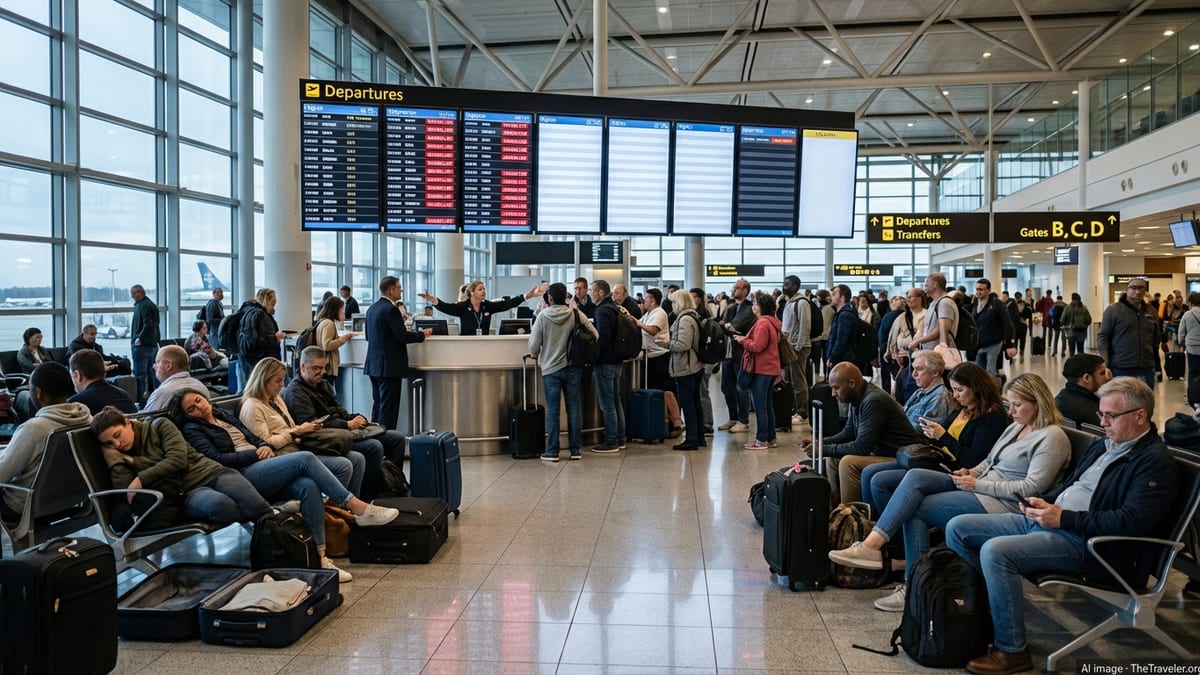
A Midair Emergency That Rerouted a Plane and a Travel Trend
According to publicly available reports, FlyDubai flight FZ1073 departed Dubai for Tel Aviv on the morning of September 30, 2026, carrying around 170 to 180 passengers, many of them Israeli tourists and business travelers. Not long after entering Jordanian airspace, the flight transmitted emergency signals and began a rapid descent before diverting to Prince Sultan bin Abdulaziz International Airport in Tabuk, northwestern Saudi Arabia.
Coverage from multiple international outlets indicates that the Omani co-pilot allegedly stabbed his colleague and then tried to interfere with the aircraft’s systems. The captain and first officer were injured, but additional crew and passengers entered the cockpit and helped subdue the attacker. The aircraft landed safely in Tabuk at around 9:45 a.m. local time, where Saudi officials arrested the suspected assailant and medical teams treated the wounded.
Israeli air defenses briefly scrambled amid initial fears of a hijacking. Once it became clear the Boeing 737 had landed safely in Saudi Arabia, attention shifted from an unfolding aviation emergency to the broader implications for a new and sensitive travel corridor linking Israel with Gulf and, indirectly, Asian destinations via Saudi skies.
FlyDubai later dispatched replacement aircraft to Tabuk to continue the journey to Israel. While all passengers and crew were reported safe and accounted for, the incident has cast a long shadow over the rapid growth in Israel–Gulf travel since diplomatic normalization began in 2020.
Israelis in Saudi Arabia Begin to Head Home
In the hours after the emergency landing, news coverage from Israel described confusion and growing unease among Israelis already in Saudi Arabia, as well as those using Saudi territory only as a refueling or diversion point. Reports from Israeli media and international outlets indicate that some travelers began looking for the quickest possible connections out of the kingdom, often opting to route through Dubai, Abu Dhabi, or Amman rather than remain overnight.
The number of Israelis present in Saudi Arabia at any given time remains relatively small compared with regional hubs such as the United Arab Emirates or Turkey, reflecting the absence of full diplomatic relations and the lack of direct scheduled commercial flights between Tel Aviv and Saudi cities. Most Israelis entering Saudi Arabia in recent months have done so for business, religious pilgrimage via third countries, or as transit passengers on flights diverted for operational reasons.
Travel agents in Israel, according to published business press coverage, report a spike in inquiries from clients asking whether itineraries overflying Saudi territory can be changed, even when no ground stop is scheduled. Some carriers route flights between Israel and Asia over Saudi airspace under recently granted overflight permissions, while others cross the Red Sea further south. In the wake of the FlyDubai incident, customers are requesting detailed explanations of routing options and emergency procedures.
Tourism professionals note that because Saudi Arabia does not issue tourist visas to Israeli passport holders in the same way as it does to many other nationalities, the immediate trend is less about mass departures from Saudi resorts and more about Israelis deciding not to use Saudi territory at all when booking future journeys.
Security Reviews and Policy Ripples Across the Region
Israel’s government has announced plans to strengthen vetting and psychological screening for pilots operating flights that carry Israeli passengers, including those on foreign airlines serving Ben Gurion Airport. Publicly available statements from senior officials indicate that security agencies are examining whether the FlyDubai incident should be treated as a terror attack specifically targeting Israelis or as an individual act whose full motives remain under investigation.
In Saudi Arabia, official aviation and airport statements emphasize that all passengers were safely disembarked in Tabuk and that local security and medical protocols were activated. Regional aviation authorities in the United Arab Emirates have also opened inquiries into how a sharp object or weapon could have been brought into the cockpit, and whether cockpit access and crew monitoring procedures need to be revisited.
For carriers across the Gulf, the episode highlights the complexities of operating flights that link states with different security doctrines and political relationships. Since the signing of normalization agreements between Israel and several Arab states in 2020, airlines based in the UAE and Bahrain have promoted Tel Aviv as part of broader networks connecting Europe and Asia. Saudi Arabia, while not a signatory, has gradually opened its airspace to these services, creating multi-leg journeys that are now subject to renewed scrutiny.
Industry analysts quoted in regional business media suggest that insurers and regulators may seek updated risk assessments for routes that combine sensitive destinations and overflight corridors. That, in turn, could influence schedules, ticket prices, and the availability of late-night or early-morning departures that have been popular with Israeli travelers aiming to connect onward to East Asia.
Impact on Travelers: Rerouting, Insurance, and Trip Planning
For individual travelers, the suspected terror attempt is already reshaping practical decisions. Online booking platforms tracked by travel analysts show an uptick in searches from Israel for itineraries that avoid overflying Saudi Arabia, even if that means longer travel times via Cyprus, Greece, or Central Europe. Some Israelis have reported opting for national carriers or airlines with which Israel has long-standing security protocols rather than lower-cost Gulf options that use Saudi airspace.
Travel insurance providers active in the Israeli market are reviewing the language in policies that cover flight diversions, emergency landings, and trip interruptions. Published policy updates in recent months have already reflected higher perceived risks on routes passing near active conflict zones; the FlyDubai incident is expected to accelerate this trend, with closer attention on how midair security incidents are classified and compensated.
At Ben Gurion Airport, flights from Gulf carriers continued to arrive after the Tabuk diversion, according to real-time schedule data cited in local coverage. However, check-in agents and call centers have faced increased questions about crew nationality, cockpit security procedures, and contingency plans if an aircraft must divert to a country without formal diplomatic ties to Israel.
Specialized corporate travel managers say they are conducting fresh risk assessments for staff itineraries that involve transiting the Gulf region. Some companies have temporarily instructed employees to favor routings via Europe rather than the Arabian Peninsula, particularly for high-profile business travelers or those whose work involves sensitive sectors.
Future of the Israel–Saudi Travel Corridor
The FlyDubai emergency landing has unfolded against a backdrop of delicate, indirect engagement between Jerusalem and Riyadh on overflight rights and potential future normalization. In recent years, Saudi Arabia has quietly coordinated occasional emergency landings for aircraft carrying Israeli nationals, but the latest incident is the most dramatic test yet of that cooperation.
Publicly available diplomatic commentary suggests that both sides remain interested in maintaining aviation arrangements that allow long-haul flights to cross Saudi territory, despite heightened scrutiny. For Israel, these routes cut hours off journeys to Asia and unlock new tourism and business links. For Saudi Arabia, they support its ambitions to become a major global aviation hub while retaining tight control over which passengers may actually enter the kingdom.
In the short term, Israeli tourists and business travelers appear to be voting with their boarding passes. Bookings data highlighted in regional travel reporting show stronger relative demand for itineraries that keep aircraft either entirely outside Saudi airspace or limit exposure to a narrow corridor with established emergency protocols. Airlines will be watching closely to see whether this represents a brief reaction to a headline-grabbing scare or a more durable shift in traveler preferences.
For now, the suspected terror plot on FlyDubai FZ1073 has turned what was once a largely technical question of air corridors and overflight rights into a frontline concern for ordinary passengers. As investigations continue in Saudi Arabia, the United Arab Emirates, and Israel, the incident is prompting travelers to weigh convenience against perceived security, and to ask new questions about what it means to transit through skies and airports at the intersection of geopolitics and tourism.