


More news on this day
Rail passengers in Essex have been urged not to travel after a major line near Newport was blocked on Thursday 1 October, causing widespread disruption to Greater Anglia and CrossCountry services and leaving key routes towards Cambridge and London facing cancellations and severe delays.
Get the latest news straight to your inbox!
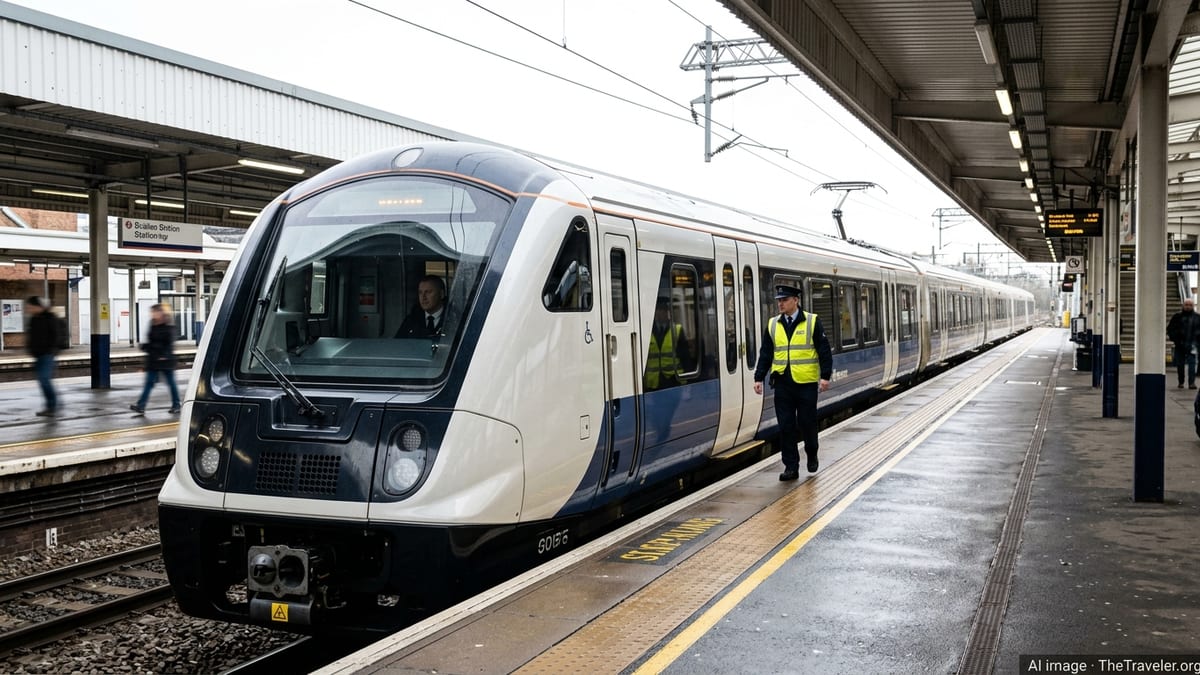
Line blockage near Newport brings services to a standstill
Service updates from Greater Anglia indicate that all lines through Newport in Essex were blocked on Thursday morning due to over-running engineering works in the area. The problem affected the busy corridor used by regional trains linking stations such as Audley End and Newport with London Liverpool Street and Cambridge, resulting in a rapid build-up of stranded trains and cancelled services.
Journey-planning information shows that the blockage prevented trains from passing through the affected stretch of track in either direction, forcing operators to suspend multiple services while engineers worked to restore the route. In response, a prominent warning advised passengers not to travel on impacted lines, highlighting the serious level of disruption across parts of the Essex network.
Greater Anglia’s disruption feed reported that efforts were underway to resolve the engineering overrun, but that no firm time could initially be given for the line to fully reopen. The uncertainty around when services could resume at normal levels contributed to the decision to issue strong guidance against rail travel on the most heavily affected sections.
Publicly available information shows that the disruption also affected some CrossCountry connections that rely on the same infrastructure, compounding the impact for passengers attempting longer-distance journeys that pass through the Essex corridor.
‘Do not travel’ message and limited alternatives
Live service information for Greater Anglia confirms that the operator issued a clear “do not travel” message for routes passing through the blocked section near Newport. Such wording is reserved for periods of severe disruption when trains are either not running at all or operating at a level that cannot reliably accommodate demand.
Information on the operator’s website notes that rail replacement buses were being sought to cover parts of the route, but that vehicles were not immediately available. This left many passengers without a straightforward alternative, particularly at smaller intermediate stations where local bus links are limited or require multiple changes.
Stansted Express services between London Liverpool Street and Stansted Airport were reported to be operating as normal, which meant that some travellers heading to the airport could still complete their journeys by rail. However, the continued running of airport services did little to ease the problems faced by commuters and regional travellers whose trains rely on the blocked Newport line.
According to previous operational guidance used across the UK rail industry, a “do not travel” message is typically issued when disruption is so extensive that even replacement buses and diversions cannot offer a reasonable service. The Essex incident fits this pattern, with limited spare capacity on parallel lines and heavy reliance on a single corridor through the area.
Impact on commuters and regional travel
The blockage came during a busy weekday morning, amplifying its effect on commuters travelling between Essex, Cambridgeshire and central London. Early reports from journey planners showed multiple cancellations, extended journey times and trains that terminated short of their normal destinations, leaving passengers needing to re-plan at short notice.
Passengers with flexible working options were encouraged via public service updates to delay or avoid travel, while those already en route were advised to check station departure boards and journey-planning tools for the latest alterations. With no confirmed reopening time, many travellers faced the prospect of significantly lengthened or abandoned journeys.
The disruption also had knock-on effects across the wider timetable. Trains and crew displaced by the blockage created gaps on other parts of the network, leading to further delays even on sections of line physically unaffected by the engineering works. This kind of secondary impact is a common feature of severe rail incidents, particularly on routes with few diversionary options.
For travellers trying to reach coastal destinations in Essex or connect with other regional lines, the blockage at Newport added extra complexity, as alternative paths often involve multiple changes and slower routes via different London terminals.
How the Essex incident fits a wider pattern of UK rail alerts
The “do not travel” alert in Essex follows a series of high-profile warnings on the UK rail network in recent months. Rail coverage has documented similar messages during incidents ranging from overhead wire failures on the East Coast Main Line to safety closures triggered by a gas leak near Didcot, which led to a major shutdown of services between Reading and Swindon.
In previous cases, such alerts have been associated with events such as derailments, extreme weather, infrastructure damage and power supply failures, where running even a reduced timetable would risk overcrowding or safety. The Essex disruption underlines how engineering overruns can have comparable consequences if they affect a key junction or stretch of track with limited alternative routing.
Industry-facing documents and research on passenger communications note that the phrase “do not travel” is intentionally strong, intended to signal that conditions on the network are substantially worse than a typical delay or route closure. The message is generally reserved for situations where most passengers are expected to be better off postponing journeys altogether rather than attempting complex diversions or relying on scarce bus replacements.
The repeated use of this wording across different operators, including those in eastern and south-eastern England, has made it a familiar phrase to regular rail users. However, the Essex incident shows that the circumstances leading to such alerts can vary widely, from planned works overrunning to sudden infrastructure failures.
Advice for affected and future travellers
For passengers whose journeys were disrupted by the Essex line blockage, publicly available guidance from train operators and consumer organisations indicates that tickets dated for the affected day are typically valid on later services once lines reopen, or may be eligible for fee-free changes and refunds where travel became impossible.
Future travellers planning to use the same corridor are advised to check live departure boards and official journey-planning tools before setting out, particularly in the days following a major disruption, when residual delays and short-notice alterations can continue even after a line has technically reopened.
In severe incidents such as the Newport blockage, travellers with time-sensitive connections, including flights or onward long-distance rail services, are often encouraged in public information notices to consider alternative modes of transport if available, or to allow significantly more time than usual for their journeys.
While the precise timeline for services to stabilise after the Essex disruption will depend on how quickly engineers complete their work and how fast rolling stock and crew can be put back in position, the incident serves as a reminder of the value of flexible plans and real-time information when travelling on busy UK rail routes.