


More news on this day
Travelers moving through China’s busiest airports are facing fresh disruption as publicly available aviation data and media roundups indicate that more than 140 flights on major Chinese carriers have been cancelled in recent days, snarling traffic through key hubs such as Beijing, Shanghai, Guangzhou, Shenzhen and Chengdu.
Get the latest news straight to your inbox!
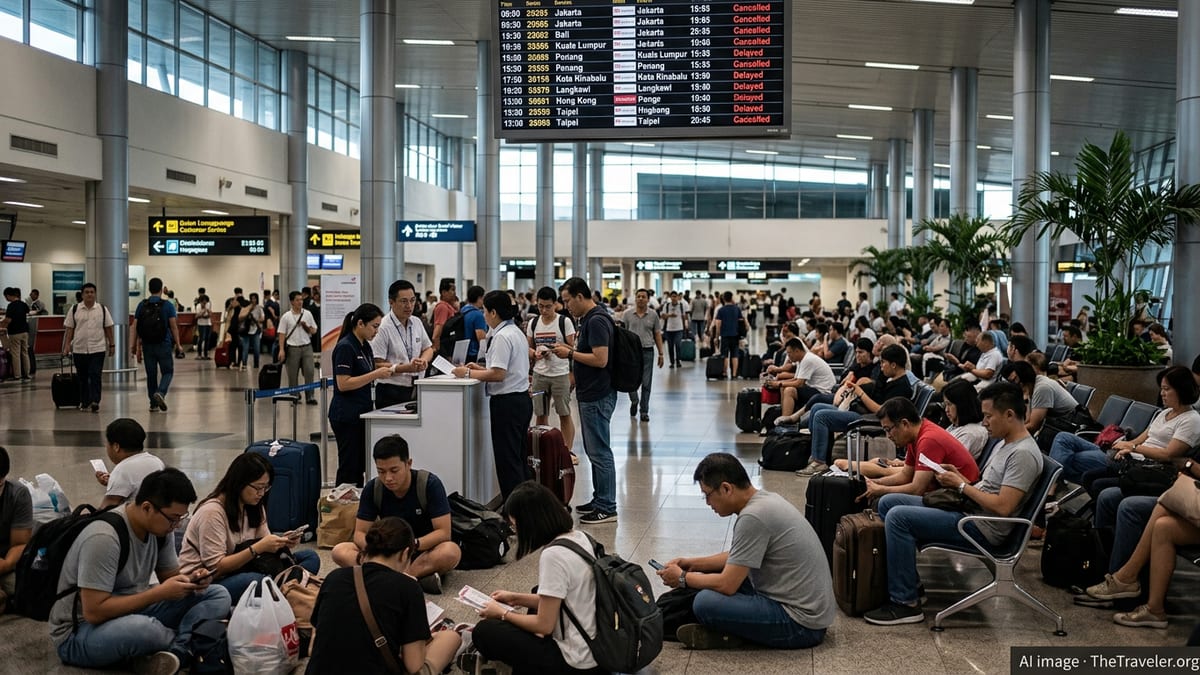
Clusters of Cancellations at China’s Big Three Carriers
Monitoring of flight tracking dashboards and schedule feeds for the period around May 24 to 26 shows concentrated waves of cancellations affecting China Eastern Airlines, Air China and China Southern Airlines, along with several regional partners. Aggregated tallies in Chinese and regional travel industry coverage describe over 140 flights removed from daily operations across the network, with some reports placing the broader disruption at more than 200 affected services when delays are included.
The pattern appears uneven across the country but is most visible on trunk routes linking Beijing, Shanghai, Guangzhou and Shenzhen with inland hubs such as Chengdu, Xi’an, Hangzhou and Kunming. Data snapshots compiled by aviation-focused outlets indicate that dozens of China Eastern and Air China departures from Shanghai and Beijing were scrubbed or retimed within 24 hours of departure, while China Southern and partner airlines saw cancellations and extended delays ripple through Guangzhou Baiyun and Shenzhen Bao’an.
Publicly accessible airport departure boards and route trackers suggest that the cancellations are not limited to one time of day or one carrier. Morning bank services connecting coastal business centers to western China, as well as evening return waves intended to feed long haul flights, all show higher than normal levels of disruption. This has increased the risk of missed onward connections for travelers using Chinese mega hubs as transfer points.
While some individual cancellations are flagged as weather related, others appear tied to capacity management and rolling schedule adjustments. Industry commentary notes that Chinese airlines have been working to rebalance fleets and crews after a rapid ramp up in both domestic and international flying during the first half of 2026.
Major Hubs from Beijing to Shenzhen Feel the Strain
Beijing’s two main airports, Capital and Daxing, have been among the most affected, according to published coverage that collates daily airport statistics. Multiple Air China and China Southern flights on north south corridors, including services to Shanghai, Guangzhou and Shenzhen, were cancelled or heavily delayed on several consecutive days, creating bottlenecks at check in and transfer security.
Shanghai’s dual hub system at Pudong and Hongqiao has also come under pressure. Schedule monitoring platforms show China Eastern, the dominant carrier in the city, cancelling or retiming selected flights to Chengdu, Xi’an and smaller inland markets, while partner and code share services operated by Juneyao Air and Shanghai Airlines recorded knock on delays. Passengers transiting Shanghai on long haul itineraries to Europe, Australia and North America have reported tighter connection windows and occasional missed onward flights.
In southern China, Guangzhou Baiyun and Shenzhen Bao’an have experienced similar turbulence. Aviation news aggregators highlight clusters of cancellations on China Southern and Shenzhen Airlines services linking Guangzhou and Shenzhen with Chengdu, Nanjing and other secondary cities. At times, this has left departure boards in domestic terminals showing strings of “cancelled” designations across successive flights to the same destination, forcing passengers to scramble for later departures or alternate routings.
Chengdu, which serves as a key inland hub for western China, has felt the downstream impact from both northern and southern hubs. Reduced frequencies or same day cancellations on flights from Beijing, Shanghai and Guangzhou into Chengdu have compressed capacity on remaining services, making same day rebooking more difficult and driving up last minute fares on flights that continue to operate.
Multiple Factors Behind the Latest Wave of Disruption
Publicly available commentary from industry analysts and travel forums points to a combination of factors behind the latest wave of cancellations. Seasonal weather disturbances, including storms affecting eastern and southern China, have contributed to air traffic control restrictions at some airports, particularly during peak afternoon and evening periods when congestion is already high.
At the same time, Chinese carriers are still recalibrating their networks after a rapid recovery in demand. Capacity on some domestic routes has grown faster than underlying passenger volumes, while certain international links remain constrained by bilateral arrangements or aircraft availability. In this environment, airlines may choose to consolidate lightly booked flights and reprotect passengers on remaining services, leading to headline cancellation numbers even on days without major weather issues.
Crew and maintenance scheduling challenges may also be adding strain. With fleets flying more hours and new routes coming online for the summer season, any unplanned aircraft downtime can cascade through tight rotations. Industry observers note that when disruption hits early morning departures, the knock on effects can echo throughout the day across multiple hubs and partner airlines.
Geopolitical tensions and evolving overflight routings remain an additional background factor for some international services. While the current wave of disruption appears centered on domestic and regional routes, travelers connecting from long haul flights into China’s major hubs are exposed to the same network fragility if their onward domestic sectors are cancelled or significantly delayed.
What Travelers Are Experiencing on the Ground
Accounts shared on travel forums and social media over the past month describe crowded customer service desks, long queues at ticket counters and frequent last minute gate changes at large Chinese airports. Some travelers report receiving cancellation notifications only a few hours before departure, leaving limited time to pursue alternatives, especially during busy weekend periods.
Others note that rebooking options can vary widely depending on the airline, route and type of ticket. On high frequency corridors such as Beijing Shanghai or Guangzhou Chengdu, passengers are often offered seats on later flights the same day, though these may themselves be delayed. On thinner routes or late evening departures, travelers sometimes face overnight stays or rerouting through a different hub, with mixed experiences around hotel vouchers and meal support.
International passengers transiting Chinese hubs have reported particular stress when a cancelled domestic leg threatens to break a longer itinerary. Although some carriers are able to reissue tickets over partner airlines, this is not always possible at short notice during peak travel dates. As a result, travelers have increasingly turned to alternative options such as high speed rail for medium haul domestic segments when air reliability appears uncertain.
Despite the disruption, not all flights are affected, and many services continue to operate close to schedule. However, the perception among frequent travelers is of a more fragile system in which previously straightforward connections now require additional buffers of time and a willingness to adjust plans if cancellations occur.
Practical Advice for Upcoming Trips Through Chinese Hubs
Travel experts and consumer advocates reviewing the recent disruption suggest that passengers with imminent travel to or within China build in extra flexibility. Booking slightly longer connection times at Beijing, Shanghai, Guangzhou, Shenzhen or Chengdu can reduce the risk of missed onward flights if an initial sector is delayed or cancelled.
Passengers are also encouraged to monitor their bookings closely through airline apps, SMS alerts and travel agency platforms, particularly in the 24 to 48 hours before departure when most schedule adjustments appear to be finalized. Where possible, selecting flights earlier in the day may offer more rebooking options if disruptions occur, as later departures can be harder to recover.
For domestic segments under about 1,000 kilometers, some travelers have opted to compare air and high speed rail timings, especially on corridors such as Shanghai Nanjing, Shanghai Hangzhou, Guangzhou Shenzhen and Beijing Tianjin, where rail can be a resilient fallback. While rail tickets can also sell out during peaks, these networks are often less exposed to the type of cascading operational issues that affect air traffic.
Observers note that Chinese airlines have shown an ability to stabilize operations after previous bouts of disruption, suggesting that the current cluster of cancellations may ease as schedules and staffing settle into the summer season. Until then, passengers planning to pass through China’s major aviation hubs are advised to remain vigilant, allow more time and keep contingency options in mind.