


More news on this day
Travellers in Türkiye are facing renewed disruption as sudden flight cancellations at Istanbul Airport and Ankara Esenboğa affect services operated by British Airways, Pegasus Airlines and other carriers, severing key links to Algiers, London Heathrow and Istanbul Sabiha Gökçen and leaving passengers scrambling for alternatives.
Get the latest news straight to your inbox!
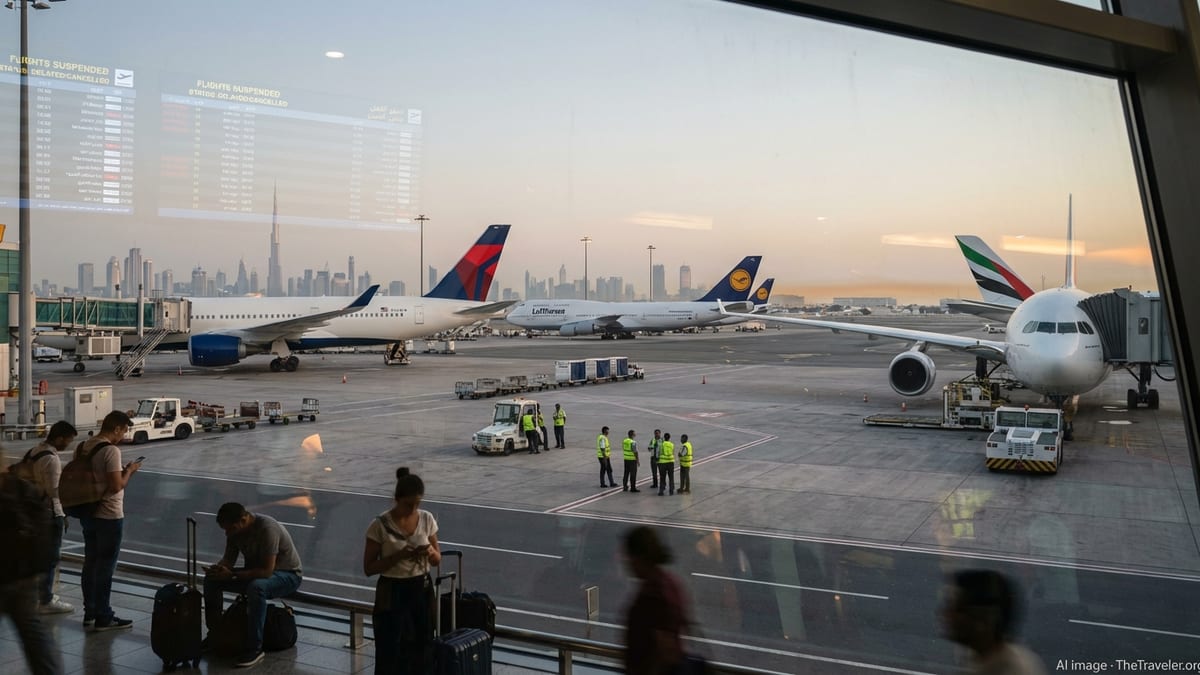
Networks Hit as Three Strategic Routes Falter
The latest wave of cancellations has focused attention on three strategically important routes: Istanbul to Algiers, Ankara to London Heathrow and London Heathrow to Istanbul Sabiha Gökçen. These corridors connect major hubs in Europe, North Africa and the Middle East, and form part of wider transfer networks for long haul journeys.
Published timetables and booking platforms show that British Airways and Pegasus Airlines have both been adjusting capacity on Türkiye services in recent months, reflecting a more volatile operating environment across the region. When multiple flights are withdrawn within a short time frame, the knock-on effect can quickly strand travellers with tightly timed onward connections.
Recent schedule data indicates that London Heathrow to Istanbul Sabiha Gökçen has become a particularly sensitive link. The route connects one of Europe’s busiest long haul gateways with Istanbul’s secondary international hub, which itself feeds extensive domestic and regional traffic. Disruptions on that single service can ripple out to connections onward to the Gulf, North Africa and the Caucasus.
At the same time, flights between Türkiye and North Africa, including services to Algiers, have been operating against a backdrop of changing demand, airspace constraints and higher operating costs. Analysts note that such routes are among the first to see tactical cancellations when airlines rebalance capacity or react to short term operational pressures.
Operational Pressures and Fuel Costs Behind Cancellations
Across Europe, airlines have been cutting flights and seats in response to rising jet fuel costs and operational challenges, and Türkiye’s main airports have not been immune. Industry data compiled in early May shows that carriers removed thousands of flights and nearly two million seats from global schedules for the month, with London Heathrow among the airports seeing trimmed timetables as airlines consolidated services.
Publicly available information points to several overlapping pressures behind the latest disruptions in Türkiye. Airlines are managing higher fuel bills, periodic staffing constraints and occasional ground handling bottlenecks, while also navigating complex regional airspace and evolving security considerations. In some cases, carriers opt to cancel marginal or lightly booked flights rather than operate them at a loss in a high fuel price environment.
Separate reports of recent days of disruption at Istanbul’s main airport, including over one hundred delays and more than a dozen cancellations on a single day earlier in the spring, illustrate how quickly operations can become strained when weather or air traffic control constraints coincide with busy travel periods. When those conditions overlap with systemic cost pressures, tactical cancellations become more likely across multiple airlines.
For travellers, the result is often a confusing mix of changing departure times, downgraded aircraft types and, in the most disruptive cases, same day cancellations that force an unplanned night in Istanbul or Ankara. With Istanbul Airport now Türkiye’s primary long haul hub, even limited schedule changes can have disproportionate consequences for connecting itineraries.
Impact on Passengers at Istanbul and Ankara Esenboğa
The sharpest effects of these cancellations are being felt on the ground. Travellers transiting Istanbul and Ankara Esenboğa report missed connections, long queues at transfer desks and uncertainty over rebooking options as airlines work through disrupted schedules. Some have described being routed onto alternative services via different European hubs, extending relatively short journeys into day-long odysseys.
Experiences shared on public forums and social media in recent months highlight repeated instances of passengers stuck at Istanbul Sabiha Gökçen for extended periods after Pegasus Airlines delays and cancellations, with some travellers needing to purchase additional visas or accommodation while they wait for replacement flights. Similar accounts have emerged of British Airways customers stranded during irregular operations, including cases where return flights to London Heathrow were rescheduled a day or more later than planned.
At Ankara Esenboğa, disruption to international departures can be particularly challenging for travellers who rely on the airport as a starting point for long haul journeys via European hubs such as Heathrow. When the Ankara to London leg is cancelled, options to reroute the same day are often limited, especially during peak travel periods, leaving passengers reliant on domestic hops to Istanbul or last minute rebookings on other carriers.
Travel industry commentators note that while large hubs are designed to absorb a degree of irregular operations, simultaneous issues across multiple airlines quickly overwhelm available capacity. This is particularly visible when cancellations affect evening departures, when there are fewer remaining flights to accommodate stranded passengers.
What Airlines Are Offering and How Travellers Can Respond
Public guidance from British Airways and Pegasus Airlines on delays and cancellations outlines a broadly similar framework of options for affected customers. When flights are cancelled, travellers are generally offered a choice between rebooking on the next available service, rerouting via an alternative airport where possible, or requesting a refund for unused segments of their journey.
Information published by British Airways explains that customers whose flights have been cancelled may rebook onto a later date without change fees, or in some cases be rebooked on partner airlines where space is available. Refunds are typically available when a flight is cancelled outright or delayed beyond a certain threshold. Hotel accommodation and meals may be offered if an overnight stay becomes necessary, subject to the circumstances of the disruption.
Pegasus Airlines’ general conditions outline a range of rules covering schedule changes, cancellations and open tickets, with specific provisions for flights touching Turkish airports such as Ankara Esenboğa and Istanbul Sabiha Gökçen. The carrier’s published policies also explain how taxes, surcharges and ancillary fees are handled when flights do not operate as planned, a detail that can materially affect the value of any refund.
Consumer advocates recommend that travellers affected by the current disruption in Türkiye keep boarding passes, booking confirmations and receipts for any additional expenses such as hotels and meals. Depending on the route, departure airport and operating carrier, passengers may be entitled to statutory compensation or reimbursement under European, United Kingdom or Turkish aviation regulations in addition to any rebooking assistance offered by the airline.
Planning Ahead for Summer Travel Through Türkiye
The latest cancellations in Istanbul and Ankara come at the start of the busy late spring and early summer travel season, heightening concerns that further schedule changes could follow as airlines continue to adjust capacity. Industry analysis suggests that carriers are likely to refine their networks repeatedly over the coming months as fuel prices, demand patterns and operational constraints evolve.
For travellers planning itineraries involving Istanbul Airport, Istanbul Sabiha Gökçen or Ankara Esenboğa, publicly available advice from travel experts stresses the importance of building in generous connection times, particularly for self connecting itineraries booked on separate tickets. Longer layovers provide a buffer when inbound flights are delayed or cancelled and reduce the risk of missing onward services to hubs such as London Heathrow or regional destinations like Algiers.
Passengers are also being encouraged to monitor flight status in the days leading up to departure using airline channels, airport information pages and independent flight tracking tools. Early awareness of schedule changes can open up more rebooking options, including the possibility of switching to alternative routings before remaining seats are taken by other disrupted travellers.
While airlines maintain that most flights will continue to operate as scheduled, the experience of recent weeks in Türkiye underlines how rapidly conditions can change. For those flying through Istanbul and Ankara in the coming months, flexibility, careful planning and close attention to updates may prove essential to keeping complex itineraries on track.