


More news on this day
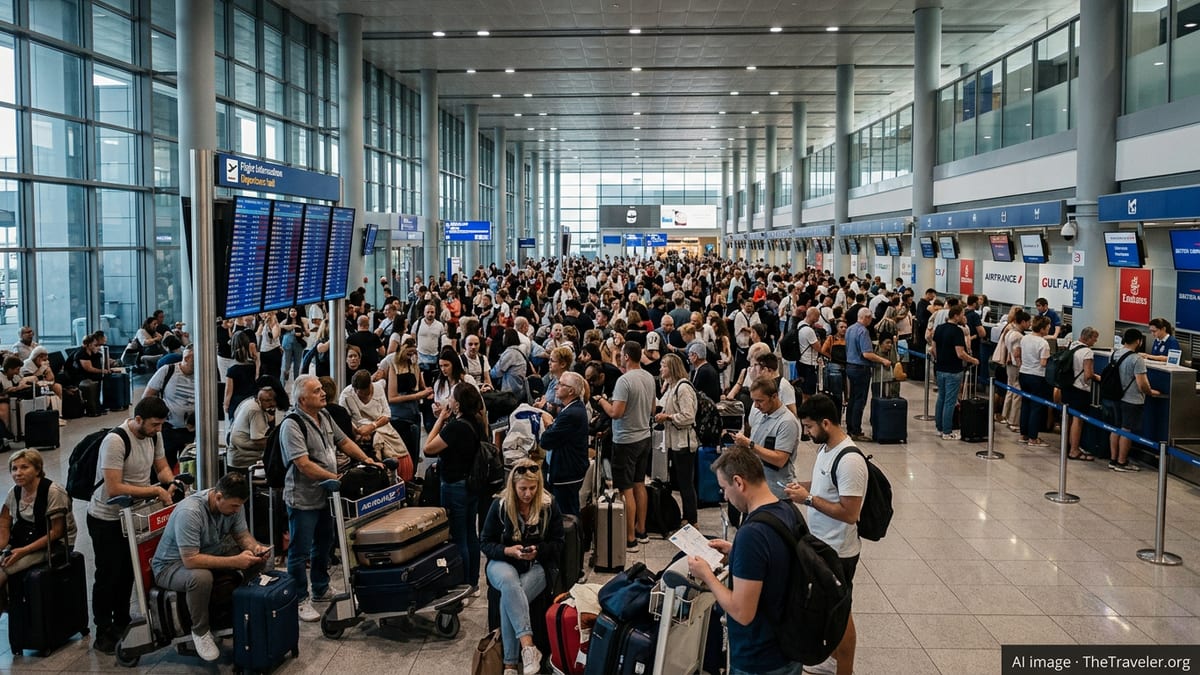
Greek airports are heading into another turbulent high season as surging passenger demand, structural capacity limits and renewed technical problems converge to produce mounting queues, flight delays and cancellations across the country’s key gateways.
Get the latest news straight to your inbox!
Record Traffic Meets Old Constraints
Passenger traffic through Greek airports has climbed sharply in early 2026, underlining the country’s position as one of Europe’s leading summer destinations. Industry data published in recent weeks indicates that more than 23 million travelers passed through Greek airports in the first five months of the year, a level that is already ahead of comparable 2025 volumes and points to another record season if trends continue.
This surge is being driven by a broad mix of scheduled carriers, low cost airlines and charter flights feeding Athens and the islands. New and expanded routes from major European hubs, along with increased capacity on services to popular destinations such as Crete, Rhodes, Corfu, Santorini and Mykonos, are concentrating heavy traffic into a relatively short peak window from June to September. Tour operators are reporting strong demand from key markets, even as some travelers book later due to cost and geopolitical uncertainty.
The infrastructure handling this influx is struggling to keep pace. While terminal expansions and runway upgrades have taken place at some airports over the past decade, the core air traffic management systems and staffing levels that govern flows into Greek airspace have not expanded at the same rate. This mismatch is increasingly visible in longer queues at check in and security, saturated departure halls and growing departure and arrival delays.
The situation is particularly acute at Athens International Airport, the main hub for both domestic island services and international connections. Monitoring reports for spring and early summer 2026 show rising average delay minutes per flight in the Athens control area, suggesting that pressure is building ahead of the busiest holiday weeks.
Air Traffic Control Under Strain
Behind the visible crowds and departure boards, air traffic control capacity is emerging as a key bottleneck. Publicly available operational briefings from European network managers for June identify Greece as one of the continent’s principal delay hotspots, with Athens area control center accounting for a significant share of en route hold ups attributed to capacity limitations and staffing issues.
Greek media coverage has highlighted repeated concerns from within the aviation system about shortages of trained controllers and aging equipment in the Athens Flight Information Region. Reports in May described renewed communication disruptions between pilots and controllers, adding to a series of earlier radar and radio problems that had already forced temporary reductions in airspace capacity during the winter and early spring.
These technical vulnerabilities are colliding with peak-season traffic volumes. When communication or radar glitches occur, handling rates are cut and aircraft are metered into Greek airspace at slower intervals, triggering knock-on delays across the network. Even when systems are functioning normally, limited controller numbers constrain the number of arrivals and departures that can be safely processed each hour, particularly during the busiest morning and evening banks.
Eurocontrol’s latest summer briefing points to Greece contributing a notable share of network-wide en route delays in mid June, with both Athens and Makedonia control centers affected. Capacity and staffing constraints, combined with rerouted traffic flows linked to tensions in nearby regions, are amplifying the strain on an already busy airspace corridor that connects Western Europe with the Eastern Mediterranean and the Middle East.
Island Gateways Face Peak Season Bottlenecks
While Athens is the most visible pressure point, regional airports that serve Greece’s holiday islands are facing their own summer gridlock. Airports on Crete, Rhodes, Corfu, Kos, Santorini, Mykonos and Zakynthos have all seen increased aircraft movements in the 2026 summer schedule as airlines add frequencies and larger jets to capitalize on demand.
Many of these gateways operate with short runways, limited apron space and tight opening-hour windows, leaving little margin when schedules slip. When a morning wave of arrivals runs late, aircraft can quickly stack up, leading to ground holds, diversions to alternate airports and extended waits on taxiways as crews search for available stands. Turnaround times lengthen, and afternoon departures depart later than planned, affecting connections back into major European hubs.
Industry advisories aimed at business and charter operators describe a deteriorating parking and slot situation at popular island airports. Obtaining overnight parking or last-minute slots in high season is becoming more difficult, prompting operators to reposition aircraft to less congested fields or to limit same-day itineraries. These constraints filter down to leisure travelers, who are more frequently encountering schedule changes, retimed flights or extended ground stops as airlines work around operational limits.
Heatwaves and extreme weather add another layer of complexity. Recent reports on the impact of high temperatures across Greece note that heat alerts, aircraft performance limitations and passenger comfort considerations can lead to additional restrictions on operations during the hottest parts of the day, further compressing usable capacity into narrower windows at morning and evening.
Passenger Impact and Travel Industry Response
The immediate impact for travelers is visible in the form of mounting delays and cancellations. On several recent peak days in June, Athens International Airport has seen hundreds of flights disrupted, according to public flight tracking analyses. Similar patterns, albeit on a smaller scale, are being reported at key island airports as the network struggles to absorb knock-on effects from earlier disruptions.
Consumer-rights platforms are documenting a rise in claims and inquiries from passengers seeking compensation or clarification about their entitlements under European air passenger rules. Many of these travelers face long queues for rebooking and baggage assistance, as ground service teams juggle multiple delayed arrivals at once. For visitors trying to connect with ferries, cruises or prebooked tours, even modest delays can domino into missed connections and extra accommodation costs.
The travel industry is adjusting its messaging and operations in response. Advisories circulated to tour operators and high-end travel planners for June and July emphasize the need for longer minimum connection times through Athens, earlier check-in for domestic island flights and greater flexibility around arrival and departure days. Some operators are encouraging clients to avoid tight same-day onward travel to remote islands, suggesting overnight stays in Athens or at primary island hubs instead.
Airlines are also fine-tuning schedules and capacity. While there has been overall growth in seats to Greece for summer 2026, some carriers are trimming marginal frequencies, rerouting services through less congested airports or shifting flying into shoulder-season months to ease peak bottlenecks. High-profile decisions, such as reduced winter capacity at certain regional bases, underline the commercial balancing act between exploiting strong summer demand and managing operational risk.
What Travelers Can Expect for the Rest of Summer
With the core holiday period running through late August, current indicators point to continued volatility at Greek airports rather than an immediate easing of gridlock. Forecasts for European traffic suggest only modest growth in overall flight numbers compared with last summer, but the concentration of those flights into Greece’s constrained airspace and airports will keep pressure high during busy weekends and holiday periods.
Infrastructure and staffing remedies are, by nature, longer term. Recruitment and training of new controllers, modernization of communication and radar systems and further expansion of terminal and apron capacity are multi-year projects. As a result, most of the practical mitigation measures for summer 2026 focus on traffic management, schedule adjustments and traveler behavior rather than structural change.
For visitors planning trips, publicly available guidance from airlines, tour operators and travel advisers increasingly stresses flexibility and buffer time. Booking earlier flights in the day, allowing generous layovers in Athens before onward island connections, considering travel in June or September rather than at the very peak of July and August, and monitoring flight status closely are among the strategies being promoted.
Despite the disruption, demand for Greek holidays remains resilient, supported by the country’s broad appeal, extensive route network and diversified mix of accommodation across the mainland and islands. As the 2026 summer peaks, the challenge for Greece’s aviation system is to move growing numbers of visitors through its airports with fewer bottlenecks, even as deep-rooted capacity constraints continue to test its limits.