


On an island chain where most shores are pebbly or rocky, Šunj Beach on Lopud stands out as a genuine stretch of soft sand and shallow turquoise water. Tucked into a wide bay on the south side of car free Lopud Island in the Elafiti archipelago near Dubrovnik, it has become one of the most sought after day trip beaches in southern Dalmatia. This guide explains exactly how to reach Šunj, what to expect when you arrive, and how to time your visit for the best experience.
Get the latest updates straight to your inbox!
Why Šunj Beach Is Special in the Elafiti Islands
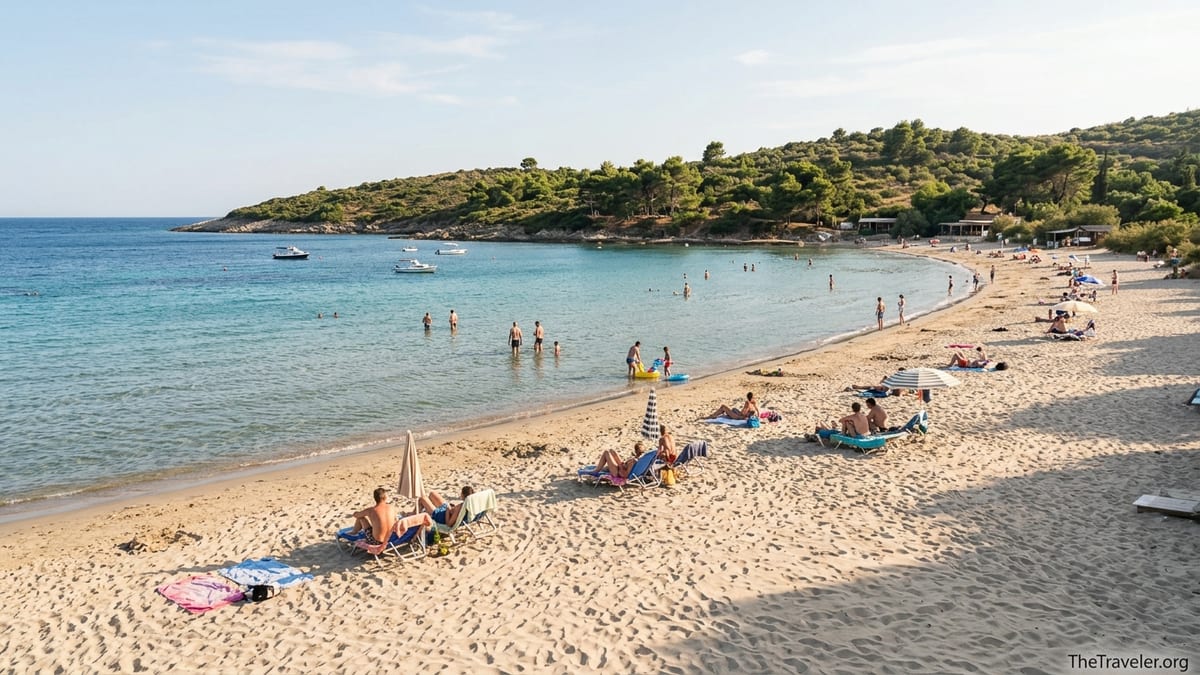
Lopud is the middle and most visited of the Elafiti Islands off Dubrovnik, and Šunj is the main reason many travelers come. While the Adriatic coast is famous for clear water, it is not famous for sand; most beaches are stone platforms or small pebble coves. Šunj is different. It curves around a horseshoe bay with a long, shallow sandy seabed, making it one of the very few true sandy beaches within easy reach of Dubrovnik. Locals often recommend it as the best beach in the Elafiti group for people who want to lie on actual sand and wade into the sea without water shoes.
The bay itself is broad and open, backed by low green hills and pines. When you walk out into the water, you can often go 30 to 50 meters from the shore and still only be waist deep, especially at normal summer tides. That combination of sand underfoot, clear water and a gentle slope is what convinces many families and casual swimmers that Šunj edges out the smaller, rockier bays on neighboring Koločep and Šipan.
It is worth understanding that Šunj is not a secret cove any more. In July and August a steady stream of visitors arrives on ferries from Dubrovnik, organized Elafiti boat tours, and private speedboat charters that anchor just off the bay. Yet even at its busiest, the beach remains relaxed by Dubrovnik standards, with simple beach bars instead of big resort complexes and a laid back, slightly bohemian feel.
Compared with Koločep’s smaller sandy pocket at Donje Čelo or the mixed pebble and sand beaches on Šipan, Šunj simply offers more space, a softer bottom and better services for a full day at the sea. If your priority is a comfortable swim and an easy place to let kids splash for hours, it tends to be the standout choice among the Elafiti beaches.
Getting to Lopud from Dubrovnik
Reaching Šunj is a two step journey: first you travel from Dubrovnik to Lopud village on the island’s north side, then you cross the island to the beach. The most budget friendly and predictable option is the public ferry service that runs from Dubrovnik’s Gruž port to Lopud several times a day in high season. The crossing typically takes about 50 minutes to 1 hour, depending on the route pattern that day.
Ticket prices on the public ferry are usually in the low double digits in euros for a return trip per adult, with discounts for children. For example, travelers in recent seasons have reported paying in the ballpark of 15 to 20 euros per person for a same day return, though exact fares vary with the operator and timetable. This makes Lopud and Šunj one of the better value full day excursions from Dubrovnik, especially compared with private speedboat hire.
If you prefer a package experience, many agencies in Dubrovnik sell full day Elafiti Islands boat tours that stop on Koločep, Lopud and Šipan. These excursions often include a simple onboard lunch and unlimited drinks. Prices tend to be higher than the public ferry but can still be attractive once you factor in food and the novelty of boating between islands. The trade off is that your time at Šunj will be limited to the tour schedule, which commonly allows between 2 and 3 hours on Lopud.
Private speedboat or small yacht charters from Dubrovnik are another way to reach the bay. Skippers often anchor directly off Šunj, and you swim or take a tender to shore. This can be a memorable splurge for a group of friends or a family, but is obviously a premium option, with costs running into several hundred euros for a half or full day charter depending on boat size and season.
Crossing Lopud: Walking vs Golf Cart Shuttles
When you step off the ferry in Lopud village, you will not see Šunj immediately. The harbor faces north, while the beach lies in a wide bay on the south side of the island. There are no cars on Lopud, so you either walk across the island or take a small electric golf cart taxi to the beach. Both options are straightforward, and your choice depends on your energy level, heat tolerance and how much beach gear you are carrying.
The walk is part of what many visitors enjoy most. From the harbor promenade, paved lanes lead gently uphill past stone houses, a Franciscan monastery and small gardens. You then follow a shaded path between pines and low brush across the island’s narrow middle. The walk takes around 20 to 30 minutes at a normal pace, a bit longer if you are with young children or stopping for photos. Most of the route is not steep, but in high summer temperatures the midday sun can feel strong, so carrying water and wearing a hat is sensible.
If you prefer to save your energy for swimming, golf cart taxis line up near the harbor in high season. Drivers usually display prices on boards or will quote a flat fee per ride. Recent travelers often report one way charges of around 8 to 10 euros per cart, which can usually carry three or four people, making it cost effective for small groups or families. Some hotels and beach clubs also organize their own shuttles on similar vehicles, included for guests or bookable at reception.
A common compromise is to take a golf cart to Šunj in the morning when temperatures are rising and bags are heaviest, then walk back in the late afternoon when the path is shaded and the island is quieter. The route is easy to follow without a map. Signs or simple “Šunj” arrows painted on walls and rocks point you in the right direction, and there are usually enough fellow day trippers heading the same way that it is hard to go wrong.
Sandy Beach Conditions, Facilities and the Nudist Section
Once you arrive at Šunj, the first thing you notice is the softness underfoot. The upper part of the beach is a mix of fine sand and some small pebbles, but as you walk further into the water the seabed becomes mostly sand, pale and compact. The water is famously shallow for a long distance, which is one of the key reasons the beach is so popular with families and less confident swimmers. On calm days you will see people standing and chatting dozens of meters from the shore, and children playing ball games waist deep in the sea.
Facilities are simple but more developed than on many small Croatian islands. Several beach bars and restaurants line the back of the bay in season. Names change over time, but at the time of writing visitors commonly mention places such as Cima Beach Club and a handful of classic beach bars offering grilled fish, salads, burgers, ice cream and cold drinks. Most of these venues rent sun loungers and umbrellas in front of their terraces, typically charging per item for the day. Recent reports suggest you should expect to pay somewhere around 10 to 15 euros for a lounger and a similar amount for an umbrella in high summer, with prices sometimes lower in shoulder season.
There are basic amenities such as toilets at the beach bars and outdoor showers or simple wash points in a few spots. Shade from pine trees exists at the edges of the bay, especially towards the sides, but large central stretches of sand are exposed. If you want a spot under natural shade, it is worth arriving early and heading to the fringes of the beach where tree cover reaches closer to the water.
Šunj is also known for having an informal naturist section. Traditionally, nudists tend to gather at the far end of the bay, often to the east side, slightly away from the main cluster of families and loungers. There is usually some kind of signage, and the separation is obvious once you see where people are sunbathing in a more relaxed dress code. For most visitors this coexistence works smoothly. Families with children typically stay near the central section and beach bars, while those seeking a more clothing optional experience drift to the quieter extremes of the bay.
Beach Bars, Food and Atmosphere
The atmosphere at Šunj is casual and sociable rather than glamorous. Instead of large resort hotels, you find a line of modest beach bars and a couple of more developed venues. A typical day might start with grabbing a coffee or fresh juice from a simple kiosk style bar near the sand, then settling into a lounger as the first ferries from Dubrovnik arrive.
Food is generally straightforward but satisfying. Menus frequently feature grilled fish, calamari, simple pasta dishes, burgers, sandwiches and salads. Prices are higher than in inland villages but lower than Dubrovnik Old Town. A basic grilled fish plate or seafood pasta may cost somewhere in the mid teens to low twenties in euros, while a burger or salad is usually in the low teens. Soft drinks and draft beer are sold at typical Croatian seaside prices, and cocktails appear on many menus for those lingering for sunset.
Cima Beach Club and similar operations tend to offer a slightly more polished setting, with cushioned loungers and cabana style seating, attracting guests who want a full day of food, drinks and sunbeds in one place. More rustic bars at the edges cater to those happy to sit on the sand with a cold drink and perhaps a simple sandwich. Because the village is a 20 to 30 minute walk away, most day trippers plan to eat at the beach, at least for lunch. If you follow a gluten free or very specific diet, it can be sensible to bring some snacks from Dubrovnik or Lopud village to supplement what is on offer.
Music volumes are usually modest, with individual bars playing their own playlists. In high season some evenings see livelier gatherings, with younger visitors staying for drinks as the day cools. Yet even then the overall feel is relaxed, more informal beach hangout than full scale party resort. After the last ferries depart, the crowd thins and the bay returns to a quiet, almost sleepy atmosphere enjoyed by overnight guests staying on Lopud.
Families, Kids and Who Šunj Suits Best
Šunj is one of the most family friendly beaches in the Dubrovnik area. The combination of soft sand, very gradual entry into the sea and space to play makes it an easy recommendation for visitors with young children. Parents often appreciate that they can let kids paddle quite far out while still being able to stand next to them in shallow water. Simple floats, inflatable rings and paddle toys are widely used, and the soft bottom means fewer worries about sharp rocks.
The flip side is that the shallow bay can feel warmer and slightly cloudier in the height of summer than deeper, rockier coves. On very hot August afternoons the water may feel more like a warm bath than a brisk dip, which some adults actually enjoy but others find less refreshing. For toddlers and small children, however, those bathtub like conditions are usually ideal.
Beyond families, Šunj appeals to several other groups. Couples on a city break in Dubrovnik come for a quieter, more natural day by the sea after walking the city walls. Friends in their 20s and 30s often combine time on the loungers with a few afternoon cocktails at one of the livelier beach bars. And active travelers sometimes use Lopud and Šunj as a base for kayaking or stand up paddleboarding in the sheltered bay and along the coastline.
People who may find Šunj less ideal are those seeking complete solitude or a very wild, undeveloped shore. While the green backdrop and car free island setting feel atmospheric, the beach is very much on the tourist map now. In July and August the central section can feel crowded, especially during the midday peak when all the Elafiti boat tours overlap. For quieter, more rugged coves, other parts of the Elafiti or mainland Dalmatia might better fit the bill.
Crowds, Seasonality and the Best Time to Go
Like much of the Croatian coast, Šunj Beach has a distinct rhythm through the year. The main season typically runs from late May to late September, with July and August as the busy core. During those peak months, almost all beach bars and services are open, ferries from Dubrovnik are frequent, and golf cart shuttles operate all day. The trade off is crowds: by late morning the central stretches of sand may be tightly packed with loungers, and the shallow water becomes a sea of bathers and inflatables.
If you are visiting in high summer, timing can make a big difference. Aim to catch one of the early morning ferries from Dubrovnik, arriving on Lopud by mid morning. That way you can cross to Šunj before the bulk of day trippers arrives. Arriving around 9:30 or 10:00 often means you can still choose a front row lounger or a good patch of free sand, and enjoy a couple of relatively calm hours before the midday rush. Another strategy is to arrive later in the afternoon, around 15:00 or 16:00, when tour boats start departing and the beach slowly empties out while the light softens.
June and September are particularly attractive months for those who can travel slightly outside school holidays. Temperatures are usually warm enough for comfortable swimming, but overall visitor numbers are lower than at the height of summer. Beach bars and shuttles generally still operate, but you are more likely to find space and slightly better value on sunbed rentals. May and early October can deliver beautiful, quiet days too, though services are more limited and you should not rely on every bar being open or every shuttle running.
In shoulder season or on cooler, cloudy days, the shallow water may feel fresher, and a light onshore breeze can pick up small waves across the bay. The sandy seabed means that strong winds can stir up sand and slightly reduce clarity, though even then the water generally remains appealing. On calm, sunny days from mid June to mid September, the sea in Šunj’s bay is typically clear, warm and inviting.
Practical Tips, Costs and Real World Examples
To plan a realistic day at Šunj, it helps to think through a few practical details. Start with timing your departure from Dubrovnik. If you are staying near the Old Town, factor in 15 to 20 minutes by local bus or taxi to reach Gruž port for the public ferry. Many travelers aim for an early to mid morning sailing, for example leaving Dubrovnik between 9:00 and 10:00, arriving on Lopud before 11:00 and reaching the beach by late morning.
In terms of budget, consider a rough breakdown for a couple or small family. A return ferry for two adults and, say, one child might come to somewhere around 40 to 50 euros in total, depending on current fares and age based discounts. A return golf cart shuttle for the group could add another 15 to 20 euros if you decide not to walk. On the beach, renting two loungers and an umbrella for a full day could cost around 30 to 45 euros in peak summer. Add lunch at a beach bar, where basic main dishes are commonly in the low to mid teens per person, plus drinks and ice creams, and a comfortable day at Šunj can easily come to the low hundreds of euros for a family if you use most paid services.
There are simple ways to moderate costs. Many visitors bring their own lightweight beach mats or towels and skip lounger rental altogether, especially if they plan to move around during the day. Packing a picnic of supermarket snacks, fruit and bottled water from Dubrovnik or Lopud village reduces food spending, and buying just one main meal or a round of drinks at the beach bars still supports local businesses. Walking one way or both ways between the village and the beach saves on shuttles and allows you to explore more of the island’s narrow lanes and viewpoints.
Pack for the specific conditions at Šunj: the combination of very shallow water and exposed sand means strong sun reflection, so high factor reef safe sunscreen, hats and rash vests for children are sensible. Water shoes are not essential here as they often are on rocky Croatian beaches, but they can still be helpful at the extreme ends of the bay where stones and sea urchins are more common. Finally, remember that Lopud is car free and low key; dress casually, carry cash as well as cards in case individual bars have connectivity issues, and be prepared for a pleasantly unhurried pace of service compared with mainland resorts.
The Takeaway
Šunj Beach earns its reputation as one of the best sandy beaches in the Elafiti Islands by offering something relatively rare on the Croatian coast: an expansive, genuinely sandy bay with shallow, family friendly water, a car free island backdrop and enough simple facilities to spend an entire day by the sea in comfort. It is neither a hidden cove nor a polished luxury resort, but rather a relaxed, slightly bohemian stretch of shoreline where families, couples and groups of friends all find their own corners.
If you are staying in Dubrovnik and longing for a softer, more spacious beach day than the city’s pebble coves and concrete platforms can provide, Šunj is one of the easiest and most rewarding escapes. A straightforward ferry ride, a short walk or golf cart shuttle across Lopud, and you arrive at a bay that feels pleasantly distant from the cruise ship bustle. Time your visit for early morning or late afternoon, manage expectations about crowds in high summer, and you will likely understand why many regular visitors quietly rank Šunj as their favorite beach in southern Dalmatia.
FAQ
Q1. How long does it take to get from Dubrovnik to Šunj Beach?
Travel time is usually around 1.5 to 2 hours door to towel. This includes about 1 hour on the public ferry from Dubrovnik to Lopud and 20 to 30 minutes walking or a shorter golf cart ride across the island to the beach.
Q2. Is Šunj Beach really sandy, or is it mostly pebbles?
Šunj is genuinely sandy compared with most Croatian beaches. The upper shore mixes fine sand and some pebbles, but the seabed becomes predominantly sand as you walk into the water, with a long, shallow, soft bottom.
Q3. Are there golf cart shuttles from Lopud harbor to Šunj, and what do they cost?
In high season small electric golf cart taxis usually wait near Lopud harbor. They charge a flat fee per ride, often around 8 to 10 euros one way for a cart that can take several passengers, though exact prices can vary by year and operator.
Q4. Is Šunj Beach suitable for young children?
Yes. The very gradual entry into the sea and long stretches of shallow water make it one of the most child friendly beaches near Dubrovnik. Parents should still supervise closely, but the sandy bottom and lack of sudden drop offs are reassuring.
Q5. Are there restaurants and toilets at Šunj, or do I need to bring everything?
Several seasonal beach bars and small restaurants line the back of the bay, serving drinks and simple meals. They provide access to basic toilets, and some have outdoor showers or wash points. Bringing extra water and snacks from Dubrovnik or Lopud village is still sensible.
Q6. When is the best time of day to visit Šunj to avoid crowds?
The quietest times on busy summer days are usually early morning before about 11:00 and later afternoon after 15:30 or 16:00. Arriving on one of the first ferries from Dubrovnik or staying into the early evening both help you avoid the midday peak.
Q7. Is there a nudist section at Šunj Beach, and is it easy to avoid with kids?
There is traditionally a naturist area at one end of the bay, slightly away from the main family section and beach bars. It is usually clearly separated, and families can easily stay in the central stretch without passing directly through the nudist zone.
Q8. Can I pay with a card at the beach bars, or do I need cash?
Some beach bars and restaurants accept cards, but connectivity can be unreliable. It is wise to carry enough cash in euros to cover loungers, simple meals, drinks and the golf cart shuttle, just in case card terminals are not working.
Q9. Do I need water shoes at Šunj Beach?
Water shoes are not essential because most of the main swimming area has a soft, sandy bottom. They can still be useful if you plan to explore the rocky fringes of the bay or walk along the coastline where sea urchins may be present.
Q10. Is Šunj Beach open year round, and will facilities be available in spring or autumn?
The beach itself is always accessible, but full services are seasonal. From late May to late September most bars, loungers and shuttles usually operate. In early spring or late autumn you may find a much quieter bay with little or no catering open, so plan to bring your own supplies.