


Just off Dubrovnik’s busy harbor, the Elafiti Islands promise pine forests, sandy coves and quiet stone villages that feel a world away from the Old Town crowds. Whether you prefer to hop on the local ferry with the commuters or spend a lazy day on a private boat, planning your Elafiti day trip from Dubrovnik is straightforward once you understand the options. This guide breaks down ferries from Gruž, group and private boat tours, tickets, timing, swimming stops and how to choose the right island for your perfect escape.
Get the latest updates straight to your inbox!
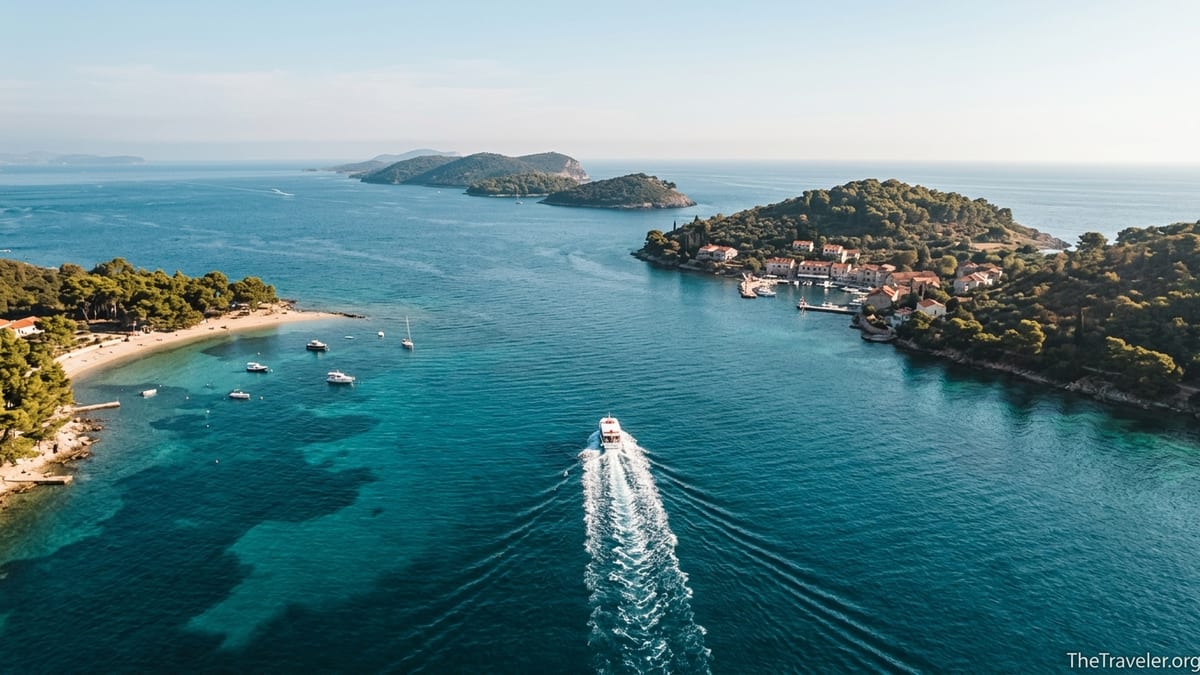
Understanding the Elafiti Islands: Koločep, Lopud and Šipan
The Elafiti (Elaphite) Islands are a small archipelago northwest of Dubrovnik, but most visitors focus on three inhabited islands connected by daily ferries and tours: Koločep (often called Kalamota), Lopud and Šipan. All three are car free or almost car free, have small stone villages and clear water, and are close enough to reach in under an hour from the mainland. They share the same Adriatic setting, yet each has a different feel, which matters when you only have one day.
Koločep is the closest and smallest, around 20 minutes by local ferry from Dubrovnik’s Gruž port. It has two hamlets, Donje Čelo and Gornje Čelo, a handful of small beaches and rocky coves, and sea caves that many speedboat tours visit for quick swim stops. Travelers who want an easy walk and quiet coffee on a village waterfront often choose Koločep for a half-day trip, while boat tours use it as their first cave and snorkeling stop.
Lopud sits a little farther out and is famous for Šunj, a shallow sandy bay on the opposite side of the island from the main village. You reach Šunj by a 20–30 minute walk uphill and down, or by electric buggy taxis that wait near the harbor in high season. Lopud’s waterfront is lined with cafés and small hotels, and in July and August it can feel lively with day trippers, but step a few streets back and it is still a sleepy Dalmatian village of stone houses and citrus trees.
Šipan is the largest of the three and the furthest on the regular ferry route, with two main settlements: Suđurađ, where the ferry docks, and Šipanska Luka, a sheltered bay on the other side of the island reached by local bus, taxi or a 40–60 minute walk. Šipan is ideal if you prefer more time walking, cycling between olive groves and vineyards, and a long seafood lunch rather than multiple short swim stops. Many private boat itineraries include Šipan as their furthest point before looping back to Dubrovnik.
Getting to Gruž Port and Reading the Ferry Schedules
Almost all public ferries to the Elafiti Islands leave from Gruž, Dubrovnik’s main commercial and passenger port, several kilometers northwest of the Old Town. The main bus station is directly beside the port, and local buses from Pile Gate or Lapad usually drop you within a short walk of the ferry piers. If you take a taxi or ride-hailing car, tell the driver you are going to the local ferry for “Elafiti / Jadrolinija” at Gruž to avoid being dropped at the cruise terminal entrance.
Local ferries for Koločep, Lopud and Šipan are operated by Jadrolinija on a line that connects Dubrovnik with Koločep, Lopud and Suđurađ on Šipan. The timetable is published seasonally and typically shows several daily sailings in each direction, with extra departures in summer. For example, in high season it is common to see a morning boat from Dubrovnik around 9:30–10:00 that calls at Koločep and Lopud before reaching Šipan, plus afternoon and evening returns from each island. Travel times are roughly 20–30 minutes to Koločep, about 50 minutes to Lopud and around 1 hour 15 minutes to Šipan on the standard passenger ship.
When you check the timetable, pay close attention to which sailings are marked for “all ports” and which skip certain islands, as well as notes about limited operations on Sundays or bad weather. For instance, an evening departure may run only on specific days or be operated by a small car ferry rather than the usual passenger vessel. Many travelers screenshot the current schedule and keep it on their phone because smaller Jadrolinija offices at Gruž and on the islands can be busy in July and August.
Tickets for the local ferry are reasonably priced compared with tours. As a rough guide, a one way ticket from Dubrovnik to Lopud is often under the cost of a typical Dubrovnik taxi ride across town, and Šipan is slightly more. You can usually buy tickets on the day at the Jadrolinija office beside the pier, and in high season it is wise to arrive 30–40 minutes before your chosen departure. Lines of day trippers can form for popular morning sailings, particularly when cruise ships are in port, but the ships on this route are used to handling commuter crowds and it is rare for foot passengers to be left behind outside of peak holiday weekends.
Local Ferry Day Trips: DIY Island Hopping
Using the Jadrolinija ferry for a do it yourself day trip is the most budget friendly way to experience the Elafiti Islands and gives you maximum flexibility. Common itineraries include a simple return trip to one island, such as a Dubrovnik–Lopud–Dubrovnik day to enjoy Šunj beach, or a hop between two islands, for example taking a morning ferry from Dubrovnik to Koločep, then continuing later to Lopud and catching an evening sailing back to Gruž.
A typical Lopud day trip might look like this in summer: you leave Dubrovnik on a morning ferry sometime between 9:00 and 11:00, arrive in Lopud village in time for a late breakfast on the seafront, walk to Šunj for swimming and sunbathing, then wander back via the hilltop viewpoints before catching a late afternoon or early evening boat back to Gruž. Many visitors prefer to have an early dinner on Lopud at a konoba in the harbor, then ride a sunset ferry back with views of Dubrovnik’s walls glowing in the fading light.
If you plan to visit more than one island in a single day by local ferry, you should study the timetable carefully. For example, one realistic plan is to take an early morning departure from Dubrovnik to Koločep, swim and walk there for a few hours, then continue by midday sailing to Lopud for lunch and the beach, returning directly from Lopud to Dubrovnik in the evening. Attempting to include Šipan as well in the same day by public ferry usually leaves you with very short stops and more clock watching than relaxation, so most travelers either combine Šipan with Koločep by private boat or dedicate a full day to Šipan alone.
Using the ferry also means you can travel in almost any weather that is safe for local commuters. On windy days when small speedboat tours cancel, the larger Jadrolinija ship often still runs, though it may adjust its schedule or use a different vessel. The trade off is that you do not get the same cave hopping or secluded bay experience that private tours offer, and the ferry docks in the main harbors rather than stopping at hidden beaches.
Group Boat Tours: The Classic Three Islands Cruise
Group “three islands” boat tours are widely sold in Dubrovnik and online and are an easy option if you want a structured day with lunch and drinks included. Most of these tours use a traditional wooden boat or small cruiser, depart from the harbor near Gruž or the Old Town in the morning, and visit Koločep, Lopud and Šipan with fixed times on each island. Prices vary with season and inclusions, but full day group tours are often advertised in the region of 50 to 80 euros per person, sometimes less on special offers outside peak season.
On a typical itinerary, you might have around one hour on Koločep for a short swim or a coffee, then another hour or so on Šipan for a stroll around Suđurađ and a stop at a local church or olive grove, before spending the longest block of time, often two to three hours, on Lopud. Many tours include a simple grilled fish or chicken lunch served onboard while the boat moves between islands, plus local wine and soft drinks. The atmosphere can be social, and many travelers mention live music or a party vibe on the return leg in high summer.
Quality can vary between operators, so it pays to read recent reviews and check the fine print: how many people the boat officially carries, whether lunch is cooked fresh onboard, and exactly how long you will have free time on each island. Some budget tours load dozens of passengers on large boats, which keeps prices low but can mean crowded decks and lines for food. Others market themselves as “small group” with a cap of around 12–16 people, often at a slightly higher price but with more personal attention and flexibility on swim stops if the group agrees.
Group tours work well if you have limited time in Dubrovnik and want to see all three islands in a single day without worrying about bus schedules or ferry tickets. They are also convenient for families who appreciate having lunch, shade and toilets onboard. If you are mainly interested in a quiet beach day, however, or you dislike fixed departure times, you may find the structure of a large group cruise too rigid and prefer either the local ferry or a private boat instead.
Private Boat Tours: Flexibility, Swim Stops and Costs
Private boat tours from Dubrovnik to the Elafiti Islands have grown in popularity and range from modest speedboats to luxury motor yachts. They generally include a licensed local skipper, fuel for a set itinerary and snorkeling gear, with full day trips typically lasting 7–8 hours and half days around 4 hours. Boat size dictates price: small speedboats for up to 6 guests might start around 350 to 450 euros for a half day and 450 to 700 euros for a full day, while larger, more comfortable boats or small yachts can cost several hundred euros more.
Many private tour companies advertise sample routes that combine the Elafiti Islands with nearby caves. A common full day plan starts from Dubrovnik in the morning, heads first to the Blue Cave and other smaller caves along Koločep’s coast for snorkeling, then continues to Šunj beach on Lopud for a few hours of swimming and lunch at a beach restaurant, before finishing in Šipan’s Suđurađ or Šipanska Luka for a stroll and a drink. Skippers often adjust the order to dodge crowds and tailor stops to your interests, for example focusing more on hidden bays for couples who prefer quiet swimming over village sightseeing.
When comparing private tours, ask specific questions: Is fuel fully included or charged separately according to route, especially if you want to detour beyond the standard Elafiti circuit? Is there a sunshade and freshwater shower onboard? Are drinks, snorkeling masks and towels provided, or should you bring your own? Many smaller operators list clear pricing on their websites, but some will give you a final quote only after you confirm your group size and preferred date, as high season demand can push prices up on popular August weekends.
Private tours suit travelers who value flexibility and comfort. If you have a group of four to six people, the per person cost can be similar to or only slightly higher than joining a good quality small group tour, with the advantage that you decide how long to stay at Šunj, whether to linger at an empty bay on Koločep, or skip one island entirely and spend more time at a favorite restaurant on Šipan. They are also a smart choice if you want to celebrate a special occasion, since many skippers are happy to help arrange sparkling wine, birthday cakes or sunset timing on the way back to Dubrovnik.
Tickets, Luggage, What to Pack and When to Go
For the local ferry, you usually buy tickets at the Jadrolinija office in Gruž or at small kiosks on the islands. In July and August, lines can build before popular morning sailings, so arriving early is recommended. You do not need to buy round trip tickets; many people purchase a one way outbound in the morning and then decide later whether to return from the same island or continue onward. Keep your ticket handy, as staff may check it again when you reboard after stops at intermediate islands.
Most travelers visit the Elafiti Islands as a day trip and bring only a small backpack or beach bag. The ferries happily carry larger suitcases if you are moving between accommodation in Dubrovnik and an island guesthouse, but group boat tours often discourage large luggage because deck space is limited. Private boats are usually more flexible, but it is still polite to ask your skipper in advance if you plan to bring anything bigger than cabin sized luggage. For day trippers, a swimsuit, light towel or travel towel, hat, reef friendly sunscreen, water bottle and simple cover up are usually enough.
Footwear is important. Many visitors board the ferry in flip flops only to discover rocky shorelines and steep village lanes. Light sneakers or sturdy sandals are better if you plan to walk from Lopud’s harbor to Šunj beach or explore Šipan’s interior. For swimming from boat tours, water shoes can be useful as some coves have pebbly entries or sea urchins hidden among the rocks. Several operators provide simple foam floats or noodles for less confident swimmers, but you should not rely on this if you need strong flotation aids.
Peak visiting season runs from June to September, with July and August bringing the warmest sea temperatures and the biggest crowds. In May and October, the water can still be cool for long swims but warm enough for short dips on sunny days, and ferries and tours are less busy. During shoulder months, some restaurants on the islands run limited hours, and not every group boat tour will operate daily, so check schedules a few days ahead. In very windy or stormy weather, small boat tours may cancel for safety, often at short notice, while the larger ferry may operate with minor delays or route changes.
Choosing the Right Island and Day Trip Style
If you have one full day and love sandy beaches, a straightforward ferry trip to Lopud is hard to beat. You can take a morning boat from Gruž, wander slowly through the waterfront village, then make your way to Šunj for several hours of shallow water swimming. Families with young children appreciate that the sea here stays waist deep for a long way out, and there are basic facilities such as sunbed rentals and simple beach bars in high season. You can finish with dinner in Lopud village as the day trippers leave, then catch an evening ferry back to Dubrovnik.
Travelers who prefer a quieter, less developed feel might opt for Šipan. Using the local ferry, you dock at Suđurađ and can spend the day there at a couple of waterfront cafés, then follow a walking path or take a short bus or taxi ride across the island to Šipanska Luka, a pretty bay with stone houses and a line of small restaurants along the shore. Cyclists sometimes bring or rent bikes to explore the interior roads between olive groves and old summer houses that once belonged to Dubrovnik’s nobility.
Koločep is ideal if you want a half day escape or you are focused on cave swimming with a private boat. On foot, you can walk from the tiny harbor at Donje Čelo to the other side of the island in less than an hour, passing through pine woods and small gardens. There are a few modest beaches, and the water here tends to be very clear. Many boat tours include a stop at Koločep’s Blue Cave, where strong sunlight can create an intense, deep blue hue inside the grotto. Conditions vary with time of day and sea state, so skippers often time their visits to avoid crowds and get the best light.
Your choice of transport matters as much as the island. A budget conscious couple who enjoy walking might do best with the ferry to Šipan and a long lunch at a harborside konoba, while a multigenerational family might prefer a group three islands cruise with lunch included and guaranteed shade on deck. Friends celebrating a birthday or honeymooners often decide on a private speedboat so they can linger at favorite bays and return to Dubrovnik at golden hour, with the Old Town walls coming into view as the city lights switch on.
The Takeaway
Visiting the Elafiti Islands from Dubrovnik does not need to be complicated. Start by deciding whether you want a structured group experience, a flexible private boat day, or a simple local ferry ride and beach escape. From there, choose the island that best matches your style: sandy Šunj on Lopud for long swims, relaxed Šipan for slow lunches among olive groves, or compact Koločep for quiet walks and cave swims. With realistic expectations about timing, weather and crowds, your Elafiti day trip can easily be one of the most memorable days of your stay in Dubrovnik.
Give yourself enough time at the port in Gruž, buy ferry tickets or confirm tour details at least a day ahead in high season, and pack light but smart. The reward is a day of pine scented paths, clear Adriatic water and village harbors where the loudest sound is often the clink of coffee cups on stone terraces. For many travelers, that contrast with Dubrovnik’s busy streets is exactly why the Elafiti Islands become the highlight of their Croatian journey.
FAQ
Q1. Can I visit the Elafiti Islands without joining a tour?
Yes. You can use the local Jadrolinija ferry from Gruž port to reach Koločep, Lopud or Šipan independently, then explore on foot, swim and eat at local cafés before returning on an afternoon or evening sailing.
Q2. How far in advance should I book an Elafiti boat tour?
In July and August, it is wise to book popular group or private boat tours several days, and ideally a week, in advance. In May, June, September and October, you can often find spaces closer to the date, though private boats for specific days can still sell out.
Q3. Is a private boat tour worth the extra cost?
For couples or very small groups, a private tour is a splurge, but for four to six people the per person cost can be similar to a quality small group tour. The extra value is in flexibility: you choose how long to stay at each island, when to stop for swimming and whether to avoid crowds.
Q4. Which Elafiti Island is best for a family with children?
Lopud is often the best choice for families, mainly because of Šunj beach, where the sea is shallow and sandy. Group three islands cruises also work well for families who prefer having lunch onboard and shaded seating for breaks between swims.
Q5. Can I bring luggage on the ferry or tours?
Local ferries from Gruž accept larger suitcases, and many people use them to move between Dubrovnik and island accommodation. Group boat tours usually allow only small day bags because of limited space, while private boats may accept larger bags if you arrange this in advance.
Q6. Are there restaurants and shops on the islands?
Yes, each island has at least a few cafés and restaurants near the main harbor, and in high season beach bars operate at Šunj on Lopud. Shops are limited, however, so you should bring essentials such as sunscreen, any specific snacks and enough cash or a card that works abroad.
Q7. Do boat tours and ferries run in bad weather?
Small speedboat and group tours may cancel or shorten routes in strong wind or storms for safety, often with the option to rebook or receive a refund. The larger local ferries are more robust and often still run with minor delays, but extreme conditions can affect them too.
Q8. Is it possible to swim from the ferry?
No. The Jadrolinija ferry is pure transport and does not stop for swimming. If you want to jump from the boat into bays or caves, you need to book a dedicated group or private boat excursion that includes swim stops in its program.
Q9. What should I wear for an Elafiti day trip?
Light summer clothes, a swimsuit under your outfit, a hat and sturdy sandals or sneakers are usually best. Bring a light cover up for ferries and boat rides, as it can feel windy, and consider a dry bag to protect your phone and camera.
Q10. Can I see all three main islands in one day?
Yes, but it is easier with a structured three islands boat tour than with public ferries. DIY travelers often choose one or at most two islands to keep the day relaxed, while group and private tours are designed to include short visits to Koločep, Lopud and Šipan in a single outing.