


More news on this day
A late-term Supreme Court ruling is rapidly reshaping the travel landscape for millions of lawful permanent residents, widening federal authority at the border and raising urgent questions about how safely green card holders can leave and reenter the United States.
Get the latest news straight to your inbox!
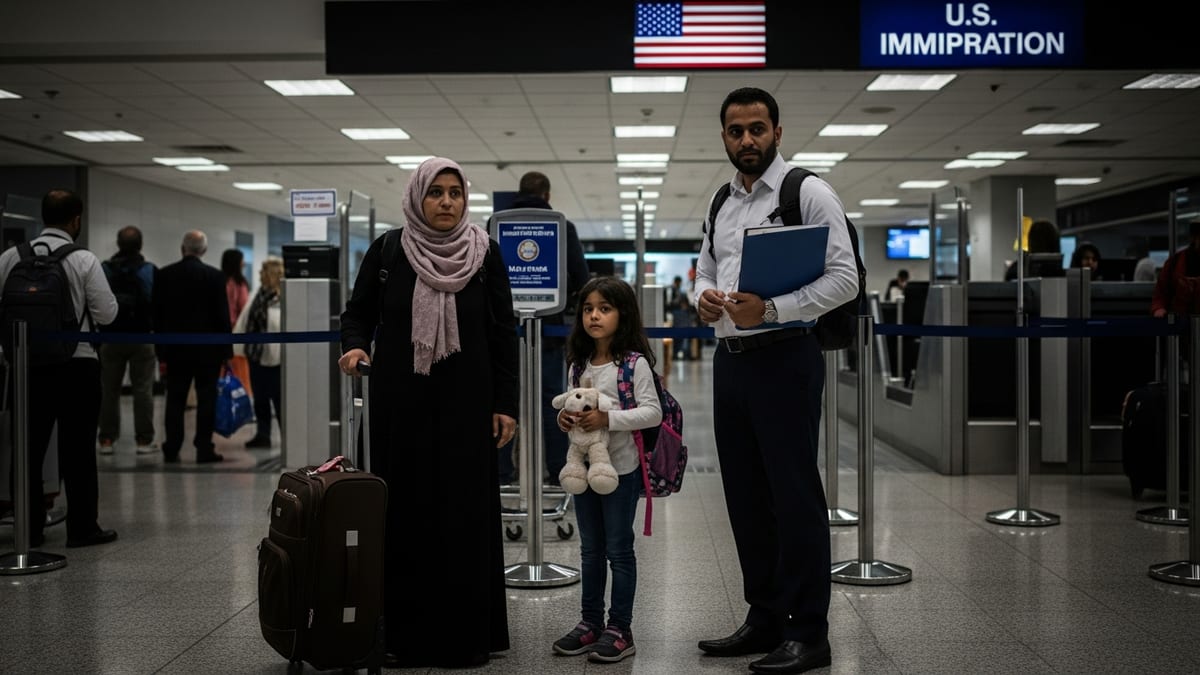
High Court Backs Broader Border Discretion in Blanche v. Lau
The Supreme Court’s June 23, 2026 decision in Blanche v. Lau has become an immediate flashpoint in U.S. immigration policy, particularly for lawful permanent residents who travel internationally. In a 6–3 ruling, the Court held that immigration officers at ports of entry do not need clear and convincing evidence that a green card holder committed a crime involving moral turpitude before treating that person as an applicant for admission rather than as someone already admitted to the country.
The case centered on Muk Choi Lau, a longtime lawful permanent resident who returned from a brief trip abroad while facing state counterfeiting charges. Border officers placed him on immigration parole and later pursued removal based on his eventual conviction. The Court concluded that the Immigration and Nationality Act allows officials to reclassify returning residents in such circumstances, effectively lowering the evidentiary threshold required at the moment of reentry.
Immigration law analysts note that this interpretation strengthens government control at the border by giving officers greater leeway to shift lawful permanent residents into the more demanding “inadmissibility” track, where the burden falls heavily on the traveler. Critics argue that the ruling unsettles long-standing expectations that green card holders enjoy relatively secure status when returning from routine trips.
Expanded Enforcement Power Raises High-Stakes Travel Risks
For green card holders, the immediate consequence of the ruling is a sharper divide between the rights they hold inside the United States and the vulnerability they may face upon return from travel abroad. Publicly available commentary from immigrant advocacy groups indicates that lawful permanent residents with pending charges, old arrests, or past convictions now face heightened risk that a trip overseas could trigger intensive screening, extended questioning, or placement into removal proceedings at the airport.
Legal experts highlight that the decision allows border officers to act on allegations and records that are still in flux. The government can now treat a lawful permanent resident as seeking a new admission based on suspected crimes, then develop fuller evidence later in immigration court. This sequence reverses what many travelers assumed: that only a proven, disqualifying conviction would seriously endanger their status at the border.
Organizations monitoring the decision warn that this shift may have a chilling effect on international mobility for permanent residents. Some green card holders may forgo family visits, business trips, or emergencies abroad out of concern that unresolved legal matters, even minor or years old, could be interpreted as grounds to question their right to reenter and remain in the country.
Rights Groups Warn of “Immigration Limbo” for Returning Residents
Immigrant rights advocates and legal service providers are responding to the ruling with strong concern, emphasizing what they describe as a new form of “immigration limbo” for affected travelers. According to published coverage and legal analyses, a lawful permanent resident intercepted at the border under the Blanche v. Lau framework can now be stripped, at least temporarily, of the practical security that a green card is widely understood to provide.
Individuals routed into this process may face detention, parole with restricted movement, or protracted removal proceedings before any final decision on removability is reached. For many, this can mean separation from family, disruption of employment, and uncertain access to travel documents while their cases move through an already backlogged system.
Civil society organizations also point to the psychological and financial toll of such outcomes. Even if a lawful permanent resident ultimately prevails in court, the period spent in limbo can involve legal fees, lost income, and long-term damage to careers or educational plans. Commentators stress that these consequences may now flow not from a completed criminal case, but from unresolved or disputed allegations that surface as the traveler attempts to come home.
Policy Context: A Broader Shift in U.S. Immigration Enforcement
The Blanche v. Lau decision arrives amid a wider realignment of immigration enforcement priorities under the current administration. Public reporting shows a renewed emphasis on aggressive border and interior enforcement tools, with federal agencies leaning more heavily on existing statutory grounds of inadmissibility and deportability for noncitizens with any criminal history or open charges.
Advocates argue that the new ruling fits into this broader pattern by giving the government additional leverage at a critical chokepoint: the moment lawful permanent residents seek to reenter the United States. Because border encounters can be fast-paced and opaque, travelers may have limited opportunity to present mitigating evidence, clarify outdated records, or seek timely legal advice before decisions are made about their status.
Some legal analysts describe the decision as a marked departure from a more protective approach that historically treated green card holders returning from short, innocent trips as continuing residents. The Court’s majority framed the outcome as a straightforward reading of statutory text, while critics view it as a significant policy shift that effectively expands border enforcement authority without new legislation.
Practical Travel Warnings for Green Card Holders
In response to the ruling, immigration lawyers and community legal clinics are issuing increasingly stark travel advisories to lawful permanent residents. Public guidance emphasizes that anyone with a pending criminal charge, past arrest, diversion program, or unresolved immigration issue should seek individualized legal advice before leaving the United States, even for brief trips.
Advisers caution that routine encounters at airports and land borders may now carry higher stakes, particularly where records suggest possible crimes involving moral turpitude or other disqualifying conduct under immigration law. Travelers could be subjected to secondary inspection, intensive document review, and detailed questioning about their criminal and travel history.
For green card holders whose status has long been seen as a stable foundation for cross-border mobility, the Supreme Court’s decision introduces a new layer of uncertainty. While the ruling does not change who can ultimately be deported under federal law, it changes when and how the government can begin that process, effectively moving the front line of enforcement to the arrival gate and raising the stakes of every international trip.