


More news on this day
Finland’s national rail operator VR has unveiled its new Sm7 FLIRT commuter trains manufactured by Stadler, marking a major renewal of suburban rolling stock designed for the country’s harsh Nordic conditions and growing passenger demand.
Get the latest news straight to your inbox!
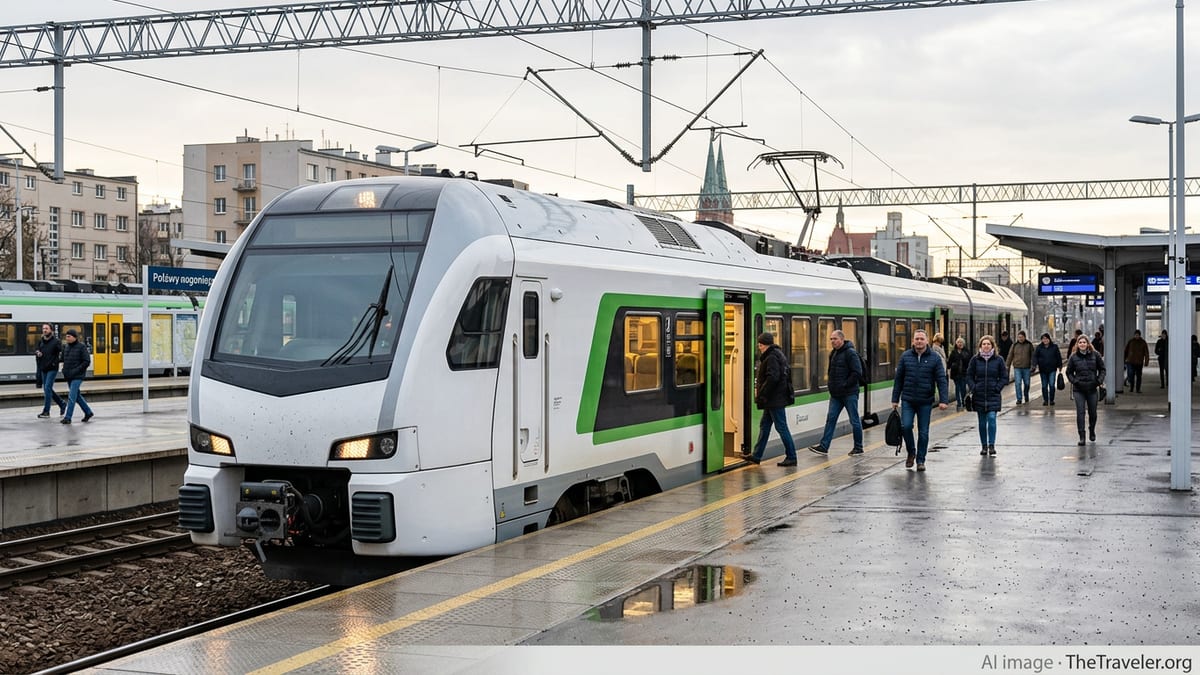
A flagship for VR’s next commuter era
The Sm7 series represents VR’s latest generation of electric multiple units, ordered from Stadler in 2022 as part of a wider modernisation of Finland’s passenger rail fleet. Publicly available information shows that the contract covers 20 four-car single deck FLIRT units, with options for additional trains as demand grows. The first completed trainset was delivered to Finland in May 2025 and has since been undergoing commissioning and test runs on the national network.
Reports from railway industry outlets indicate that the units are based on Stadler’s well established FLIRT platform, already in service in Finland’s capital region as the Sm5 commuter fleet. For the Sm7, the design has been adapted for longer regional and interurban routes operated by VR, focusing on higher capacity, improved comfort and fast boarding at busy suburban stations.
VR has framed the Sm7 introduction as a step change in its commuter offering, comparable in scale to the replacement of older suburban stock in the Helsinki area over the last decade. The trains are expected to enter regular passenger service after a testing period that extends into early 2026, with the roll out continuing on key regional corridors over subsequent years.
The new trains are also the first in VR’s Finnish fleet to adopt a refreshed exterior design language already seen on the company’s cross border services in Sweden. The bright green and white livery and distinctive front-end styling are intended to make the new commuter fleet instantly recognisable on platforms across the country.
Designed for Finnish winters and daily reliability
Stadler and VR have emphasised that the Sm7 trains have been engineered specifically for Finland’s demanding operating environment, where winter temperatures can drop well below freezing and snow, ice and slush are regular challenges. Technical descriptions published by specialist rail media highlight features such as enlarged snow ploughs, reinforced and sealed equipment rooms, and extensive underfloor heating to keep vital components free of ice.
The FLIRT platform has already built a reputation for reliable operation in Nordic markets, with similar trains running in Sweden and Norway. For the Sm7, this experience has been combined with VR’s domestic know how from running earlier FLIRT based fleets in the Helsinki metropolitan area. The resulting configuration is intended to minimise weather related disruption and maintain steady performance throughout the year.
Passenger areas have also been specified with the Nordic climate in mind. Wide entrance vestibules, open gangways and generous standing space are designed to cope with passengers carrying bulky winter clothing and luggage. Large windows, bright lighting and modern finishes seek to create what VR describes in its public material as a more pleasant daily commuting environment, even during the darker months.
The focus on reliability extends to maintenance and fleet management. The Sm7 units will be integrated into VR’s existing depots and servicing facilities, benefiting from digital condition monitoring systems that can flag emerging issues before they impact day to day operations. This is expected to support higher train availability and more consistent timetables on busy commuter routes.
More capacity, better accessibility and smoother journeys
VR’s information on the new commuter trains highlights capacity and accessibility as central priorities of the Sm7 project. Each four car unit offers a mix of seating types tailored for regional services, from standard airline style seats to longitudinal seating zones around doors for short hops between suburban stops. Open interiors and full low floor access aim to provide uninterrupted movement through the train.
Step free boarding is a standard feature, with door thresholds aligned to platform heights on VR’s main commuter routes. This design approach is intended to simplify travel for passengers using wheelchairs, pushchairs, bicycles or heavy luggage, and to shorten dwell times at stations. Dedicated multi purpose spaces and clearly marked priority areas reinforce this focus on inclusive design.
Ride comfort has been another design objective. The FLIRT platform’s bogies, suspension and noise insulation are configured to deliver smoother acceleration and braking, which is particularly important on stop intensive suburban services. Passengers can expect features such as air conditioning, power outlets and modern passenger information systems as part of the onboard environment.
Publicly available material from VR notes that feedback from passengers and train staff on earlier commuter fleets was incorporated into the Sm7 interior layout. This has influenced details such as grab rail placement, luggage rack locations and the distribution of seating for solo travellers and groups, with the goal of making day to day journeys more convenient and intuitive.
Energy efficiency and fleet renewal strategy
According to technical summaries of the project, the Sm7 trains are expected to consume significantly less energy than the older Sm2 and Sm4 commuter units they will gradually replace. VR has indicated that the new trains can deliver around 50 percent higher energy efficiency compared with the oldest suburban stock, assisted by modern traction systems, regenerative braking and lightweight bodyshells.
This efficiency improvement supports VR’s broader environmental targets and Finland’s climate goals, by reducing the carbon footprint per passenger kilometre on commuter routes. Lower energy use and modern systems are also expected to cut operating costs over the life of the trains, freeing up resources for service improvements and potential network extensions.
The arrival of the Sm7 fleet is part of a wider investment cycle in new rolling stock across VR’s long distance and night train services. Together, these acquisitions are set to retire some of the country’s oldest passenger trains and bring a more coherent, modern image to the network. Industry analysts note that the standardisation around Stadler platforms may also simplify maintenance and staff training over time.
VR has an option for additional Sm7 units beyond the initial 20 trainsets, which could be exercised if demand on commuter and regional corridors continues to grow. That flexibility allows the operator to scale capacity in response to population increases around major cities and to potential future service expansions.
Implications for passengers and Finland’s rail network
The introduction of the Sm7 FLIRT trains is set to reshape the passenger experience on several of Finland’s busiest commuter and regional lines. As the new units enter regular service after testing, travellers can expect more consistent comfort, better real time information and improved accessibility at stations served by the modern fleet.
From a network perspective, the higher performance and faster boarding characteristics of the Sm7 may enable timetable adjustments and increased frequencies on some routes. Railway commentators suggest that replacing aging rolling stock with modern electric units typically allows operators to make better use of existing infrastructure, reducing delays and improving punctuality.
Enthusiasts and local observers have already noted test runs of the bright green trains around Helsinki and other key hubs, indicating that the commissioning programme is progressing. As additional units are delivered and accepted into service, the presence of the Sm7 on Finnish rails is expected to grow steadily through the second half of the decade.
For VR, the unveiling of the new Stadler built commuter trains signals a long term commitment to rail as the backbone of everyday mobility between Finnish cities and their surrounding suburbs. For passengers, the Sm7 promises a visibly modernised journey that aims to match rising expectations for comfort, reliability and sustainability in public transport.