


More news on this day
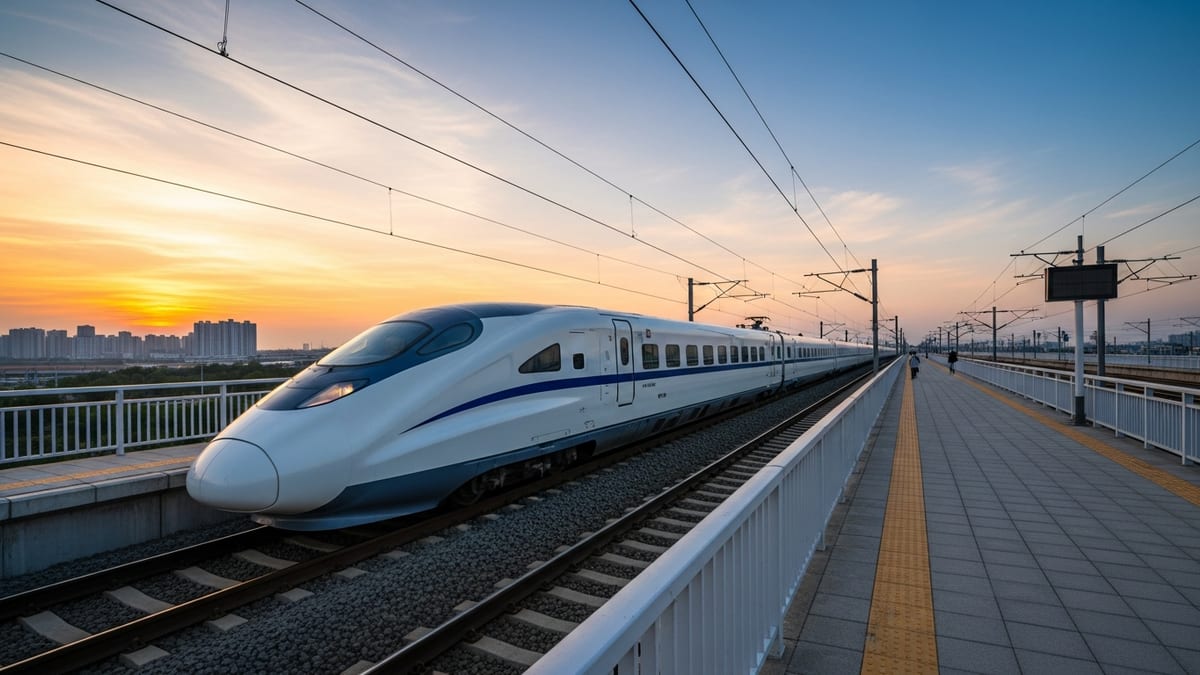
As Taiwan High Speed Rail approaches its 20th anniversary in January 2027, the island’s flagship rail corridor is marking the milestone with record ridership, new trains on the way and government backing for major extensions that will push the network beyond its original west coast spine.
Get the latest news straight to your inbox!
From Risky Start-Up to Backbone of North–South Travel
Taiwan’s high speed line between Taipei and Kaohsiung opened to commercial service in January 2007, introducing 300 kilometer per hour trains along the island’s densely populated western corridor. Two decades on, publicly available data shows that the system has evolved from a financially fragile project into a core component of Taiwan’s transport network, routinely carrying more than 200,000 passengers per day.
Corporate reports for 2024 and 2025 indicate that annual ridership climbed from about 78 million passenger trips in 2024 to just over 82 million in 2025, a year on year increase of nearly 5 percent. The operator also expanded weekly services to almost 60,000 train runs, while maintaining punctuality of more than 99 percent for arrivals within five minutes of schedule, underscoring the line’s role as a reliable alternative to domestic air and highway travel.
In May 2026, coverage by Taiwan News reported that the chair of Taiwan High Speed Rail forecast ridership could reach around 83.9 million passengers this year, which would set another record. The line’s performance is being boosted by both business demand along the so called one day living circle linking Taipei, Taichung and Kaohsiung, and by sustained leisure travel within Taiwan.
Ridership peaks around long weekends and holiday periods highlight how deeply the service has become embedded in daily life. In October 2025, Central News Agency reporting cited company figures showing average daily patronage of about 237,000 passengers during a month with three extended weekends, well above the full year average. That pattern reflects the rail line’s ability to absorb surges that would otherwise strain highways and conventional rail.
Financial Turnaround and Fleet Modernization
Early in its history, Taiwan High Speed Rail was closely watched as a test of large scale public private partnership in transport, and its heavy construction debt initially weighed on financial results. Over time, however, ridership growth and a series of capital restructuring measures have steadily improved the balance sheet, and the line is now widely described in local coverage as a profitable, dividend paying infrastructure asset.
Company disclosures show that revenue surpassed 50 billion New Taiwan dollars for the first time in 2024, supported by both rising passenger volume and targeted service increases. The operator has also emphasized that a strong operating cash flow and more favorable financing terms have allowed it to reduce leverage while investing in upgrades, including digital ticketing tools and expanded retail areas in major stations.
A key step in preparing for the next decade is the introduction of a new generation of trains sourced from Japan. According to corporate statements, these sets entered the manufacturing stage in 2025, with the first units expected to arrive in Taiwan for testing as early as late 2026 and enter commercial service in the second half of 2027. The new fleet is intended to increase capacity, support more frequent peak service and offer upgraded interiors and accessibility features.
In parallel, the company is pursuing what it describes as a station service 2.0 program, which includes refurbishing platforms, expanding waiting areas and improving connectivity with local buses and metro systems. Taken together, these investments are meant to ensure that the railway can accommodate additional passengers generated by future network extensions while maintaining its high punctuality record.
Yilan Extension Approved as Network Pushes East
The most significant policy shift as the 20 year mark approaches is the government’s push to extend high speed services beyond the original west coast alignment. After years of study, environmental review and public debate, the Ministry of Environment approved the environmental impact assessment for an extension from Taipei’s Nangang district to Yilan County in August 2025, according to coverage by Central News Agency and official summaries.
The project cleared another major hurdle on July 23, 2026, when the Executive Yuan gave its formal approval to move ahead with construction planning. Cabinet level briefings described the Yilan link as a way to relieve chronic congestion on National Freeway No. 5 and existing rail and road corridors between Taipei and the northeast coast, which frequently experience traffic jams and weather related disruptions.
Planning documents from the Railway Bureau outline the Yilan project as part of a broader strategy to build a high efficiency ring of rail services around Taiwan, improving resilience in the face of earthquakes and extreme weather. The new line will connect with conventional rail services in Yilan, allowing passengers to transfer toward Hualien and Taitung and significantly boosting capacity to eastern Taiwan.
Preliminary schedules described by government agencies anticipate completion of the Yilan extension around 2037, following phased construction and systems installation. Once operational, travel time between Taipei and Yilan is projected to fall to under 30 minutes, compared with current journeys that often take considerably longer by road during peak periods.
Southern Push Toward Pingtung and a Round Island Vision
While Yilan has dominated recent headlines, planning is also advancing on a southern extension from the current terminus at Zuoying in Kaohsiung to Pingtung. The Railway Bureau’s English language project overview states that this corridor is being developed in four phases, including civil works, systems engineering and land development around the planned Pingtung high speed station.
The Pingtung project builds on an earlier decision by the central government to prioritize high speed rail as the main north south spine, with conventional rail and local transit providing feeder connections. From a regional development perspective, officials and analysts have argued in public forums that bringing high speed services directly to Pingtung could strengthen links with the Southern Taiwan Science Park, technology clusters and agricultural hubs.
Although target opening years have shifted as studies proceed, the current project framing situates Pingtung alongside Yilan as part of a long term plan for a higher capacity, more resilient national rail grid. When combined with ongoing improvements on conventional lines, policymakers have described this program as moving Taiwan toward a de facto round island rail network where major cities are reachable within roughly 90 minutes.
Urban planners note that such connectivity could further reinforce the one day living concept, allowing more people to commute across regions while maintaining residence in smaller cities. It may also support tourism by making multi city itineraries along both coasts easier to undertake by rail instead of private car or short haul flights.
Balancing Growth, Capacity and Sustainability
As Taiwan High Speed Rail prepares to enter its third decade of operation, the central challenge is how to manage continued passenger growth while keeping the system financially sound and environmentally resilient. Sustainability reports published by the operator highlight modest but steady gains in energy efficiency and system reliability, with punctuality rates near 99.5 percent and reliability close to 100 percent even as train services expand.
At the same time, debates around the Yilan extension in particular have underscored the tensions inherent in large infrastructure projects. Environmental groups and local stakeholders have raised concerns over construction impacts, landscape changes and long term climate risks, prompting repeated adjustments to alignments and mitigation measures during the review process. Government agencies have emphasized in public documents that the project will adhere to step by step procedures to address these issues.
For passengers, the more immediate impact is likely to be continued incremental improvements. Additional train paths, upgraded onboard connectivity, expanded station amenities and, by 2027, the arrival of new rolling stock are all expected to make the service more attractive. If ridership projections hold, the line will enter its 20th anniversary year carrying more passengers than ever, reinforcing its position as a backbone of mobility in Taiwan.
With flagship extensions now endorsed at the policy level, the next few years will determine how quickly Taiwan can translate plans into concrete progress. The story of its high speed rail so far suggests that steady growth, technical reliability and iterative policy support have been critical, and those same ingredients are set to shape the system’s evolution beyond its first two decades.