


Thailand’s immigration framework is undergoing steady but significant change, with new long-stay categories, tighter enforcement of short-stay rules, and rapid digitalization of procedures. For prospective expats, remote workers, and long-term retirees, understanding these evolving trends is critical to assessing whether a sustainable, legally secure stay in Thailand is realistic over the next several years.
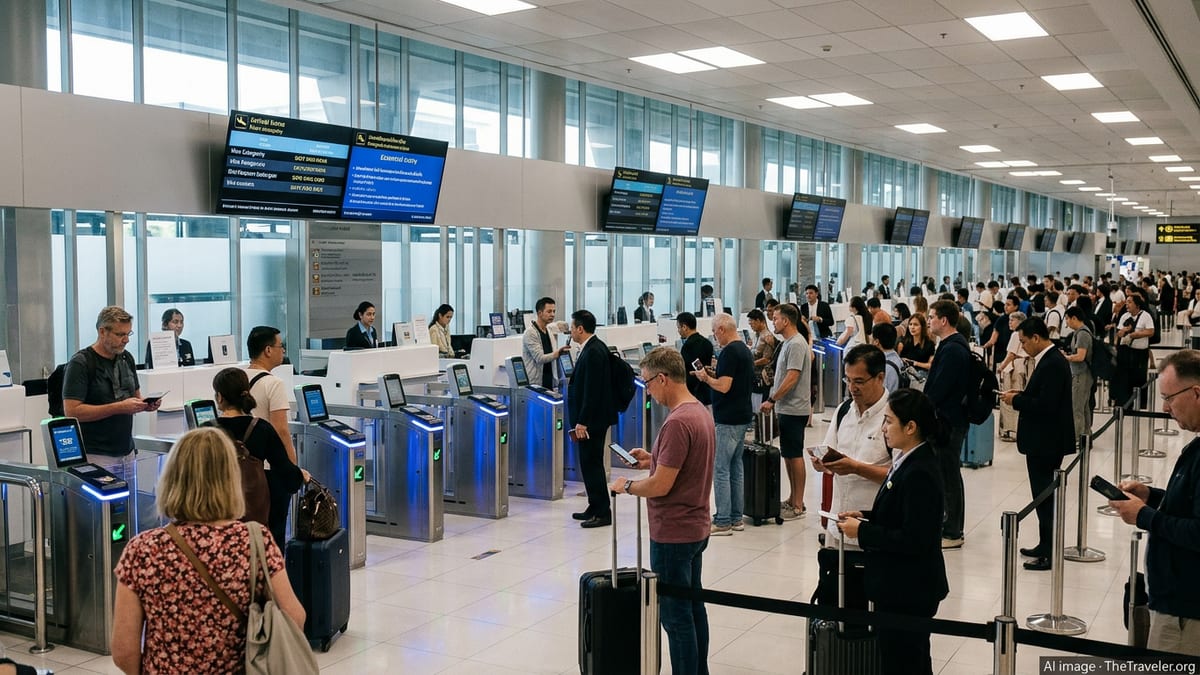
Macro Direction of Thailand’s Immigration Policy
Recent changes indicate a dual-track immigration strategy: on one hand, Thailand is introducing and refining long-term, higher-quality residency pathways for targeted groups such as skilled professionals, investors, and digital nomads. On the other, it is reducing tolerance for informal long stays through back-to-back tourist entries and ad hoc extensions. This shift matters for expats who previously relied on flexible short-term options rather than formal long-term status.
Policy decisions since 2024 show an explicit intent to attract foreigners who bring capital, high skills, or stable remote income, while discouraging low-document, low-visibility stays. Examples include the Destination Thailand Visa (DTV) for digital nomads and lifestyle visitors, and the ongoing recalibration of the Long-Term Resident (LTR) visa program. At the same time, immigration authorities have stepped up scrutiny of repeated visa-exempt entries and in-country extensions, particularly from late 2025 onward, signaling a preference for clearly documented residence over informal long-term tourism.
For relocation planning, this means that Thailand is not closing itself to foreigners, but is demanding more structure and clearer economic rationale for longer stays. Prospective expats should assume future rules will further favor documented, longer-term categories over loosely regulated patterns of stay, and plan on selecting a specific legal pathway rather than relying on flexibility at the border.
Another notable macro trend is the increasing use of temporary relaxation measures for economic or crisis-related reasons, followed by partial tightening once conditions normalize. Examples include expanded visa-free stays to support post-pandemic recovery and time-limited relaxations in response to international disruptions. Relocating expats should therefore distinguish between permanent structural policy changes and temporary incentives that may not last for the full duration of a planned stay.
Crackdown on Informal Long Stays and Visa Runs
One of the most consequential trends for aspiring expats is the ongoing crackdown on “visa runs” and informal long stays that rely on repeat visa-exempt entries or serial short-term visas. From late 2025, immigration authorities have systematically increased scrutiny of patterns where foreigners exit and re-enter frequently by land or air for the primary purpose of resetting stay limits, rather than transitioning to a formal long-term status. Reports indicate closer questioning at checkpoints and higher rates of entry refusals for travelers with multiple back-to-back stays without an appropriate long-term visa.
This tightening is accompanied by more restrictive rules on in-country extensions for certain entry categories. Information from immigration practice updates in 2025 indicates that extensions are no longer automatically available for some travelers entering by land and that officers have more discretion to deny repeat extensions viewed as de facto residence rather than genuine tourism. Officials also clarified in early 2026 that there is no blanket two-entries-per-year cap on visa-free entries, but emphasized enhanced security screening and profiling for repeat entrants. The overall effect is a more controlled environment where long-term living via short-stay loopholes is significantly less predictable.
For prospective expats, this trend fundamentally alters the risk profile of using visa-exempt or short tourist visas as a quasi-residence strategy. Border decisions are discretionary, and travelers with extensive prior time in Thailand but no clear long-term status may face additional questioning or denial of entry. Over-reliance on informal visa runs therefore poses a growing continuity risk for individuals who need stable residence for employment, schooling, or long-term rentals.
Relocation evaluations should assume that policies targeting visa runs are unlikely to reverse and may tighten further. Those planning multi-year stays should prioritize categories that explicitly authorize long-term residence or multi-year validity, even if the upfront documentation and eligibility thresholds are higher. Using visa-free entries as a bridge while preparing a proper application may still be viable in the short term, but should not be the cornerstone of a relocation strategy.
Emergence of the Destination Thailand Visa and Digital Nomad Policy
Thailand has moved from tacit tolerance of remote workers on tourist statuses to an explicit policy framework for digital nomads and long-stay lifestyle visitors. The Destination Thailand Visa (DTV), introduced in 2024 and implemented through 2025, is designed as a multi-year, multi-entry visa suited to remote workers, freelancers, and individuals with flexible income sources abroad. Official documents and professional analyses describe a five-year validity with the ability to stay up to around 180 days per year, with a focus on remote work for foreign employers or self-employment that does not compete directly with local labor.
The DTV represents a strategic pivot: instead of ignoring the presence of digital nomads, immigration authorities now provide a structured channel with clearer conditions. Typical requirements include evidence of remote employment or business activity outside Thailand and sufficient financial resources. The visa is not designed as a pathway to local employment in Thai companies and does not replace conventional work permits. However, it offers medium-term security for those able to demonstrate compliant remote income, and reduces the incentive to use tourist entries as a workaround.
Policy-wise, the DTV marks a broader trend towards segmenting expat populations by economic role. Digital nomads, retirees, and investors are each assigned tailored visa products with distinct rights and obligations, rather than being grouped under generic non-immigrant categories. For relocation planning, this specialization can be positive, as it clarifies expectations and, over time, may lead to more stable rules for each segment. At the same time, the program is still relatively new, and practical implementation details continue to evolve based on consular discretion and central guidance.
Prospective digital nomad expats should monitor adjustments to DTV criteria, especially income thresholds, allowed activities, and maximum annual stay days. Experience with newer programs suggests that documentation standards and interpretations can tighten after launch. Applicants should also be aware that possessing a digital nomad visa does not automatically grant access to local financial infrastructure or tax registration and should plan separately for those aspects of relocation.
Recalibration of the Long-Term Resident (LTR) Visa
The Long-Term Resident (LTR) visa is central to Thailand’s strategy to attract what policymakers term “high potential” foreigners. This 10-year visa targets wealthy global citizens, pensioners, highly skilled professionals, and remote workers employed by large foreign companies. Since its initial launch, the program has undergone multiple adjustments, with important changes adopted by the cabinet in January 2025 that took effect later that year. These changes reflect an ongoing effort to broaden the eligible pool while still focusing on applicants with substantial assets or income.
Key trends in LTR policy include more flexible financial thresholds in some categories, such as lowered minimum investment or income requirements and revised criteria for counting global assets. At the same time, authorities are emphasizing the need for demonstrable, stable investment in Thailand, often in the range of several hundred thousand US dollars or equivalent, and total worldwide assets near or above one million US dollars for certain investor-focused categories. Professional reports in 2025 highlight that the goal is to shift from purely numerical thresholds towards a more holistic assessment of economic contribution and stability.
For expats evaluating the LTR as a relocation pathway, the broader trend is toward a premium, relatively exclusive product rather than a mass-market long-stay option. Approval remains discretionary, documentation requirements are strict, and processing can be lengthy. In return, successful applicants receive long-term stability, streamlined work authorization in some categories, and potentially favorable treatment under Thailand’s tax rules. The authorities appear committed to fine-tuning rather than dismantling the LTR, indicating that high-net-worth and high-skill segments will continue to have a defined route for long-term residence.
Prospective LTR candidates should track future refinements to eligibility, including any sector-specific incentives for industries Thailand wishes to promote. Adjustments may include changes in required investment instruments, modifications to income thresholds to reflect exchange rate movements, or new documentation standards. For relocation feasibility, the critical question is whether applicants can realistically gather and maintain the required financial and professional evidence over a 10-year horizon.
Evolution of Thailand Privilege (Formerly Elite) and Other Long-Stay Schemes
Alongside government-administered visas, Thailand continues to support the semi-commercial Thailand Privilege (formerly Thailand Elite) program as an alternative long-stay mechanism. This program offers multi-year stay privileges, typically ranging from 5 to 20 years depending on the package, in exchange for a substantial one-time membership fee. As of 2026, updated packages maintain a focus on affluent long-stay visitors and expats seeking convenience, with tiers differentiated by duration, bundled services, and price.
Recent program trends include the introduction of more accessible lower-tier options with shorter validity and fewer concierge services, as well as continued premium tiers for high-net-worth individuals. While membership fees vary by tier, they generally remain significantly higher than the total cost of typical visa applications, reflecting the program’s positioning as a lifestyle and convenience product rather than a standard immigration route. The visa itself does not automatically confer work rights or permanent residence status, but facilitates long-term physical presence with streamlined immigration handling.
This tiered approach mirrors a broader policy trend where Thailand uses different instruments for different segments of the expat population: formal investor or skilled-worker visas for long-term contributors, digital nomad visas for remote income earners, and fee-based privilege programs for affluent, primarily consumption-oriented residents. Prospective expats assessing the Thailand Privilege route should treat it as a mobility and convenience tool, rather than a substitute for conventional work authorization or an automatic pathway to permanent settlement.
Future changes are likely to involve periodic adjustments to pricing, benefits, and background screening intensity, responding to demand, reputational considerations, and regional competition. While there is no clear indication that the program will be discontinued, its commercial nature implies that terms and availability can evolve relatively quickly compared with standard visa categories, and long-term planners should account for such flexibility in their risk assessment.
Digitalization of Immigration Procedures and Enhanced Screening
Thailand is steadily digitalizing its immigration interface, shifting from paper-based forms and in-person applications toward online systems and electronic pre-clearance. A notable development is the gradual rollout of the Thailand Digital Arrival Card, which replaces or supplements the traditional TM6 paper form with an online submission process required for foreign travelers. By 2025, preliminary submissions and mandatory use for most foreign nationals had been phased in, giving immigration authorities more structured pre-arrival data.
In parallel, Thailand has expanded its e-visa platform for applications submitted through consulates and embassies, covering a wider range of visa types and extending to more nationalities. This enables pre-screening of applicants based on travel history, financial documentation, and security flags before they arrive at the border. The overall effect is more predictable processing for compliant travelers but also a higher likelihood that concerns will be addressed before entry rather than through informal negotiation at checkpoints.
Another key element is the introduction and refinement of electronic pre-authorization systems for visa-exempt entrants, which require travelers from many countries to obtain digital clearance before boarding. By centralizing data and automating risk analysis, these systems support targeted screening of high-risk profiles and repeat entrants, aligning with the broader crackdown on informal long stays. At major airports, Thailand has also implemented enhanced security and profiling measures for certain nationalities and risk groups, while clarifying publicly that there is no absolute numerical cap on visa-free entries per individual.
For expats, digitalization brings both advantages and obligations. On the positive side, it can reduce processing times, allow remote submission of documents, and make status tracking more transparent. On the obligation side, it increases the importance of accurate, consistent information across applications and entries. Attempts to obscure prior stays or misrepresent purpose of visit are more likely to be detected when records are consolidated electronically. Prospective long-stay residents should assume that immigration will have detailed visibility on their historical patterns of stay and should build relocation plans around full compliance rather than ambiguity.
Temporary Measures, Humanitarian Flexibility, and Policy Volatility
Thailand’s immigration authorities periodically introduce temporary measures in response to external shocks, illustrating both flexibility and a degree of policy volatility. A recent example is the waiver of overstay fines and the provision of short-term extensions for foreigners unable to depart due to airspace closures linked to regional conflict in early 2026. In these cases, immigration offices were instructed to prioritize humanitarian considerations and allow affected individuals to regularize their status once travel resumed, subject to documentation and officer discretion.
Such measures show that while routine enforcement has tightened, the system can still accommodate exceptional circumstances. However, these flexibilities are highly time-limited and narrowly defined, and expats should not expect broad or ongoing amnesties for ordinary non-compliance. Historically, Thailand has combined strict formal rules with periodic one-off concessions during crises, which can sometimes create confusion among residents about what is temporary and what is structural policy.
For relocation decision-making, the main implication is that Thailand’s immigration environment is dynamic. Rules around stay lengths, eligible nationalities for each category, financial thresholds, and required documentation can shift with relatively short notice. Expats who require strong continuity of status, for example families with children enrolled in school or professionals on long-term assignments, should build contingency plans for policy changes that may affect renewal conditions or maximum lengths of stay.
It is prudent to treat any promotional or crisis-driven relaxation of entry rules as a bonus rather than a baseline. Long-term relocation assessments should be anchored in the more conservative interpretation of regulations, with the expectation that compliance standards will be enforced more systematically over time as digital systems mature and policy objectives are refined.
The Takeaway
Overall, Thailand’s immigration policy trajectory is toward more structured, segmented, and data-driven management of foreign residents. Informal methods of living long-term in the country through short-stay mechanisms are increasingly risky, while formalized, economically oriented pathways such as the DTV, LTR, and Thailand Privilege programs are being refined and, in some cases, made more accessible to clearly defined target groups.
For prospective expats, this means that relocation feasibility now hinges less on personal flexibility at the border and more on meeting the criteria of a specific long-term framework. Those able to demonstrate substantial assets, stable remote income, or high-level professional skills will find multiple potential pathways, each with its own benefits and constraints. Others may still be able to spend extended periods in the country, but should expect closer scrutiny of their stay patterns and more limited predictability if they rely solely on tourist or visa-exempt entries.
Digitalization, enhanced screening, and periodic policy adjustments introduce a level of volatility that expats must factor into long-term planning. Individuals and employers considering Thailand as a multi-year base should systematically monitor regulatory updates, view temporary relaxations as non-permanent, and design strategies that can withstand tighter enforcement. In this evolving environment, structured compliance and clear alignment with Thailand’s stated economic objectives offer the most durable foundation for sustainable residence.
FAQ
Q1. Is Thailand becoming stricter or more open for long-term foreign residents?
Thailand is selectively more open for targeted groups such as investors, skilled professionals, and digital nomads with clear remote income, while becoming stricter toward informal long stays based on repeated short-term entries or visa runs.
Q2. Can expats still rely on border runs and visa-exempt entries to live long term in Thailand?
Increasing scrutiny of repeat entries and tighter extension practices mean that relying on visa runs is progressively riskier. While some people may still manage this pattern in the short term, it is no longer a reliable foundation for multi-year residence planning.
Q3. How important is the Destination Thailand Visa for digital nomads considering relocation?
The Destination Thailand Visa is central to Thailand’s digital nomad policy, offering a structured, multi-year option for remote workers and freelancers. For those who qualify, it significantly reduces reliance on tourist visas and creates a clearer, more stable framework for medium-term stays.
Q4. Are financial requirements for Thailand’s Long-Term Resident visa becoming easier or harder to meet?
Recent adjustments have moderated some thresholds and broadened eligibility, but the LTR remains aimed at high-income, high-asset, or highly skilled applicants. The overall direction is refinement rather than dramatic relaxation, and it continues to target relatively affluent or specialized expats.
Q5. Does holding a Thailand Privilege (Elite) membership guarantee full immigration security?
Thailand Privilege membership gives multi-year stay privileges and streamlined immigration processing, but it does not by itself provide work rights or permanent residence. It is a powerful convenience tool, yet members must still comply with immigration rules and broader legal obligations.
Q6. How will immigration digitalization affect day-to-day life for expats?
Digital systems are likely to make many procedures faster and more predictable, but they also increase transparency of personal travel histories. Expats should expect less room for informal arrangements and a greater need for consistent, accurate information across all applications and entries.
Q7. Are current visa relaxations and longer tourist stays likely to be permanent?
Visa relaxations introduced to stimulate tourism or manage exceptional situations are typically time-limited. While some elements may be retained, expats should not assume that generous short-stay policies will remain unchanged over a multi-year horizon.
Q8. How stable is Thailand’s overall immigration framework for long-term planning?
The strategic direction toward targeted, economically oriented long-stay programs appears stable, but specific rules, thresholds, and procedures can change with relatively short notice. Long-term plans should include buffers for regulatory shifts and avoid relying on a single narrow pathway.
Q9. What are the main risks for expats who delay choosing a formal long-stay visa?
The risks include denial of entry after multiple short stays, reduced access to extensions, and growing difficulty regularizing status later. Delaying a formal pathway can undermine continuity for work, schooling, and housing arrangements.
Q10. Which type of expat is currently best positioned under Thailand’s immigration trends?
Individuals with stable remote income, significant assets, or in-demand professional skills are best positioned, as current policies and new visa categories are designed explicitly around these profiles. Those without such characteristics may face a more fragmented and less predictable set of options for long-term residence.