


Mexico’s immigration environment remains comparatively open, yet the practical experience of entering, staying and regularizing status has shifted significantly in recent years. For prospective expats, the core legal framework is stable, but implementation is evolving in ways that directly affect how long foreigners may stay, how strictly rules are enforced, and what it takes to transition from short term visits to formal residency. Understanding these immigration policy trends is essential to realistically evaluating a move to Mexico in 2026 and beyond.
Macro Direction of Mexico’s Immigration Policy
Mexico has not announced a radical overhaul of its immigration law, but the enforcement climate has clearly hardened compared with the largely permissive practices seen a decade ago. Authorities are managing three overlapping pressures: very high flows of transit migration toward the United States, domestic demands for stronger security screening, and sustained growth in long term foreign residents, especially retirees and remote workers. The cumulative effect is a more rules based and less discretionary environment, even though much still depends on the officer at the point of entry.
The broad direction is toward encouraging foreigners with demonstrable financial stability, clear purpose of stay and respect for local regulations, while reducing tolerance for irregular stays, frequent border runs and ambiguous activity such as working online from Mexico without appropriate status. For relocation planners, this means that long term plans built solely on repeated tourist entries are increasingly fragile, while formal residency routes are treated as the appropriate channel for medium and long term stays.
Policy signals since 2021 also show a preference for channeling people through structured, pre approved pathways. This includes more systematic use of interviews and document checks at consulates, tightening of special regularization programs, and gradual digitization of entry records. Expats who align with this more formalized system generally experience predictability, while those relying on flexibility and informality encounter rising friction.
Another important trend is decentralization in practice. While federal law is uniform, implementation varies by airport and local immigration office. Some international gateways have become known for shorter tourist stays and tighter questioning, while others continue to apply more generous interpretations. This geographic unevenness is itself a defining feature expats must factor into relocation strategy.
Tourist Entry and FMM Practice: From Automatic 180 Days to Discretion
For many years, a central attraction of Mexico for nomads and trial expats was the near automatic grant of 180 days on the Forma Migratoria Múltiple (FMM) to many nationalities that do not require a visa. Since around 2021, immigration officers have exercised their legal discretion more actively, issuing shorter stays of 7, 15, 30 or 90 days in a growing number of cases. Reports through 2024 and early 2026 indicate that while 180 days is still common, it is no longer a default assumption, especially for travelers with patterns that suggest de facto residence or work.
Entry screening has become more probing in certain airports. Officers are more likely to ask about onward travel plans, accommodation details, financial means and the true purpose of the visit. Inconsistent or vague answers, lack of exit plans, or evidence of repeated long stays can result in shorter FMM validity. There are also cases of travelers being refused entry when they could not credibly justify extended stays or when their travel history suggested systematic visa runs. Although there is no published numerical threshold, expats who have spent much of the previous 12 to 24 months in Mexico on back to back visitor entries face higher questioning risk.
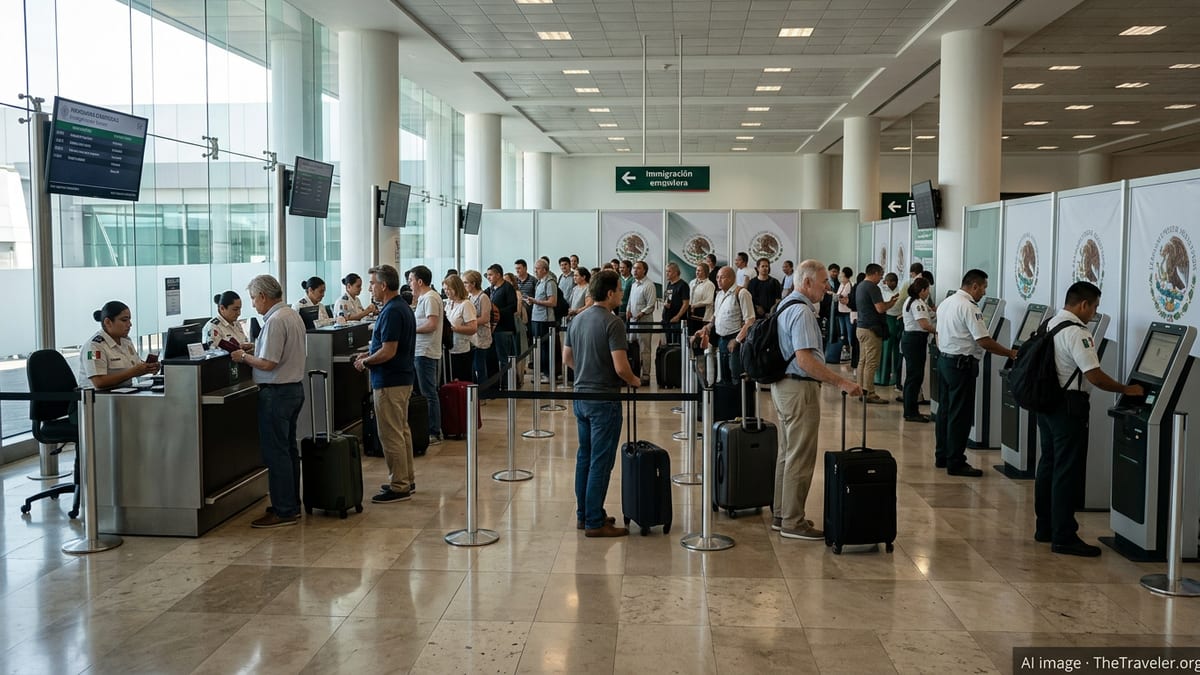
Another notable development is the wider introduction of digital procedures at major airports. In some locations, kiosks issue an electronic FMM tied to a QR code and the passport record, with no paper slip. At others, a physical ticket or stamp indicates the number of days authorized. This move toward digitization improves the government’s ability to track cumulative days in country and to identify irregular patterns. For expats, it reduces the scope for ambiguity about authorized stay and makes it harder to claim confusion about expiry dates.
Prospective relocators who plan to “test” Mexico on visitor status should now model worst case scenarios such as receiving 30 days instead of 180, and plan accordingly. That includes budgeting for potential visa runs being curtailed, as land and air entries are increasingly cross referenced. While tourist entry remains a valid tool for short exploratory visits, it is an increasingly unreliable foundation for long term relocation.
Crackdown on Visa Runs and Irregular Stays
One of the clearest immigration trends affecting expats is the decreasing tolerance for informal long term residence based on repeated tourist entries, often referred to as visa runs. prior to 2020, it was relatively common for foreigners to exit briefly to a neighboring country or the United States and re enter Mexico with a new 180 day FMM. Since then, immigration authorities have paid more attention to patterns that suggest permanent presence without residency.
Recent practice at major airports illustrates this shift. Travelers who present passports showing sequential 180 day stays, minimal time outside Mexico, or frequent entries through the same port are more likely to receive reduced stays or extensive questioning. In some instances they are told explicitly that the visitor status is intended for tourism, not long term living, and advised to pursue residency if they wish to remain. While there is no public national rule banning visa runs, operational guidance appears to encourage officers to differentiate between genuine tourists and de facto residents.
At the same time, Mexico has tightened options for people in irregular situations to normalize their status through extraordinary programs. A special residency procedure that allowed certain long overstayers to regularize based on continuous physical presence before specific cutoff dates has been progressively narrowed, with recent updates limiting eligibility to individuals who arrived before 2023 and have not left since. The intent is to close the expectation that overstaying will eventually be forgiven by broad amnesties.
The enforcement toolkit is also gradually expanding. Proposed legal changes discussed in several states and at the federal level would explicitly allow local police and the National Guard to request immigration documents in more circumstances, increasing the practical consequences of being out of status. While day to day enforcement remains uneven, expats should assume that irregular stay, once considered low risk if discreet, now carries higher potential for detention, fines or removal.
Residency Pathways: Financial Thresholds and Administrative Tightening
Another critical trend for relocation planning is the steady ratcheting up of financial and procedural requirements for temporary and permanent residency. Mexico’s main residency categories remain in place, including temporary residency that can typically be held for up to four years and permanent residency for long term settlement. However, the income and asset thresholds that consulates apply have broadly increased over recent years, and 2026 has brought a further round of adjustments and fee hikes.
Typical consular practice now expects applicants for temporary residency based on economic solvency to demonstrate regular monthly income above a moving benchmark indexed to Mexican minimum wage or to show bank or investment balances over a similar threshold averaged over several months. While exact numbers vary by consulate and are periodically updated, practical examples show monthly income requirements commonly in the low to mid four figures in US dollar terms, and savings requirements often in the mid five figures or higher. These levels screen in financially secure retirees and remote workers while excluding those with more modest or unstable incomes.
Administrative costs have also risen. Government fees for residency cards, renewals and certain changes of condition increased around the start of 2026, in some cases by significant percentages. When combined with consular visa fees and optional legal or facilitation services, the first year cost of obtaining temporary residency now often runs into several hundred US dollars equivalent, even before considering travel costs to consular appointments. For permanent residency applicants, especially those skipping directly from temporary to permanent, total outlays are higher still.
Processing timelines have become more variable. Some consulates and local immigration offices experience backlogs during policy change periods or end of year slowdowns, resulting in appointment waits of several weeks or months. This makes careful sequencing of consular applications, initial entry and in country card issuance more important. Expats contemplating relocation in the near term should assume that securing residency will take multiple months from first appointment request to card in hand, rather than treating it as a quick administrative formality.
Digitization, Data Sharing and Enforcement Capacity
Mexico’s immigration system is undergoing gradual but important digitization that will reshape how expats are monitored and managed. The move from paper FMM cards at airports to electronic records linked to QR codes and passport data is the most visible change, but it sits within a broader strategy of building integrated databases spanning entries, exits, residency permits and in some cases biometric identifiers. Over time, this enhances the government’s ability to detect overstays, identity fraud and multiple parallel files.
For expats, the immediate impact is greater traceability of movements and status. In the past, inconsistencies between different ports of entry and local immigration offices could sometimes be used to reset the clock or obscure previous stays. With more comprehensive digital records, such strategies are becoming less effective. Officers can more easily see total days spent in Mexico over a given period, the sequence of permits held and prior infractions, and can tailor decisions accordingly.
This digitization trend is also linked to enhanced security vetting. Entry interviews for certain nationalities, as well as for individuals who trigger risk indicators such as unclear travel purpose or missing documentation, may involve database checks against watchlists and regional information sharing arrangements. While this primarily targets irregular migration and organized crime, it can indirectly affect law abiding expats through longer processing times, stricter documentation demands and less tolerance for administrative irregularities.
Looking ahead, it is plausible that Mexico will expand online application options for some immigration procedures, such as extensions, address changes or appointment scheduling, in line with regional best practices. This could eventually streamline certain aspects of life for residents, but in the near term the transition period may create confusion as practices differ between offices and as paper and digital systems run in parallel.
Potential Future Reforms and Scenario Outlook
While there is no single announced immigration reform package aimed specifically at expats, several currents in Mexico’s policy debate could influence future conditions for foreign residents. Discussions about broader human mobility and security legislation periodically raise the question of how to better differentiate between high value long term residents and irregular transit migrants, particularly along the southern and northern borders. Any future reforms are likely to seek tighter control of irregular flows while maintaining or even enhancing pathways for financially stable, law abiding expats.
One potential area of change is the formal recognition of remote work arrangements. Mexico has not yet created a dedicated national digital nomad visa, despite pressure from tourism and business stakeholders. If such a category emerges in the medium term, it would probably formalize the expectations already being applied in practice: proof of stable foreign income, health coverage, and clear separation between remote work for non Mexican employers and local labor market participation. For now, expats should assume that remote work remains a legal gray zone that immigration officers may scrutinize, particularly if it appears to displace local employment.
Another scenario involves further tightening of on the ground enforcement powers. Legislative drafts in recent years have contemplated allowing more routine document checks away from border points, expanding fine ranges for overstays and clarifying procedures for administrative detention of foreigners without valid status. Although not all such proposals become law, the direction of travel suggests that expats should plan on needing to carry valid identification and proof of legal stay, and on resolving any status lapses promptly rather than assuming de facto tolerance.
Finally, broader political and economic shifts can indirectly influence immigration practice. Fiscal pressures may encourage continued increases in government fees for immigration services, while public concern about security could lead to more intensive vetting at entry points during periods of heightened alert. Conversely, if Mexico seeks to attract more investment and retirement capital, it may refine residency categories to court specific groups such as high net worth individuals or foreign pensioners, even as it maintains tougher stances on irregular migration. Relocation planners should monitor these macro trends alongside formal legal changes.
The Takeaway
Mexico remains a relatively accessible destination for foreigners compared with many advanced economies, but the informal, highly flexible environment that expats once enjoyed is giving way to a more structured and data driven immigration regime. Tourist entry is still widely available but no longer guarantees the long stays that many nomads and trial relocators have relied on, and the practice of serial visa runs is increasingly discouraged through officer discretion and better tracking.
For expats contemplating a move, the practical implication is that serious medium and long term relocation planning should center on formal residency pathways rather than on assumptions about repeated visitor stays. Financial thresholds and administrative fees for residency have risen, and processes can be slow, but those who enter through regular channels generally experience a more predictable environment and lower enforcement risk.
The trajectory of policy suggests continued tightening around irregular stays, more extensive digitization of records and potential new categories that could formalize remote work or targeted investor and retiree schemes. Although exact reforms and timelines remain uncertain, the underlying message is consistent: Mexico expects would be long term residents to align their legal status with their actual intentions. Expats who internalize this expectation and plan accordingly will be better positioned to make informed relocation decisions in the evolving Mexican immigration landscape.
FAQ
Q1. Is the 180 day tourist stay in Mexico still guaranteed for most visitors?
The 180 day stay is legally a maximum, not a guarantee. Immigration officers increasingly exercise discretion, and many travelers receive shorter stays based on their travel history, purpose and documentation.
Q2. Can expats still rely on visa runs to live in Mexico long term without residency?
Visa runs are riskier than in the past. Frequent back to back tourist entries and long cumulative time in Mexico can trigger shorter stays, intense questioning or refusal of entry, so they are no longer a reliable basis for long term residence.
Q3. Are there signs that Mexico will introduce a dedicated digital nomad visa?
Business and tourism stakeholders have advocated for a digital nomad visa and officials have signaled openness in principle, but as of early 2026 there is no nationwide program in force or confirmed launch date.
Q4. How have financial requirements for residency changed recently?
Consulates have generally raised income and savings thresholds over the last several years, and 2026 brought higher government fees. Applicants now typically need higher documented monthly income or larger savings balances than in the mid 2010s.
Q5. Does working remotely from Mexico affect immigration decisions?
Remote work for foreign employers often sits in a legal gray area. If officers suspect that a visitor is effectively living and working from Mexico without residency, they may issue shorter stays or advise switching to an appropriate residency category.
Q6. How is Mexico using digital systems to enforce immigration rules?
Mexico is expanding electronic FMMs, QR coded records and centralized databases that link entries, exits and residency permits. This makes it easier to detect overstays, frequent visa runs and inconsistent information across applications.
Q7. Are irregular overstays in Mexico still treated leniently?
Tolerance for irregular stays has declined. Special regularization programs have been narrowed, fines and enforcement tools are being strengthened, and future reforms may further expand document checks and penalties for being out of status.
Q8. How long does it typically take to secure residency under current conditions?
Timelines vary by consulate and local office, but from first appointment request to receiving a residency card it is prudent to plan for several months, especially during busy periods or around policy changes.
Q9. Do immigration practices differ between Mexican airports?
Yes. Some airports are known for stricter questioning and shorter tourist stays, while others often remain more flexible. These differences are operational rather than legal and can change over time.
Q10. What is the main strategic shift expats should recognize in Mexico’s immigration policy?
The central shift is from informal, loosely enforced tolerance of long visitor stays toward a more structured system that expects genuine long term residents to use formal residency pathways, supported by stronger data and enforcement capacity.