


Thailand remains one of Southeast Asia’s most popular destinations for long-term foreign residents, yet the country presents a distinct risk profile that expats and employers must evaluate systematically. This relocation risk dashboard focuses on core stability, security, environmental, and infrastructure factors that can materially affect daily life and business continuity for foreign assignees considering a move to Thailand.
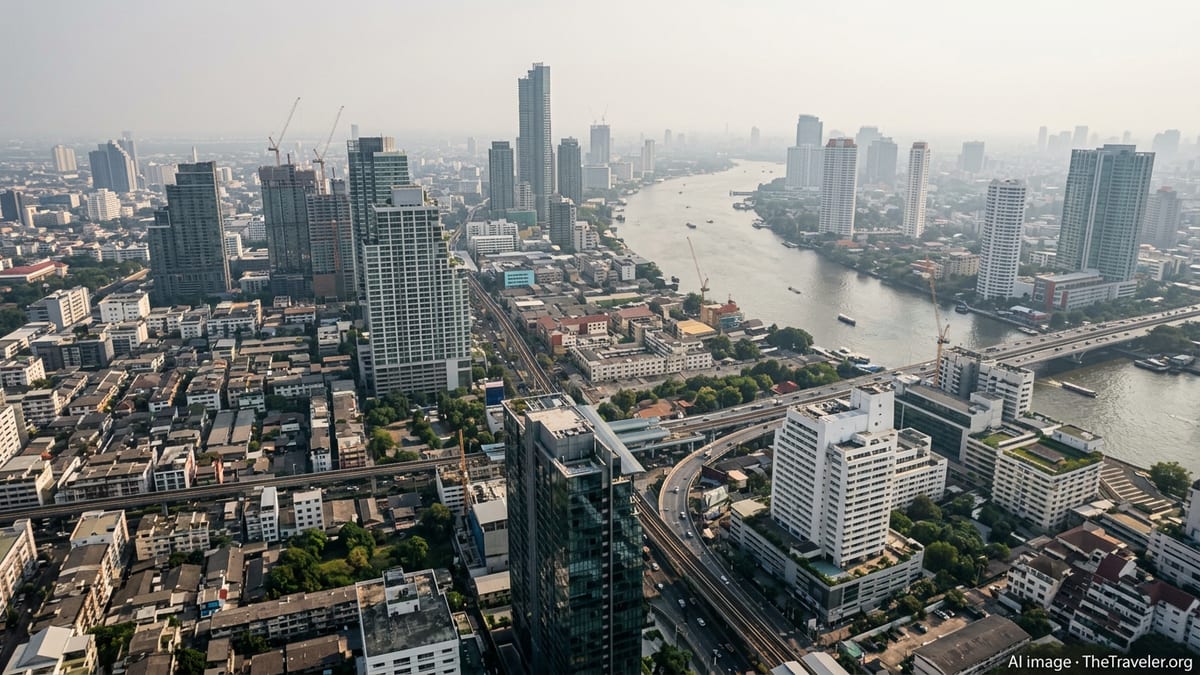
Overall Risk Profile and Expat Exposure
Thailand combines relatively predictable day-to-day living conditions in major cities with episodic political and environmental shocks that can temporarily disrupt normal routines. For most urban-based expats, the dominant relocation risks relate less to personal safety in the conventional sense and more to air quality, seasonal flooding, and political or regulatory volatility that may affect work and business operations.
Compared to many emerging markets, Thailand’s major expat hubs such as Bangkok, Chiang Mai, and the Eastern Economic Corridor generally provide stable basic services. However, the country’s exposure to climate-related hazards, concentrated urban air pollution, periodic protests, and leadership turnovers creates a medium overall risk rating, with elevation to high during specific seasons or political inflection points.
From a corporate mobility perspective, Thailand is typically viewed as suitable for unaccompanied and accompanied assignments, provided that employers maintain active monitoring of environmental and political conditions and develop contingency protocols, especially for staff with respiratory vulnerabilities or critical business roles.
Risk exposure is not uniform nationwide. Northern provinces experience more severe seasonal haze, some coastal and riverine areas are prone to flooding, and border regions may be affected sporadically by security or diplomatic tensions. Location selection within Thailand is therefore a central mitigation lever for expats and organizations.
Political and Governance Stability Risks
Thailand’s political system has experienced recurring cycles of elected governments, judicial interventions, and military or constitutional resets for over two decades. Recent years have seen additional turbulence, including a major political crisis in 2025 and continued leadership changes and early elections through 2025 and early 2026. These dynamics elevate governance and regulatory uncertainty, although they have rarely translated into sustained threats to personal safety for expats in core urban areas.
Street protests in Bangkok periodically attract tens of thousands of participants, especially around key institutions and symbolic locations. While such events can disrupt traffic, public transport, and access to government districts, they are generally predictable in timing and geography and can be avoided with standard situational awareness. Expats working in government-adjacent sectors or in central business districts may face temporary access restrictions, work-from-home periods, or delays in government processing when demonstrations or political stand-offs occur.
Governance risk is more material in the form of regulatory unpredictability. Coalition governments and rapid leadership changes can generate shifts in policy direction, including around economic development, digital regulation, and regional diplomacy. For expats employed in regulated industries such as energy, telecoms, defense, and certain professional services, this volatility can affect project timelines and compliance requirements, although it rarely targets individuals.
Despite these factors, core state functions such as policing, utilities, schooling, and healthcare continue to operate through political crises, and Thailand has not experienced widespread state failure. Political risk therefore tends to manifest as medium-level operational friction rather than high-level personal danger, but organizations should maintain political risk monitoring and have protocols for relocation out of protest-affected neighborhoods if necessary.
Public Security, Crime, and Personal Safety
Recorded violent crime rates in Thailand are generally lower than in many large Latin American or African urban centers, and expats rarely face targeted violent incidents. The predominant security risks for foreign residents involve opportunistic crime, traffic accidents, and occasional scams, particularly in entertainment and nightlife districts.
Petty theft, bag snatching, and credit card fraud can occur in crowded urban environments and tourist-heavy areas. These risks are typically manageable with standard urban precautions such as avoiding visible display of valuables, using reputable transport providers, and exercising caution around nightlife venues and cash withdrawals. Most expats report feeling physically safe walking in central districts in the evening, with risk perception rising late at night around alcohol-focused areas.
Traffic safety constitutes a significant and sometimes underappreciated relocation risk. Thailand has persistently ranked among the higher-risk countries globally for road fatalities per capita, driven by motorbike usage, variable helmet compliance, and mixed enforcement of traffic laws. For expats, the most effective mitigation is to minimize motorbike use, prioritize professional drivers or reputable ride-hailing services, and select housing with safe pedestrian access to daily needs where possible.
Serious crimes against foreigners, including violent assault and homicide, do occur but remain relatively infrequent compared with visitor and expat volumes. They are often concentrated in specific nightlife or border regions and are not representative of baseline risk in business and residential districts. Nonetheless, corporate policies typically advise against involvement in local political activities, illicit substances, or high-stakes business disputes, all of which can sharply escalate personal security exposure.
Environmental and Climate Risk: Air Quality
Air pollution is one of the most consequential relocation risks in Thailand, particularly for long-stay expats and accompanying family members. Fine particulate matter (PM2.5) frequently exceeds World Health Organization guideline levels across large parts of the country, with northern areas and Bangkok experiencing recurrent seasonal peaks. Recent analyses indicate Thailand’s average annual PM2.5 concentration has hovered in the mid-20 micrograms per cubic meter range, several times above WHO’s recommended annual limit.
Northern Thailand, especially around Chiang Mai, experiences some of the country’s worst air quality during the annual burning season in roughly February to April. During these months, daily PM2.5 readings can spike to levels categorized as unhealthy or worse on international air quality indices, with some years placing Chiang Mai among the most polluted cities globally for short periods. For expats with asthma, cardiovascular conditions, or young children, this seasonal haze represents a high health and quality-of-life risk that may warrant either seasonal evacuation, assignment timing adjustments, or selection of alternative locations.
Bangkok and surrounding provinces face a combination of vehicular emissions, industrial activity, and regional pollution, leading to elevated PM2.5 levels especially in the cool and dry season. Average annual concentrations in recent years have typically been in the 20s micrograms per cubic meter range, with episodes where daily levels exceed 50 to 100 micrograms per cubic meter in parts of the capital. Authorities have occasionally responded with measures such as work-from-home advisories, school adaptations, and restrictions on outdoor burning.
Effective mitigation for expats includes installing high-quality air purifiers in homes and offices, ensuring accommodation has sealed windows and effective air conditioning, monitoring daily air quality apps, and limiting outdoor activity on severe days. For assignments involving outdoor work, logistics, or frequent motorcycle use in high-pollution areas, employers should conduct targeted health risk assessments and consider supplemental protective equipment or alternative work organization.
Environmental and Climate Risk: Flooding, Heat, and Natural Disasters
Thailand is ranked among the higher-risk countries globally for population exposure to flooding, with national disaster management data indicating hundreds of thousands of residents exposed annually to flood hazards. Low-lying areas of Bangkok, provinces along the Chao Phraya River basin, and parts of the south are particularly vulnerable. Major flood events can disrupt transport, damage property, and impact power and communications in affected neighborhoods.
For expats, flood risk is heavily location dependent within cities. In Bangkok, some districts experience recurrent seasonal street flooding and drainage overload during heavy monsoon rains, whereas others sit on relatively higher ground with improved flood defenses. Property selection is therefore critical: high-floor units in well-managed buildings with backup generators, elevated parking, and robust drainage typically offer lower disruption risk than low-rise housing in flood-prone zones.
Beyond floods, Thailand faces periodic exposure to tropical storms, coastal surges, and, to a lesser extent, earthquakes and tsunamis, particularly along the Andaman Sea coast. While large catastrophic events remain relatively infrequent, the potential exists for major disruption on a decadal timescale, and past tsunamis have had severe consequences in coastal provinces. Expats in coastal or island locations should understand local evacuation routes, building standards, and warning systems as part of their relocation planning.
Chronic heat is another environmental factor with risk implications. Average temperatures in much of Thailand are high year-round, and recent hot seasons have produced extreme heatwave conditions, with apparent temperatures significantly above 40 degrees Celsius in some regions. For expats with cardiovascular issues, outdoor workers, and families with small children, the combination of heat and humidity increases risk of heat stress and necessitates reliable air conditioning, adequate hydration, and schedule adjustments during peak afternoon hours.
Infrastructure Reliability and Urban Systems Risk
Core urban infrastructure in Thailand’s main expat destinations is generally adequate but not immune to strain, particularly under environmental stress or rapid urbanization. Electricity supply in Bangkok and major provincial capitals is relatively reliable, with outages typically brief and localized. However, during severe storms or floods, certain neighborhoods may experience more frequent interruptions, reinforcing the value of selecting residential buildings with backup power systems.
Water supply and sanitation services are widely available in cities, but water quality can be variable, and many expats rely on bottled or filtered water for drinking. Flood events can temporarily affect water clarity and pressure in certain districts. Drainage systems in older neighborhoods may be insufficient for extreme rainfall events, causing short-term road inundation and requiring route adjustments or remote work arrangements.
Transport infrastructure presents a mixed risk picture. Bangkok benefits from extensive elevated rail systems and expressways, enhancing mobility but also making expats vulnerable to system disruptions during heavy rain, protests, or technical failures. Road congestion is chronic, and accidents are common, particularly involving motorbikes and large vehicles. Secondary cities and resort areas often lack comparable mass transit, increasing reliance on road transport and heightening exposure to traffic risk.
Digital infrastructure is comparatively strong, with widespread high-speed mobile data coverage and growing fiber broadband penetration in urban centers. Service interruptions do occur but are typically short-lived. For expats whose work depends on continuous connectivity, redundancy through multiple mobile providers and backup home or coworking connections can significantly reduce operational risk.
Social, Regulatory, and Operational Continuity Risks
Thailand’s legal and regulatory environment contains several features that are relevant to expat risk assessment, especially around expression, public assembly, and sensitive topics. Strict defamation and royal insult provisions, combined with periodically assertive law enforcement, create a legal landscape in which public political commentary and activism can entail disproportionate consequences. For foreign residents, corporate mobility policies commonly advise strong neutrality in local politics and careful management of social media activity that touches on domestic institutions.
Operational continuity risks for businesses employing expats arise from the intersection of political volatility and regulatory discretion. Periods of heightened tension can produce short-notice rule changes, intensified inspections in certain sectors, or delays in approvals and permits. While these measures typically do not target individuals, they can affect project timelines and job security, which in turn influences expat assignment stability and family planning.
Social cohesion risks remain limited in most urban expat neighborhoods, where communities are diverse and accustomed to foreign presence. However, economic inequality, regional disparities, and debates over environmental impacts of development have fueled localized protests and activism. Expats whose work touches on contentious issues such as land use, resource extraction, or large infrastructure projects may find themselves indirectly exposed to reputational or protest-related risks, even if personal safety is not directly threatened.
From a business continuity standpoint, robust crisis management planning is advisable. This includes clear internal communication channels, tested work-from-home capabilities for staff in Bangkok and northern cities during extreme air pollution or flood days, and predefined thresholds for temporary relocation or remote work for especially vulnerable employees.
The Takeaway
Thailand offers a generally manageable relocation environment for expats, provided that key structural risks are understood and proactively mitigated. The main differentiators in Thailand’s risk profile are chronic air quality challenges, recurring but usually non-lethal political turbulence, location-specific flood exposure, and high road-traffic accident rates rather than pervasive violent crime.
For many foreign professionals, these risks are acceptable when balanced against available mitigation measures such as careful neighborhood and housing selection, investment in air quality controls, avoidance of motorbike commuting, and strong corporate crisis protocols. However, expats with significant respiratory, cardiovascular, or mobility limitations may find seasonal haze, heat, and infrastructural strain more burdensome than in lower-risk jurisdictions.
Decision makers should treat Thailand as a medium-risk, high-variance destination, where day-to-day living may feel stable and comfortable but where localized spikes in environmental or political stress can occur with limited lead time. A structured, data-informed risk assessment, updated at least annually and tailored to specific cities and roles, is an essential component of any relocation decision involving Thailand.
FAQ
Q1. How safe is Thailand for expats in terms of personal security?
Thailand’s major cities are generally safe for expats, with lower levels of violent crime than many other emerging markets. Most risks relate to petty theft, scams in nightlife areas, and road-traffic accidents rather than targeted violence.
Q2. How serious is air pollution in Thailand for long-term residents?
Air pollution is a major relocation risk, especially in Bangkok and northern cities. Annual PM2.5 levels are several times above international guidelines, with seasonal peaks that can reach unhealthy or worse categories, particularly from roughly February to April in the north.
Q3. Are political protests in Thailand dangerous for foreign residents?
Political protests occur periodically, mainly in Bangkok, and can disrupt traffic and access to certain areas. They are usually avoidable with situational awareness, and expats typically stay safe by avoiding protest sites and refraining from political participation.
Q4. Which natural disasters should expats in Thailand be most concerned about?
The primary natural hazard is flooding in low-lying urban and riverine areas, along with tropical storms and, in some coastal regions, tsunami risk. These can disrupt infrastructure and mobility, making careful location and building selection important.
Q5. How reliable are power, water, and internet services in Thailand’s main expat hubs?
In major cities, electricity, water, and internet are generally reliable, with occasional short outages or disruptions during storms or floods. High-quality residential buildings typically provide better backup systems and faster service restoration.
Q6. Is road safety a major concern for expats in Thailand?
Yes. Road-traffic accident rates are high, driven by motorbike use and inconsistent enforcement of traffic rules. Expats reduce risk by avoiding motorbike driving, using reputable transport services, and choosing housing that minimizes hazardous commuting.
Q7. How do seasonal patterns affect relocation risk in Thailand?
Risk levels vary by season: air pollution peaks in the cool, dry months in the north and central regions, while flood risk rises during the monsoon. Assignment timing and flexibility to adjust travel or work patterns can significantly reduce exposure.
Q8. Are there specific regions in Thailand that are higher risk for expats?
Northern provinces face more severe seasonal haze, certain low-lying neighborhoods in Bangkok and other cities are more prone to flooding, and some border and nightlife areas carry elevated security risks. Urban business and residential districts are generally lower risk.
Q9. How does Thailand’s political volatility affect expat work and business continuity?
Political changes and protests can slow government processes, alter regulations, and cause short-term disruptions in central districts. While core services usually continue, organizations employing expats should maintain contingency plans and monitor developments closely.
Q10. What are the most effective mitigation steps for expats relocating to Thailand?
Key measures include selecting low-risk neighborhoods and buildings, investing in air purifiers, avoiding motorbikes, preparing for temporary work-from-home during extreme pollution or floods, and maintaining strict neutrality in local political matters.