


More news on this day
Storm systems affecting both US coasts over Thanksgiving 2026 led to several hundred flight cancellations, more than a thousand delays and widespread weather waivers from major airlines, complicating holiday travel at a time when national passenger volumes were close to pre‑pandemic records.
Get the latest news straight to your inbox!
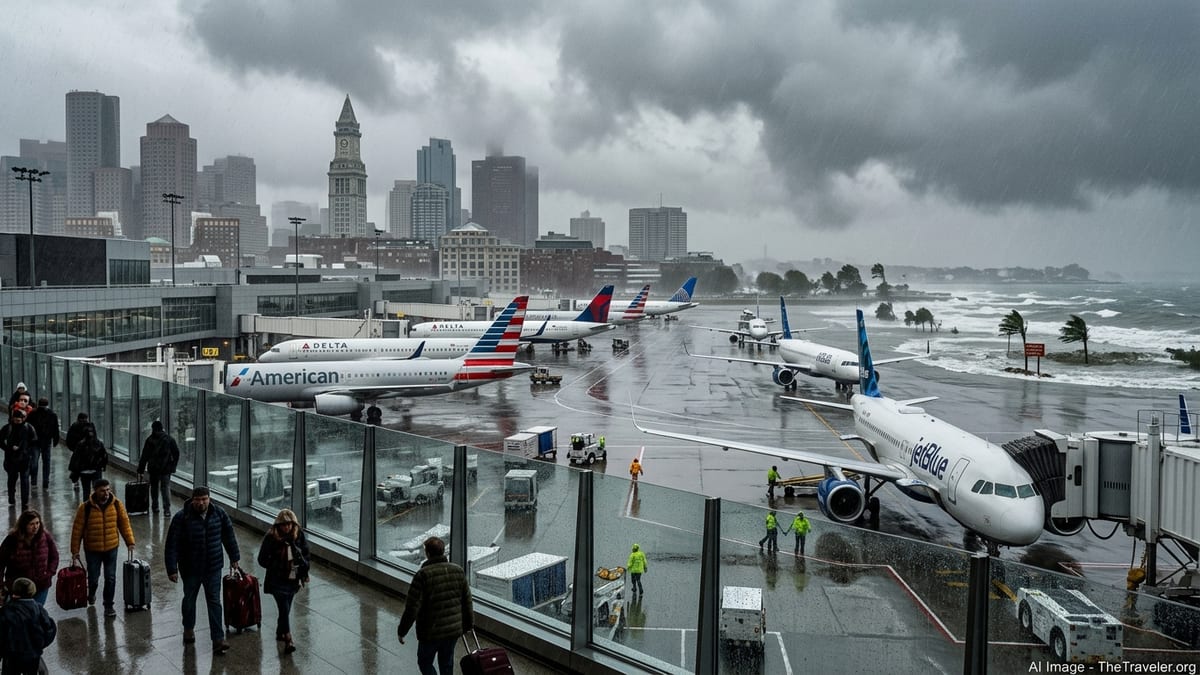
Nor’easter batters busy Northeast corridor on Thanksgiving Day
The main disruption for air travelers on Thanksgiving Day, Thursday 26 November 2026, came from a coastal storm that intensified into a nor’easter along the Eastern Seaboard, bringing heavy rain, strong winds and coastal flooding from the Carolinas into New England. Forecasts from federal agencies ahead of the holiday highlighted the risk of 1 to 3 inches of rain across major Mid‑Atlantic and Northeast metros, with locally higher totals, along with tidal flooding in vulnerable shoreline communities during multiple high‑tide cycles.
By Thursday morning, the storm was producing wind gusts well above normal seasonal levels in some of the country’s busiest airspace. In New York City, gusts exceeded 50 miles per hour in Central Park and topped 60 miles per hour at LaGuardia Airport, conditions that forced air traffic managers to reduce arrival and departure rates at times and contributed to holding patterns and extended taxi queues at the three major New York airports.
States along the Mid‑Atlantic and Northeast coasts entered Thanksgiving under formal preparations for flooding and power outages. In New Jersey and neighboring states, emergency management briefings pointed to a risk of inundated roads in low‑lying neighborhoods, hazardous surf, beach erosion and scattered damage to coastal infrastructure as the nor’easter coincided with elevated astronomical tides. Officials urged residents and visitors moving along barrier islands and bayside communities to avoid driving through flooded roadways and to allow extra time reaching airports or intercity rail stations during peak high‑water periods.
Flight disruption concentrated at East Coast and Florida hubs
Flight‑tracking data from multiple independent platforms indicate that US air travel on Thanksgiving Day experienced a marked increase in disruption compared with a typical late‑November Thursday. One widely cited tally recorded 1,449 flights classified as disrupted within, into or out of the United States on 26 November 2026, including 396 cancellations and 1,053 delays. Those figures cover all carriers operating in US airspace and refer to flights that were either canceled outright or arrived at least 15 minutes behind schedule.
Although the national totals remained well below the worst modern holiday disruptions, the impact was unevenly distributed across the network. Mid‑Atlantic and Northeast hubs located directly under the heaviest rain bands and strongest crosswinds saw elevated disruption rates, particularly during the afternoon and early evening. Airports in the Baltimore–Washington region, New York’s three major airports and Boston Logan all experienced periods when low clouds, reduced visibility and wet runways required controllers to lengthen the spacing between aircraft, temporarily reducing the number of movements that could be handled per hour.
Further south, separate severe weather and a runway incident earlier in the week left Miami International Airport operating with reduced capacity going into Thanksgiving. On Thursday, the airport continued to report long average delays on some departures and arrivals as it worked through a backlog from the earlier disruption while also contending with instability in regional weather patterns. The combination of issues at Miami and along the Northeast corridor meant that some passengers encountered multi‑leg delays even when their local weather appeared relatively benign.
West Coast atmospheric river adds coastal hazards and local delays
While the nor’easter dominated national attention, travelers on the West Coast faced a different set of risks tied to an atmospheric river and unusually high tides impacting Northern and Central California and parts of the Pacific Northwest. Earlier in the week, the National Weather Service issued coastal flood warnings and high surf advisories for San Francisco Bay shorelines and nearby oceanfront communities, citing the convergence of king tides and long‑period Pacific swells capable of producing 20 to 30 foot breakers along exposed coasts.
On Wednesday 25 November, a section of the municipal pier in Pacifica, south of San Francisco, collapsed into the ocean after repeated battering from large waves, prompting local authorities to close the remaining structure to the public and reinforcing official warnings to stay clear of jetties, sea walls and coastal promenades during peak surf conditions. Around the broader Bay Area, tide gauges registered some of the highest November water levels on record, though subsequent inspections found no significant damage to airport runways or critical aviation infrastructure.
For air travel, the West Coast storms produced more localized operational constraints than the East Coast nor’easter but still affected some passengers’ plans. San Francisco International and nearby Bay Area airports reported periods of low ceilings and gusty winds that required specific instrument arrival and departure patterns, modestly reducing hourly throughput. Along the Southern California coast, heavy surf and pockets of coastal flooding led to temporary closures or access restrictions on some roads and rail segments that connect beach cities with their nearest airports, illustrating how hazards unrelated to conditions directly over runways can still complicate airport access during major holiday travel periods.
Major US airlines activate and expand weather waivers
As forecasts clarified the scale of the Thanksgiving storms, the four largest US carriers issued travel waivers aimed at giving customers more flexibility to adjust plans. In the days leading up to 26 November 2026, American Airlines, Delta Air Lines, United Airlines and Southwest Airlines each published advisories covering a set of East Coast airports from the Washington, DC region to Boston, in some cases adding Florida and selected Southeast destinations tied to separate weather systems.
American’s public advisory for the Northeast allowed eligible customers whose itineraries involved specified airports on 26 November to rebook without a change fee, typically for travel between 23 and 29 November, provided they retained the same origin, destination and cabin of service. In many scenarios where customers could move to alternative flights within that window while keeping the same routing, American also waived the fare difference, with the caveat that higher fares could still apply if equivalent booking classes were unavailable. A separate weather alert addressed passengers scheduled to travel through Miami and several nearby airports on Wednesday 25 November following thunderstorms and earlier operational issues there.
United Airlines implemented a coastal storm waiver that applied to passengers ticketed to, from or through a list of Northeast airports, including major hubs from the Washington area to Boston, for travel on Thursday 26 November. Under that policy, customers could change to flights departing between 25 and 28 November without paying either a change fee or additional fare, provided they kept the same city pairs and cabin. The carrier spent the same week managing residual disruptions from a technology outage earlier in the month that had prompted a temporary Federal Aviation Administration halt for some flights bound for Atlanta, highlighting how non‑weather events can leave airlines with less leeway when storms arrive later in a busy travel season.
Delta Air Lines and Southwest Airlines set out comparable frameworks aligned with their own networks. Delta’s advisory covered a roster of East Coast airports, including New York and Boston, and allowed changes within a defined window around Thanksgiving without a change fee; in many cases, the airline waived fare differences for rebooked travel on or before Saturday 28 November when customers kept the same cabin. Southwest, which does not charge change fees as part of its fare structure, informed customers that those scheduled to travel through about half a dozen East Coast airports on 26 November could rebook within 14 days of the original travel date, between the same city pairs and in the same fare class, without paying a higher fare.
Other carriers’ responses and passenger rights when flights are canceled
Beyond the largest four airlines, other US carriers responded to the Thanksgiving storms with more targeted alerts linked to their specific route maps. JetBlue, which has major operations at New York and Boston airports, did not initially post a broad East Coast storm waiver on its public travel alerts page by late Wednesday 25 November but instead issued narrower notices as conditions evolved at individual airports. Regional and ultra‑low‑cost carriers likewise published limited advisories for select routes rather than blanket waivers for entire regions.
Across all airlines, the storms highlighted the continued importance of long‑standing federal rules on cancellations and refunds. Under current US regulations, passengers whose flights are canceled by the operating carrier are entitled to a refund of the unused portion of their ticket if they choose not to travel, regardless of whether the cancellation is attributed to weather, air traffic control restrictions or other causes. That entitlement applies separately from any weather waivers, which typically govern when and how passengers can voluntarily change flights before or after disruption occurs.
In contrast, additional forms of assistance such as hotel rooms, meal vouchers or surface transportation are generally discretionary for US carriers when extreme weather is the primary cause of disruption. Airlines sometimes provide goodwill accommodations during high‑profile events, particularly for passengers who are stranded overnight away from home, but there is no automatic federal requirement to do so in weather‑driven cases. Passengers whose trips are affected are therefore advised to review the specific customer service commitments and conditions of carriage associated with their ticket, as policies can differ by airline, fare type and whether the itinerary involves international segments subject to other jurisdictions’ consumer protection rules.
Near‑record Thanksgiving volumes but limited systemic breakdown
The Thanksgiving storms intersected with one of the busiest US air travel periods in recent years. Federal transportation forecasts leading into the holiday projected that more than 400,000 commercial departures would operate nationwide between 22 and 30 November 2026, with several million passengers expected to fly specifically for Thanksgiving trips and an even larger total of travelers passing through airport security checkpoints over the broader period. Preliminary checkpoint counts through Thanksgiving Eve pointed to volumes approaching, but still slightly below, the record levels seen in 2025.
In practice, the network operated close to capacity but with somewhat more slack than in some previous peak seasons, which helped limit the scale of knock‑on disruption when storms affected key hubs. Many of Thursday’s issues were tied to temporary arrival and departure restrictions and short ground stops while intense bands of rain and wind moved over major fields, rather than to sustained closures or physical damage to runways and navigational aids. Once the nor’easter shifted offshore and winds eased late Thursday and into Friday, air traffic managers were able to relax spacing constraints and airlines could reposition aircraft and crews that had ended the holiday out of place.
By the morning of Friday 27 November, federal operations dashboards and independent trackers showed a notably improved picture compared with Thanksgiving Day, with fewer than 100 cancellations and several hundred delays recorded nationally in the early hours. As the day progressed, those numbers rose, consistent with a busy post‑holiday Friday, but remained well below the peaks seen during the height of the nor’easter. The relative speed of the recovery underscores how pre‑emptive schedule adjustments, weather waivers and operational planning can help contain the broader network impact of even disruptive holiday storms.
What travelers should monitor through the rest of the holiday window
Despite the rapid improvement in day‑to‑day operations after Thanksgiving, travelers heading home over the final weekend of November face continued knock‑on effects. Airlines are still processing a backlog of passengers who were rebooked from Thursday’s canceled or heavily delayed flights, particularly at hubs that saw the highest disruption rates. That backlog overlaps with elevated demand on Sunday 29 November, which forecasters expect to be the single busiest air travel day of the 2026 Thanksgiving period, leaving many flights heavily booked even when schedules appear to be operating normally.
Passengers due to fly in the remaining days of the holiday window are being advised to track three key elements before setting out for the airport. First, they should monitor not only the status of their own flight but also the status of the inbound aircraft assigned to operate it, since delays early in an aircraft’s day can cascade through multiple later legs. Second, it is important to recheck the latest travel advisories and waivers on the airline’s official channels, as some policies allow free date or time changes only if rebooking takes place by a specified deadline or within a defined travel window. Third, travelers whose flights experience significant delays or cancellations should keep records of notifications, boarding passes and any additional out‑of‑pocket expenses in order to assess later whether they may qualify for refunds or reimbursement under airline policies or, where applicable, credit card travel protections.
Looking into the final days of November, official meteorological outlooks point to a gradually improving pattern for much of the Eastern United States, with lingering showers and gusty winds in parts of New England, the Mid‑Atlantic and around the Great Lakes but no immediate repeat of the Thanksgiving Day coastal storm. In the West, additional Pacific systems associated with the same broader pattern that produced this week’s atmospheric river are forecast to bring more heavy rain and mountain snow to sections of Washington, Oregon and the northern Rockies. While these follow‑on disturbances are not currently expected to match the nor’easter’s nationwide air travel impact, they retain the potential to trigger localized delays or scattered cancellations if visibility, ceilings or crosswinds temporarily fall outside preferred operating limits at key airports. For travelers, that means continued value in checking live flight information and updated advisories shortly before departure, especially when connecting through coastal or mountain hubs that remain sensitive to fast‑changing weather conditions.