


British Airways will return to Melbourne in January 2027 with a new daily service from London Heathrow routed via Kuala Lumpur, restoring a one‑carrier option between the UK and Australia’s second city for the first time in around two decades. With schedules and indicative fares now published, travellers planning 2027 trips can start to weigh this new option against well‑established one‑stop itineraries on carriers such as Qatar Airways, Emirates and Singapore Airlines.
Get the latest updates straight to your inbox!
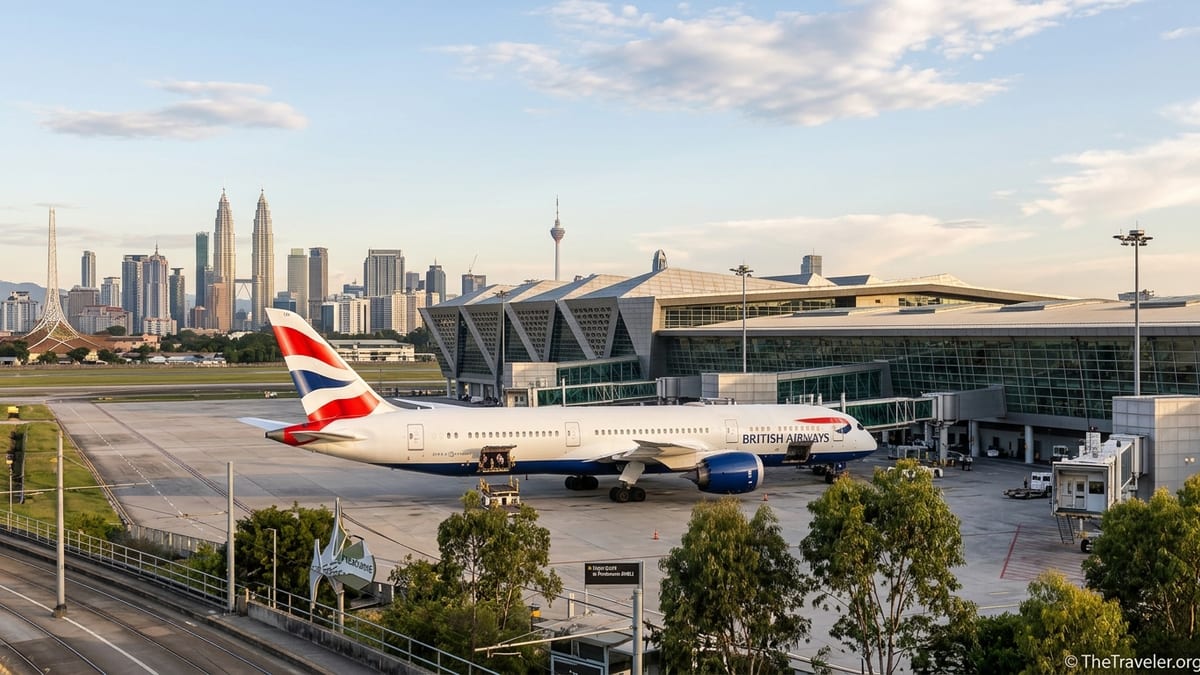
The new London–Melbourne route and schedule
British Airways has confirmed that its Melbourne service will resume in January 2027 as part of its expanded winter 2026/27 long‑haul programme. The airline will operate a daily rotation between London Heathrow and Melbourne Tullamarine via Kuala Lumpur, using flight numbers BA33 outbound and BA34 inbound. This marks British Airways’ first direct involvement on the London–Melbourne city pair since it withdrew its previous services more than 20 years ago.
According to the published schedule, BA33 is planned to depart London Heathrow at 21:10 each evening. It is scheduled to arrive at Kuala Lumpur International Airport (KLIA) at 18:05 the following calendar day, local time. After a ground time of around 1 hour 40 minutes, the same aircraft is due to depart Kuala Lumpur at 19:45 and arrive into Melbourne at 06:40 on the second morning after leaving London. In practical terms, an evening departure from Heathrow on a Monday would see you land in Melbourne early on Wednesday morning.
On the return, BA34 is slated to leave Melbourne at 16:35, arriving into Kuala Lumpur at 21:35 the same evening. After a late‑evening layover of just under two hours, the flight is scheduled to depart Kuala Lumpur again at 23:15, touching down at Heathrow at 05:20 the following morning. Melbourne Airport and British Airways have both indicated that the first return sector MEL–KUL will begin on 11 January 2027, with the first London‑originating service slightly earlier in the same week, so the full pattern should be in place by mid‑January.
Timings are designed to offer convenient connections at Heathrow for inbound passengers from the UK regions and parts of Europe, and at Melbourne for domestic connections on Australian carriers. The early‑morning arrival into Melbourne fits within the traditional long‑haul bank of arrivals, balancing a full day ahead in the city with time to clear immigration and baggage reclaim without excessive rush.
Routing via Kuala Lumpur and how the stop works
The new British Airways service treats Kuala Lumpur as a through stop rather than a destination that requires passengers to recheck baggage. Travellers flying London to Melbourne or vice versa on a single British Airways ticket will remain in transit at Kuala Lumpur International Airport. Bags should be tagged at check‑in all the way to Melbourne or London, and passengers will follow transfer signs rather than immigration, subject to Malaysian transit rules in force at the time of travel.
On most days the ground time in Kuala Lumpur for through passengers will be approximately 1 hour 40 minutes eastbound and around 1 hour 40 minutes westbound. That is sufficient for crew changes, refuelling and catering, but short enough that many passengers will simply remain in the secure departures area. For example, an Economy traveller leaving Heathrow at 21:10 could expect to disembark in Kuala Lumpur around 18:05, stretch their legs, visit a transit restroom and reboard around an hour later for the final overnight hop to Melbourne.
For travellers who want to break the journey, British Airways and partner agencies are expected to offer stopover products that allow a multi‑day stay in Kuala Lumpur between sectors. In that case the itinerary would normally be ticketed as London–Kuala Lumpur plus Kuala Lumpur–Melbourne, and passengers would clear Malaysian immigration, collect their luggage and re‑check in before their onward leg. Stopover rules and any additional taxes will depend on the specific fare purchased, so passengers should check carefully if they intend to spend time in Malaysia rather than remain airside.
The routing through Kuala Lumpur also creates new options for mixed itineraries. For instance, a traveller could fly London–Kuala Lumpur on British Airways, spend a week in Malaysia, then continue Kuala Lumpur–Melbourne on Malaysia Airlines or another regional carrier, all while using Kuala Lumpur as a hub. Equally, Melbourne‑based travellers could combine British Airways’ flight to Kuala Lumpur with a separate ticket onward into Southeast Asia, though in that case baggage and connection protections would depend on whether the flights are under a single booking.
Overall journey time and how it compares
Door‑to‑door journey times on the new British Airways service are competitive but not the absolute shortest on the market. The advertised London–Melbourne travel time via Kuala Lumpur is around 22 hours 30 minutes including the technical stop. By contrast, sample one‑stop itineraries in early 2027 on other major carriers typically range between about 21 and 24 hours, depending on connection times and routing.
For example, a recent fare search for mid‑January 2027 travel showed an Emirates itinerary from London to Melbourne via Dubai with a scheduled journey time of about 24 hours, while a Qatar Airways option via Doha was listed at approximately 21 hours 15 minutes. A Singapore Airlines one‑stop routing via Changi usually sits in the 22 to 23 hour range, depending on the specific connection between the London–Singapore and Singapore–Melbourne sectors. The differences of one or two hours often matter less than the quality of the connection time, airport facilities and overnight rest pattern.
The British Airways schedule has the advantage of a late evening departure from Heathrow, which many business travellers prefer. Leaving London after the working day, you effectively sleep across the first overnight sector, walk around during the Kuala Lumpur stop, then complete the journey with another overnight or early‑morning segment into Melbourne. Compared with, say, a mid‑morning departure via the Gulf that arrives in Australia late at night, the BA pattern will appeal to those aiming to arrive early and make good use of their first day.
On the return, the 16:35 departure from Melbourne allows a full working day or leisurely check‑out before heading to the airport, with a late‑evening connection through Kuala Lumpur and dawn arrival in London. Travellers connecting onward to European cities on British Airways or other partners can typically find mid‑morning departures from Heathrow, turning the single overnight flight into effective door‑to‑door daytime arrival within Europe.
Cabins, seating and onboard experience
British Airways has indicated that the London–Kuala Lumpur–Melbourne service will be operated by a four‑class long‑haul aircraft, with First, Club World (business class), World Traveller Plus (premium economy) and World Traveller (economy) cabins. Industry analyses of the route point to the Boeing 787‑9 Dreamliner as the likely equipment, which aligns with British Airways’ existing configuration on similar length sectors in Asia and North America. Final aircraft assignments can change closer to the launch date, but passengers can expect lie‑flat beds in business class and a modern inflight entertainment system across all cabins.
In business class, British Airways has been rolling out its Club Suite product, featuring direct aisle access and a door at each seat, on many of its 787‑9 aircraft. Travellers booking Club World on BA33 or BA34 in 2027 can expect either the Club Suite or the earlier generation lie‑flat product, depending on how far the retrofit programme has progressed by then. A typical configuration on the 787‑9 includes around 42 business class seats, a small First cabin at the front, and dedicated premium economy behind business, giving a clear separation between cabins.
Premium economy, branded World Traveller Plus, provides a wider seat and greater recline than standard economy, with a small cabin size that many long‑haul passengers value for its quieter atmosphere. On a sector length of roughly 12 hours between London and Kuala Lumpur and around 8 hours between Kuala Lumpur and Melbourne, many travellers see the extra legroom and enhanced catering as a worthwhile upgrade from economy without stepping all the way up to business class pricing. British Airways’ standard premium economy on the 787 family is arranged in a 2‑3‑2 layout, compared with 3‑3‑3 in economy.
In World Traveller economy, seating will likely follow a 3‑3‑3 configuration with individual seatback screens, USB power and on‑demand entertainment. British Airways has been updating its long‑haul economy service to include improved blankets and pillows, and a choice of main courses on longer flights. For the London–Melbourne route this typically means a full meal service after departure, a second substantial service before landing, and a lighter offering on the shorter Kuala Lumpur–Melbourne leg. Exact menus will depend on the season, but sample catering on similar BA Asia routes features British and regional dishes with at least one vegetarian option.
Baggage, through‑check and transit formalities
Baggage allowances on the London–Melbourne route will follow British Airways’ standard long‑haul policies. For most economy fares, passengers receive at least one checked bag of up to 23 kilograms included in the ticket price, while premium economy usually includes two checked bags of 23 kilograms each. Business class and First customers can generally check multiple pieces, often two or three bags at 32 kilograms each, subject to the exact fare rules. Hand baggage across cabins usually consists of one larger cabin bag plus a personal item, with combined dimensions and weight limits that British Airways publishes on its website at the time of booking.
For passengers ticketed all the way from London to Melbourne on BA33, or from Melbourne to London on BA34, luggage should be tagged through to the final destination at check‑in. That means no re‑checking at Kuala Lumpur when remaining in transit. On arrival in Melbourne or Heathrow, travellers collect their bags as usual after passport control. Those making domestic or European connections under the same booking can typically have luggage interlined to their ultimate destination, though they may need to clear customs at their first point of entry.
Transit through Kuala Lumpur International Airport for through‑ticketed passengers is expected to be straightforward. You will disembark the aircraft, follow signs for international transfers and pass security screening before re‑entering the departures area. You do not normally pass Malaysian immigration unless you are entering the country for a stopover. For example, a Melbourne‑based family heading to London during the 2027 Easter holidays could check in at Melbourne, receive boarding passes for both MEL–KUL and KUL–LHR sectors, and remain airside in Kuala Lumpur with no formalities beyond security checks.
As always, travellers should verify visa and transit requirements for Malaysia that apply to their nationality before booking. While many nationalities can transit without a visa when remaining airside, rules can change. British Airways and travel agents usually highlight any visa considerations during the booking process, but the ultimate responsibility rests with the passenger.
Fares and how pricing stacks up
British Airways has promoted launch fares on the Melbourne route with headline return pricing from around 1,960 Australian dollars for travel originating in Australia. Recent independent fare searches for mid‑January 2027 suggest that an economy return from London to Melbourne via Kuala Lumpur is currently available from roughly 2,000 to 2,100 US dollars on selected dates when booked well in advance. These figures are subject to change and can fluctuate with sales, demand and currency movements, but they provide a useful benchmark for planning.
Comparative searches for the same January 2027 dates show competing one‑stop options often undercutting British Airways slightly on price. For instance, one search snapshot found an Etihad Airways economy return via Abu Dhabi at about 1,770 US dollars and a Qatar Airways itinerary via Doha around 1,860 US dollars. Singapore Airlines’ one‑stop routing via Singapore typically priced a little higher than the Gulf carriers, sometimes close to or slightly above British Airways depending on sale activity. Chinese and Southeast Asian carriers can occasionally drop below 1,500 US dollars return on limited‑time deals, though schedules and service standards vary.
At the premium end, business class fares on the London–Melbourne market in 2026/27 often range in the several‑thousand‑dollar bracket return on all major carriers. British Airways may not always be the cheapest, but its route will appeal to customers who value collecting Avios and tier points in the Executive Club, who prefer to fly a UK flag carrier, or who want to combine Melbourne with other British Airways destinations on a single ticket. During traditional sale periods, such as the UK New Year or late‑summer promotions, it may be possible to secure discounted premium economy or business‑class fares, particularly for mid‑week departures.
One‑way pricing on long‑haul routes from London can be disproportionately high compared with return fares, so travellers who need flexibility might look at “open‑jaw” tickets, such as flying into Sydney on one carrier and out of Melbourne on British Airways, or vice versa. British Airways has highlighted that the new route will enable such open‑jaw combinations more easily within its network when paired with its existing Sydney service, subject to fare rules and seat availability.
How BA via Kuala Lumpur compares with other one‑stop options
The London–Australia market is among the most competitive long‑haul corridors in the world, and by 2027 travellers from London to Melbourne will face an array of choices. In addition to British Airways via Kuala Lumpur, there are long‑established one‑stop options such as Qatar Airways via Doha, Emirates via Dubai, Etihad via Abu Dhabi, Singapore Airlines via Singapore, Cathay Pacific via Hong Kong and others via cities like Bangkok or Guangzhou. Each offers slightly different combinations of journey time, service style, stopover possibilities and frequent‑flyer benefits.
Qatar Airways and Emirates in particular have positioned themselves strongly in the UK–Australia market, with multiple daily departures from London. A sample itinerary on Qatar Airways in early 2027 might involve an evening flight from Heathrow to Doha, a two‑ or three‑hour connection overnight, then a morning arrival into Melbourne. Emirates often offers a similar two‑sector pattern via Dubai. Journey times on these Gulf carriers can be comparable to or slightly shorter than British Airways via Kuala Lumpur, and both airlines are known for extensive inflight entertainment and competitive pricing, especially in economy.
Singapore Airlines continues to attract travellers looking for a high‑service one‑stop routing, with Changi Airport widely regarded as one of the most comfortable places to connect. A London–Singapore–Melbourne journey can align well with overnight rest patterns and offers the option of a multi‑day stopover in Singapore with excellent tourism infrastructure. For some dates Singapore Airlines fares run higher than British Airways launch fares, reflecting demand and the carrier’s strong brand positioning, although promotional deals do appear periodically.
British Airways via Kuala Lumpur differentiates itself partly through brand loyalty and network integration. Executive Club members can earn and redeem Avios on the route, and status holders gain access to British Airways and partner lounges at Heathrow, Kuala Lumpur and, via reciprocal arrangements, in Melbourne. For travellers starting their journey in the UK regions or continental Europe, being able to check in with British Airways at a local airport, connect at Heathrow and remain on the same carrier all the way to Melbourne may carry real value, even if a Gulf or Asian competitor undercuts the fare by a modest amount.
Who this route suits best and how to plan your trip
The relaunched British Airways London–Melbourne service via Kuala Lumpur is likely to suit several distinct groups of travellers. Business passengers who prefer later evening departures from London and early‑morning arrivals into Melbourne will appreciate the schedule, especially if they are based near Heathrow or value a British‑flag experience. Frequent British Airways customers chasing tier points or Avios redemptions will also find the new route attractive, particularly as redemptions to Australia have historically required partner airlines or multiple connections.
Leisure travellers and those visiting friends and relatives will benefit from an additional one‑stop choice in a busy market that can see fares spike during UK and Australian school holidays. For a family of four in economy considering a July or Christmas 2027 trip, the ability to compare a British Airways fare via Kuala Lumpur against options via Doha, Dubai or Singapore gives more flexibility in balancing price, schedules and airline preferences. Some may be willing to pay a little more for the perceived familiarity of a UK carrier and straightforward connections at Heathrow.
Travellers with an interest in Southeast Asia may choose to turn the technical stop in Kuala Lumpur into a short holiday. With careful ticketing, it should be possible to spend several nights in the Malaysian capital, then continue onward to Melbourne on a later British Airways departure, effectively creating a two‑center trip. In the opposite direction, Melbourne‑based travellers could use Kuala Lumpur as a gateway to destinations such as Penang, Langkawi or Borneo by combining British Airways with regional airlines, though they should pay close attention to whether tickets are issued on a single booking for baggage and connection protection.
When planning, it is wise to monitor British Airways announcements and booking engine details as January 2027 approaches, as minor schedule adjustments are common on new long‑haul routes. Prospective passengers should also look out for sale periods in both the UK and Australia, as well as using fare alerts on major booking platforms to track price movements across British Airways and its competitors. Given the long lead time, those aiming for peak‑season departures in 2027 might consider booking as soon as seats open, then revisiting their options if more attractive fares or products appear later.
Conclusion: A welcome new option on a classic “Kangaroo Route”
British Airways’ decision to restore London–Melbourne flights from January 2027, routed via Kuala Lumpur, marks a significant expansion of its Australia footprint and provides a fresh twist on the historic “Kangaroo Route” between Europe and Australia. With a clear schedule, through‑checked baggage, four‑class cabins and competitive, if not always lowest, fares, the new service offers a credible alternative to long‑standing one‑stop options via Doha, Dubai and Singapore.
For travellers who value flying a single familiar airline from London to Melbourne, collecting Avios along the way and perhaps sampling Kuala Lumpur’s airport or city, BA33 and BA34 will be routes to watch. As launch day approaches, details on aircraft configuration, lounge access and any bundled stopover packages will become clearer, helping passengers fine‑tune their plans. In a market where choice and competition are strong, British Airways’ return should be good news for anyone planning the long trip between the United Kingdom and Australia’s cultural capital.